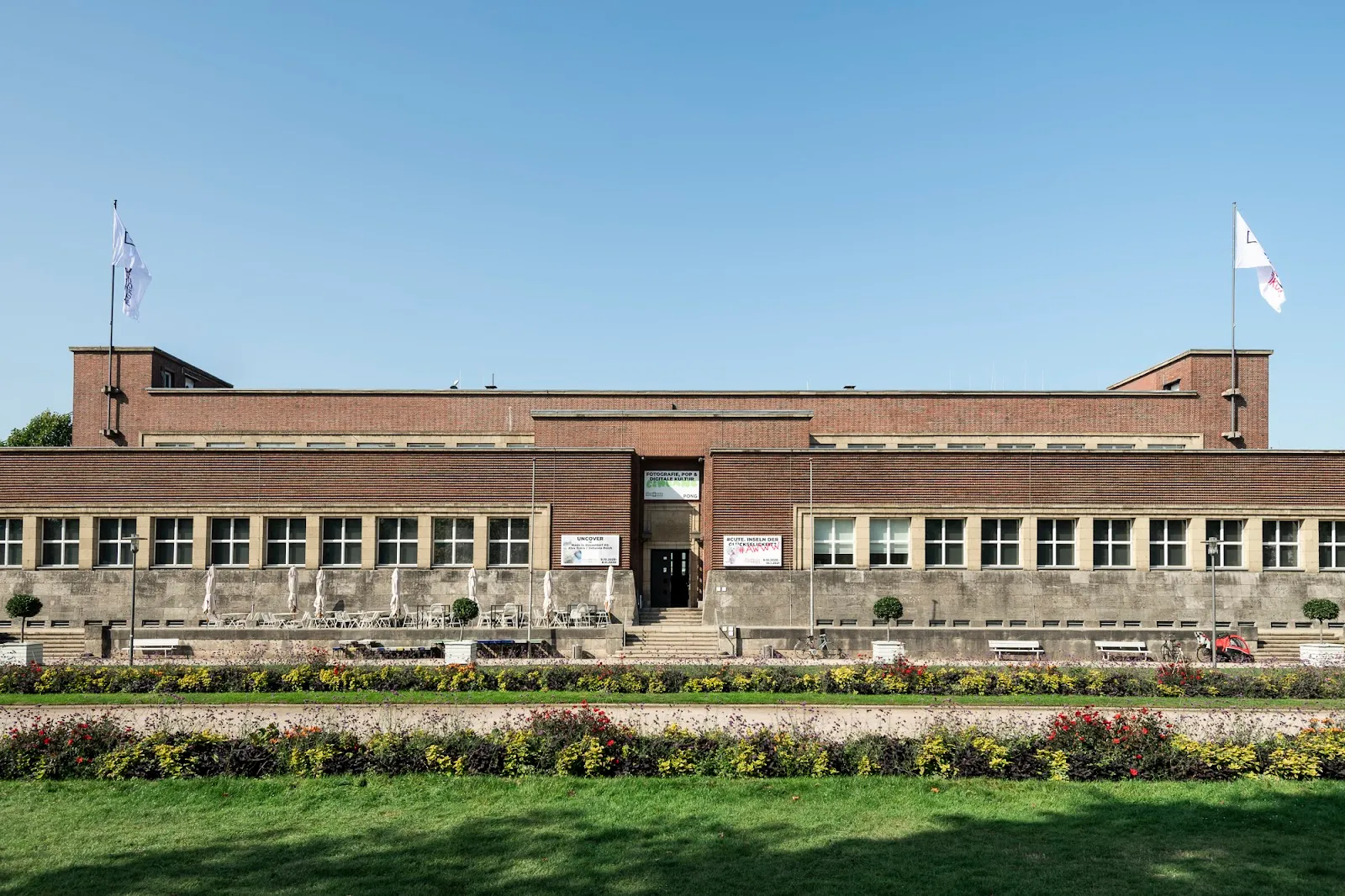
Hofgarten is Germany's first public park, set in the centre of Düsseldorf beside the Königsallee shopping street. Its roughly 28 hectares hold wide meadows, old trees, ponds, fountains and paths that cross the Düssel canal on small bridges. Modern sculptures stand along the walks, including Henry Moore's Reclining Figure in Two Parts beside the opera house. It works well as a green break between museums and shops, and it stays calm even though it sits so close to the city's central streets.
From war damage to a public park
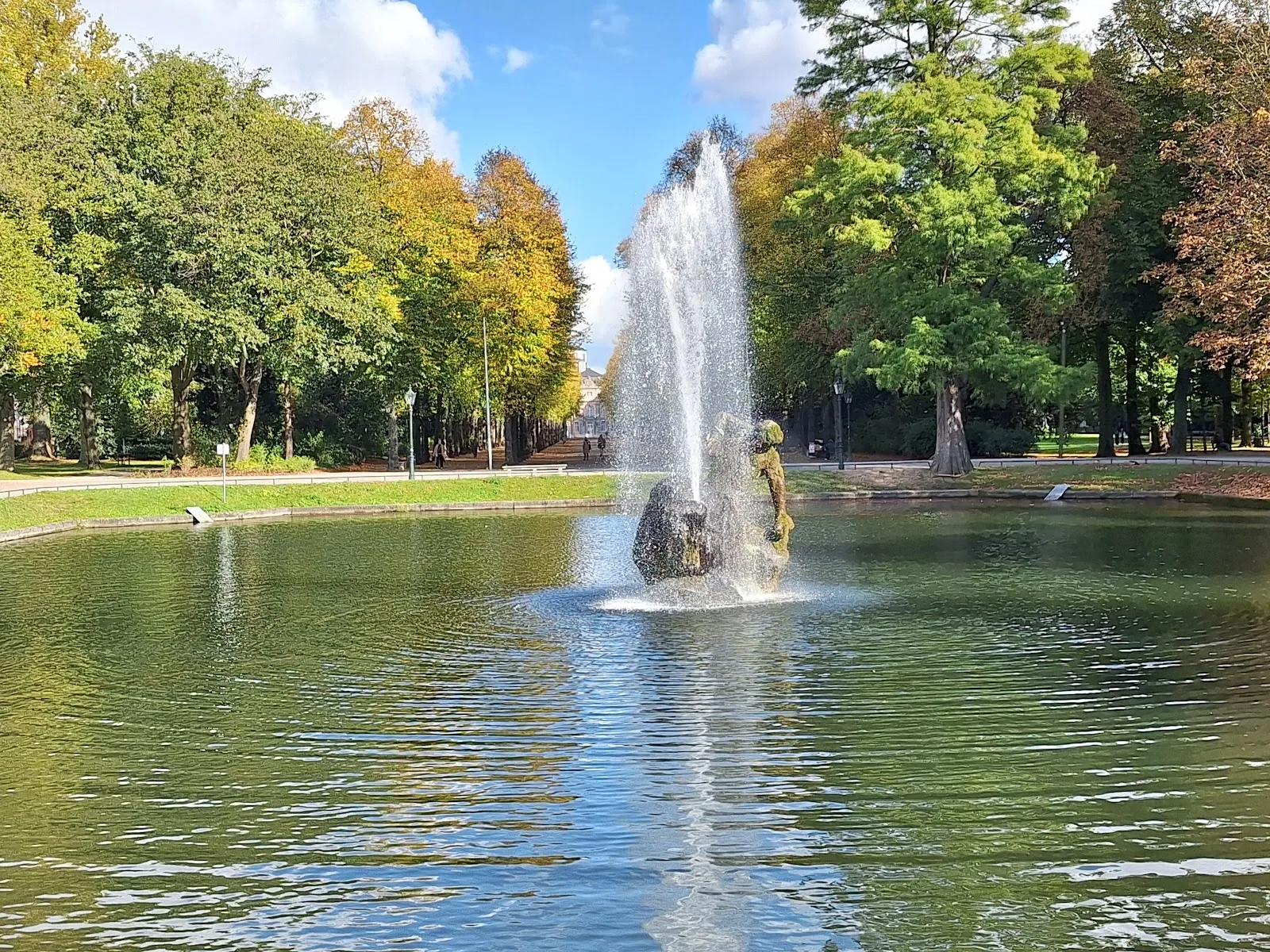
The park was created in the late 1760s, after the Seven Years' War (1756 to 1763) had left the region damaged. It was set out as a place where local residents could relax, and it became the first public park of its kind in Germany.
The grounds were later badly damaged when Napoleon's troops passed through. Much of the layout that visitors see today dates from the rebuilding that followed.
The oldest section and its layout
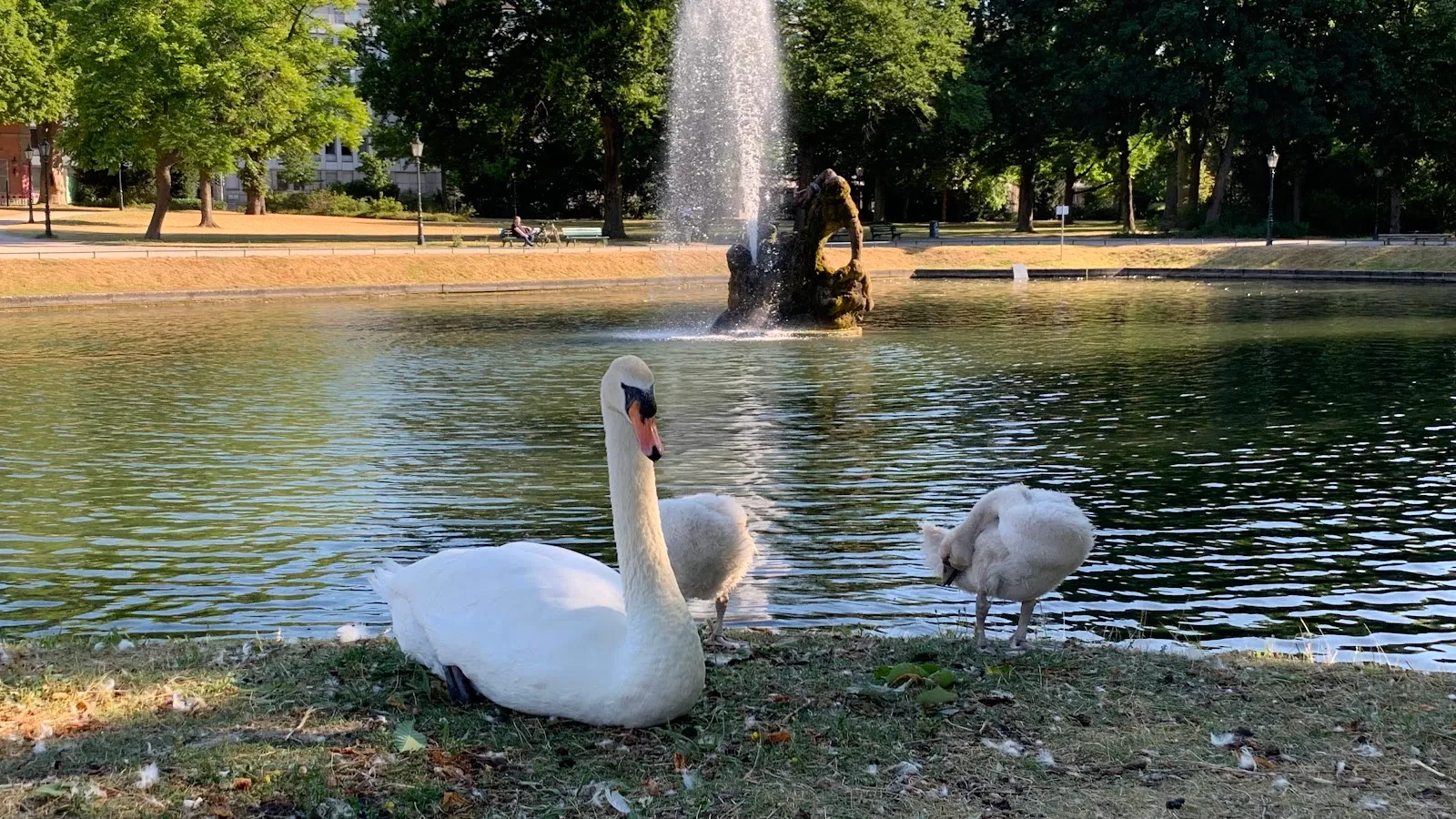
Hofgarten combines two garden styles. Near the palace the layout is formal and Baroque, and in other areas it follows the English landscape style, with open meadows, wooded areas and streams.
The oldest part lies on the east side, between Schloss Jägerhof and the Jröner Jong fountain. A long, grand avenue links the palace with the fountain. The Düssel canal runs through the park, and the paths and bridges along its banks make some of the most pleasant walks.
Schloss Jägerhof and the museums
Schloss Jägerhof is a small Baroque palace built in 1763, when it served as a hunting lodge. It now houses the Goethe Museum, which covers the life and work of the poet Johann Wolfgang von Goethe. The museum is at the east end of the park.
The Hofgärtnerhaus, the Baroque house once home to the court gardener, is another building in the park. It now houses the Theatre Museum (Theatermuseum Düsseldorf).
Sculptures and monuments along the paths
Las Meninas, a group of sculptures based on the Velázquez painting, stands near the Jägerhof palace. The Admonisher, a bronze by the Jewish-Russian artist Vadim Sidur, stands on the Ananasberg hill. Henry Moore's Reclining Figure in Two Parts is next to the opera house.
The fairytale fountain, made in 1904 by the French sculptor Max Blondat, shows three children sitting together and looking at three frogs. The Heinrich Heine monument and the Apollo monument, a neoclassical sculpture from 1906, are also in the park. Many visitors walk past the Apollo monument while looking for the more famous fountain.
Concerts, sport and play
The park hosts outdoor concerts, cultural events and festivals through the year. The Music Pavilion is one of the places where concerts are held, and the bandstand is part of the park's older design.
The grounds include a basketball court, a volleyball court, a tennis court, a skateboarding area and cycling lanes. There are playgrounds for children, a dog park area, swings and slides, and a public restroom. The main entrance is wheelchair accessible.
Getting there and getting around
Hofgarten has good public transport links, and parking areas are close by. The Königsallee runs along the park's southern edge and ends at the Triton Fountain at the park's northern end, so you can combine the two in one walk.
The park reaches from the Jacobistraße side, near Schloss Jägerhof, to the Heinrich-Heine-Allee by the Old Town. Its southern edge connects to the Rhine terrace at the river bank, so a walk can finish by the water.
FAQ
Is Hofgarten open all day?
Yes. The park is listed as open 24 hours a day, every day of the week.
Is Hofgarten the oldest park in Germany?
It is Germany's first public park. It sits in the centre of Düsseldorf and was set out as a place for local residents to relax.
Are there facilities for children and dogs?
Yes. The park has playgrounds and a dog park area, along with swings, slides and picnic tables.
Is there a museum inside the park?
Yes. Schloss Jägerhof, at the east end of the park, houses the Goethe Museum, which covers the life and work of Johann Wolfgang von Goethe.