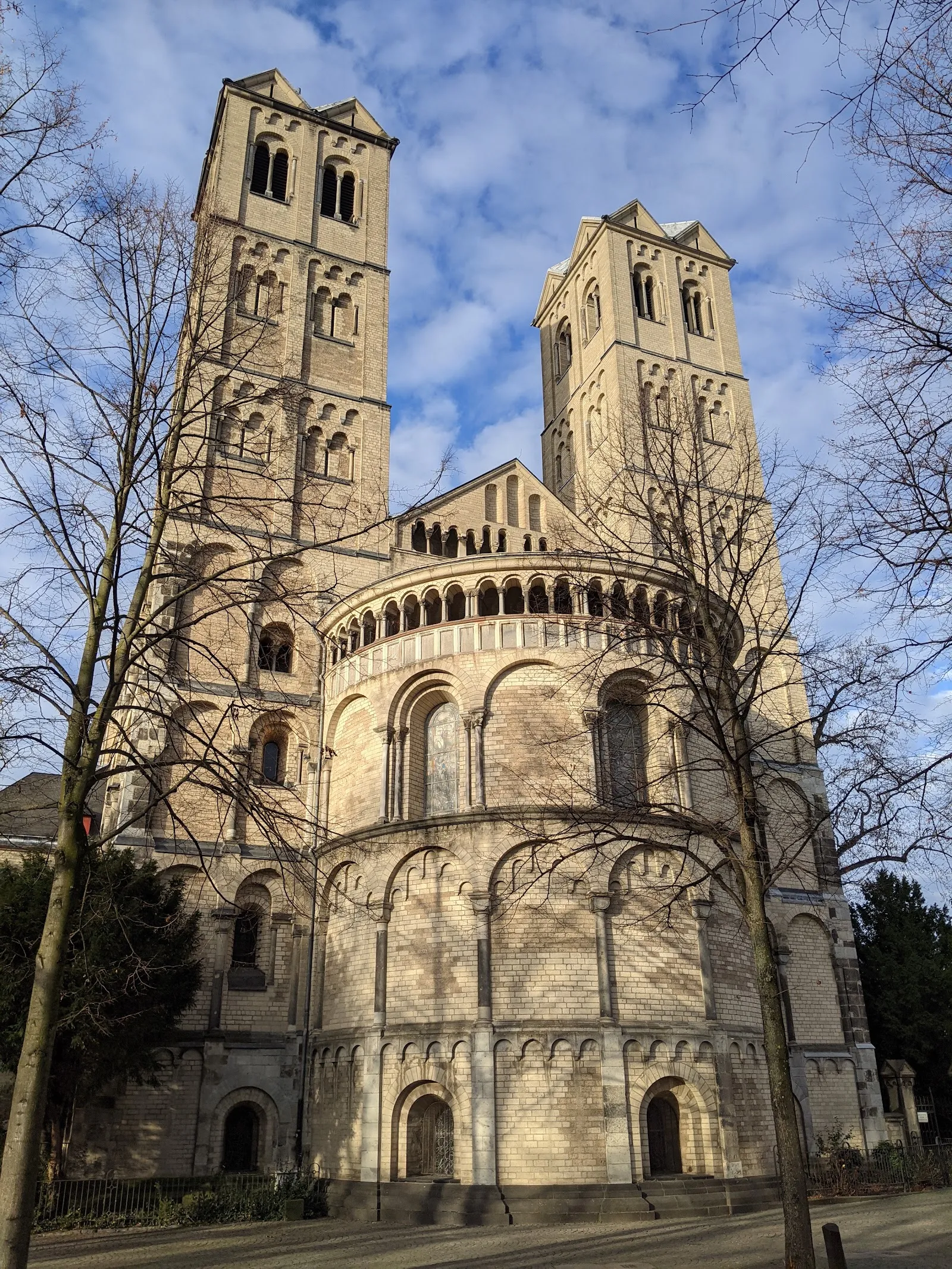
St. Gereon is a Roman Catholic basilica in central Cologne, known for its unusual decagonal dome and Romanesque architecture. Its central space rises above the remains of Roman walls, and the building grew in stages over many centuries. Inside, look for stained glass, paintings, sculptures and the crypt with ancient tombs. The church is quieter than Cologne Cathedral, making it a calm place to spend time with the city’s early Christian and medieval history. Entry is free; a donation is welcome.
A church built around Roman remains
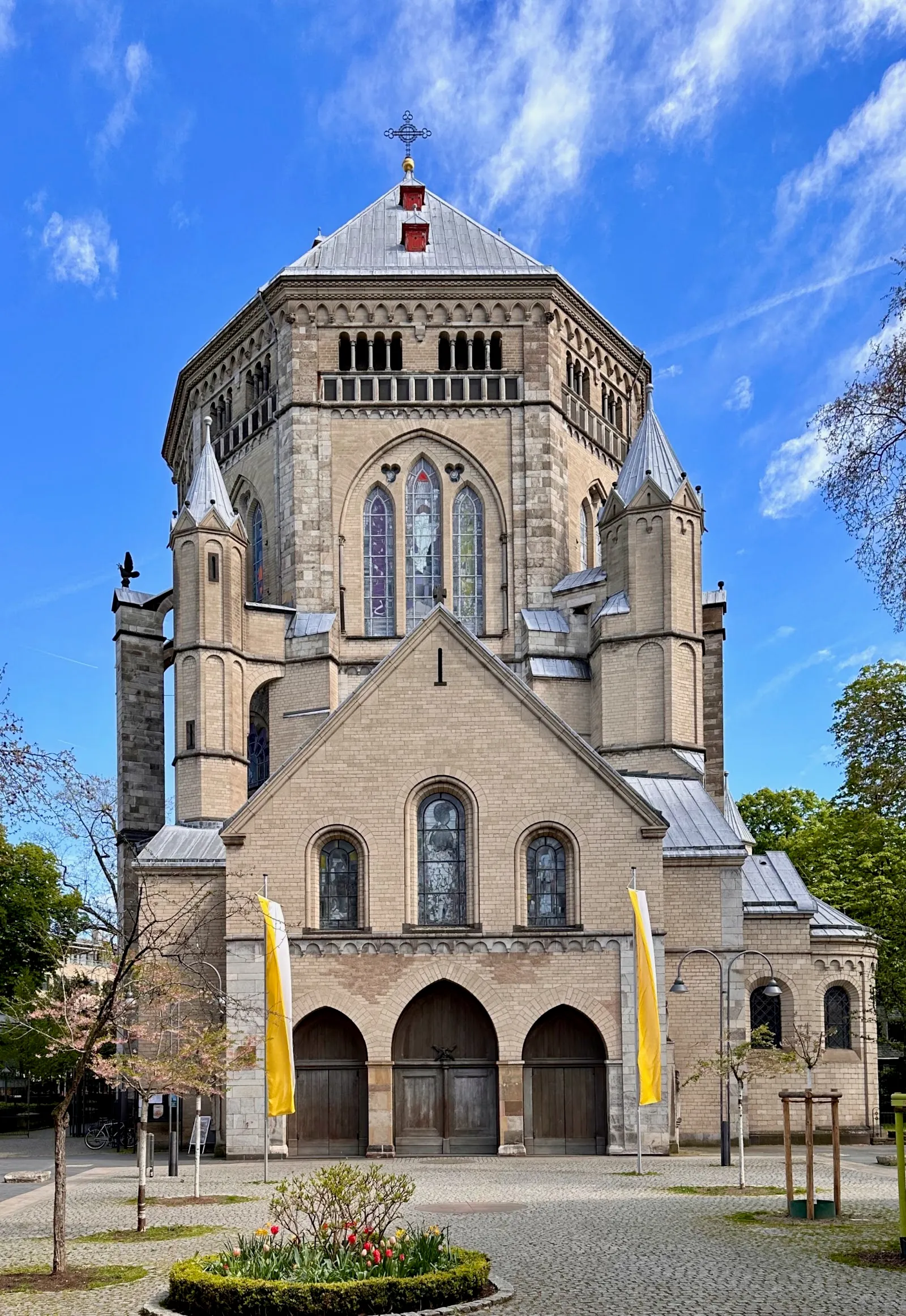
St. Gereon stands on the remains of Roman structures, some of which are still visible in the church. Archaeological work found an earlier building dating to the 4th century, though its original purpose is unknown. A later structure on the site became a church.
The basilica developed over several building phases, with much of its present form dating from the 12th and 13th centuries. New sections were added to older ones, giving the building an unusual shape. St. Gereon is one of Cologne’s twelve Romanesque churches and is dedicated to Saint Gereon, a Christian martyr associated with the city.
The decagonal dome and interior
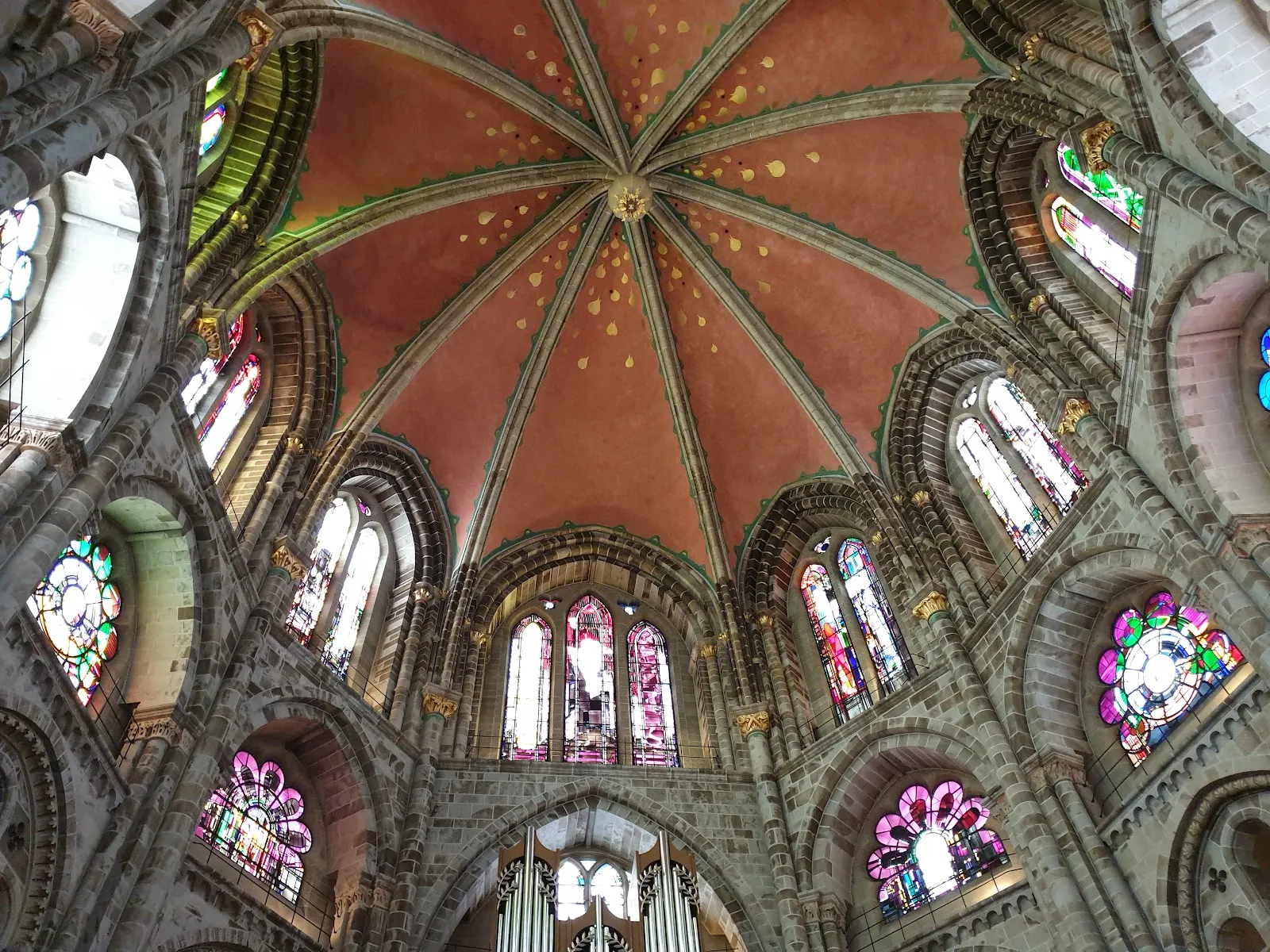
The central space is dominated by a ten-sided dome, about 21 metres across. It occupies the place where a nave might be expected, and its walls rise above Roman remains. The dome and the combination of building phases give St. Gereon a different layout from Cologne’s more familiar church interiors.
Inside, take time to look at the stained glass, paintings, sculptures, altars and statues. A mosaic floor depicts David and Goliath. The church also has a crypt with ancient tombs. Its central chamber and historic masonry are among the details that reward a slower visit.
Relics and church history
The bones of St. Gereon have been venerated here as relics since 1121. The church’s history also includes the St. Gereon sacramentary, a manuscript made around 1000 with parchment pages of mass prayers and religious images. It is now held by the National Library in Paris, so it is not on display in the basilica.
St. Gereon is an active Catholic church as well as a historic building. Keep a respectful manner inside, particularly when people are praying. Visitors can enter without paying, and a donation is optional.
FAQ
Is entry to St. Gereon free?
Yes. Entry is free, and visitors can leave a donation if they wish.
How long do you need at St. Gereon?
Allow about 30 to 60 minutes to see the church interior and exterior.
What is St. Gereon known for?
The basilica is known for its unusual ten-sided dome, Roman remains and Romanesque architecture.
What can you see inside St. Gereon?
Look for stained glass, paintings, sculptures, a mosaic floor depicting David and Goliath, and a crypt with ancient tombs.


