On Parks Road in Oxford, this university museum brings together fossils, dinosaur skeletons, insects, minerals and zoological specimens beneath a glass-and-iron roof. Its neo-Gothic building is part of the visit: look up at the ironwork and stone columns, many carved with British plants. Inside, the main court’s animal skeletons and displays on Earth’s history give you plenty to explore, with hands-on exhibits for younger visitors. Admission is free, and the adjoining Pitt Rivers Museum lets you continue from natural history into human cultural collections.
A museum built for scientific study
The Oxford University Museum of Natural History opened in 1860 as a centre for scientific study at the University of Oxford. Its collections bring together zoological, geological and other natural history specimens, including fossils, insects and minerals. The museum continues to support research and teaching as well as public visits.
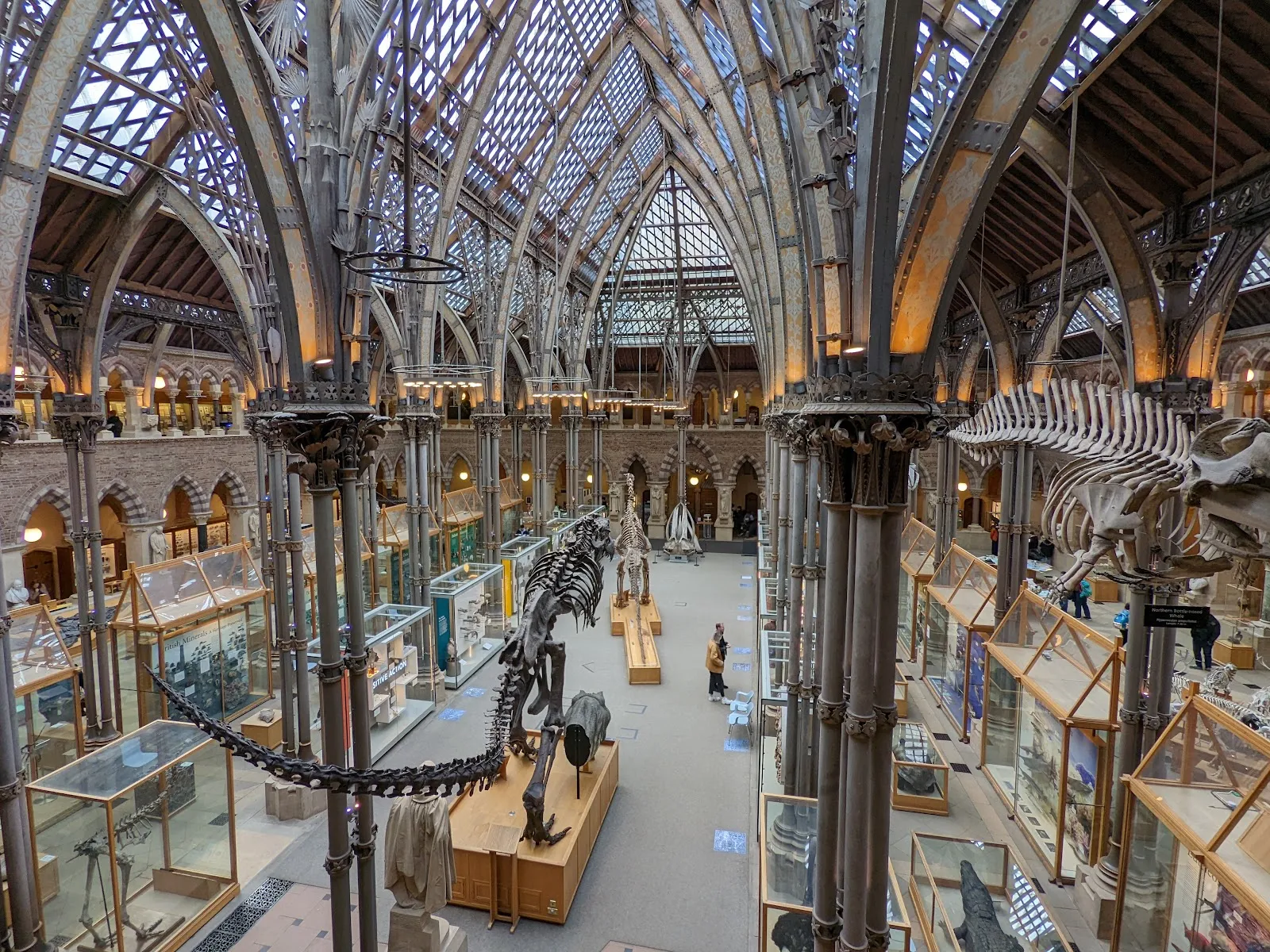
Its neo-Gothic building was designed by Thomas Newenham Deane and Benjamin Woodward, with John Ruskin influential in its design. Stonework carved with plants and animals carries the natural world into the building itself. In the main court, a glass roof rests on cast-iron pillars and galleries run around the upper floors. Pause to look at the columns, which are made from different rocks, as well as the ironwork and carved details.
Dinosaurs, fossils and the Oxford Dodo
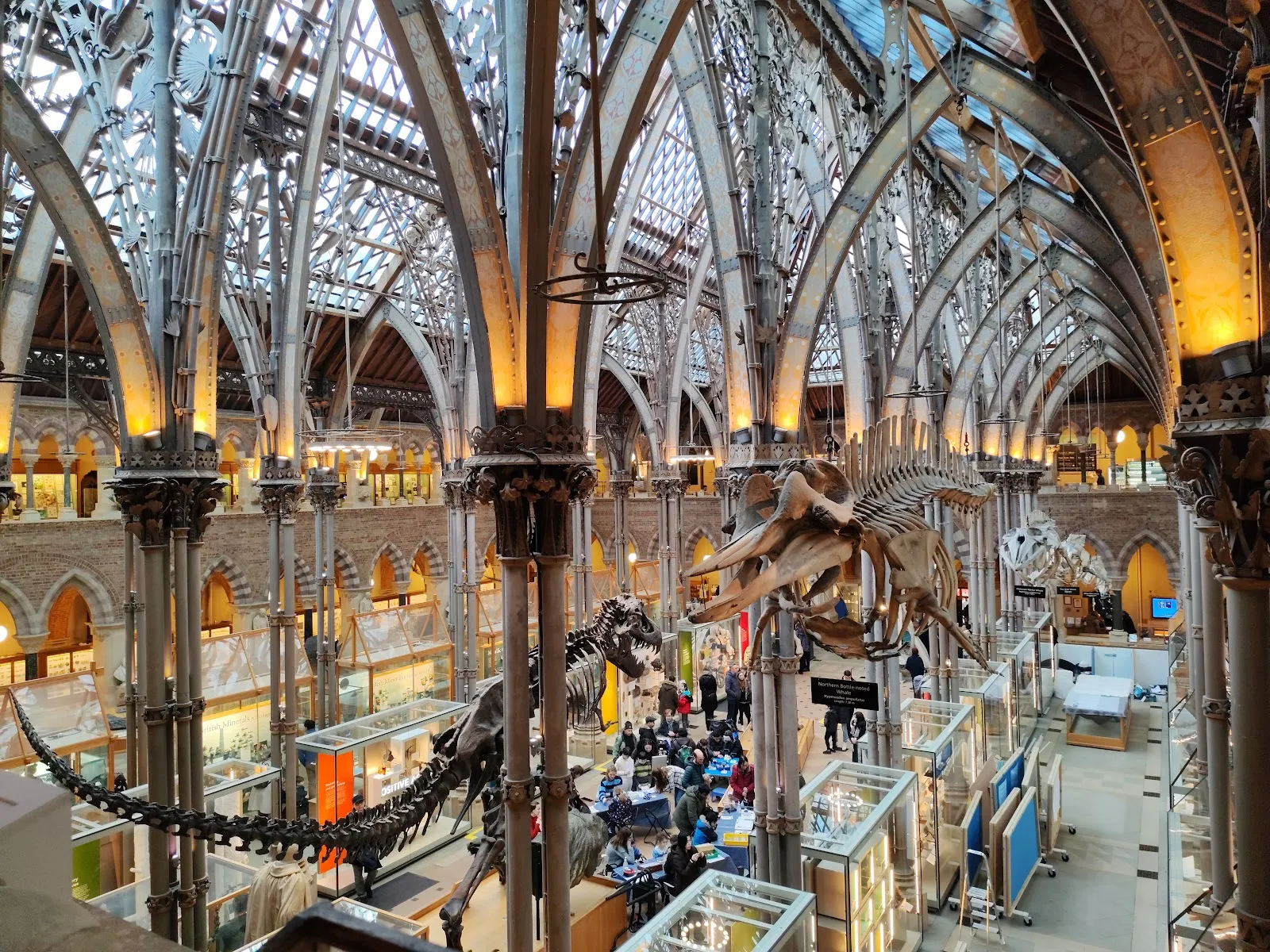
The main court is a natural starting point: dinosaur skeletons rise above the displays, alongside the bones of other animals. Elsewhere, exhibits cover fossils, zoology, insects and minerals, with specimens that help trace the history of life and the Earth. The collections include the Oxfordshire dinosaurs and material connected with the dodo. The original stuffed dodo is no longer on display; a model and information about the bird can be found near the entrance.
Hands-on displays add a tactile element to the visit. Some let you touch specimens, including a meteorite, and feel animal fur. Families can use interactive displays and children’s activities to explore the collections. The museum has material for different ages, though the range of specimens and scientific subjects also gives older visitors plenty to examine.
Continue into the Pitt Rivers Museum
The Natural History Museum shares its building with the Pitt Rivers Museum, which focuses on human cultural history and archaeology. The galleries have a different atmosphere: they are dimly lit, with objects arranged in cases and drawers. The change from the bright central court to these more intimate displays makes the two collections feel distinct, even as they form one continuous visit.
Set aside at least three hours to explore both museums without rushing. Begin in the Natural History Museum, then move through to Pitt Rivers. A weekday morning is a good choice if you would like a quieter visit. The Natural History Museum has free admission, and staff can talk through the exhibits; some are practicing scientists.
FAQ
Is admission to the Oxford University Museum of Natural History free?
Yes. Admission is free.
How long should I allow for the museum?
Allow at least three hours if you want to visit both the Natural History Museum and the adjoining Pitt Rivers Museum.
What can I see at the museum?
The collections include dinosaur skeletons, fossils, insects, minerals and zoological specimens. The Oxford Dodo is represented by a model and information near the entrance; the original stuffed bird is no longer on display.
Is the Pitt Rivers Museum in the same building?
Yes. It adjoins the Natural History Museum, and you can visit both as one continuous experience.