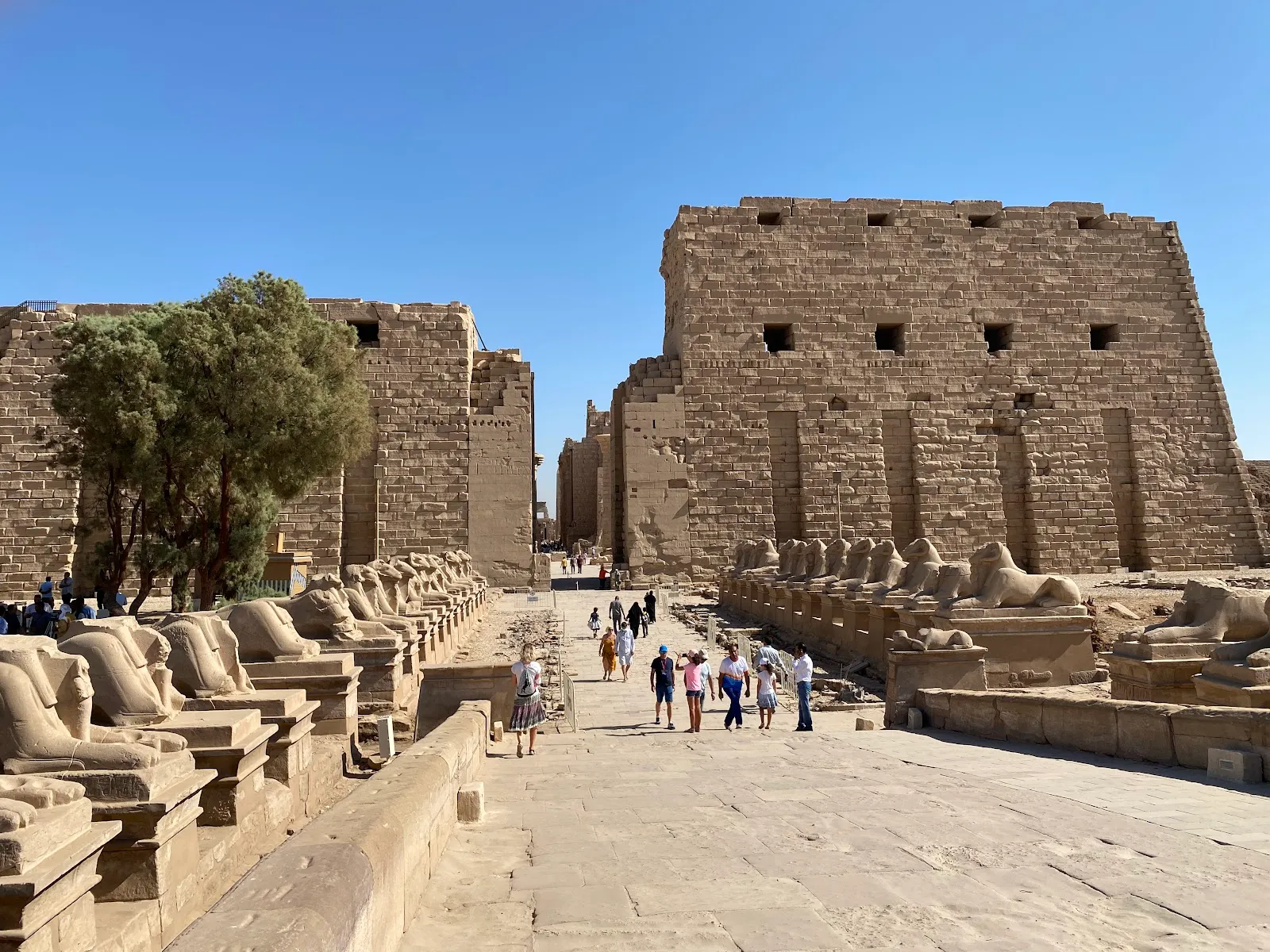
Karnak is a vast temple complex in Luxor, on the east bank of the Nile. Built and altered by successive rulers over many centuries, it brings together pylons, courtyards, shrines and obelisks rather than following one unified plan. The Great Hypostyle Hall is a highlight, with 134 towering columns arranged in 16 rows; look closely for traces of colour on some of them. Carved walls and hieroglyphs reward a slow walk through the site, so allow time to explore beyond the main hall.
A complex built over centuries
Karnak lies north of central Luxor, on the east bank of the Nile. Ancient Egyptians called the site Ipet-isut, or “The Most Selected of Places.” It was a major religious centre for nearly 2,000 years, and the buildings that survive record the work of successive rulers rather than a single building project.
Pharaohs added to, altered and restored the complex over many centuries. Rulers including Hatshepsut, Thutmose III, Amenhotep III and Ramses II left structures there. The building work continued into the Ptolemaic period. As a result, Karnak has no single unified plan: its pylons, courts, colonnades and shrines reflect different periods and decisions.
The Temple of Amun and the Hypostyle Hall
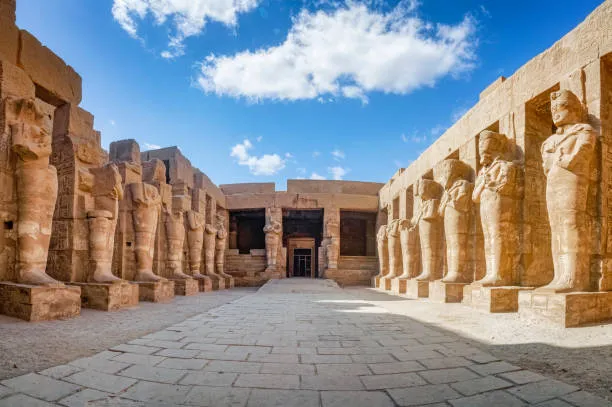
The Great Temple of Amun is the centrepiece of the complex. Its main sequence follows familiar elements of an Egyptian state temple, including a pylon, a colonnaded court, a hypostyle hall, a vestibule, a shrine and storerooms. Successive additions changed and extended that basic arrangement.
The Great Hypostyle Hall stands within the Precinct of Amun-Re. Its 134 columns are set in 16 rows, creating a striking space of closely packed stone supports. Look up as you walk through: a few columns retain traces of pigment, although much of the original colour has faded. The scale of the columns and the carved surfaces make the hall a natural place to pause rather than hurry through.
Reading the layers of Karnak
The site contains more than the main temple. Pylons, courtyards, obelisks, chapels and smaller sanctuaries were added over time, giving the complex a varied appearance. Other prominent buildings include the Temple of Khons and the Festival Temple of Thutmose III. The temple precincts were dedicated to the Theban triad of Amun, Mut and Khonsu, as well as to the prestige of the rulers who commissioned construction.
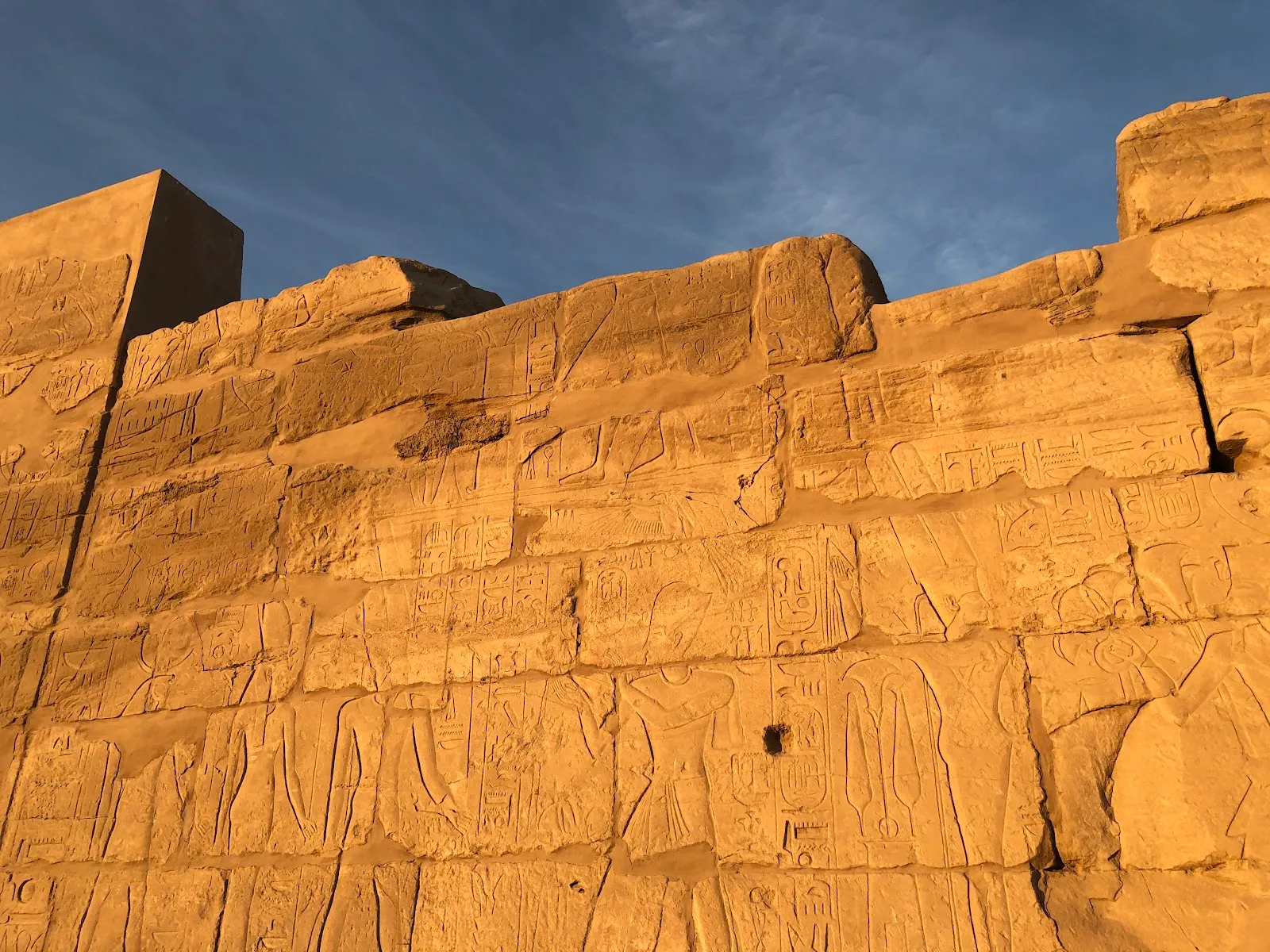
Carved walls and hieroglyphs offer details to notice as you move between the larger structures. The buildings also show how later rulers sometimes reused or changed earlier work. Rather than treating Karnak as one finished monument, follow how its different parts sit together and look for the shifts in design from one structure to the next.
Planning your visit
Give the complex at least two hours if you want time to explore its main structures. The Great Hypostyle Hall deserves a pause, but a visit can include more than the hall: take time with the pylons, courts and other surviving buildings. Bring water because options inside are limited, particularly in the heat.
Advance tickets are recommended. If you visit with a guide, stick with the guide you arranged for information about the site; people may approach with tour or photo offers inside. At the exit, vendors may be persistent, so be clear if you do not want to buy anything.
FAQ
How long should I spend at Karnak?
Allow at least two hours to explore the complex.
What should I see at Karnak?
The Great Hypostyle Hall is a highlight, with 134 columns in 16 rows. Also look for the complex’s pylons, courtyards, shrines, obelisks and carved walls.
Should I buy tickets in advance?
Advance tickets are recommended.
Is there water available inside Karnak?
Options inside are limited, so bring water.