Pianifica un viaggio
Lingua: Italiano
Pianificatore di viaggiPianifica il tuo viaggio su una mappa

Le migliori destinazioni

EnglishDeutschFrançaisEspañolPortuguêsPortuguês (BR)Italiano
Avviso di viaggio · EgittoAlcuni governi sconsigliano di viaggiare in alcune zone di Egitto.Gli avvisi riguardano solo queste aree: Fascia di 50 km lungo il confine libico, Striscia di Gaza, Confine libico (senza profondità definita), Governatorato del Sinai settentrionale, Confine sudanese (senza profondità definita), Deserto Occidentale, Governatorato di Ismailia (a est del Canale di Suez), Nord del Governatorato del Sinai meridionale (oltre la strada Santa Caterina–Nuweiba).Le indicazioni dipendono dal tuo passaporto. Leggi quelle del tuo governo prima di prenotare.Indicazioni ufficiali
Aree con avvisi
  • Fascia di 50 km lungo il confine libico · evitare ogni viaggio · Canada, Nuova Zelanda
  • Striscia di Gaza · evitare ogni viaggio · Canada, Francia, Nuova Zelanda
  • Confine libico (senza profondità definita) · evitare ogni viaggio · Germania, Spagna, Francia, Italia
  • Governatorato del Sinai settentrionale · evitare ogni viaggio · Canada, Spagna, Francia, Irlanda, Nuova Zelanda, Regno Unito
  • Confine sudanese (senza profondità definita) · evitare ogni viaggio · Germania, Spagna, Francia, Italia
  • Deserto Occidentale · evitare ogni viaggio · Canada, Nuova Zelanda, Regno Unito, Stati Uniti
  • Governatorato di Ismailia (a est del Canale di Suez) · evitare i viaggi non essenziali · Canada, Regno Unito
  • Nord del Governatorato del Sinai meridionale (oltre la strada Santa Caterina–Nuweiba) · evitare i viaggi non essenziali · Canada, Nuova Zelanda, Regno Unito

Segnalata anche da un solo governo: Fascia di 20 km lungo il confine libico (Regno Unito), Zone di confine (zone militari) (Stati Uniti), Zona di confine egiziano-israeliana (Germania), Penisola del Sinai settentrionale e centrale (Stati Uniti), Governatorato di Port Said (a est del Canale di Suez) (Canada), Zona di confine di Rafah (Spagna), Governatorato di Suez (a est del Canale di Suez) (Canada), Strada Bahariya–Siwa (Regno Unito), Trapezio di Bir Tawil (Regno Unito), Deserto a ovest di Marsa Matruh, Fayyum e Abu Simbel (Francia), Regione dal Gebel Uweinat al Gilf el-Kebir (Italia), Triangolo di Halaib (Regno Unito), Aree desertiche non turistiche (Italia), Valico di frontiera di Rafah (Irlanda), Penisola del Sinai meridionale (Germania)

GovernoConsigliAggiornatoLeggi le indicazioni
Regno Unito (FCDO)No advice against the whole country (regional advisories)–Leggi le indicazioni
Stati Uniti (Dipartimento di Stato)Exercise increased caution (regional advisories)15 lug 2025Leggi le indicazioni
Canada (Affari globali)Exercise a high degree of caution (regional advisories)–Leggi le indicazioni
Germania (Auswärtiges Amt)Besondere Vorsicht walten lassen (keine Gesamtwarnung) (regional advisories)13 ott 2026Leggi le indicazioni
Nuova Zelanda (SafeTravel)Exercise increased caution elsewhere in Egypt (regional advisories)–Leggi le indicazioni
Irlanda (Dipartimento per gli Affari esteri)High degree of caution (regional advisories)–Leggi le indicazioni
Francia (Ministero per l'Europa e gli Affari esteri)Increased vigilance for the rest of the country (regional advisories)–Leggi le indicazioni

Verificato ogni giorno dalle indicazioni pubblicate dai governi; ultima verifica 2 nov 2026.RoamLedger riassume le indicazioni ufficiali; non è un consiglio di alcun governo.

Al Aqmar Mosque
Moschea

Al-Aqmar Mosque

Al-Aqmar Mosque stands on Al-Muizz Street in Cairo’s historic El-Gamaleya district.

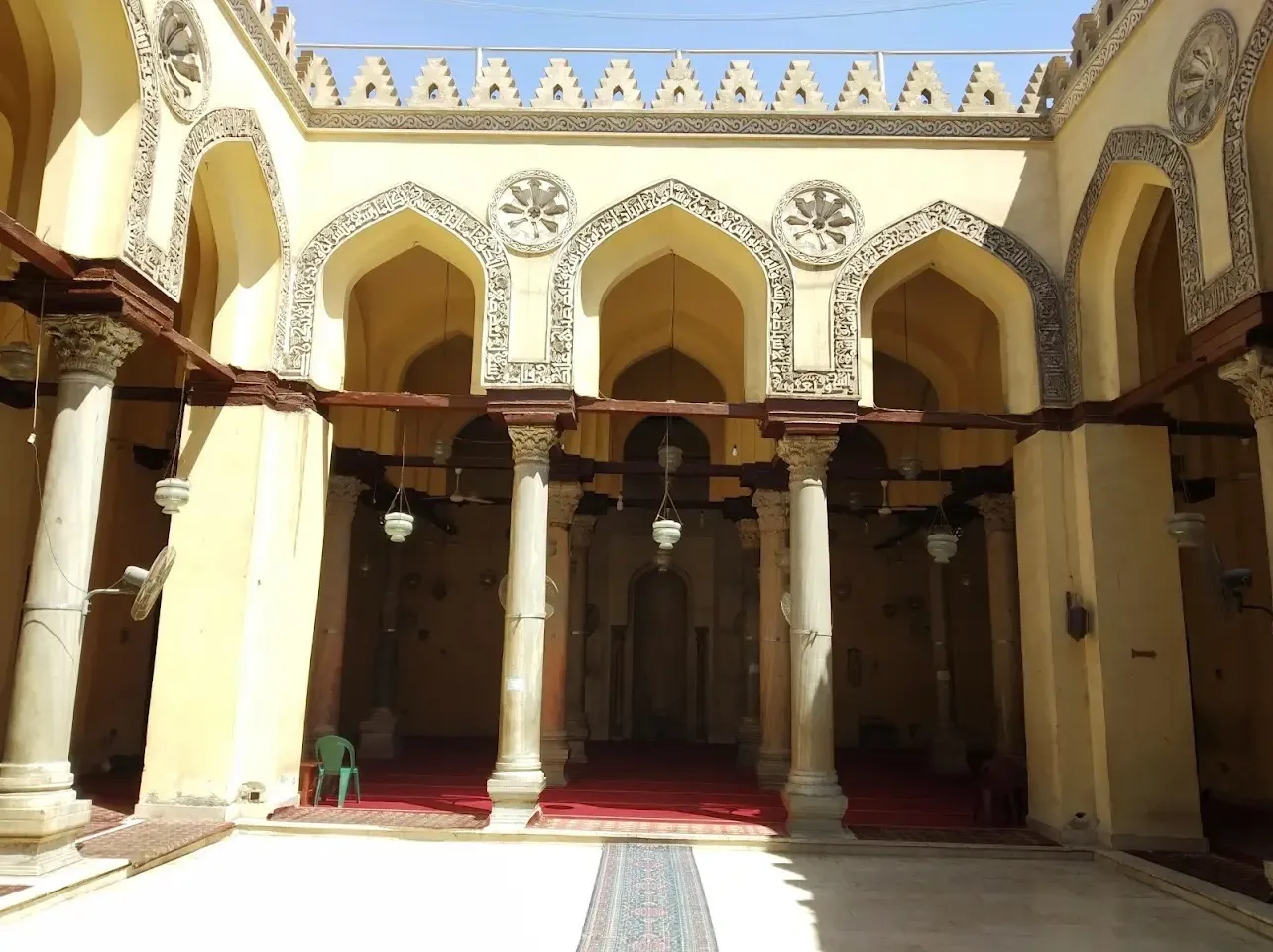
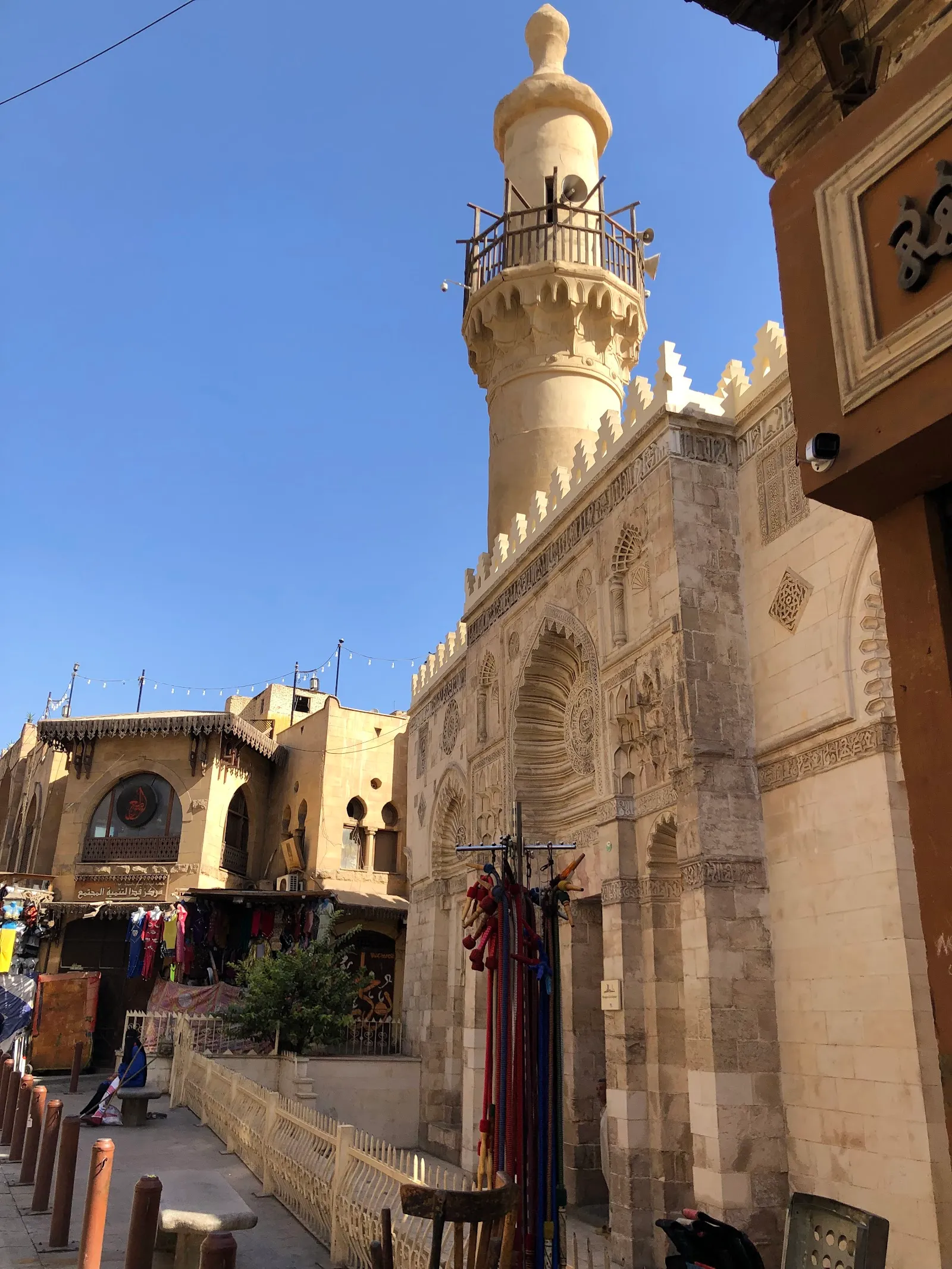
Al-Aqmar Mosque stands on Al-Muizz Street in Cairo’s historic El-Gamaleya district. Built in 1125, it is a Fatimid mosque known for its carved stone facade, geometric patterns and inscriptions. The facade follows the street’s line, while the prayer hall is oriented toward Mecca, a design that makes the building especially interesting to look at from outside. Step in to see the prayer space and its architectural details, and take time to notice how the mosque fits into the surrounding street.

A Fatimid mosque on Al-Muizz Street
Al-Aqmar Mosque
Al-Aqmar Mosque

Al-Aqmar Mosque was built in 1125 by the Fatimid vizier al-Ma’mun al-Bata'ihi, during the reign of the caliph Al-Amir. It served residents of the surrounding neighborhood and the Great Fatimid Palace, which no longer stands. Its name means “moonlit” and refers to the pale stone used in the building.

The mosque is on Al-Muizz Street, a main avenue of Fatimid Cairo. Its position among the street’s buildings makes its unusual plan easy to understand: the facade follows the street, but the prayer hall is set at an angle to face Mecca.

The carved stone facade
Al-Aqmar Mosque
Al-Aqmar Mosque

Al-Aqmar was the first mosque in Cairo to have an elaborately decorated stone facade. Its exterior has intricate carvings, geometric patterns and Quranic verses in Kufic script. Shell-shaped recesses in the stone were used here as a decorative feature and later became more common in Islamic architecture.

Look at the facade as a whole, then take in the smaller details in the stonework and inscriptions. The contrast between the street-facing exterior and the differently oriented prayer hall is central to the building’s architectural interest.

Inside the mosque

The interior includes a prayer hall with a calm atmosphere and carefully proportioned spaces. Its orientation follows the qibla, the direction of prayer toward Mecca, rather than the line of Al-Muizz Street. This solution allowed the mosque’s exterior to meet the street while its interior served its religious purpose.

Al-Aqmar has been restored over the years. During a visit, give the exterior and interior separate attention, and be respectful of anyone using the mosque for prayer.

FAQ

Where is Al-Aqmar Mosque?

It is on Al-Muizz Street in the El-Gamaleya district of Cairo.

When was Al-Aqmar Mosque built?

The mosque was built in 1125 during the Fatimid period.

What is Al-Aqmar Mosque known for?

It is known for its carved stone facade, geometric decoration and the design that aligns the facade with the street while orienting the prayer hall toward Mecca.

When is a good time to see the facade?

Visit in daylight to see the carvings and details clearly.

Altre attrazioni imperdibili a Il Cairo

Esplora tutto