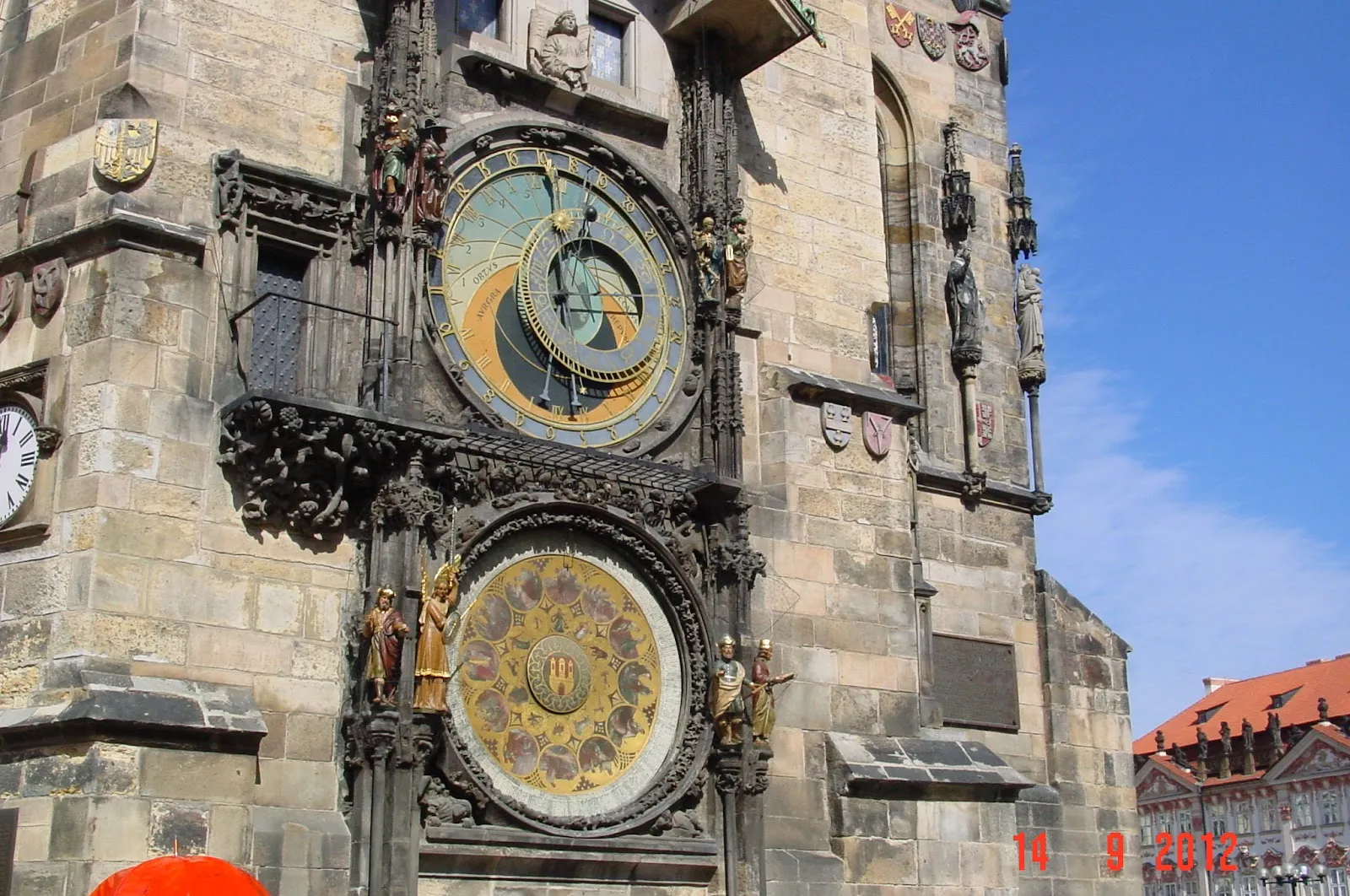
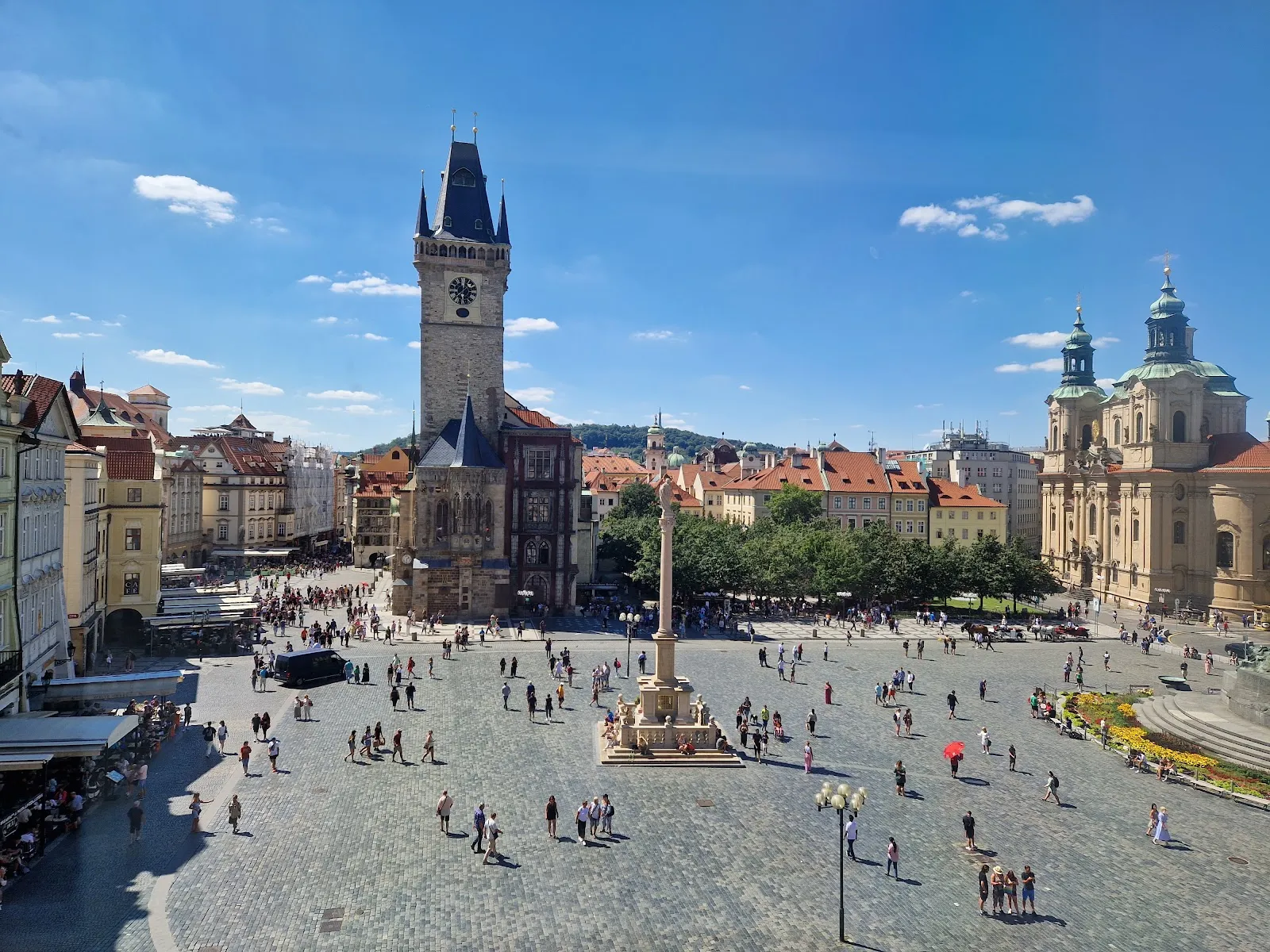
Prague’s Old Town Square is a pedestrian plaza ringed by historic churches, palaces and the Old Town Hall. Look up to see the twin Gothic spires of the Church of Our Lady before Týn, then find the Astronomical Clock on the town hall. At the top of each hour, its moving figures draw a crowd. The square is also a gathering place for street performers and seasonal markets, including Prague’s Christmas market. Come early or later in the evening for more room to take in the buildings; expect busy conditions around the clock.
A marketplace through the centuries
The square began as Prague’s central marketplace in the 12th century and remains a focal point of the Old Town. Its surrounding buildings span several architectural periods, so a circuit of the plaza reveals a mix of Gothic, Baroque, Rococo, Renaissance and Art Nouveau details. Look beyond the most famous facades: painted exteriors, towers and varied window designs give each side of the square a distinct character.
The Old Town Hall grew from a single building into a connected group of structures as the town’s administration expanded. Its history reaches back to the 14th century, when it became the first town hall in Bohemia. The Jan Hus monument stands in the square, alongside other landmarks that mark Prague’s religious and civic history.
The clock and the buildings around it
The Astronomical Clock is mounted on the Old Town Hall. Dating to 1410, it displays the time and date, as well as astronomical information such as the Sun’s position and the Moon’s phases. At each hour, moving figures appear in a short procession. The gathering around the clock can become dense at this moment, so arrive early if you want a clear view of its details.
The Church of Our Lady before Týn, with its Gothic spires, is one of the square’s most recognizable landmarks. St. Nicholas Church brings a contrasting Baroque style. Other notable buildings include Kinský Palace and the Stone Bell House. Take time to look across the whole perimeter rather than focusing only on the clock: the facades and church towers make the square’s changing architectural styles easy to spot.
Markets and quieter moments
The square hosts seasonal celebrations, including Christmas and Easter markets. At Christmas, wooden stalls sell decorations, crafts and food; a large tree and nativity scene form part of the seasonal setting. Mulled wine and trdelník, a pastry cooked over an open fire and coated with sugar and cinnamon, are among the treats associated with the market. It is a popular event, so expect crowds around the stalls.
At other times of year, street performers and musicians bring activity to the plaza, while benches near the Jan Hus monument provide a place to pause. Early morning is better suited to a quieter look at the buildings. After dark, the illuminated facades give the square a different feel. Cafés and restaurants line the area, but prices can be higher here than in streets farther from the main tourist route.
FAQ
Is Old Town Square free to visit?
The square is a public outdoor space, and the supplied information identifies it as a free attraction. Separate attractions or services may have their own costs.
When does the Astronomical Clock show its figures?
The figures appear at the top of each hour. Crowds gather then, so arriving early can help you find a viewing spot.
How long should I spend at Old Town Square?
Allow about 1 to 2 hours to see the main buildings and clock. Add time if you plan to browse a seasonal market or nearby lanes.
When is the Christmas market held?
The square hosts a Christmas market during the holiday season, but dates are not specified in the supplied information.