The Sea Organ is a stretch of white marble steps at the western tip of Zadar's Riva, where the Old Town peninsula meets the Adriatic. Under the steps, 35 pipes of different lengths turn the movement of the sea into low, drifting notes. Architect Nikola Bašić designed it, and it opened in 2005. You sit on the stone, listen, and watch the sun go down over the islands. The Greeting to the Sun light installation is right next to it, so one stop covers both. Entry is free and the site is open around the clock.
How the steps make sound
The visible part of the Sea Organ is a run of white marble steps, about 70 metres long, that descend into the sea. The stone is white and comes from a Croatian island. Holes cut into the steps let the sound out.
The instrument itself is hidden below. At the lowest tide level, 35 pipes of different lengths, diameters and tilts were set vertically into the coast. They rise at an angle toward the paved part of the shore and end in a service corridor. Whistles on the pipes play seven chords of five tones.
When a wave pushes in, it drives air through the pipes and the whistles sound. The strength of the waves and the wind decides what you hear, so the music is never repeated. A passing boat or ferry raises the volume. The sound is low and sighing. Some listeners hear whales in it, and others hear the harmonies of Dalmatian klapa singing.
Why the waterfront has an organ
Nikola Bašić, an architect from Zadar, designed the Sea Organ, and it opened in April 2005. It was part of an effort to renew the city's waterfront. After the bombing of World War II and a hurried postwar reconstruction, the seawall worked but was a hard, plain edge between land and water. The organ gave that edge a use as a place to sit and a sound of its own.
In 2006 the project won the European Prize for Urban Public Space. It is described as the first installation of its kind, and it is still the way many people come to know Zadar's waterfront.
Sunset and the Greeting to the Sun
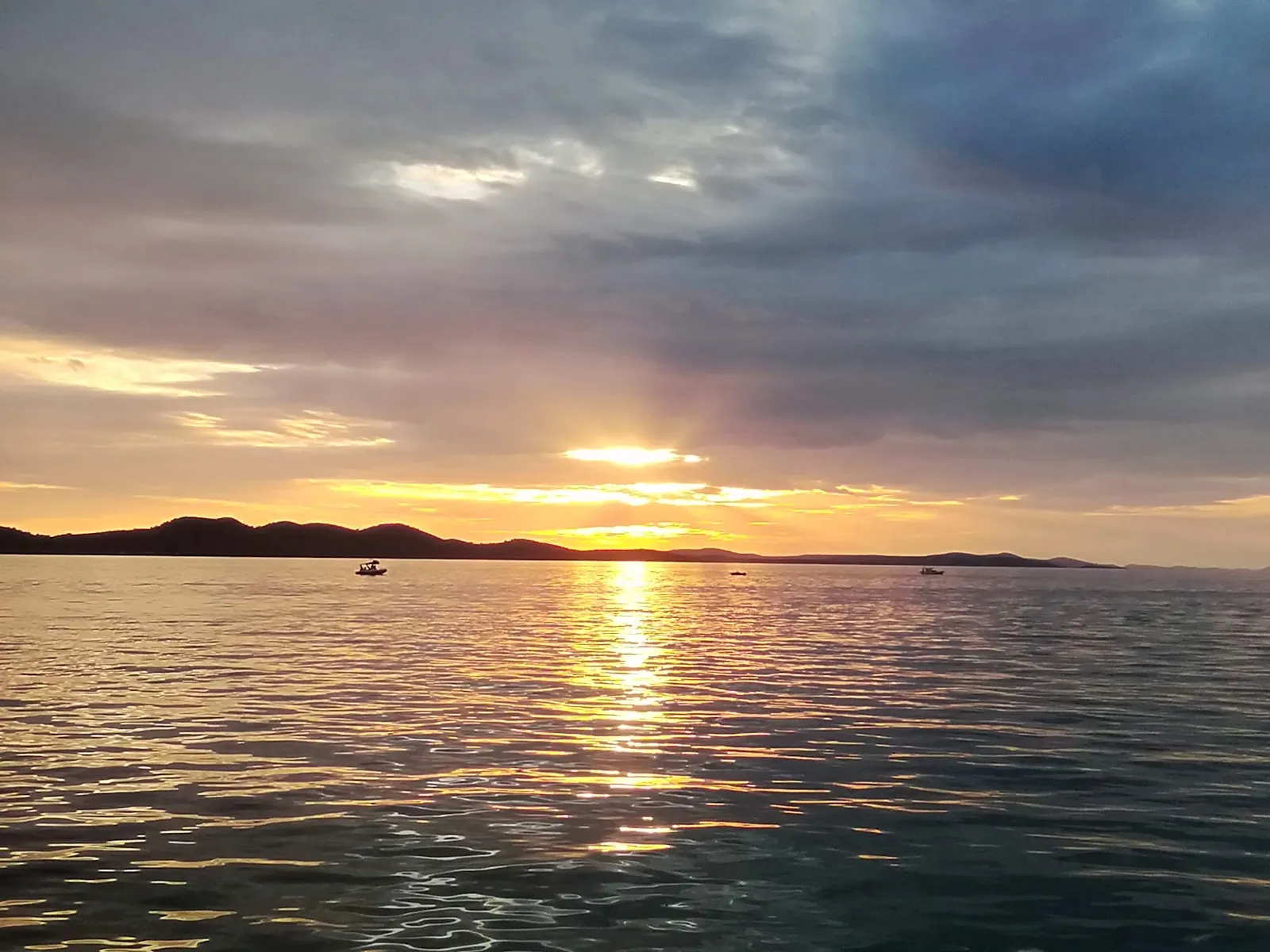
The steps face west, and the sun sets behind the islands offshore. Alfred Hitchcock, on a family holiday here in the 1960s, is said to have called it the most beautiful sunset in the world. Every evening people take a seat on the stone to watch it, some with a drink, and the steps are a regular meeting place for locals and visitors.
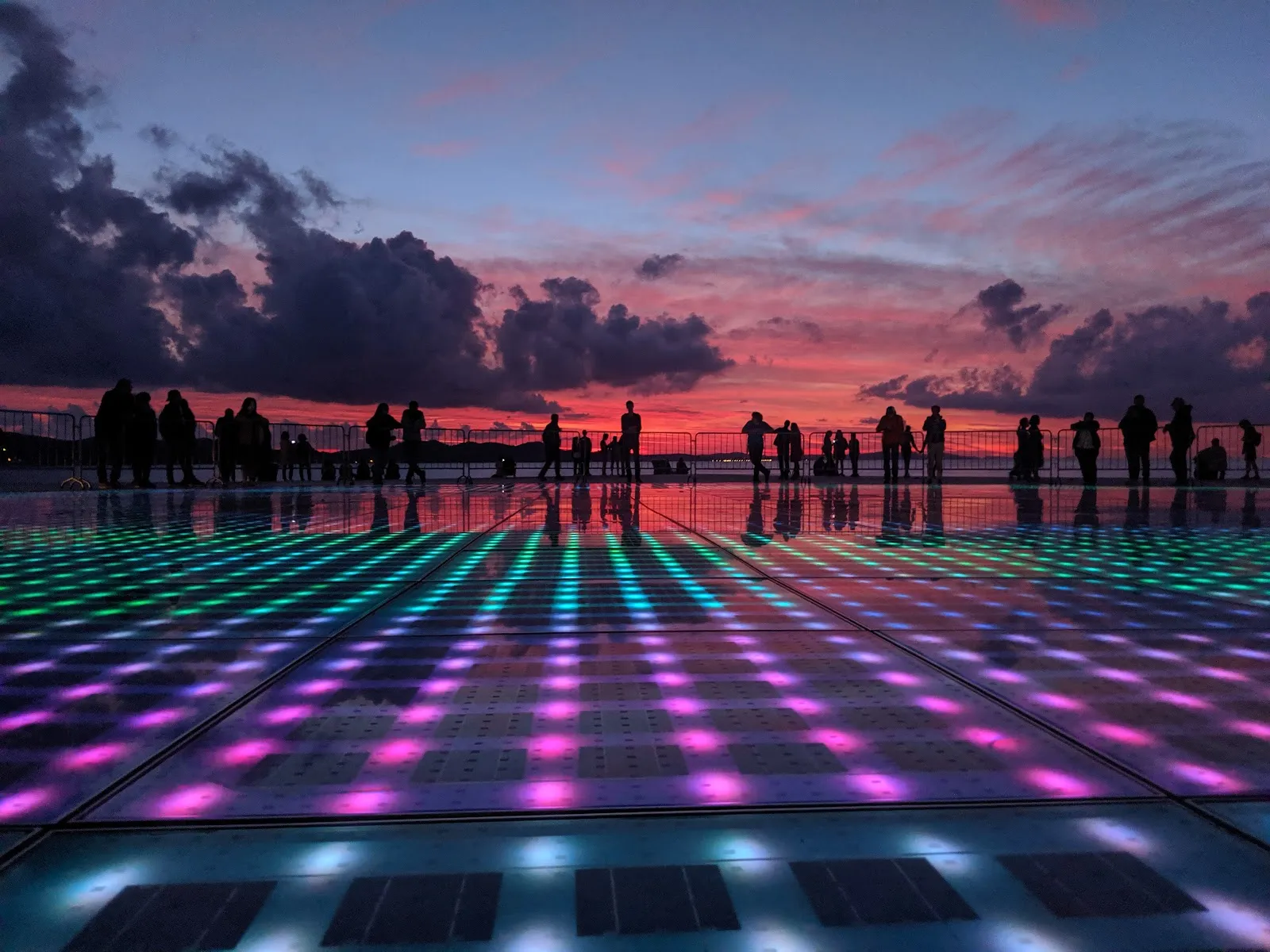
The Greeting to the Sun is next to the organ and was designed by Bašić as well. It is a circle about 22 metres across, made of glass plates laid in the paving. Solar elements underneath charge during the day. After sunset they power lights that change through many colours. Street performers often gather in the area once the show begins.
Finding it and what is nearby
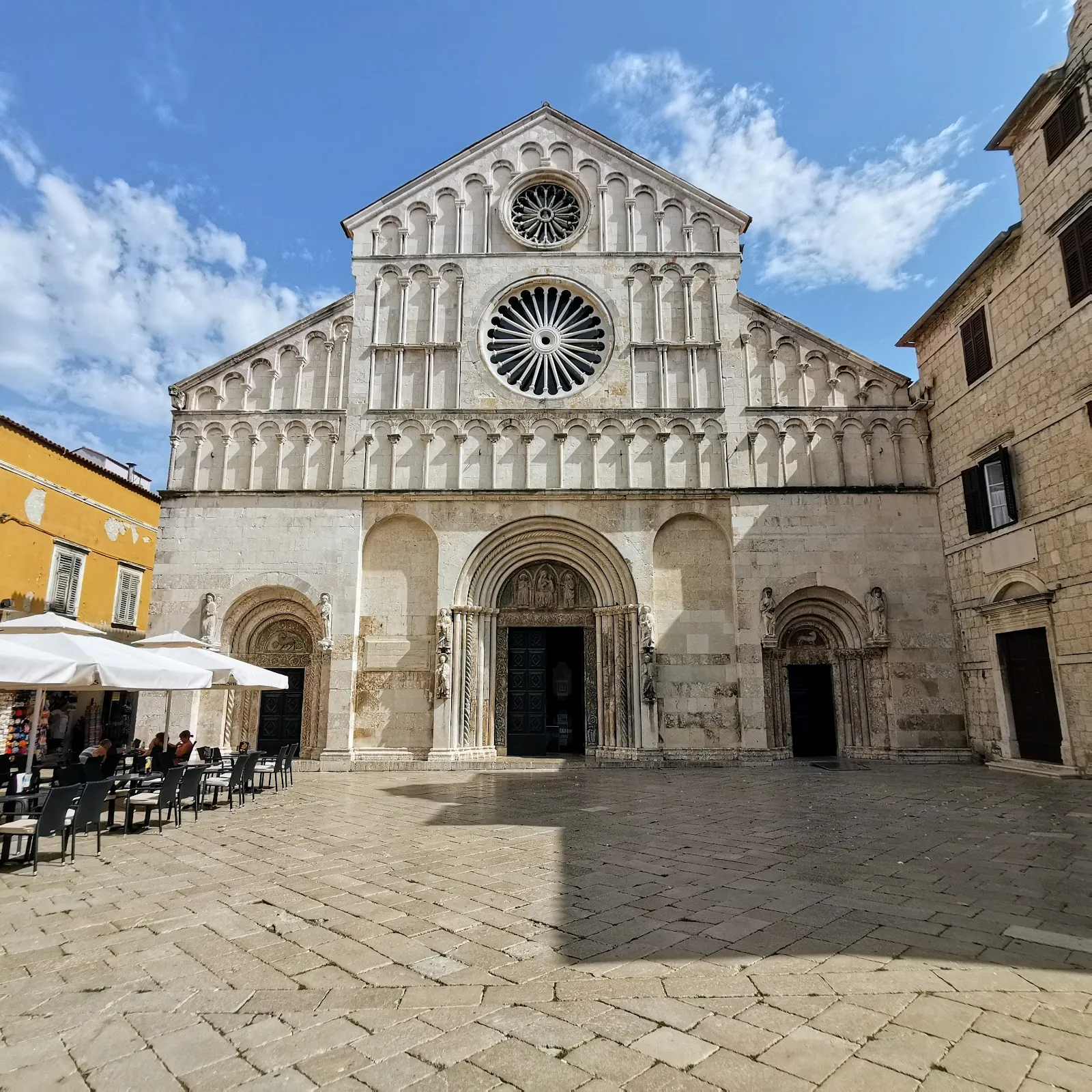
The Sea Organ is at the western end of the Riva, on the tip of the Old Town peninsula and close to the cruise port. From the centre, you walk along the waterfront past the Church of St. Donatus and the Roman Forum before the steps come into view. The site is open at all hours and has no entry fee.
The steps double as a swimming spot, and you can get into the water from them while the pipes sound. Back in the Old Town, Five Wells Square is a short walk away.
FAQ
Is there an entry fee for the Sea Organ?
No. The Sea Organ is a public part of the waterfront, free to visit and open 24 hours a day.
How does the Sea Organ work?
Waves push air through 35 pipes of different sizes built under the marble steps. Whistles on the pipes turn that air into notes. Wave strength and wind decide the sound.
When is the best time to visit the Sea Organ?
Around sunset, when people gather on the steps and the sun goes down over the islands. After dark, the Greeting to the Sun lights up next door. For fewer people, go early in the morning.
Can you swim at the Sea Organ?
Yes, you can get into the water from the steps. When the sea is rough, waves can flood the steps, so choose a calmer moment.
Where is the Sea Organ in Zadar?
It is at the western end of the Riva on the Old Town peninsula, near the cruise port. The Greeting to the Sun is right next to it.