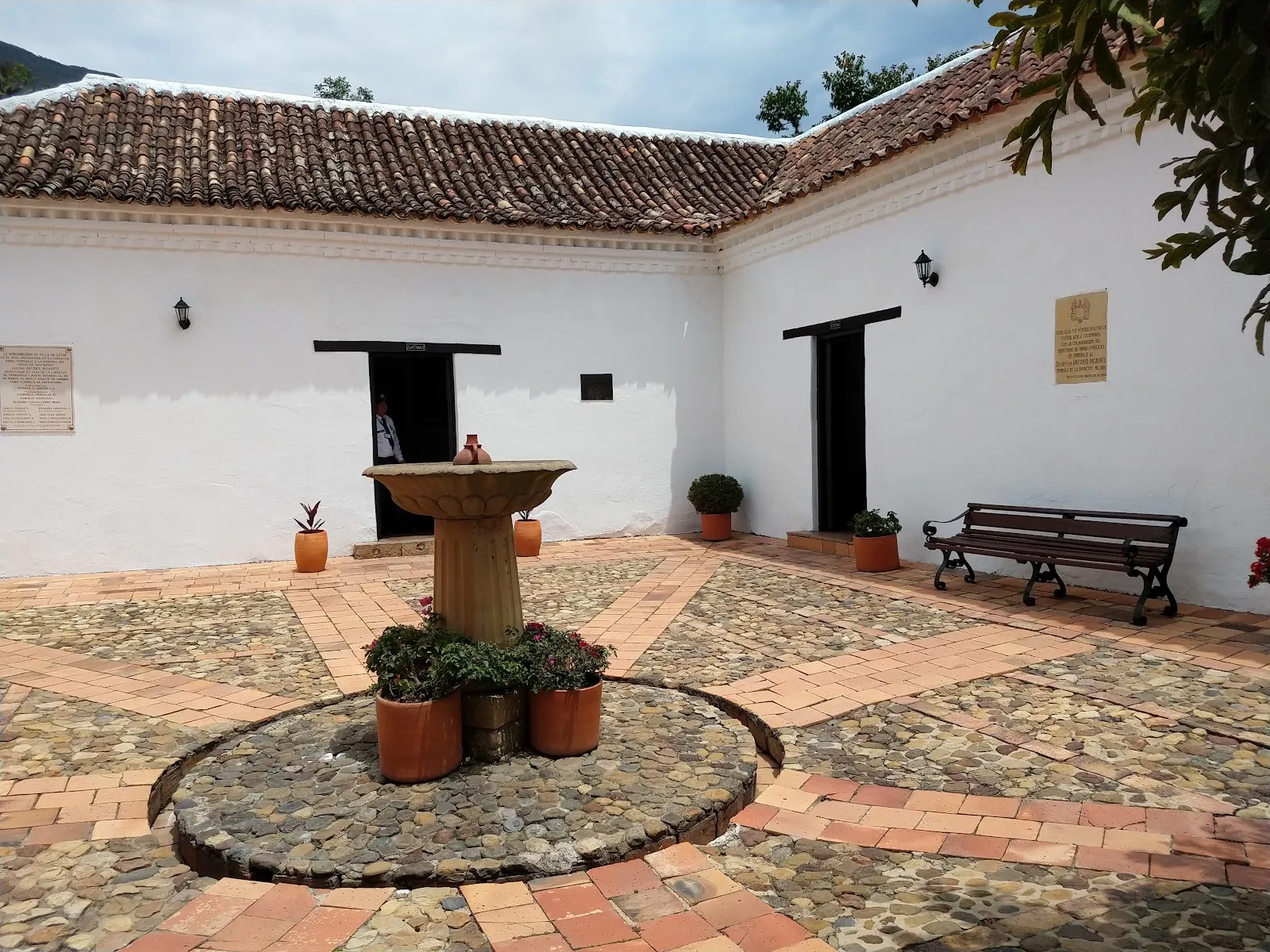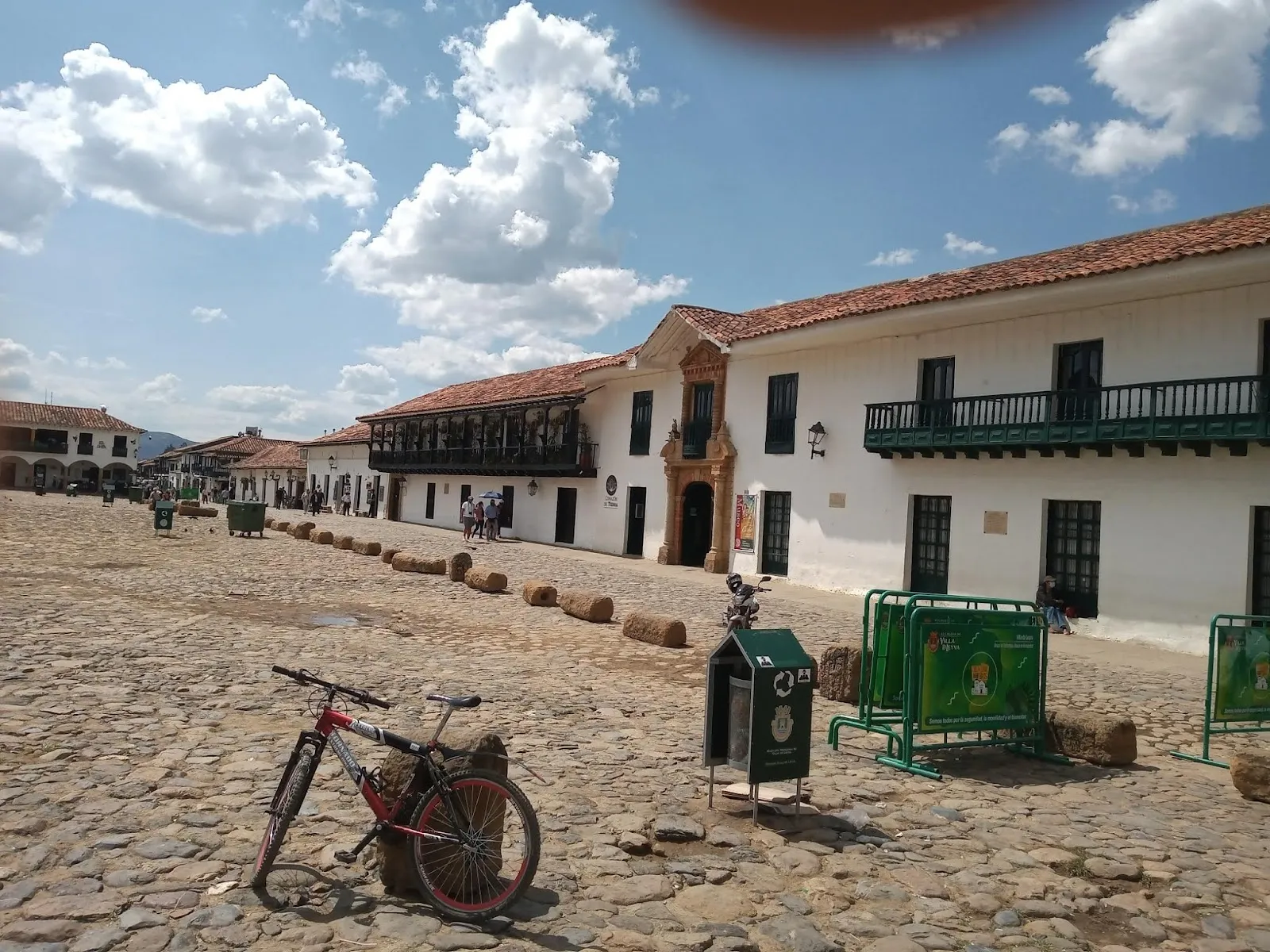
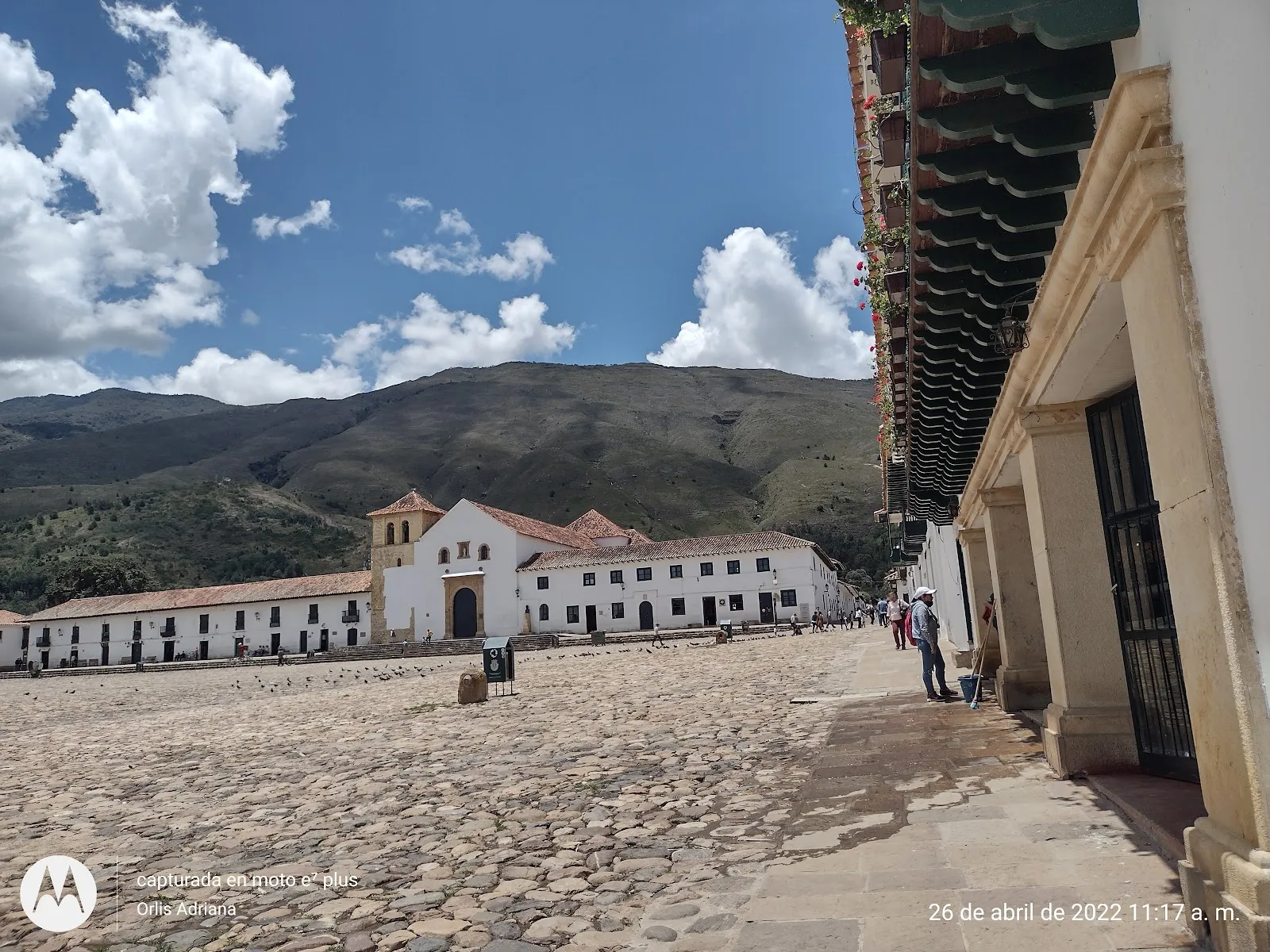
The Plaza Mayor is the central square of Villa de Leyva, a colonial town in Boyacá. Its cobblestone expanse dates to the 16th century and is one of the largest town squares in the Americas. A small fountain stands at the middle, colonial buildings line the sides, and mountains close the view. The parish church faces the square, and restaurants are close by. The square is open at all hours, so it suits a quiet early walk as well as an evening among local families and groups of friends.
A town founded in 1572
Villa de Leyva was founded on 12 June 1572 by Andrés Díaz Venero de Leiva, the first president of the New Kingdom of Granada. The land had been home to the Muisca people before that. Today the town is one of Colombia's Pueblos Patrimonio, the country's heritage towns.
The historic center has seen little major development since its founding, and the Plaza Mayor is the clearest example. The square dates to the 16th century and is paved entirely in cobblestone.
The square and what surrounds it
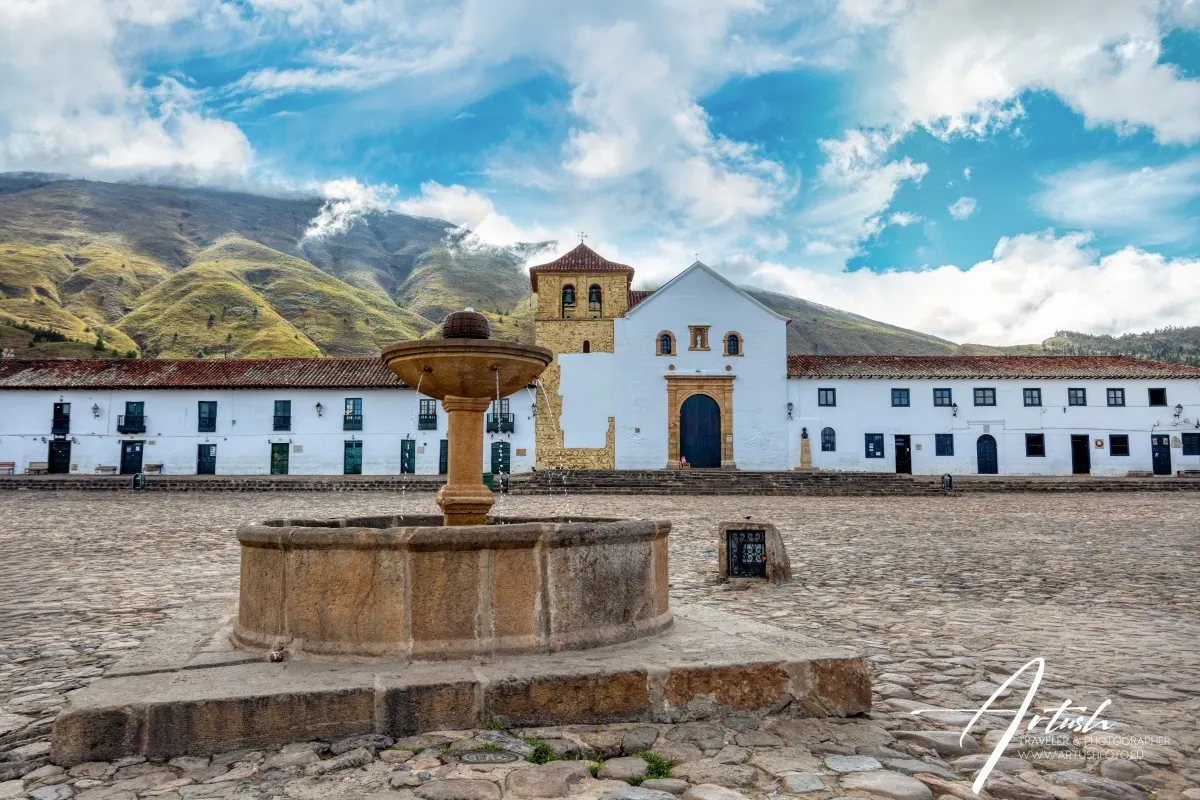
The first thing most people notice is the size. The open cobblestone floor is so wide that the buildings around it seem low, and the mountains behind them add to the sense of space. Colonial-style structures line the streets that lead off the square.
At the center stands a small fountain in Mudejar style. It supplied water to the town, and it is the only structure in the open space, which keeps the view across the square clear.
Restaurants are spread around the square and along the nearby streets. In the afternoon a breeze often crosses the square, and some people compare the feel of it to a beach town.
The parish church
The Iglesia Parroquial stands on the square. It was built in 1604. Inside, a small display of old artifacts is worth a few minutes. As in any active church, keep your voice low and dress modestly when you go in.
Evenings and events
After dark the square changes. On some nights people gather to play music, dance and spend time together, and families bring their pets. You are welcome to watch and take part in the relaxed atmosphere.
The square has also served as a stage for a jazz festival, alongside the San Francisco Cloister. The festival paid tribute to the saxophonist Wayne Shorter and gave Colombian jazz musicians an audience in the open air.
Getting around and nearby sights
Villa de Leyva is compact and best explored on foot, so the square works as a starting point. For sights outside the center, taxis and rental bikes are the usual choices.
Nearby, the Villa de Leyva Archaeological Park is a Muisca site with burial mounds and a solar observatory. Its stones are aligned east to west, in line with the Muisca calendar. The Granja de Avestruces, a 15-minute drive from town, is an animal park where children can feed ostriches and other animals.
FAQ
Is Villa de Leyva Main Square open at night?
Yes. It is an open public square, listed as open 24 hours every day. On some evenings people gather there to play music and dance.
How big is the Plaza Mayor?
It is one of the largest town squares in the Americas, with a cobblestone surface that dates to the 16th century. A small fountain at the center is the only structure in the open space.
Where can I park near the main square?
Use the paid parking lots around the square. Street parking is limited, and weekends are congested.
What is on the square besides the cobblestones?
A small Mudejar fountain stands at the center. The parish church, built in 1604, faces the square, and restaurants are close by.
Is the square good for children?
Yes. It is wide, open and car-free in the paved area. Watch the ground, as broken glass can lie between the cobblestones.