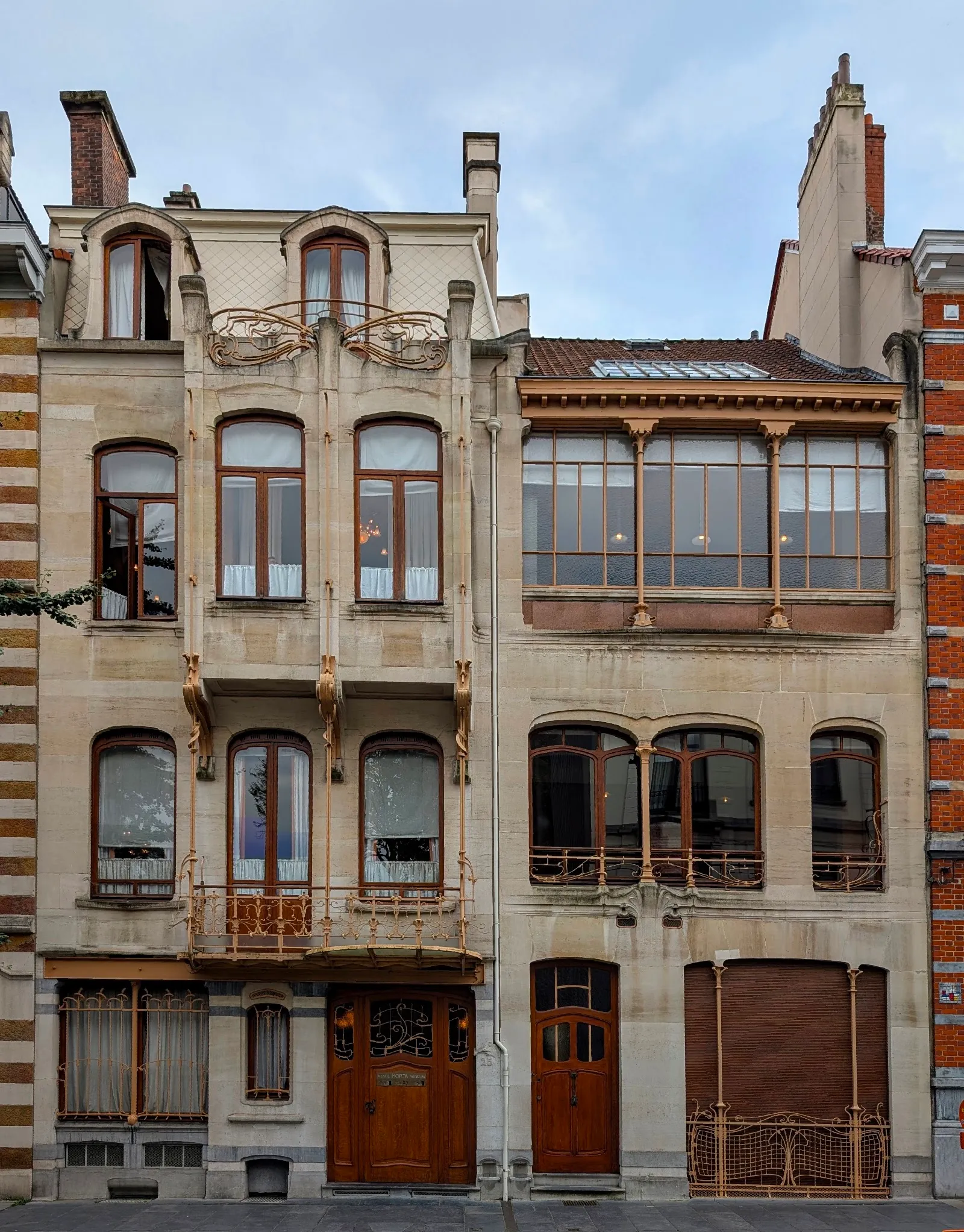
In Brussels’ Saint-Gilles neighbourhood, Musée Horta occupies the former home and studio of architect Victor Horta, designed and built between 1898 and 1901. It is a chance to see Art Nouveau worked through an entire house, from ironwork and wall decoration to the staircase and skylight. Inside, look for the light-filled reception rooms, stained glass, mosaics and the transition from formal entertaining spaces to family rooms upstairs. Treat the visit as a walk through a private home, not a large museum; some areas may be affected by renovation.
A house designed down to the details
Musée Horta brings together the former home and studio of architect Victor Horta in Brussels’ Saint-Gilles neighbourhood. He designed the buildings for himself, and construction was completed in 1901. The house is a way to see how he applied Art Nouveau throughout a lived-in space, rather than only in individual objects or decorative features.
Horta’s approach reaches from the larger arrangement of rooms to details such as door fittings and wall decoration. Ironwork bends into flowing forms, while natural light and interior finishes work together across the house. The exterior gives less away than the rooms inside, so the design becomes clearer as you move through the building.
Follow the staircase and the changing rooms
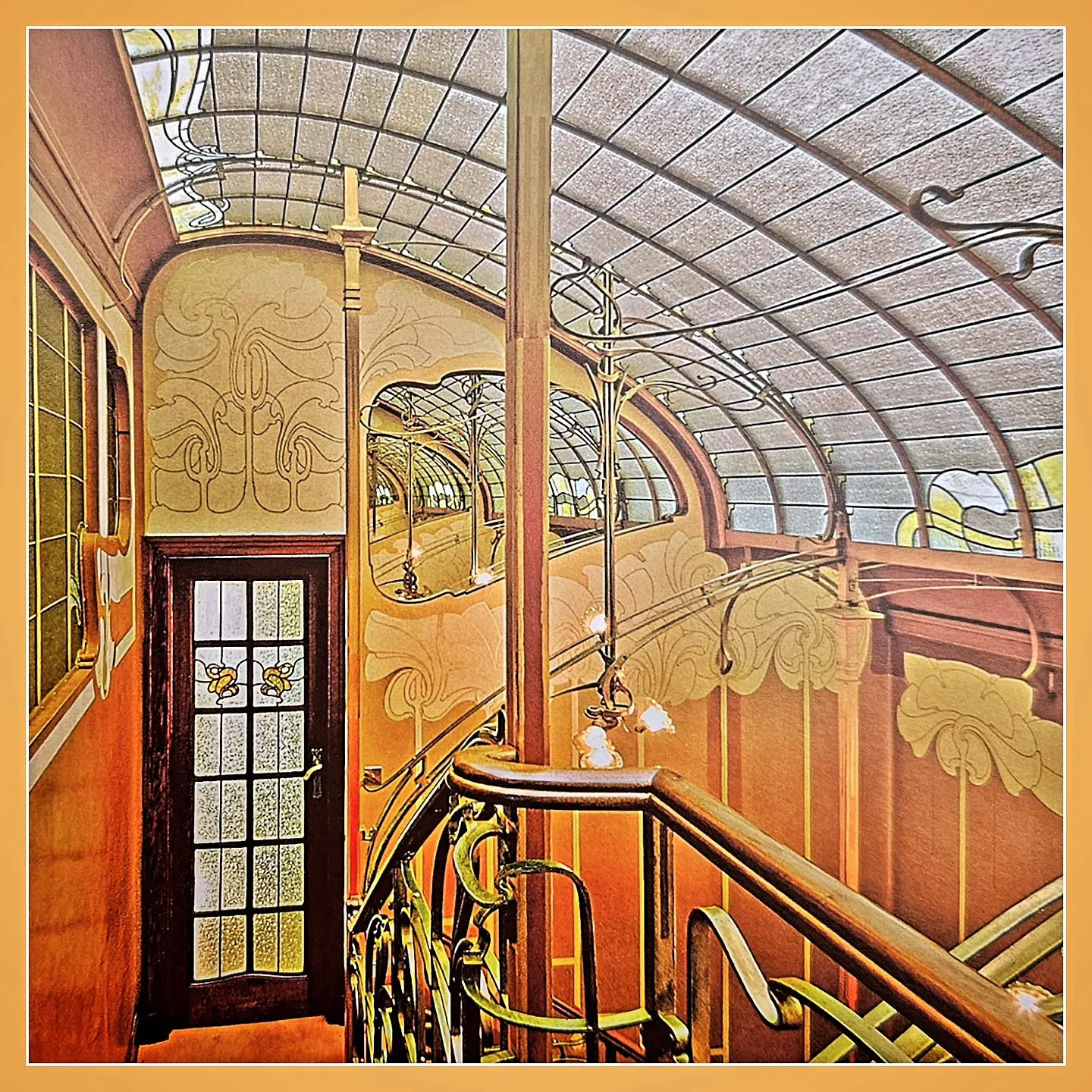
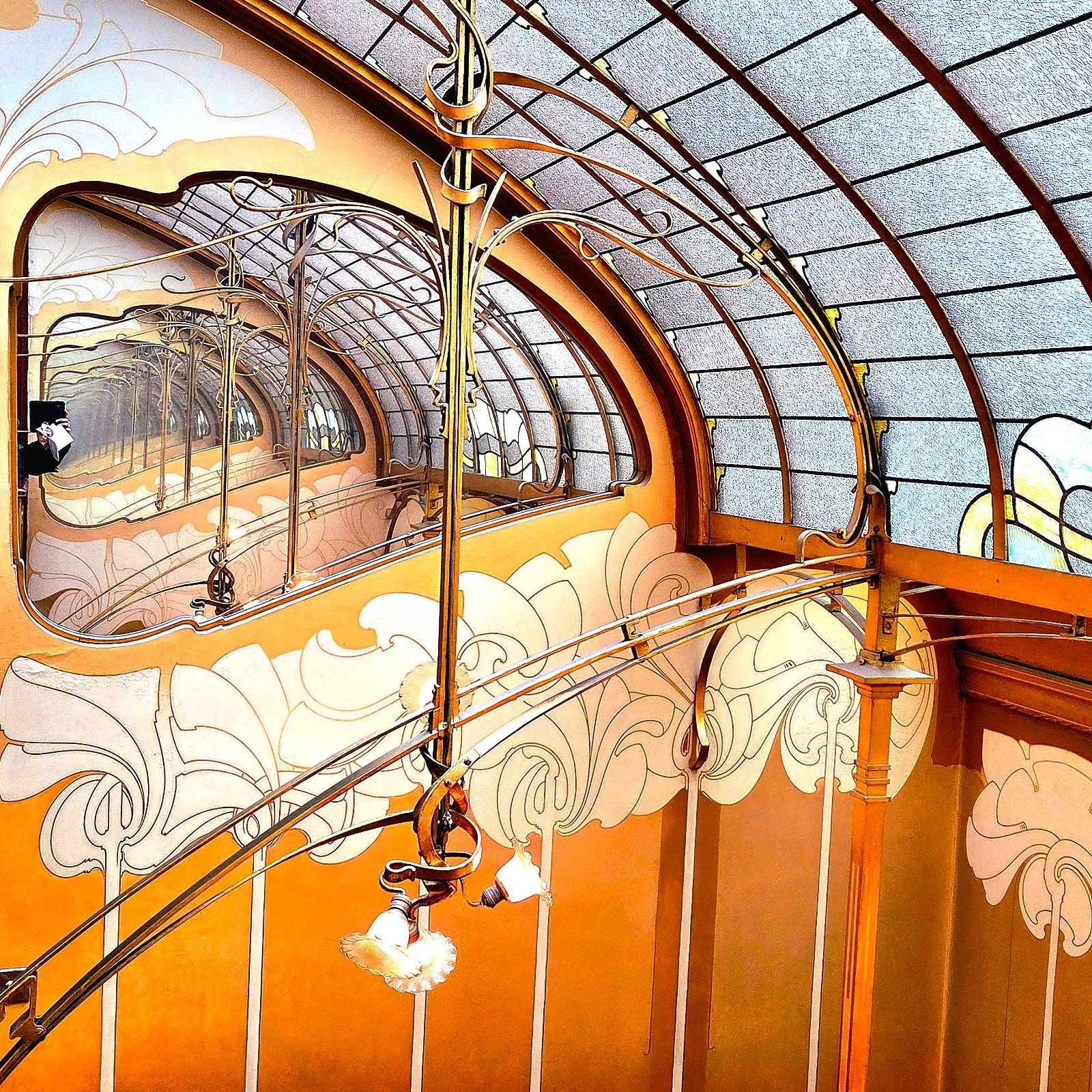
The staircase is a central point of the visit. It rises through the house beneath a skylight, bringing daylight into the interior. Look at the iron banister as it curves upwards and at the coloured glass above. The staircase links the spacious reception rooms with the more private floors, making the layout part of the architectural experience.
The lower rooms were arranged for receiving visitors. Higher up, the spaces shift towards family life, with a boudoir, a family room and bedrooms. Horta’s wife and daughter lived here, and the house also had rooms for visiting friends. Servants’ quarters were in the attic. Together, these rooms give a sense of how the home was organised around both work and domestic life.
A close look at Art Nouveau
Mosaics, stained glass and wall decoration remain part of the interior. Notice how the ironwork’s curves relate to the forms used elsewhere in the house: the design is carried through the rooms rather than confined to one feature. The house and studio are considered important examples of Art Nouveau in Brussels and are listed by UNESCO.
The rooms are still a home’s rooms in scale and purpose, not a series of vast galleries. Take your time with the transitions between them and with the fittings and finishes that Horta designed as part of the architecture. That approach suits the visit better than expecting a large collection of separate objects.
Access to parts of the museum can be affected by renovation work. Check current conditions before setting out, especially if seeing a particular room is important to you. Photography is prohibited inside the house, so plan to look closely while you are there.
FAQ
How long does a visit to Musée Horta take?
Allow about 30 to 60 minutes to see the house and studio.
Should I book Musée Horta tickets in advance?
Yes. Reservations in advance are recommended.
Can you take photos inside Musée Horta?
No. Photography is not allowed inside the house.
Is Musée Horta affected by renovation work?
Renovation work has affected access to some areas. Check current conditions before your visit.