Ahsan Manzil is a pink palace on the Buriganga River in Old Dhaka. It was the residence of the Nawabs of Dhaka and is now a museum under the Bangladesh National Museum. The building is in Indo-Saracenic style, with a large dome and a wide staircase that blends Mughal, European and local design. Inside, 23 rooms hold furniture, portraits, silver, weapons and relics from the Nawab era. It is a clear way to see the aristocratic past of the city.
From construction to restoration
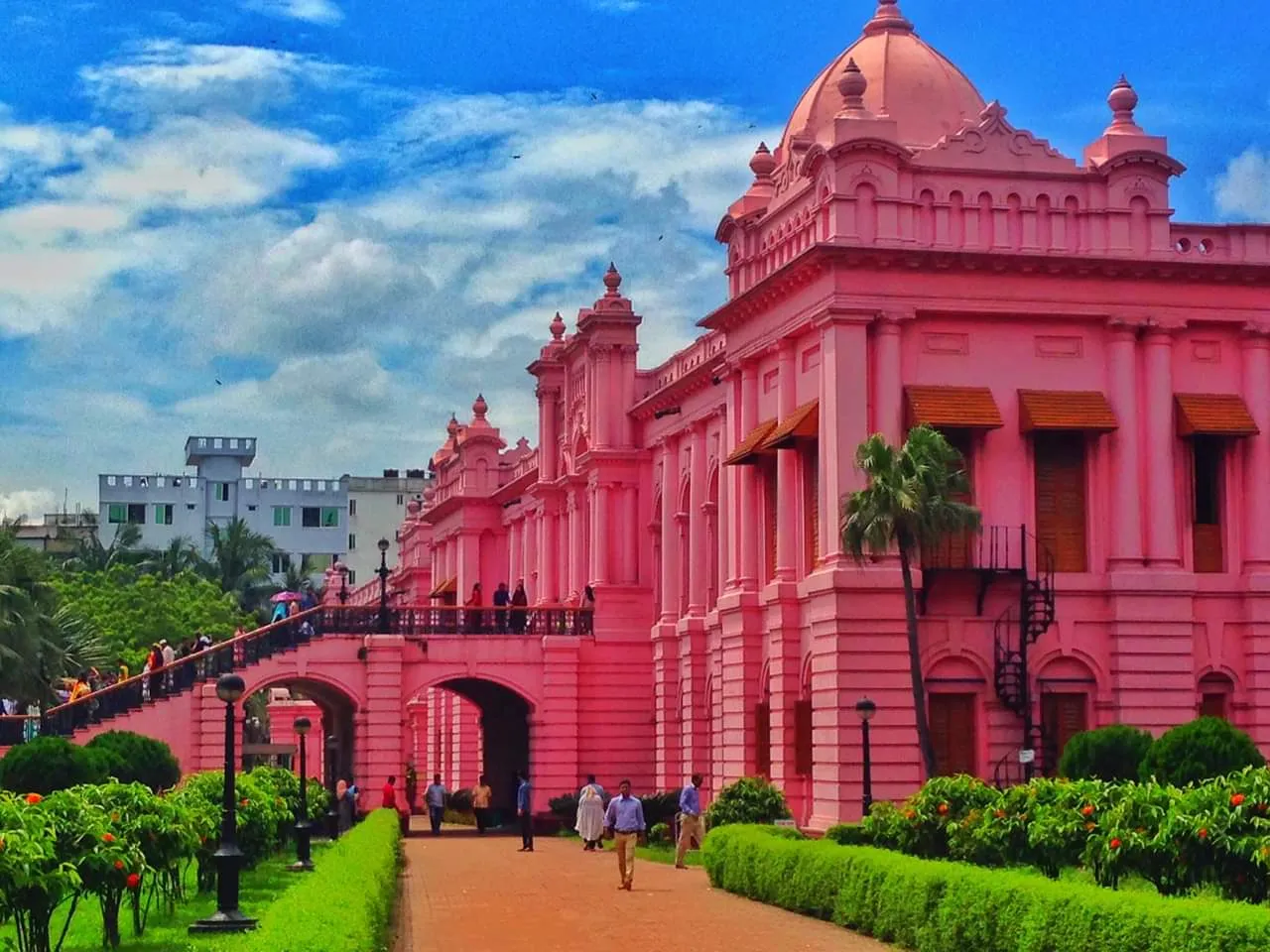
Ahsan Manzil stands in Kumartoli, on the banks of the Buriganga River in Old Dhaka. Construction began in 1859 and was finished in 1872 under Nawab Abdul Ghani. The palace takes its name from Khwaja Ahsanullah, his son.
The palace was the residence of the Nawab family in the 19th century and the official seat of the Nawab of Dhaka. A tornado in 1888 damaged the building, which was later repaired. After independence, the Nawab's successors could not maintain the palace, and it fell into neglect until the government began restoration work in the late 20th century.
Architecture and the grounds
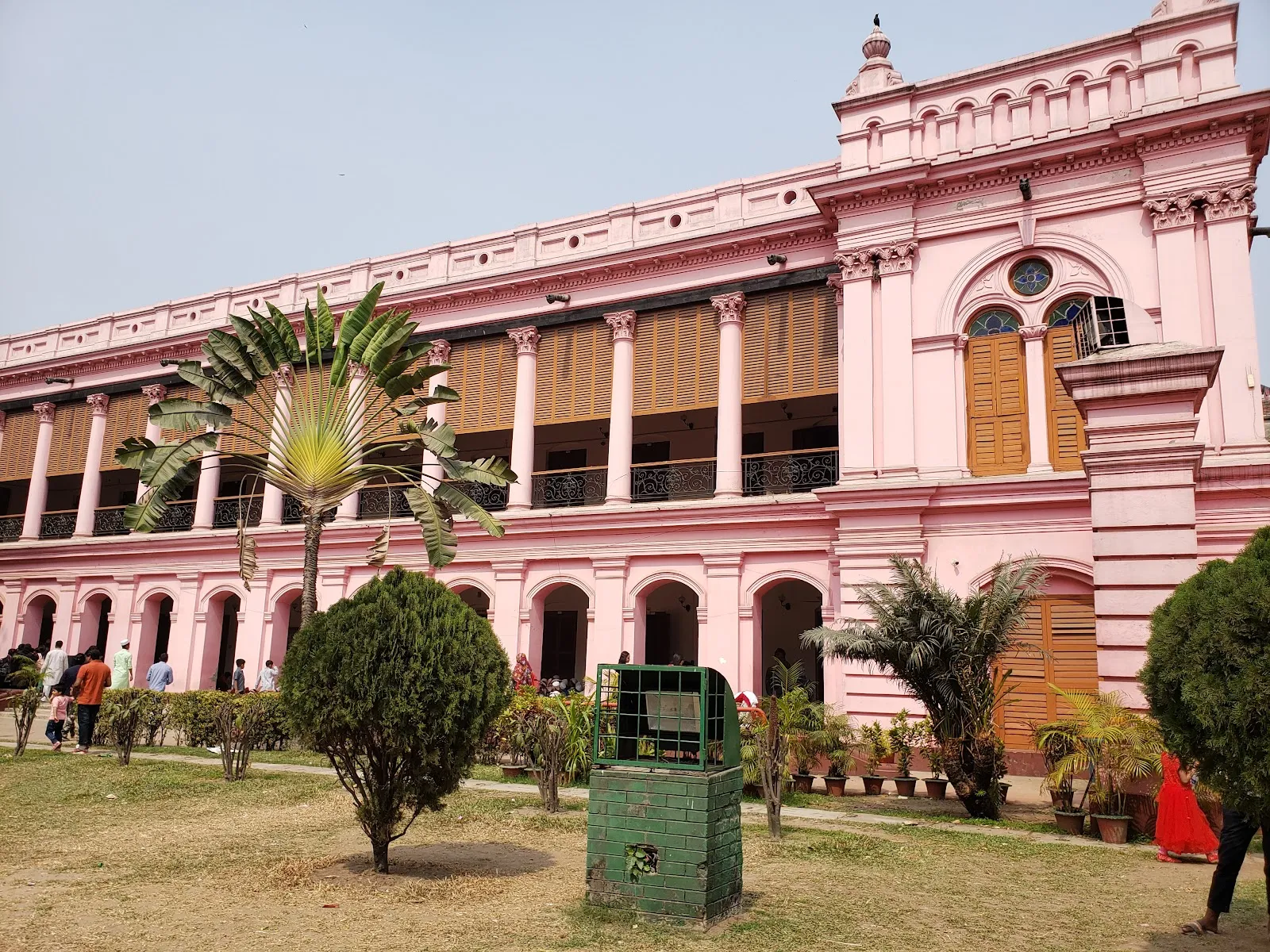
The building follows the Indo-Saracenic style, which blends Mughal, European and local design elements. The main structure sits on a platform about one metre high, reached by a flight of stairs. Its most distinctive feature is the large pink dome on the roof.
A very wide staircase runs from the front lawn up to the second floor. The grounds include a garden with grass and flowers, and the riverside setting adds a breeze to the visit.
Inside the galleries
The museum shows 4,077 artifacts across 23 rooms. The displays cover the history of the palace, the family tree of the Nawabs and examples of the family's social service work. You will see large mirrors, iron chests, wooden cupboards, dining and drawing rooms, glass and porcelain dishes, shields and swords, decorated silver, crystal chairs and tables, thrones and oil paintings.
Portraits of notable people from the period hang among these pieces. Rooms set up as Hindustani rooms and dance halls for royal guests show how the household entertained. Bookshelves hold works on literature, religion and law. The household objects include Persian style pieces and Victorian era European items. Near the entrance, a large elephant skull is on display. It is the skull of Nawab Abdul Ghani's favourite elephant.
Planning a visit
Entry is charged, and tickets can be booked in advance through the official ticket website. The site has a restaurant and a small snack shop, prayer areas and washrooms. The entrance, elevator, restroom and parking lot are wheelchair accessible.
Weekdays give the most room to explore. Fridays and weekends draw many visitors, and some come mainly for photos and short videos. Allow time to read the displays and walk through the garden, which is one of the most pleasant parts of the site.
FAQ
Is there an entry fee?
Yes, entry is charged. Tickets can be booked in advance through the official ticket website, which is recommended.
Is Ahsan Manzil open every day?
It is closed on Thursdays. Saturday hours are shorter than on the other open days.
Is Ahsan Manzil accessible for wheelchairs?
Yes. The entrance, elevator, restroom and parking lot are wheelchair accessible.
When is the least crowded time to visit?
Weekdays are the quietest. Fridays and weekends are crowded, with many visitors coming for photos.
Is Ahsan Manzil suitable for children?
Yes, the site is good for kids, and families visit to learn about the country's heritage.