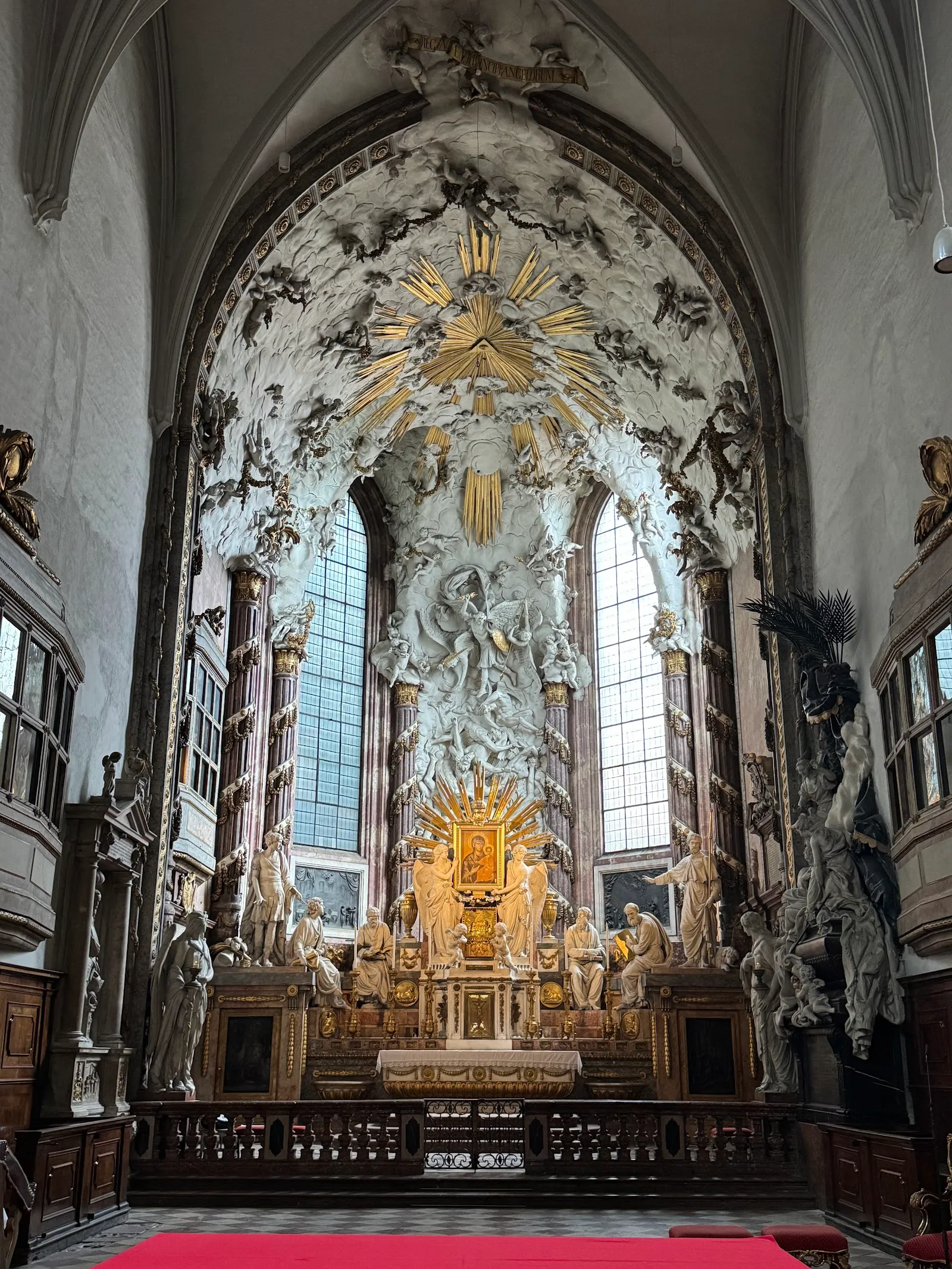
At Michaelerplatz 5, beside the Hofburg, St. Michael’s Church brings together Romanesque, Gothic and Baroque details in one of Vienna’s oldest churches. Step inside to see the ribbed Gothic nave, decorated pulpit, ornate organ and late-Baroque altar. The church also has a crypt with burial chambers and preserved mummies, which can be visited on a tour. Its long connection to the imperial court and Mozart’s funeral service gives the building a place in Vienna’s history as well as its architecture.
A church beside the Hofburg
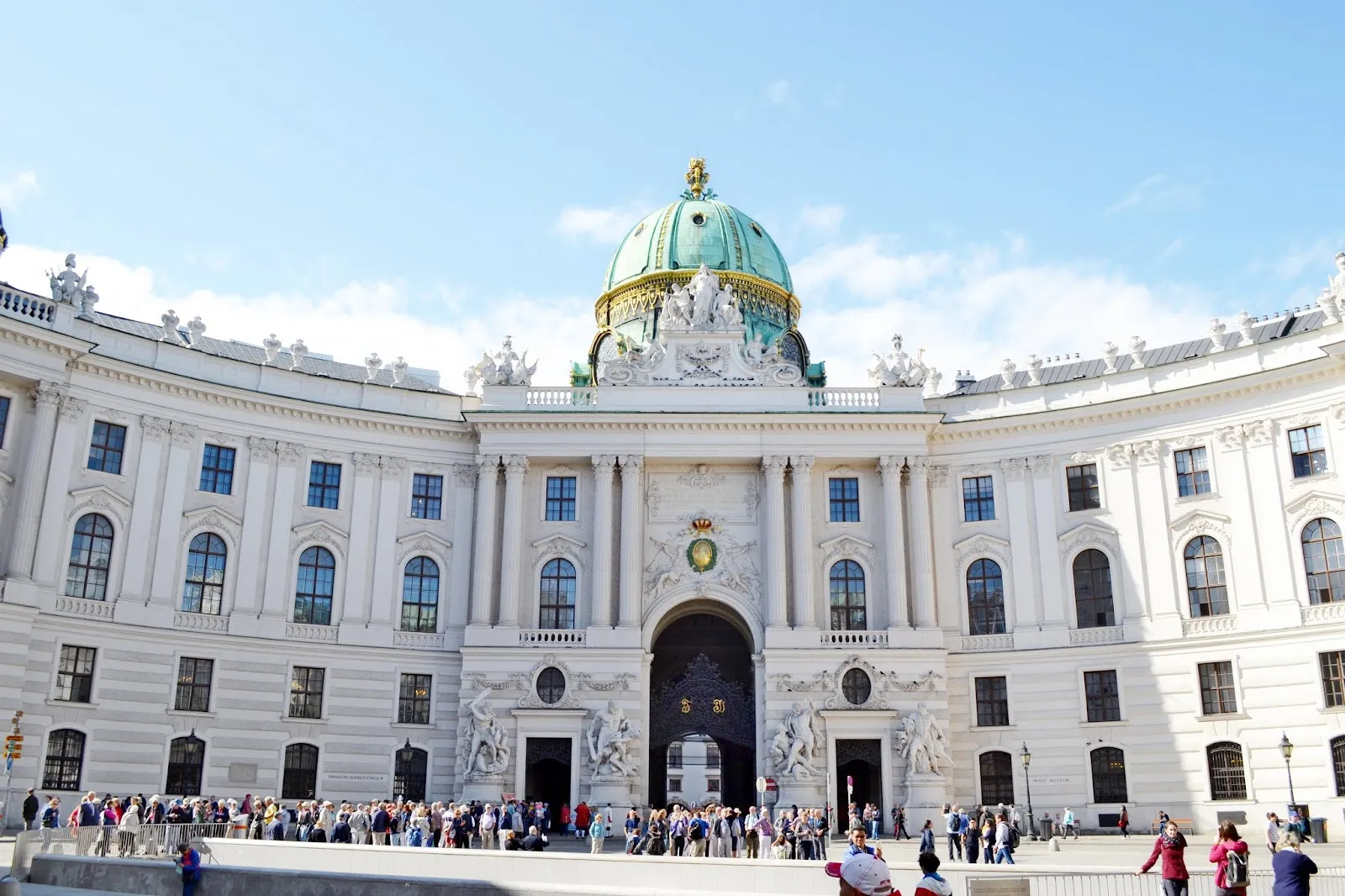
St. Michael’s Church stands on Michaelerplatz, opposite the Hofburg’s Michaelertor. The square brings together buildings from different periods, and the church is its oldest structure. Its history reaches back to the first half of the 13th century. By 1288, it was one of Vienna’s city parish churches.
The church later served as the Hofburg’s court parish church. That role changed in 1784, but the building remains closely tied to the religious life of the imperial court. It was one of the Habsburg family’s parish churches, after the Augustinerkirche.
The church’s exterior does not reveal all of its age. A Neoclassical entrance was added in 1792, while a tall, polygonal Gothic bell tower dates from the 16th century. Above the entrance, a sculptural group shows winged angels and St. Michael overcoming Lucifer. The work dates to 1725.
Layers of architecture inside
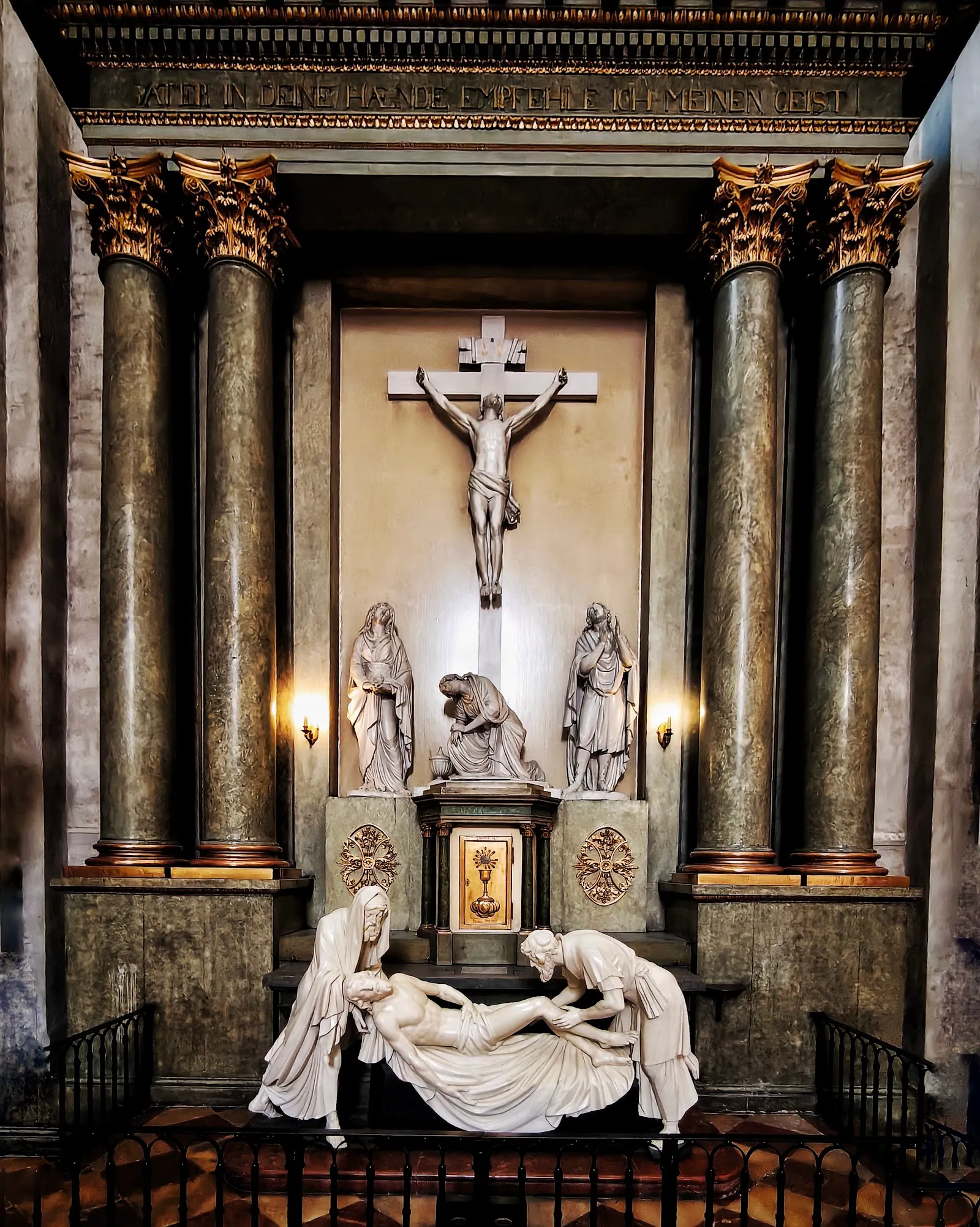
The interior combines Romanesque, Gothic and Baroque elements. The Gothic nave has ribbed vaulting, with arches and stone vaults that date from the medieval period through the end of the 14th century. Later changes brought Baroque decoration into the church.
At the eastern end, the late-Baroque altar dates to 1781. Look for its gilded details, then take in the decorated pulpit and the pipe organ. The Sieber Organ, built in 1714, is described as Vienna’s largest Baroque organ. The church’s Saturday “Orgel um 8” programme, held during the warmer months, pairs a half-hour organ concert with a tour of the organ gallery. Explanations are given in German and English.
Marble tombstones set into the floors and walls mark the burials of aristocratic families, including the Liechtensteins. These memorials form part of the church’s interior, alongside its religious art and furnishings.
The crypt and Mozart’s funeral
Beneath the church, the Michaelergruft contains burial chambers and remains from the period between 1631 and 1784. Around 4,000 people were buried in the crypt. Its particular climatic conditions helped preserve some bodies, which can be seen during a crypt tour. Check whether a tour is available before planning your visit.
St. Michael’s also has a musical connection to Wolfgang Amadeus Mozart. Parts of his Requiem were performed in the church during his funeral service in 1791. Concerts continue to take place here, so check the church’s website for current programme details.
FAQ
Where is St. Michael’s Church in Vienna?
It is at Michaelerplatz 5, opposite the Hofburg’s Michaelertor.
Can you visit the crypt at St. Michael’s Church?
The Michaelergruft can be visited on a tour. Check whether tours are available when you plan to go.
What is the connection between St. Michael’s Church and Mozart?
Parts of Mozart’s Requiem were performed here during his funeral service in 1791.
Does St. Michael’s Church host organ concerts?
A Saturday programme called “Orgel um 8” runs during the warmer months. It includes a half-hour organ concert and a tour of the organ gallery.