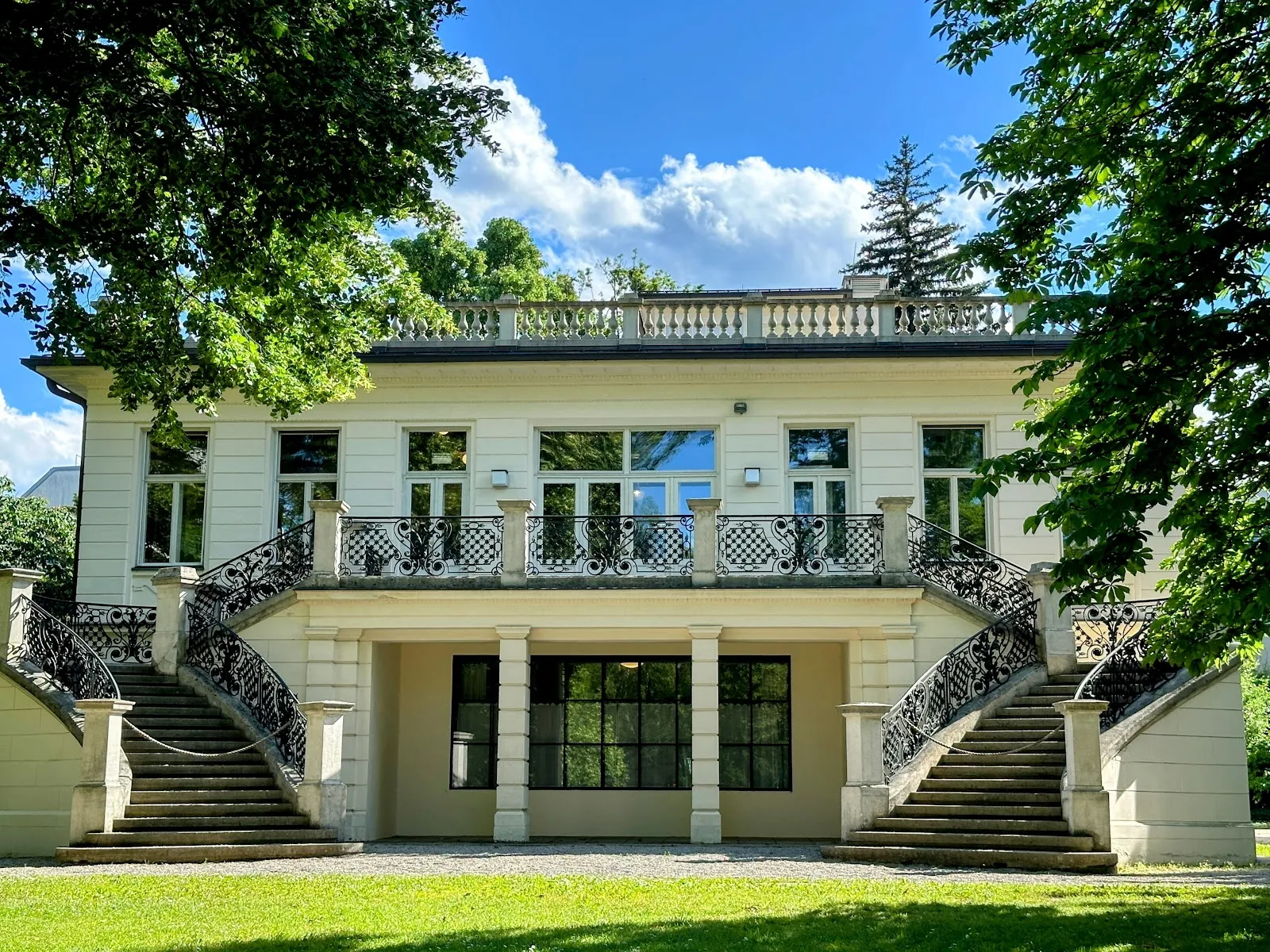
Klimt-Villa, at Feldmühlgasse 11 in Vienna’s Hietzing district, preserves the studio where Gustav Klimt worked from 1911 until his death in 1918. You can step into the studio and see recreated furnishings that suggest how the rooms were arranged; few original objects or Klimt paintings are on display. Exhibitions also trace the fate of works taken from their owners, including members of the Jewish community, and the ongoing research into their provenance. It’s a focused stop for Klimt admirers and anyone interested in the history of his collections.
Klimt’s final studio in Hietzing
Klimt used the studio at this site from 1911 until his death in 1918. The villa now standing here was built around the surviving studio, preserving the place where he worked. It is a place to encounter the setting of his final years, not a gallery devoted to displaying his paintings.
The studio is the central reason to visit. Furnishings have been recreated to give an idea of how the rooms looked in Klimt’s time. The objects are not all originals, and the museum has few original items on display. If you are mainly seeking a large collection of Klimt’s paintings, this is not the right stop for that purpose.
The people behind the paintings
The exhibitions also look beyond Klimt’s working life to the people who commissioned and owned his work. Many of his clients came from Vienna’s Jewish community. During the Nazi era, paintings and other property were taken from their owners, and the villa’s displays address what happened to those collections.
Provenance research and restitution work continue for many artworks. This part of the visit gives the studio a wider context: it connects Klimt’s patrons and their collections with the later history of the works. The emphasis is on tracing ownership and loss, not on presenting a room full of original paintings.
Tours and what to expect
The daily guided tour can add detail about the studio, Klimt’s patrons and his personal life. German is the language to check for; ask the venue whether an English tour is available. An audio tour is also available.
Exhibition text in English is present, but it can take effort to read because it is printed on transparent glass against light backgrounds. Allow time to look closely and follow the material at your own pace. The visit is compact in scale, with a small garden and a museum shop where you can find postcards. An onsite restaurant is listed among the venue’s amenities.
FAQ
Did Gustav Klimt live at Klimt-Villa?
Klimt used the studio at the site from 1911 until his death in 1918. He did not live in the villa that stands there now.
Can you see Klimt paintings at Klimt-Villa?
There are few original items on display, and most of the paintings shown are copies. The main draw is the surviving studio and the exhibitions about the history of Klimt’s works.
Are guided tours available in English?
A daily guided tour is available, but English availability is not confirmed. Ask the venue before your visit; an audio tour is also available.
What does Klimt-Villa cover besides the studio?
Exhibitions explore Klimt’s patrons, the fate of works taken from their owners during the Nazi era, and ongoing provenance research and restitution.