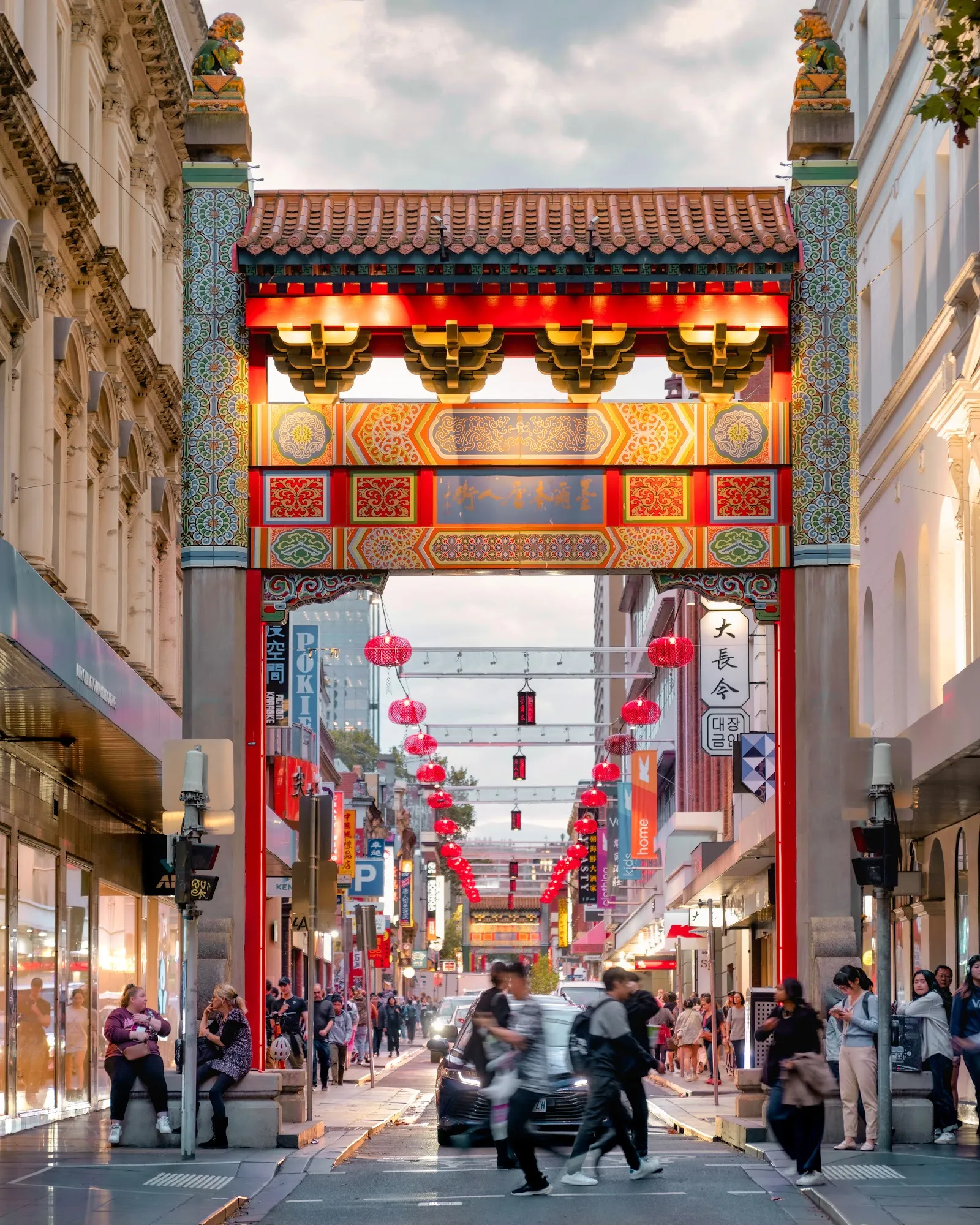
Melbourne’s Chinatown runs along Little Bourke Street in the CBD and traces its history to the gold rushes of the 1850s. Traditional gateways, red lanterns, historic buildings and narrow laneways give the precinct plenty to look at between meals. Come for dumplings, noodles, roast meats, hotpot or yum cha, then browse Asian grocery stores and small shops. The area is especially lively in the evening and during festivals. For more on Chinese-Australian history, add the Chinese Museum to your visit.
A gold rush history on Little Bourke Street
Melbourne’s Chinatown grew from the gold rushes of the 1850s, when Chinese prospectors came to Victoria in search of gold. Chinese settlers began forming a community in the city centre, and Little Bourke Street became its focal point. The precinct is recognised as the oldest continuously inhabited Chinese settlement in the Western world and the oldest Chinatown in the Southern Hemisphere.
Today, the area remains centred on Little Bourke Street in Melbourne’s CBD. Its history is visible in the traditional gateways and older buildings, alongside restaurants and shops that have changed with the city. The Chinese Museum is a useful stop if you want to explore Chinese immigration history in Australia in more depth; admission is charged.
Gateways, lanterns and laneways
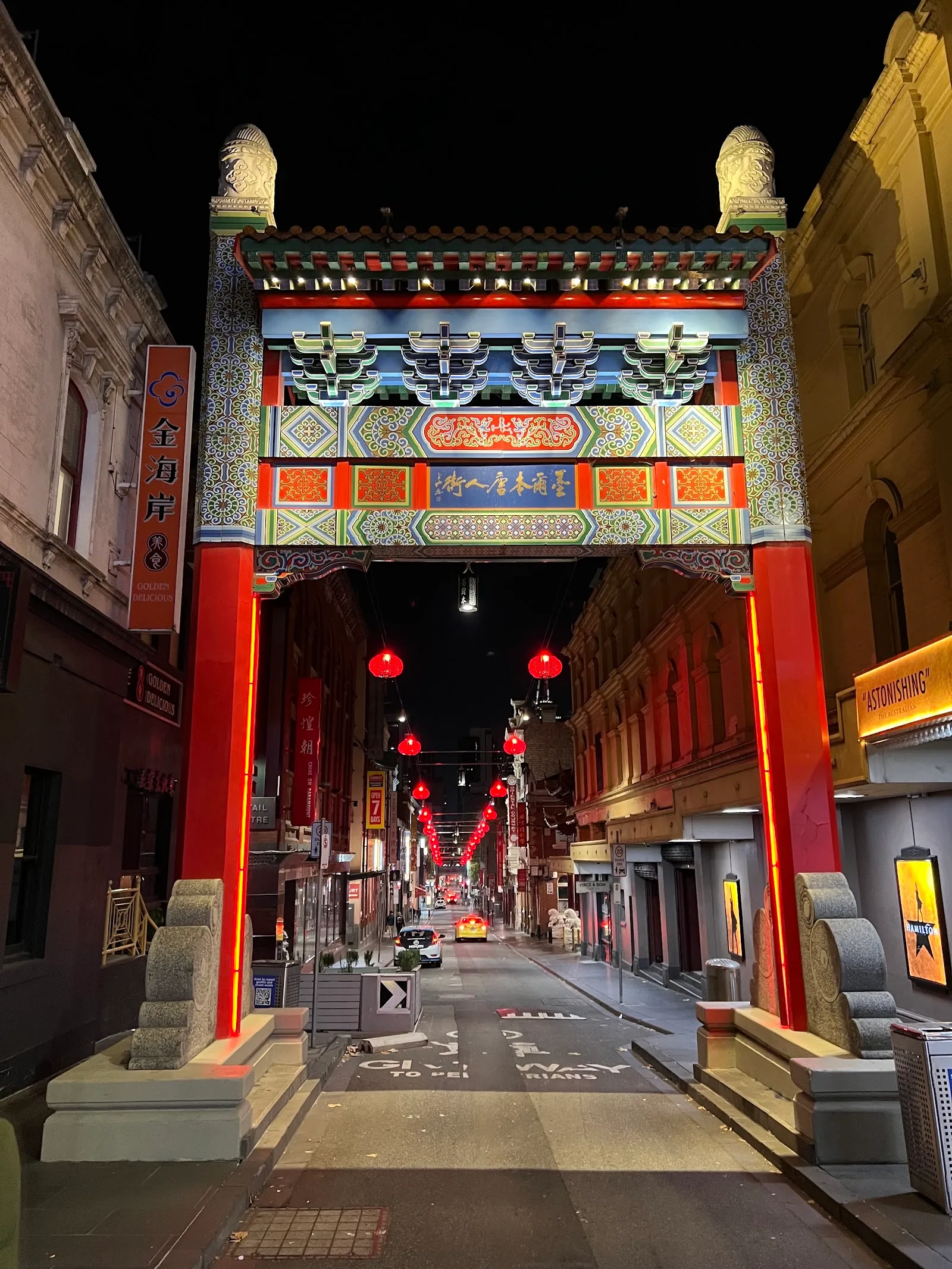
The gateways mark entrances to the historic precinct. The largest, the Facing Heaven Archway, stands at the corner of Little Bourke Street and Cohen Street. Red lanterns hang along the street, and traditional architectural details sit alongside urban street art. Narrow lanes branch away from the main strip, with shops, cafes and bars among the places to explore.
A walk through the area can be as simple as following Little Bourke Street and turning into the side lanes when something catches your eye. The precinct extends across several city blocks, with connections towards Bourke Street and Lonsdale Street. Look out for the Chinese Mission Church, also known as the Uniting Church Gospel Hall, noted for its historic architecture.
What to eat and when to visit
Food is a central reason to spend time in Chinatown. Restaurants serve Chinese and other Asian cuisines, with options ranging from dumplings and noodles to roast meats, hotpot and yum cha. You will also find cafes, bars and takeaway food, so the area works for a sit-down meal or a more casual stop. Menus and budgets vary across the precinct; if you have a particular restaurant in mind, check its details before you go.
Evenings bring the lanterns into view and the streets become livelier. The area also hosts Chinese New Year celebrations, with events including food, live music, street performers and a lion dance. Festival activity can make a visit more eventful, while a regular evening is a good time to combine a walk through the lanes with dinner.
FAQ
Where is Melbourne’s Chinatown?
It is centred on Little Bourke Street in Melbourne’s CBD.
When was Melbourne’s Chinatown established?
The community dates back to the Victorian gold rushes of the 1850s.
What can you eat in Chinatown Melbourne?
Restaurants serve Chinese and other Asian food, including dumplings, noodles, roast meats, hotpot and yum cha.
Is there a museum in Chinatown Melbourne?
Yes. The Chinese Museum covers Chinese immigration history in Australia, and admission is charged.