On the University of Texas at Austin campus, the Texas Science & Natural History Museum traces Texas life from ancient seas to present-day wildlife. Its four floors include dinosaur fossils, the Onion Creek Mosasaur, the giant Quetzalcoatlus overhead, minerals and displays of native animals. Hands-on activities and scavenger hunts give children a way to explore as they go, while the museum’s manageable size suits a family outing without taking up the whole day. Admission is listed at $10 for adults and $6 for youths, students and seniors; children four and under enter free.
Texas natural history on the UT campus
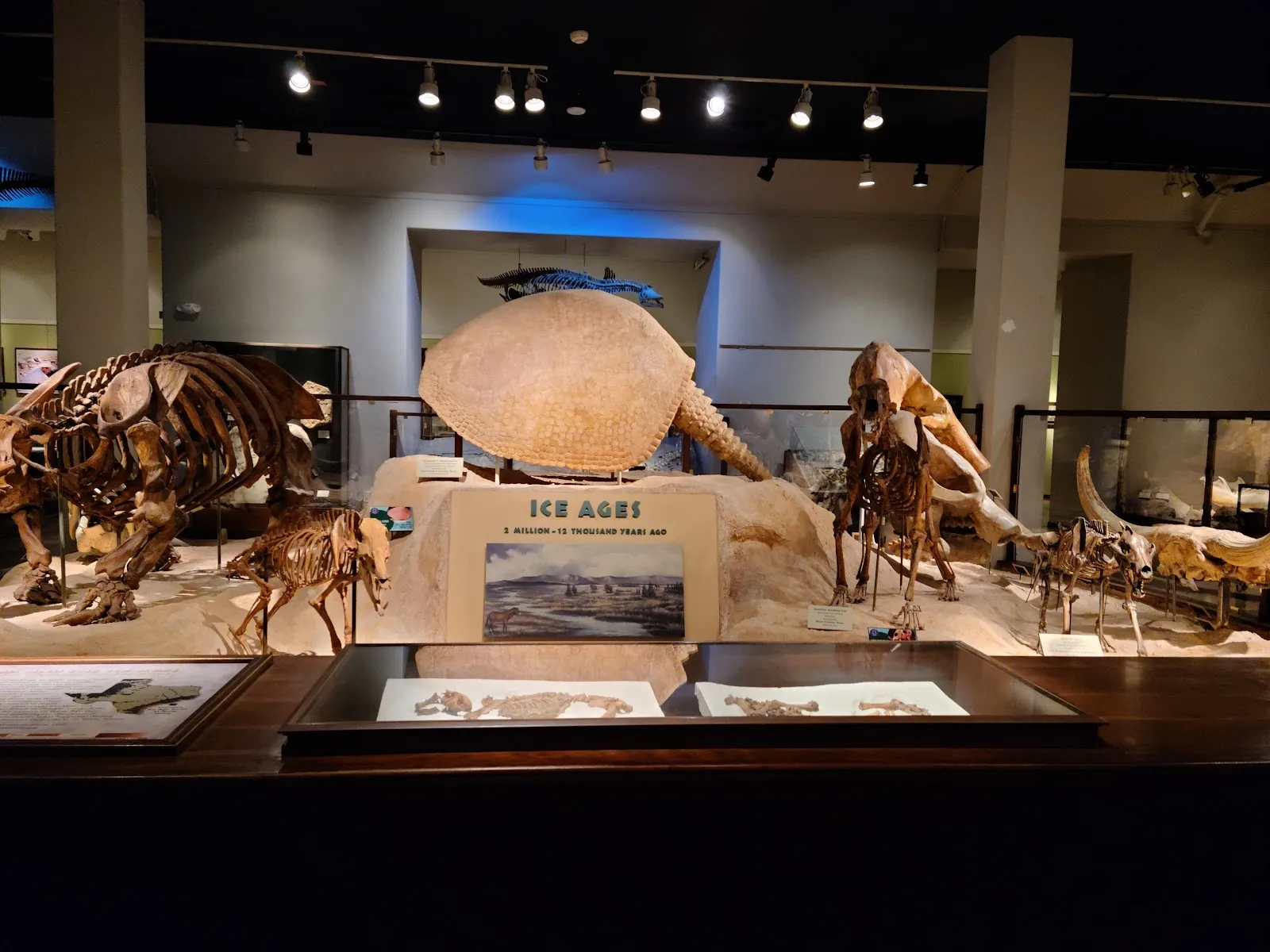
The museum is at 2400 Trinity Street on the University of Texas at Austin campus. Formerly called the Texas Memorial Museum, it opened in 1939 as Austin’s first science museum. Its collections cover the state’s geology, paleontology and wildlife, with specimens gathered through university fieldwork as well as occasional public donations.
The museum’s scope runs from the formation of Earth and prehistoric life to modern scientific discoveries. Across four floors, displays bring together fossils, minerals, meteorites, gems and Texas wildlife. The museum has undergone a major renovation and now uses its current name to reflect its focus on science and natural history.
Dinosaurs, fossils and ancient seas
The large fossil displays include the Onion Creek Mosasaur, an aquatic reptile around 30 feet long that lived in the shallow seas covering Texas during the Cretaceous Period. Look up in the Great Hall for the Quetzalcoatlus, a Texas pterosaur with an enormous wingspan. Other displays include dinosaur specimens and life-sized models that help put the fossils in context.
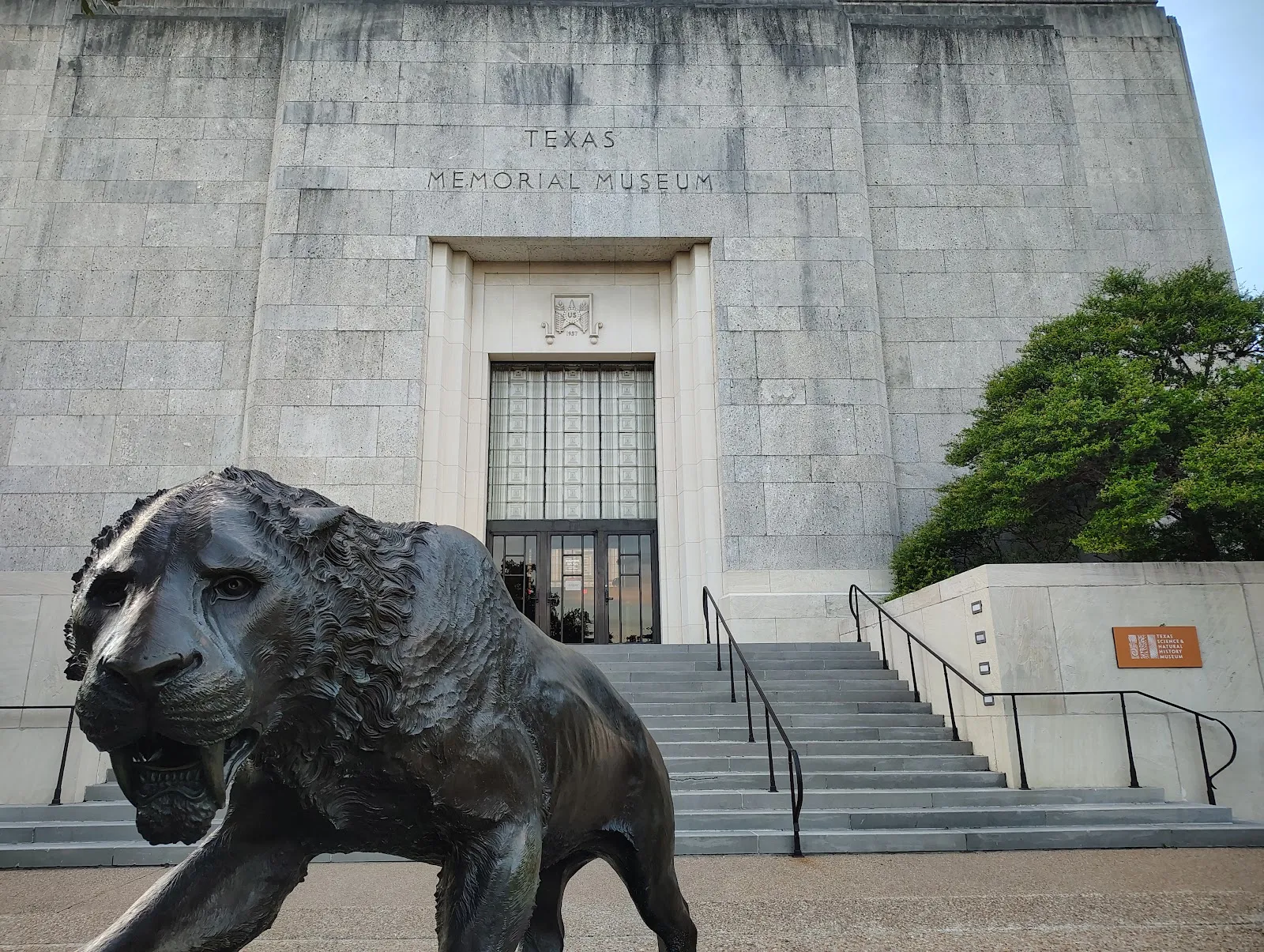
Paleontology is only part of the collection. Exhibits also include ancient mammals, minerals and gems, and wildlife from across Texas. A bat exhibit and displays of native animals add more recent life to the journey through the state’s natural history. Exhibitions change, so the fossils and other specimens on view may vary.
A visit with children
Hands-on exhibits and scavenger hunts give children ways to engage with the displays beyond reading labels. The museum’s size makes it a practical indoor stop for families who want to see several floors of exhibits without planning a full-day visit. Staff are available to help with questions about what is on display.
Admission is listed as $10 for adults and $6 for youths aged five to 17, seniors aged 65 and over, and students with identification. Children four and under enter free; a reduced Museums for All rate is also listed. Community Day admission is free, but check the museum’s current details before planning around it. Parking is available near the museum, including a garage next door; parking arrangements can depend on the day, so confirm what applies when you arrive.
Häufige Fragen
Where is the Texas Science & Natural History Museum?
It is at 2400 Trinity Street on the University of Texas at Austin campus.
How much does admission cost?
Admission is listed at $10 for adults and $6 for youths aged five to 17, seniors aged 65 and over, and students with identification. Children four and under enter free, and a Museums for All rate is listed.
What can you see at the museum?
Displays cover Texas fossils, dinosaurs, minerals, meteorites and wildlife. Highlights include the Onion Creek Mosasaur and the Quetzalcoatlus suspended in the Great Hall.
Is the museum suitable for children?
Yes. It has hands-on exhibits and scavenger hunts, and staff can help answer children’s questions.