Pont de la Mar is a late-16th-century stone bridge over the Turia, now part of Valencia’s Turia Park. Its ten pointed arches and two small shrine-like structures give the crossing a distinctive profile. The structures hold statues of the Virgin of the Forsaken and Saint Pascual. Once a route between the city and its port, it is now a pedestrian bridge with views over the former riverbed, built-in benches and green parrots sometimes seen nearby. Stop for a quiet walk, a few photos or a rest in the park.
A bridge on the old route to the port
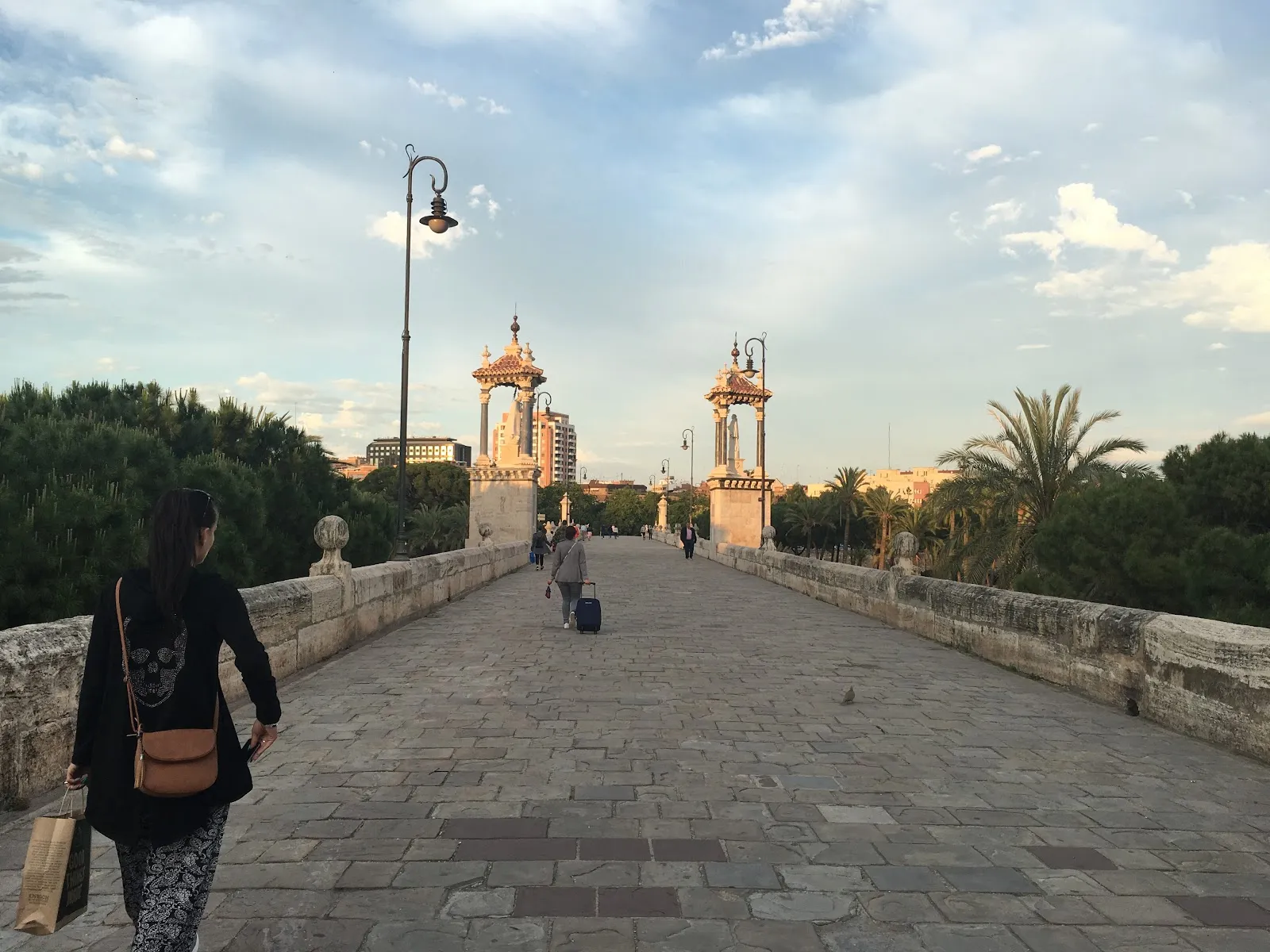
Pont de la Mar, also called Puente del Mar, crosses the Turia in the park created along the river’s former course. Its name recalls its role on the route linking Valencia with the port at El Grau.
The stone bridge dates to the late 16th century. It replaced a wooden crossing lost to flooding. The bridge has ten pointed arches and extends for about 160 metres. It carried traffic for centuries before closing to vehicles in 1933 and becoming a pedestrian crossing.
Statues and the pedestrian crossing
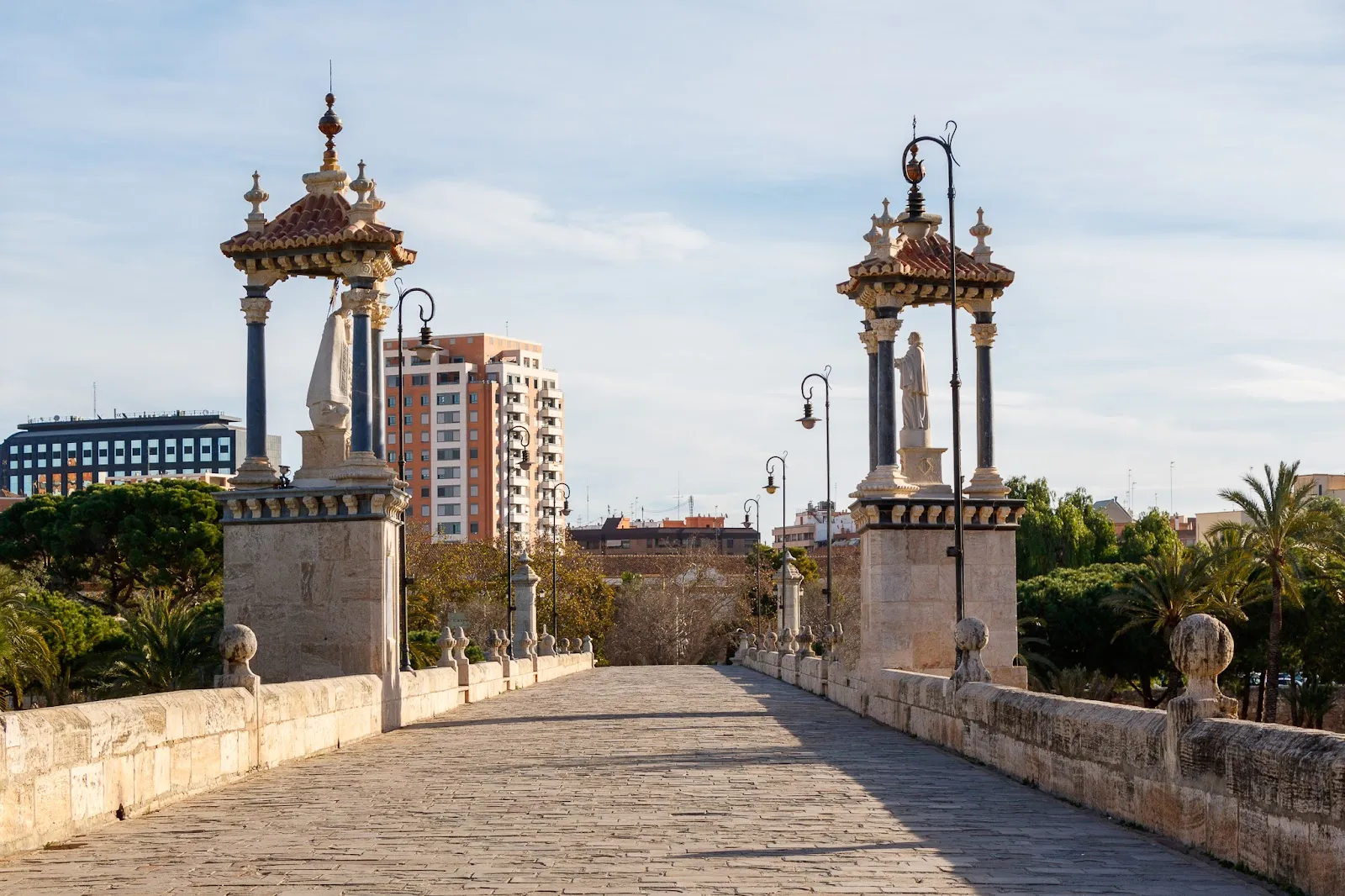
Two small structures on the bridge shelter religious sculptures: the Virgin of the Forsaken and Saint Pascual. They add a devotional detail to the bridge’s stone architecture.
A broad access staircase was built when the bridge became pedestrian-only; architect Javier Goerlich designed it. From the crossing, you can look over the Turia Park and continue your walk through the former riverbed. Benches provide a place to pause, and green parrots are sometimes seen in the surrounding area.
Perguntas frequentes
Where is Pont de la Mar?
It crosses the Turia in Valencia’s Turia Park, between the Exhibition and Aragon bridges.
What can you see on Pont de la Mar?
The bridge has ten pointed arches and two small structures containing statues of the Virgin of the Forsaken and Saint Pascual.
Can you walk across Pont de la Mar?
Yes. It has been a pedestrian bridge since 1933.