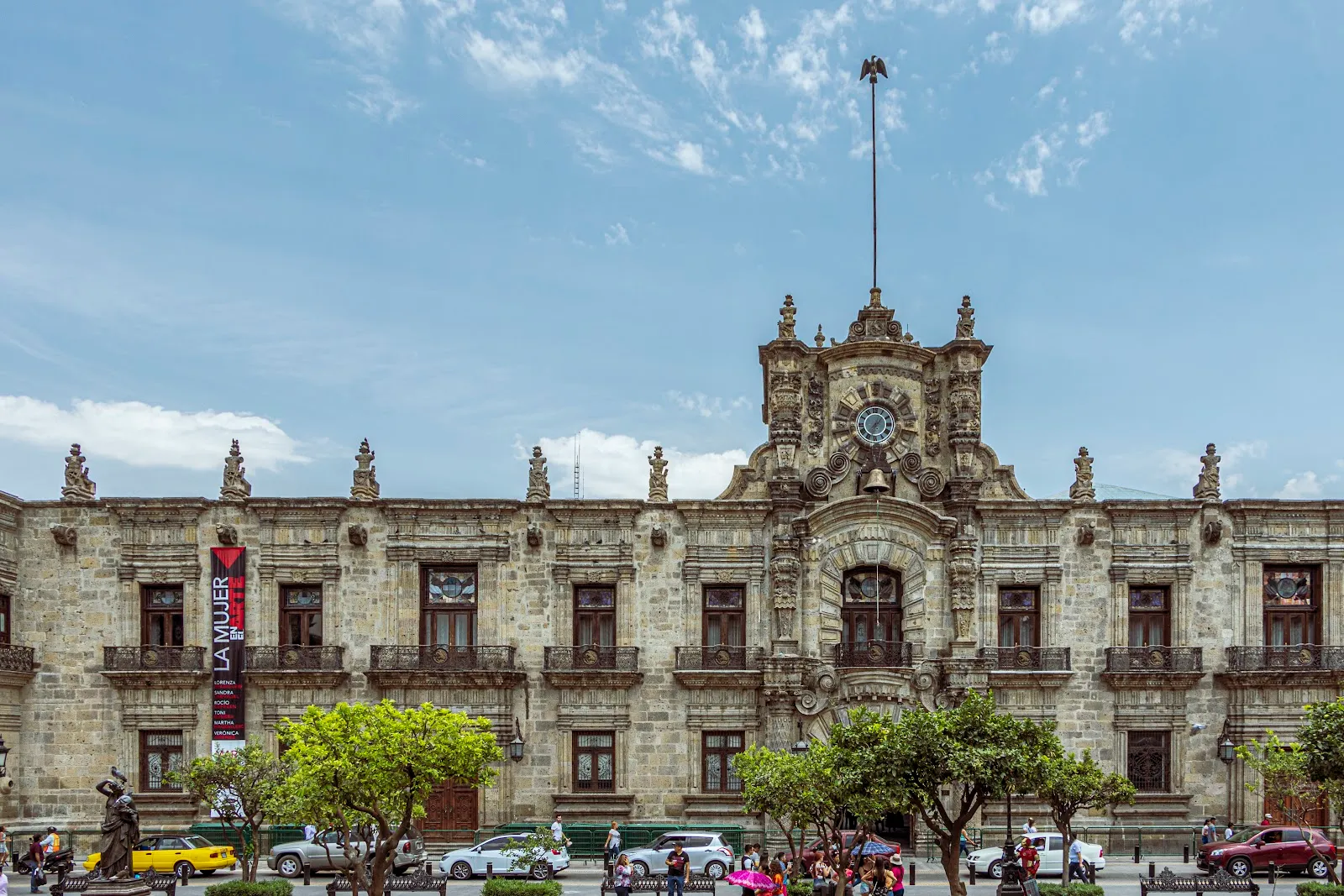
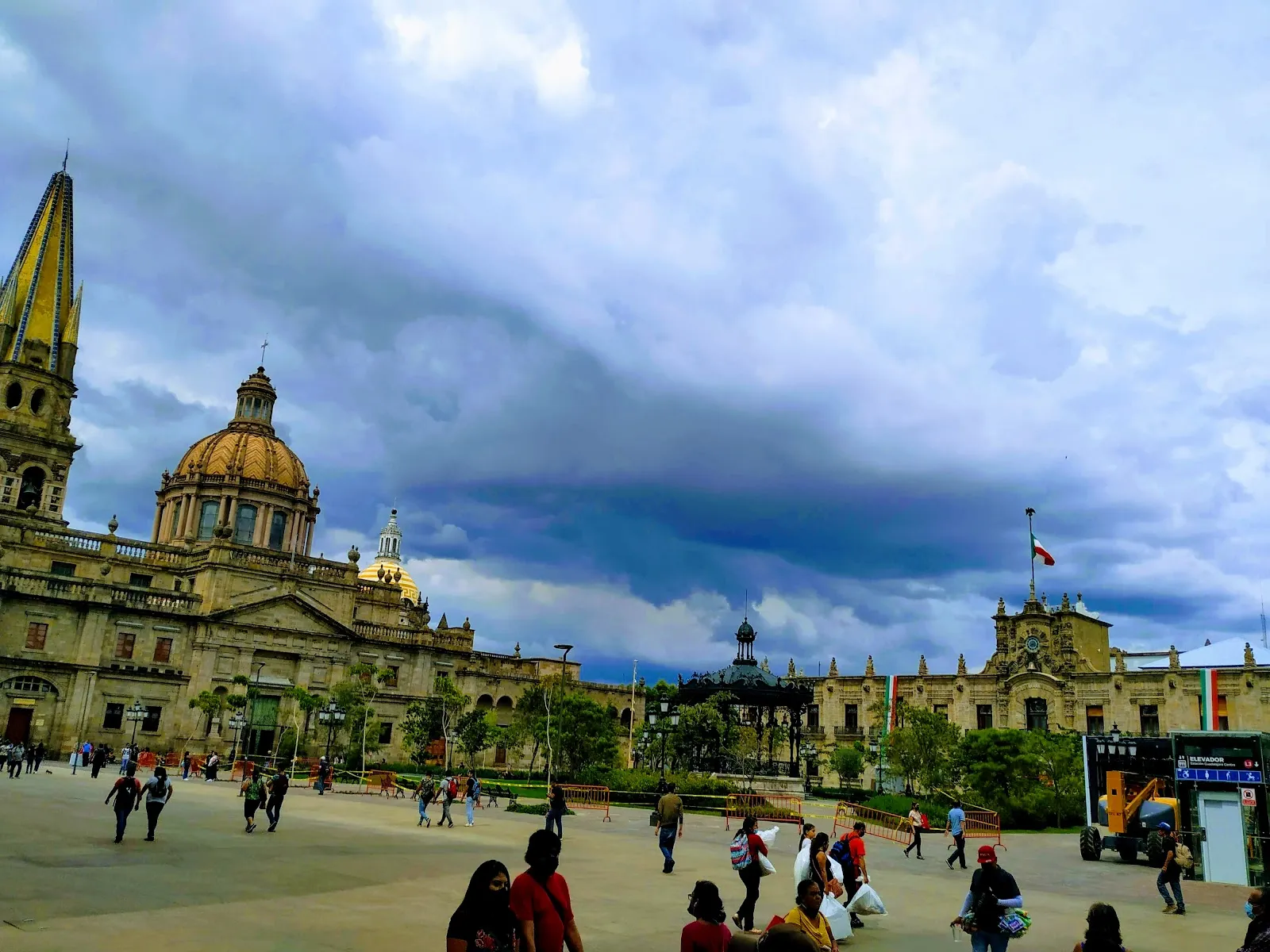
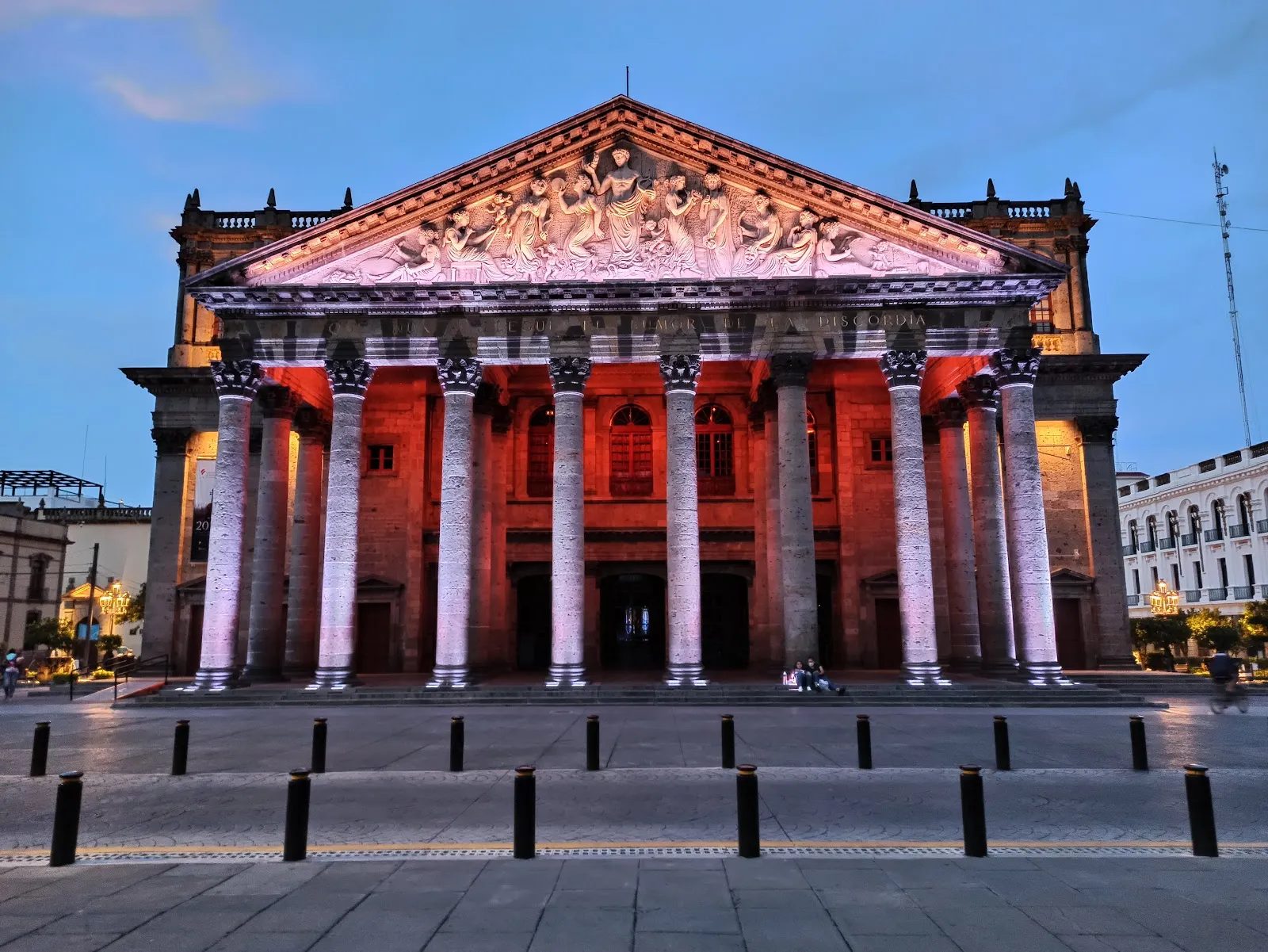
Plaza de la Liberación is the central square of Guadalajara, Jalisco, set between the cathedral on the west and the Teatro Degollado on the east. Locals also call it Plaza de las Dos Copas, after its two fountains shaped like cups. The square is open at all hours, so you can see the historic center in daylight or after dark. Sunday afternoons bring magicians, mimes, musicians and street vendors. The bronze monument of Miguel Hidalgo breaking the chains of slavery marks the square's link to the abolition of slavery in Mexico.
Abolition of slavery and the Hidalgo monument
The square's main monument makes its meaning clear. A bronze statue shows Miguel Hidalgo y Costilla, known as the father of Mexican independence, breaking the chains of slavery.
Hidalgo signed the decree abolishing slavery in Mexico in Guadalajara in 1810. The plaza itself was built in 1952 by Ignacio Díaz Morales to remember that abolition.
The buildings around the square
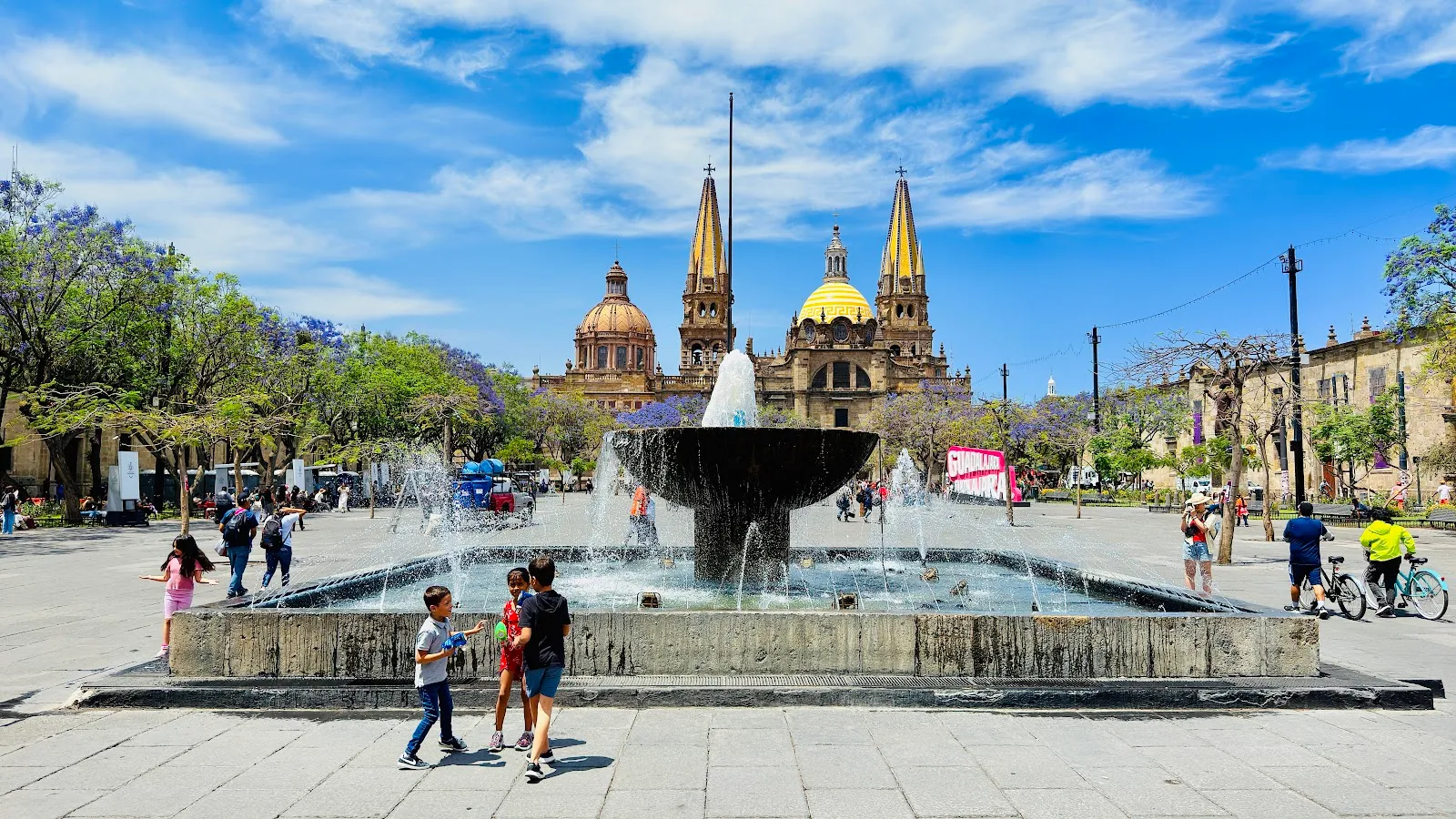
The square runs from the Guadalajara Cathedral on the west to the Teatro Degollado on the east. The cathedral's towers are Neo-Gothic, while its façade is more baroque.
On the north side, next to the Museo Regional de Guadalajara, stands the legislative palace. Its thick stone columns make it easy to recognize. East of the square, across Calle Belén, is the Palacio de la Justicia. It was built in 1588 as the city's first nunnery, and a mural by Guillermo Chávez is inside.
Fountains, events and everyday life
The two fountains are shaped like cups, which gives the square its nickname, Plaza de las Dos Copas. Locals also call it Plaza de los Tres Poderes.
The wide open space hosts exhibitions, fairs, cultural and gastronomic events, free concerts and city festivities. Christmas displays appear here, and car shows have been held in the square. Each year the Guadalajara Pride Parade ends in the plaza.
Visiting the square
Street food stalls and small cafés line the edges of the square, and shoe polishing stations stand around the perimeter. National Guard members are present in the square and talk with people.
A hop-on, hop-off city tour stops right beside the square, so it works well as a starting point for a walk through the historic center. The Museo Regional and Plaza Tapatía are close by, which makes the square easy to combine with other stops.
Perguntas frequentes
Is Plaza de la Liberación open at night?
Yes. The square is open 24 hours a day, and evenings are a pleasant time to walk around the fountains and the historic buildings.
Is the plaza wheelchair accessible?
Yes. The entrance, the restroom and the parking lot are wheelchair accessible.
Do I need cash?
Yes. The square is cash only, so bring cash for street food and other purchases.
What happens on Sunday afternoons?
Magicians, mimes, musicians and street vendors gather among the fountains, which makes it the liveliest time to visit.