Shinjuku Golden-Gai is a small nightlife district in Kabukicho, Tokyo, made up of six narrow alleys and more than 200 tiny bars. Low wooden buildings, lanterns and neon signs give the lanes a distinct postwar feel, while each bar has its own character, from intimate cocktail spots to themed rooms. Walk through to take in the atmosphere, then choose a bar whose entrance and signs suit you. Many charge a cover fee, and some are reserved for regulars, so check the door before going in.
Six alleys of tiny bars
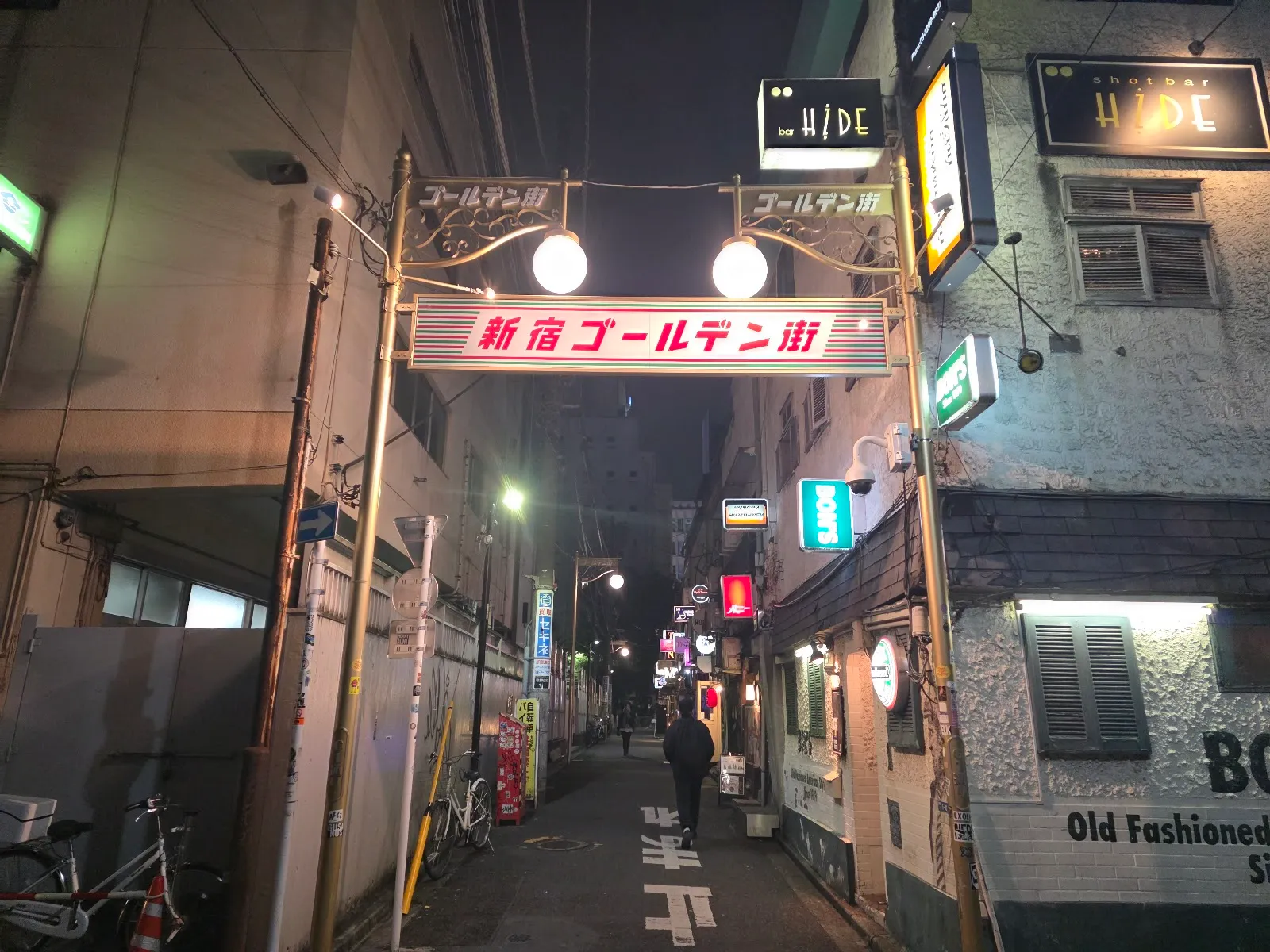
Golden-Gai is a compact nightlife district in Shinjuku’s Kabukicho, arranged across six narrow lanes linked by even tighter passages. More than 200 bars and small eateries occupy the area. The buildings are low and closely packed, many with wooden exteriors, signs and lanterns that stand out after dark.
The scale is part of the appeal. Some bars have only a few seats, so stepping inside feels quite different from entering a large pub. The narrow lanes are good for a walk even if you do not plan to drink. Look at the entrances and decorations as you go; the bars have distinct identities, and the themes range from music and art to more unusual interests.
A postwar nightlife district
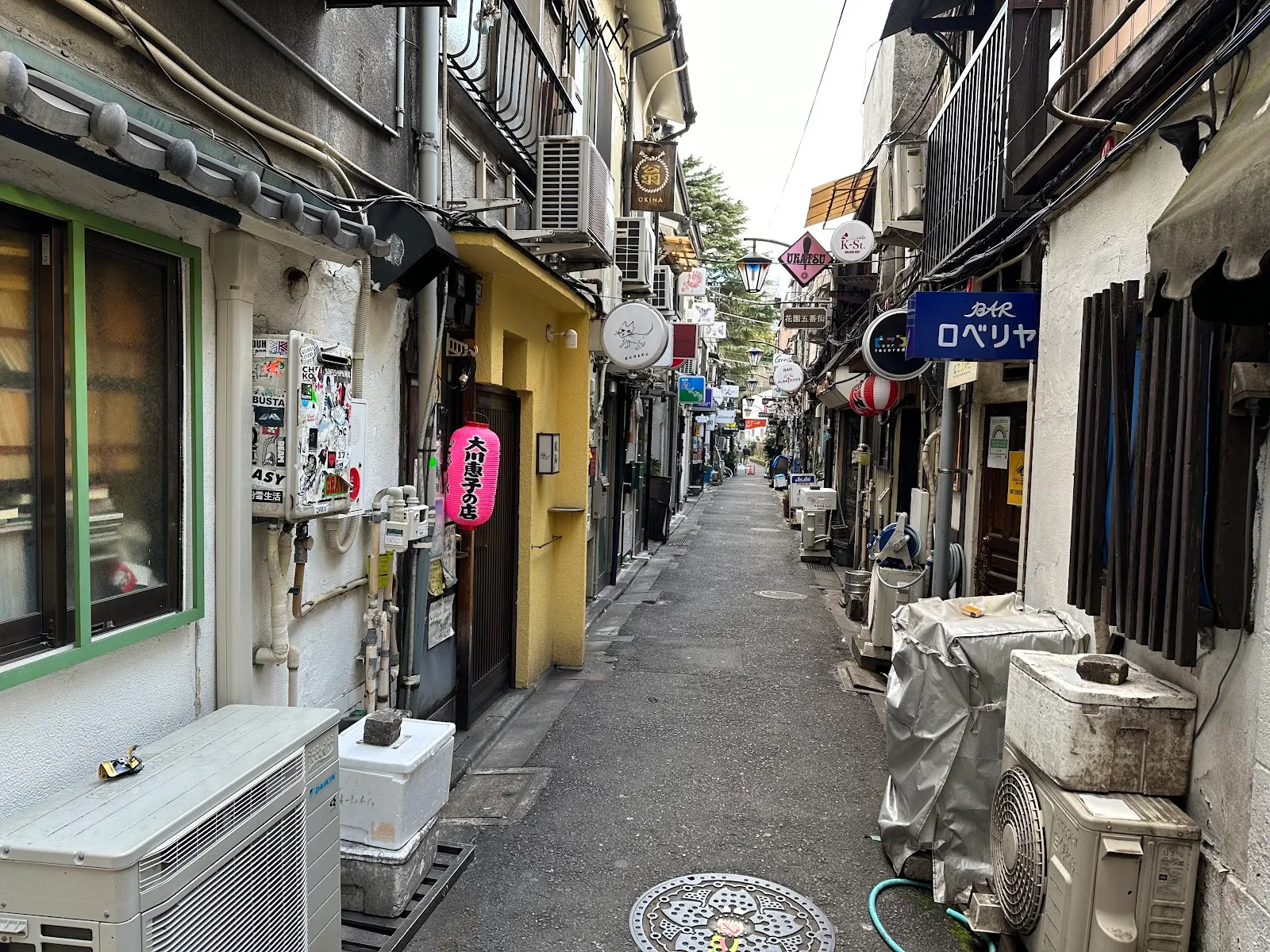
Golden-Gai grew from the postwar period, when the area was associated with black markets. It later became a pleasure district and a place for drinking. After prostitution became illegal in 1958, the area’s businesses shifted to bars. In the 1970s, artists, poets and writers were among the people drawn to its small establishments.
The district’s older wooden buildings and dense layout preserve a contrast with the larger, more modern streets around Shinjuku. Its character comes from the collection of individual buildings and bars rather than from one landmark. Wandering the lanes gives you a sense of how close together the venues are and how much each small entrance differs from the next.
Choosing a bar
Take a look at the signs before you enter. Some bars welcome newcomers, while others are for regular customers or have specific entry policies. A cover or seating charge is common, and the amount varies by bar. Check for a posted charge so you know what to expect before taking a seat.
Cash is useful because some establishments do not take cards. Bar sizes also matter when planning your night: a small party is more likely to find space together, while larger groups may need to split up or keep walking. You can browse without committing to a stop, then choose a place based on its atmosphere and the information posted outside.
When to walk the lanes
The district is most active in the evening. Around 7 to 8 pm, many bars are opening and the lanes begin to fill. Weeknights are a practical choice if you want to explore while avoiding the heavier weekend crowds. Later in the evening, the small spaces can feel busy, so allow time to look around before settling on a bar.
Golden-Gai works as a short walk as well as a bar-hopping stop. If the signs or atmosphere of one place do not suit you, continue to the next entrance. The bars vary in how they welcome visitors, and the variety is part of what makes the district worth exploring.
Perguntas frequentes
Where is Shinjuku Golden-Gai?
It is in Kabukicho, Shinjuku City, Tokyo.
How many bars are in Golden-Gai?
The district has more than 200 small bars spread across six narrow alleys.
Do bars in Golden-Gai charge a cover fee?
Many do, and the amount varies by bar. Check the entrance signs before going in.
When is a good time to visit Golden-Gai?
Weekday evenings around 7 to 8 pm are a good time to explore as bars begin to open, with fewer crowds than on busy weekend nights.