Nezu Shrine is a Shinto shrine in Bunkyo City, Tokyo, near the Yanaka area. Its grounds pair traditional shrine buildings with a short passage of vermilion torii gates, koi ponds and a garden with a waterfall. In spring, azaleas cover the hillside garden, and the shrine holds its Bunkyo Azalea Festival from April into May. Come for a quiet walk among the gates and garden, or take time to see the main hall and stone fox figures. The shrine is also close to Yanaka’s independent shops and eateries.
A shrine with Edo-period buildings
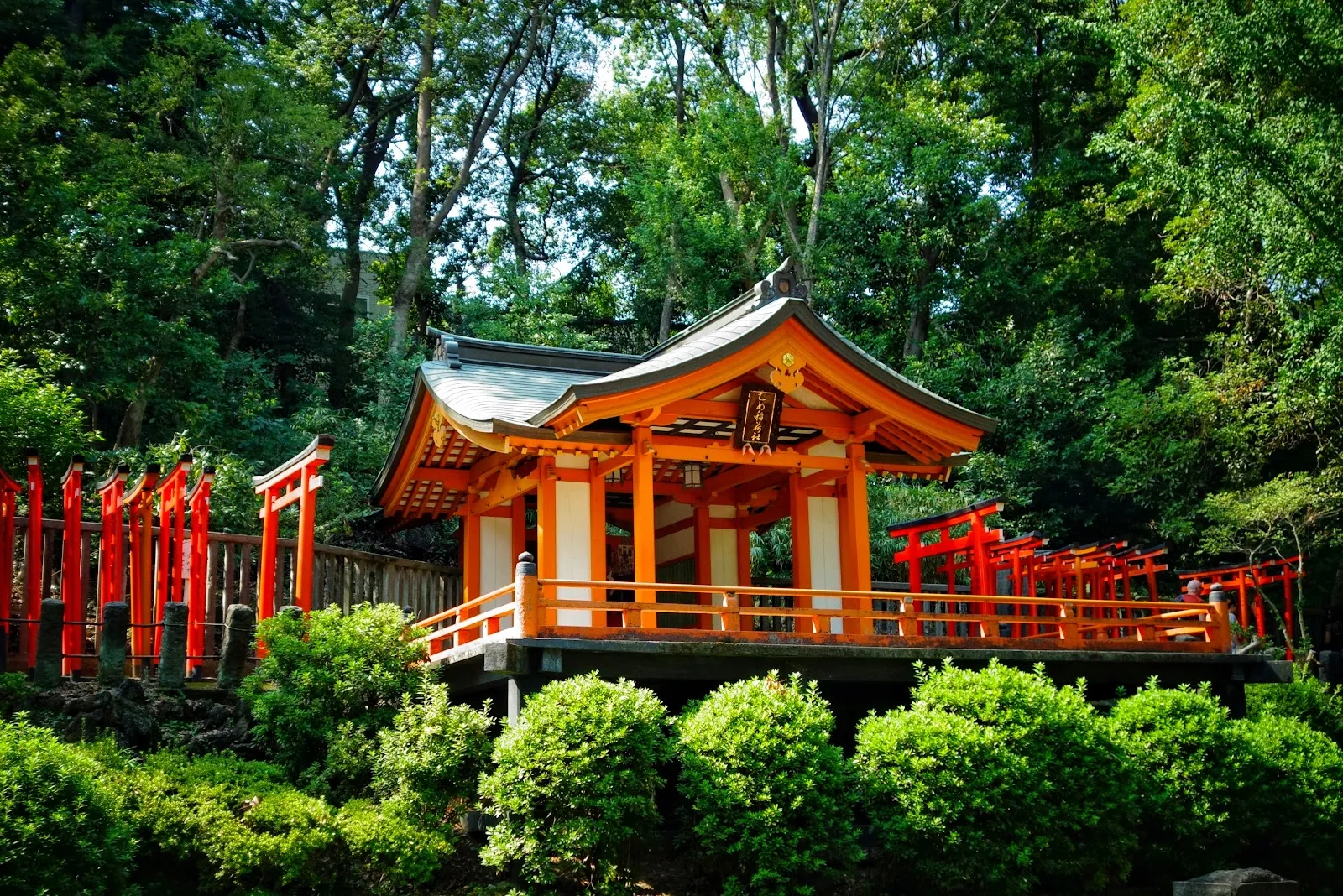
Nezu Shrine is in Bunkyo City, in a residential part of Tokyo near Yanaka. Tradition places its origins more than 1,900 years ago, linking its founding to the legendary figure Yamato Takeru. The shrine’s present buildings date to the early 18th century. The main shrine complex was built in 1706 on the order of shogun Tokugawa Tsunayoshi, and its layout was designed with Nikko’s Toshogu Shrine in mind.
The main hall and other structures are designated Important Cultural Properties of Japan. Their lacquered surfaces and traditional architectural details give the grounds a sense of age distinct from the surrounding city. Take a moment in the main clearing to look at the buildings before heading along the smaller paths.
The torii path and shrine grounds
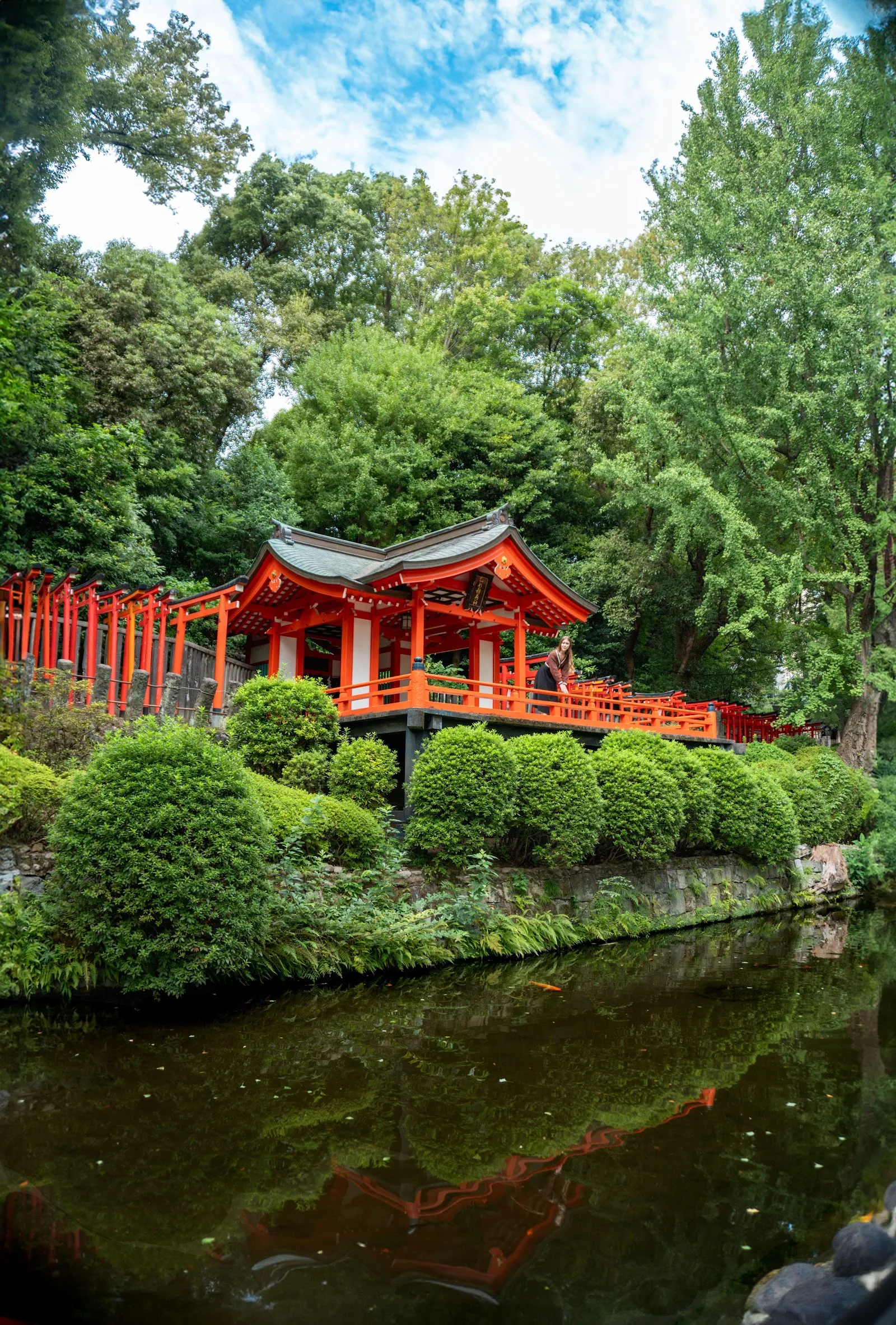
One of the best-known walks here passes through a close-set row of vermilion torii gates. The passage leads toward Otome Inari Shrine and offers a more intimate walk than the long gate routes at Fushimi Inari in Kyoto. Stone fox figures appear around the grounds, alongside ponds where koi swim. A wooden bridge crosses one of the ponds, and a garden waterfall adds to the sound of water along the paths.
The grounds also have shaded places to pause. Walk slowly and keep the shrine’s religious purpose in mind as you explore. If you wish to take part in Shinto customs, the shrine is associated with purification, prayers and fortune slips. Talismans and sacred wooden plates are available at the shrine.
Azaleas in spring
The hillside garden is the setting for the annual Bunkyo Azalea Festival, also called Tsutsuji Matsuri. It has about 3,000 azalea plants, with varieties that flower at different times. The festival runs from April into May, when pink, red and white blossoms spread across the slope. Festival stalls and a teahouse serving amazake, a sweet fermented rice drink, add to the visit.
Spring is the busiest time to see the garden. If you prefer a calmer walk, visit outside the festival period or come later in the day. The torii path, ponds and shrine buildings remain reasons to explore the grounds even when the azaleas are not flowering.
Perguntas frequentes
When do the azaleas bloom at Nezu Shrine?
The Bunkyo Azalea Festival takes place from April into May. Different varieties flower at different times during the festival period.
What can you see at Nezu Shrine?
The grounds include traditional shrine buildings, a passage of vermilion torii gates, koi ponds, stone fox figures and a hillside azalea garden.
How do you get to Nezu Shrine?
Nezu, Sendagi and Todaimae stations are each about a five-minute walk away.