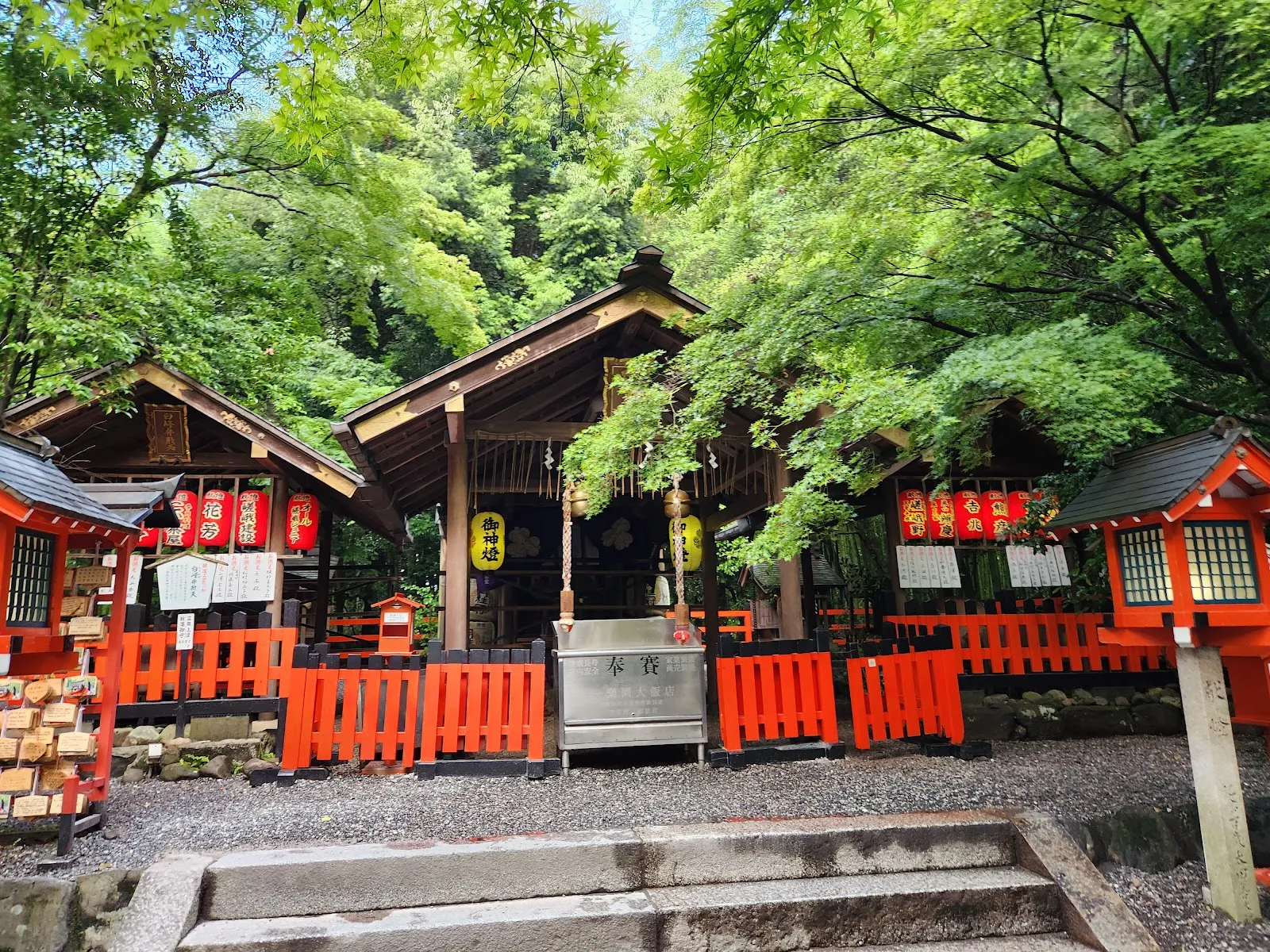
Nonomiya-jinja is a small Shinto shrine in Kyoto’s Arashiyama district, set within the Sagano Bamboo Forest. Its black torii gate and brushwood fences give the grounds a distinctive look, while the shrine’s history connects it with imperial princesses and the Ise Shrine. Stop to see the traditional structures and moss-covered gate, or write a wish on an ema plaque. The shrine is also a natural pause on a walk through the bamboo grove, with Togetsukyo Bridge nearby.
A shrine linked to Ise
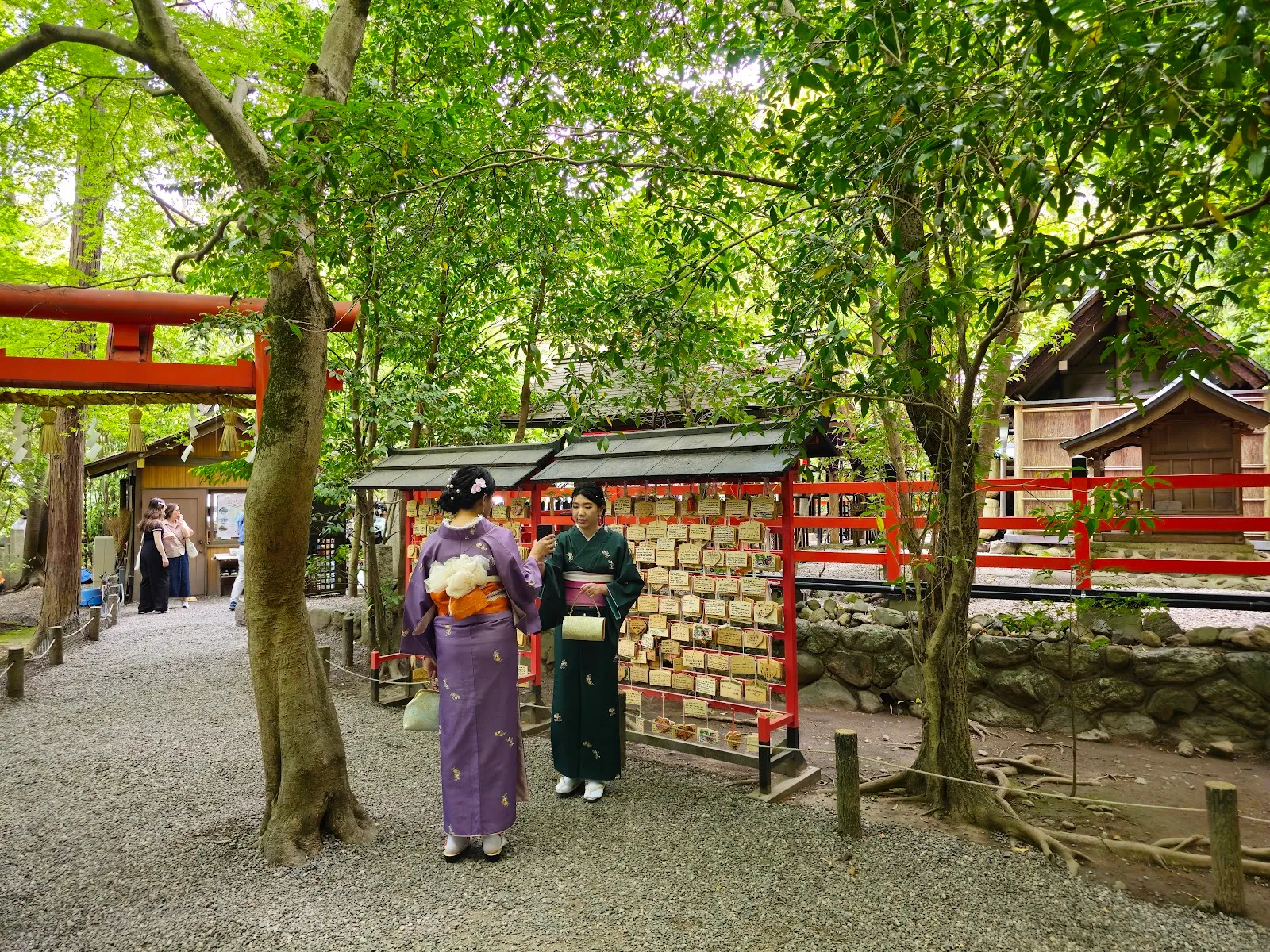
Nonomiya-jinja began as a place of purification and residence for the priestess who served at Ise Shrine. Its connection with imperial princesses gives the shrine a distinct place in Kyoto’s religious history.
The shrine is also associated with Japanese literature. Its black torii gate and brushwood fences appear in the tenth chapter of The Tale of Genji.
The gate and the grounds
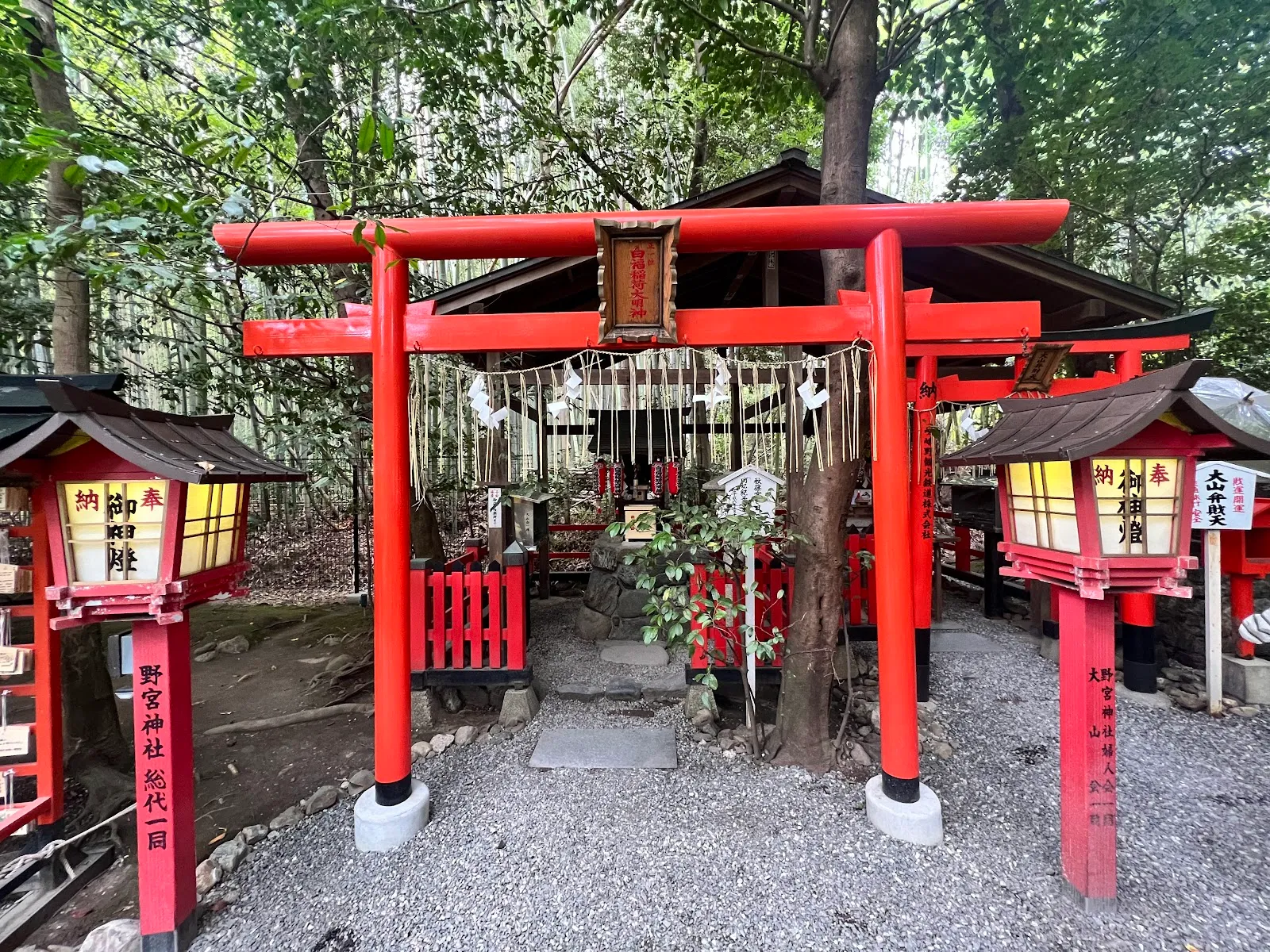
The black wooden torii stands out against the surrounding bamboo and seasonal greenery. In autumn, maple leaves add colour around the gate. The shrine’s grounds are compact, so the visit fits naturally into a walk through the Sagano Bamboo Forest.
Nonomiya Daikokuten, a deity associated with matchmaking, is among the figures worshipped here. Ema plaques provide a place to write wishes connected with love, marriage and childbirth.
An October procession
In October, the Saigū Gyōretsu reenacts the departure of priestesses for Ise. The event honours that tradition and offers a seasonal reason to include the shrine in an Arashiyama visit.
Perguntas frequentes
What can you pray for at Nonomiya-jinja?
The shrine is associated with wishes for matchmaking, marriage and childbirth. Visitors can write wishes on ema plaques.
Why is Nonomiya-jinja connected with imperial princesses?
It served as a place of purification and residence for the priestess who went to serve at Ise Shrine.
What is distinctive about the shrine’s gate?
Its black wooden torii gate is paired with brushwood fences. Both are associated with the shrine’s appearance in The Tale of Genji.
When is the Saigū Gyōretsu reenactment?
It takes place in October and commemorates priestesses’ departure for Ise.


