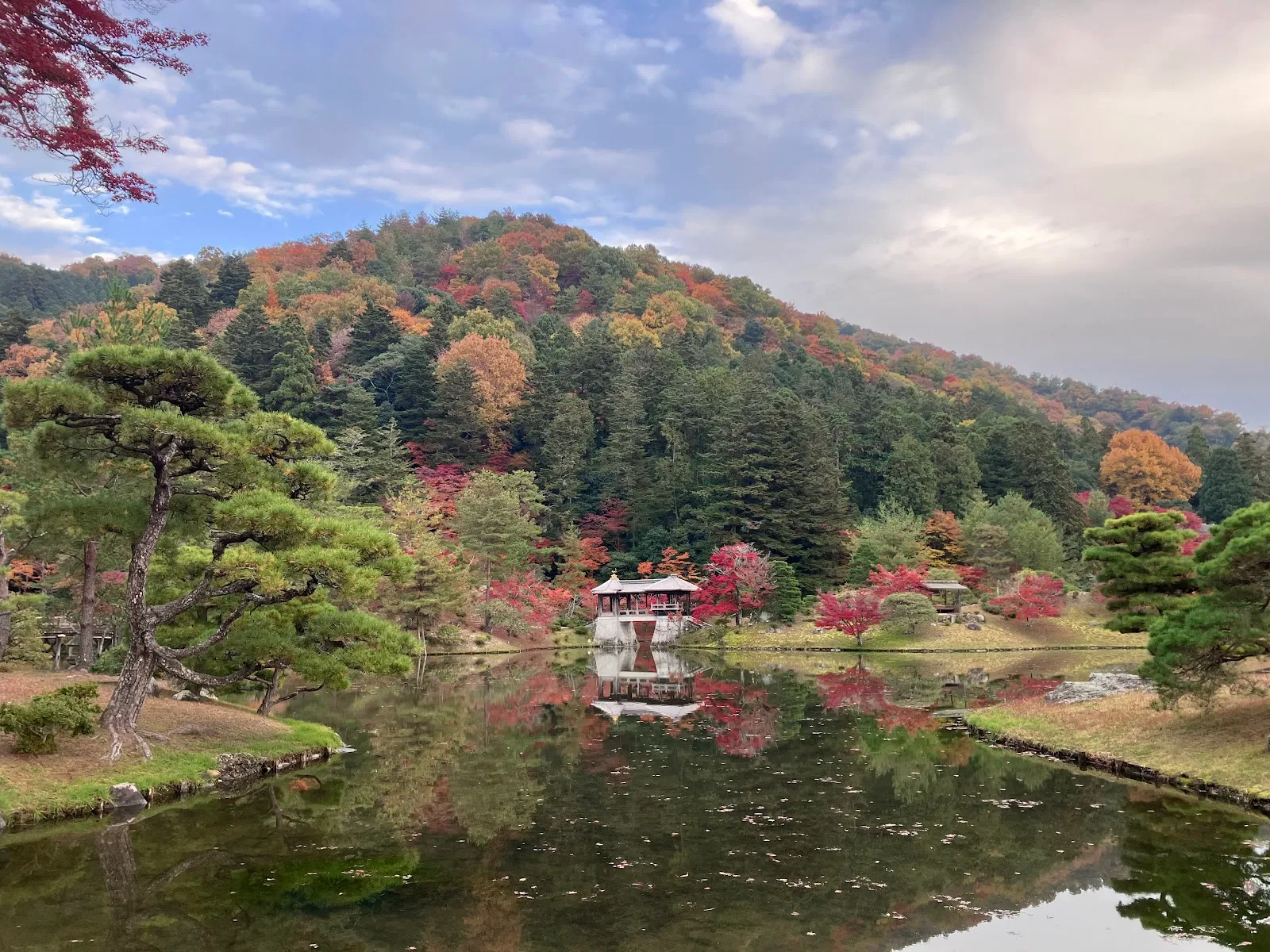
Fushimi Inari Taisha is a Shinto shrine in southern Kyoto, dedicated to Inari, a deity associated with rice and business prosperity. Its famous vermilion torii gates climb through the wooded slopes of Mount Inari, passing smaller shrines and fox statues along the way. You can see the main shrine buildings near the entrance, then follow the mountain paths for a longer walk and views over Kyoto. Food stalls and souvenir shops are near the entrance; the shrine grounds are open around the clock.
A shrine dedicated to Inari
Fushimi Inari Taisha is dedicated to Inari, a Shinto deity associated with rice and business prosperity. The shrine’s history is traced to 711, and it is the head shrine of a network of Inari shrines across Japan. Its position on Mount Inari connects the shrine buildings at the foot of the mountain with paths that climb through the forest.
The fox statues found around the grounds represent Inari’s messengers, not the deity itself. Look closely and you may notice that some hold objects, including scrolls. The statues and the shrine’s torii gates are part of the place’s religious setting, as well as details to notice on the walk.
The gates and the mountain paths
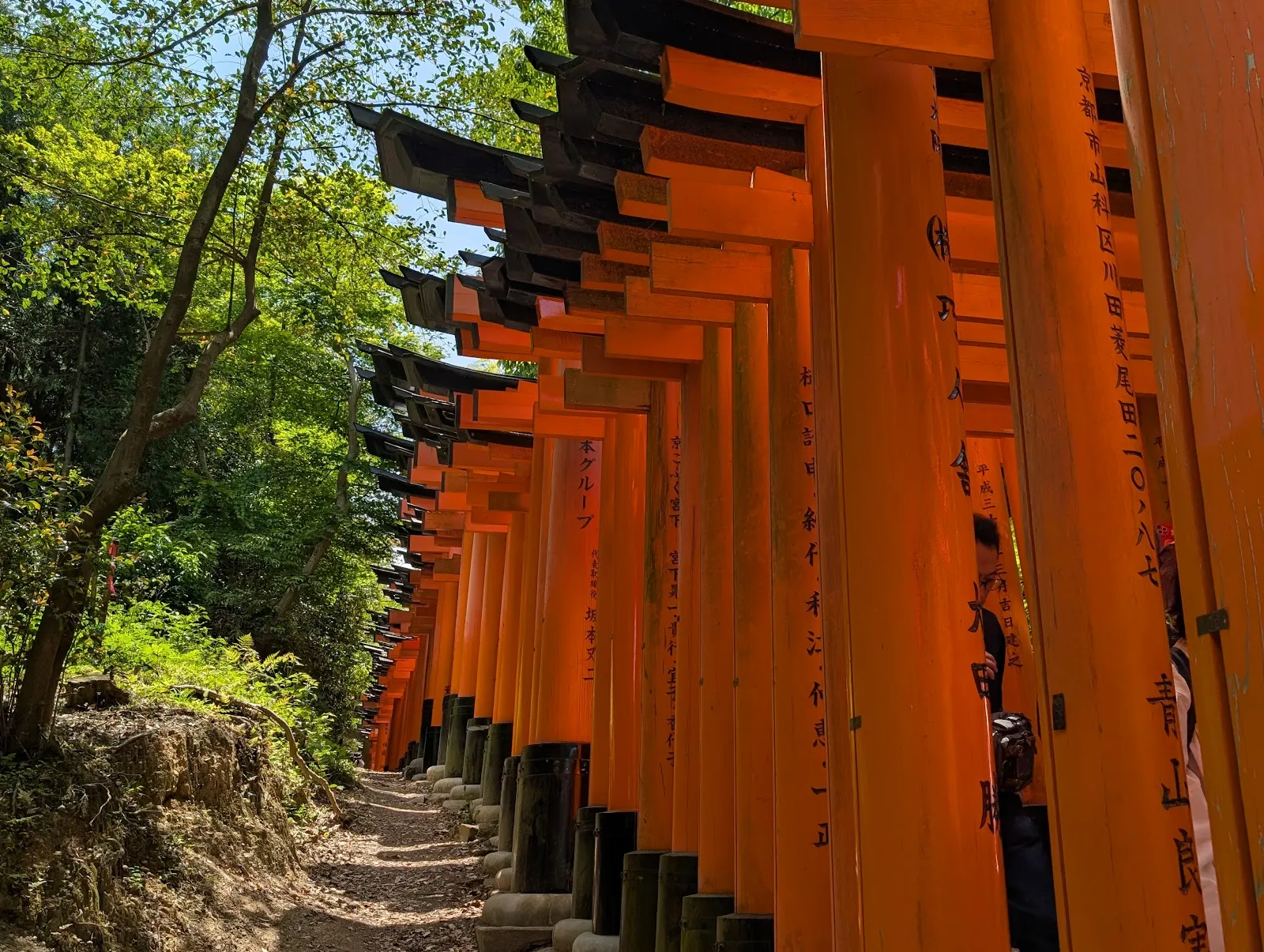
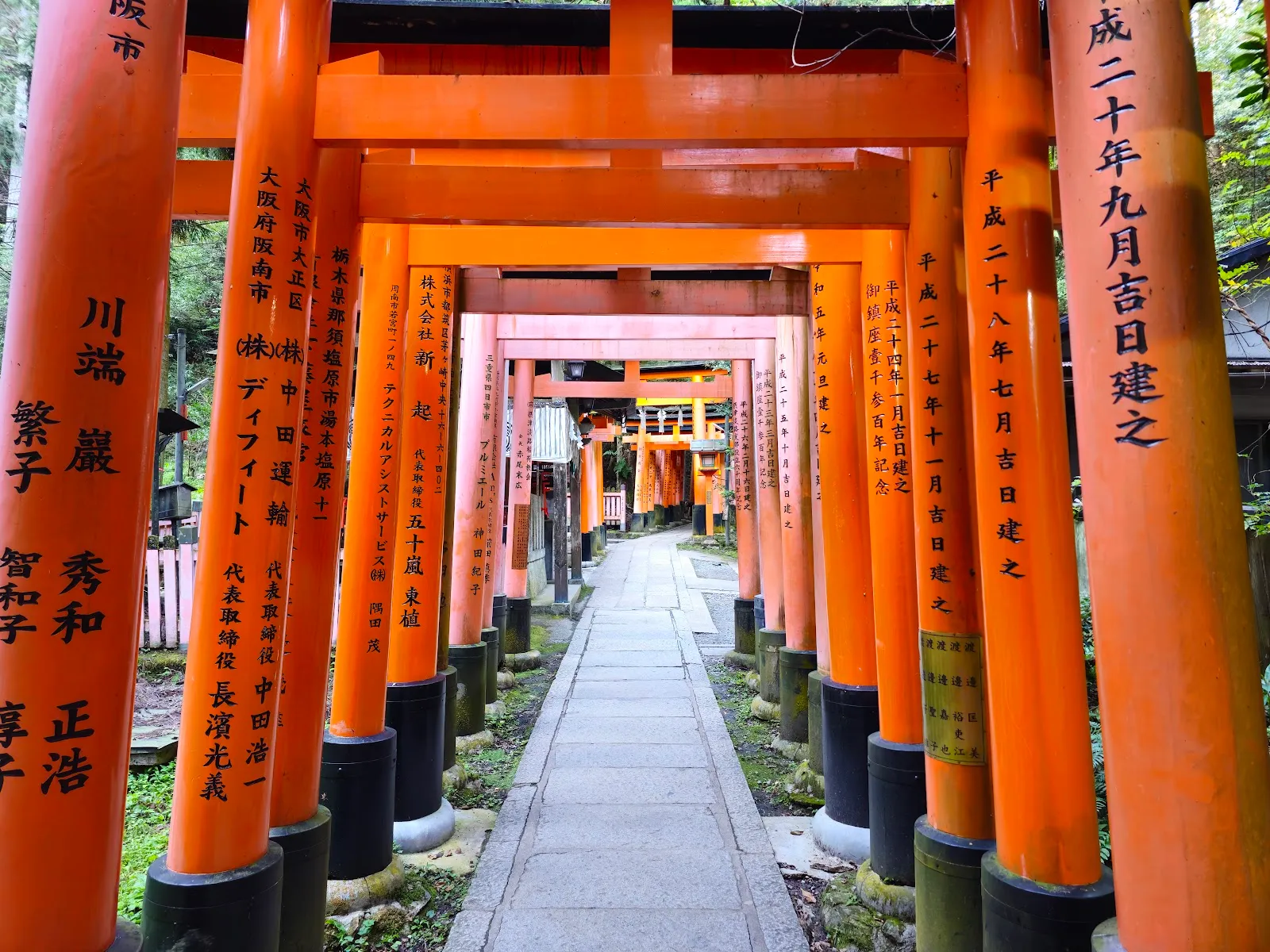
The torii gates are the landmark most people come to see. Vermilion-painted rows form passages that lead away from the main shrine buildings and up the mountain. Individuals and businesses have donated gates in the hope of expressing gratitude and seeking good fortune. Kanji characters appear on the wooden posts.
The paths do not end at the first tunnels. As you climb, the crowds thin and smaller shrines appear among the trees. Fox statues and stone lanterns line parts of the route, while clearings along the way provide places to pause and look out over Kyoto. The uphill walk involves steps, so allow time and energy for the distance you choose to cover.
You can turn back after seeing the lower shrine grounds, or make the mountain walk part of your visit. The full route to the upper paths takes considerably longer than a quick stop for photographs; the material puts a round trip at about two to three hours.
The entrance and main buildings
Begin near the entrance, where the large Romon gate leads towards the main worship buildings. The main hall, known as the honden, is among the central structures of the shrine. From here, the routes lead towards the torii-lined mountain trails.
Food stalls and souvenir shops are found near the entrance, making this the most convenient area to pause before or after walking uphill. The contrast between the built shrine grounds and the forest paths is part of the visit: the route moves from the main buildings into wooded slopes, with smaller places of worship along the way.
Perguntas frequentes
Is Fushimi Inari Taisha open at night?
The shrine grounds are open 24 hours, so you can visit outside the usual daytime period.
How long does a visit take?
Allow about two to three hours for a round trip along the mountain paths. A shorter visit to the lower grounds takes less time.
What is Fushimi Inari Taisha known for?
The shrine is known for its vermilion torii gates, which form paths up Mount Inari, and for fox statues associated with Inari’s messengers.
Is there an entrance fee?
The provided information describes admission as free.