
Kennin-ji is Kyoto’s oldest Zen temple, founded in 1202 just south of Gion. Its central buildings bring together painted screens, gardens and the Dharma Hall’s striking twin-dragon ceiling. Look for the screen depicting the wind and thunder gods, then take time with the dry gardens, including Chountei and the Circle-Triangle-Square Garden. The temple grounds sit close to Hanami-koji Street, yet the inner complex offers a quieter pause from the surrounding district. Entry to the central buildings is paid; much of the outer grounds is free.
A Zen temple founded in 1202
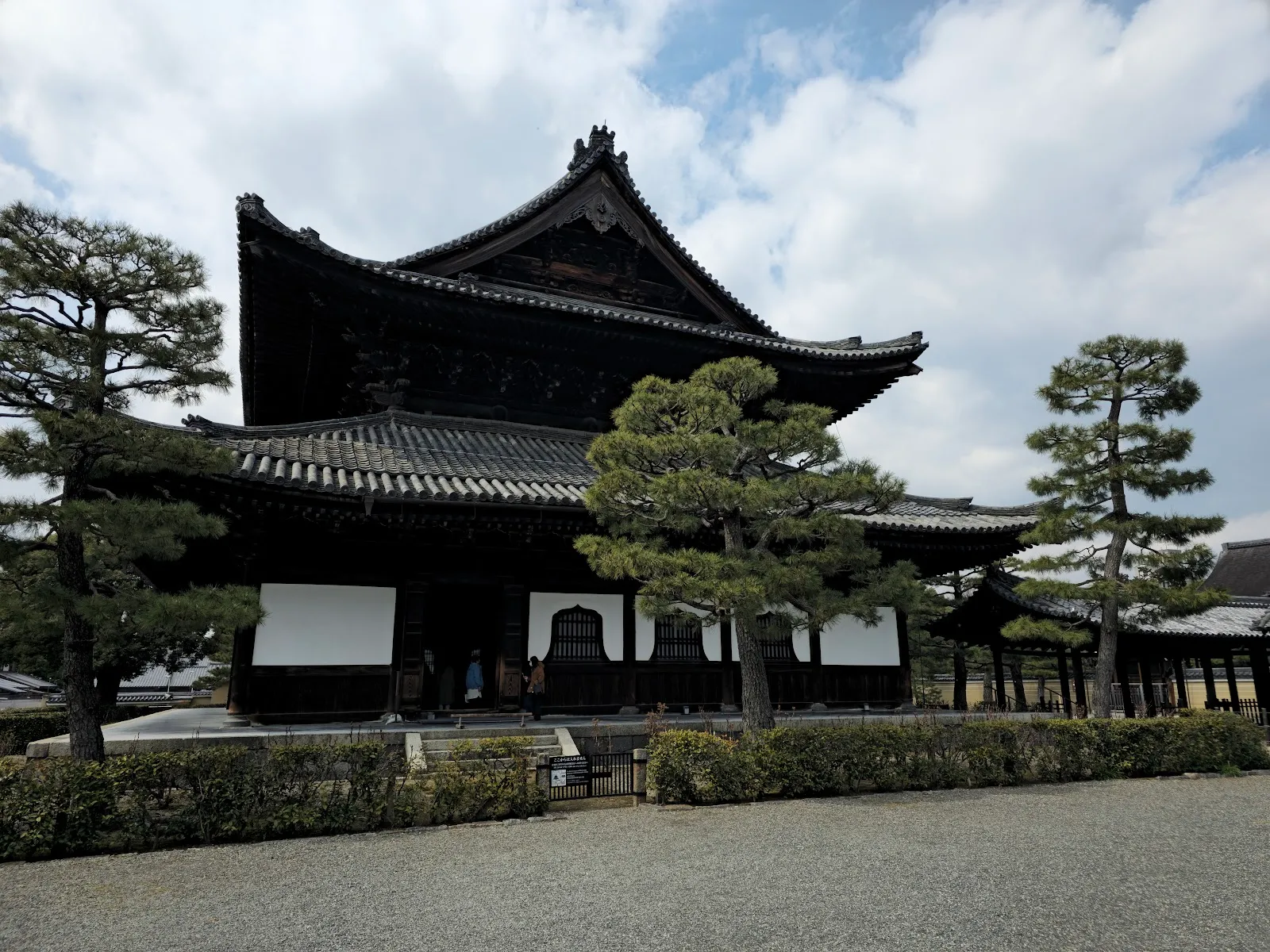
Kennin-ji was founded in 1202 by the monk Eisai and is regarded as Kyoto’s oldest Zen temple. It is a head temple of the Kennin-ji branch of the Rinzai school. The temple’s history also connects it with the introduction of Zen Buddhism and tea cultivation to Japan. It initially brought together Zen, Tendai and Shingon practices; under its 11th abbot, it became a purely Zen temple.
The complex has faced destruction from wars and fires over the centuries. Its grounds lie at the southern end of Hanami-koji Street, in Gion. The district’s busy streets are close by, but the temple precincts offer a quieter setting among halls and gardens.
Halls, screens and twin dragons
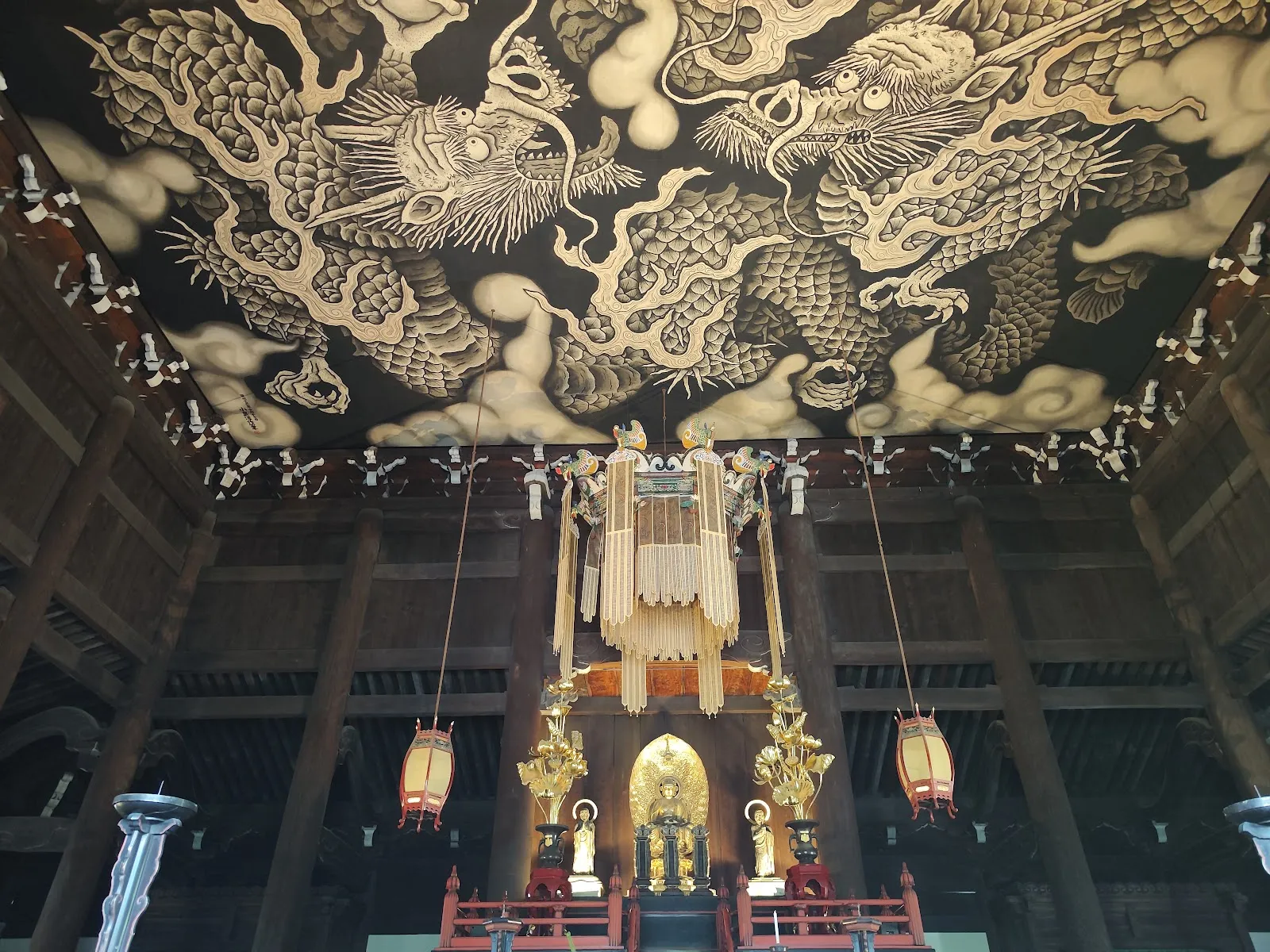
A north-to-south line of gates leads through the temple grounds toward the Dharma Hall and Hojo, the chief priest’s residence. The central buildings contain several notable works of art. In the Dharma Hall, look up at the painting of two dragons across the ceiling, added in 2002.
Another key work is the screen depicting Fujin and Raijin, the Shinto gods of wind and thunder. Painted sliding doors and traditional woodwork add to the experience of moving through the buildings. The central halls require paid entry, while much of the surrounding grounds is free to enter. Photography is permitted only in designated parts, so check the rules as you explore.
Gardens for a slower visit
Kennin-ji’s gardens include dry gravel designs and moss, with named areas such as Chountei, Daiou-en and the Circle-Triangle-Square Garden. The Hojo front garden and courtyard garden are also part of the complex. Take time to notice their different layouts rather than treating them as a single stop.
Autumn brings red and orange colour to the gardens, and cherry trees grow within the paid central area. The temple is near Hanami-koji Street and other Gion sights, so it can fit into a walk around the district. Late afternoon is a useful time to visit if you want a quieter atmosphere; keep your pace unhurried and follow the photography rules inside.
Perguntas frequentes
When was Kennin-ji Temple founded?
Kennin-ji was founded in 1202 by the monk Eisai. It is regarded as Kyoto’s oldest Zen temple.
What can you see at Kennin-ji Temple?
The complex has Zen gardens, painted screens and the Dharma Hall’s twin-dragon ceiling. The screen depicting the wind and thunder gods is another notable work.
Is there an entrance fee for Kennin-ji Temple?
Entry to the central buildings is paid. Much of the outer grounds is free to enter.
Can you take photos inside Kennin-ji Temple?
Photography is allowed only in certain parts of the temple. Check the signs and follow the rules as you visit.


