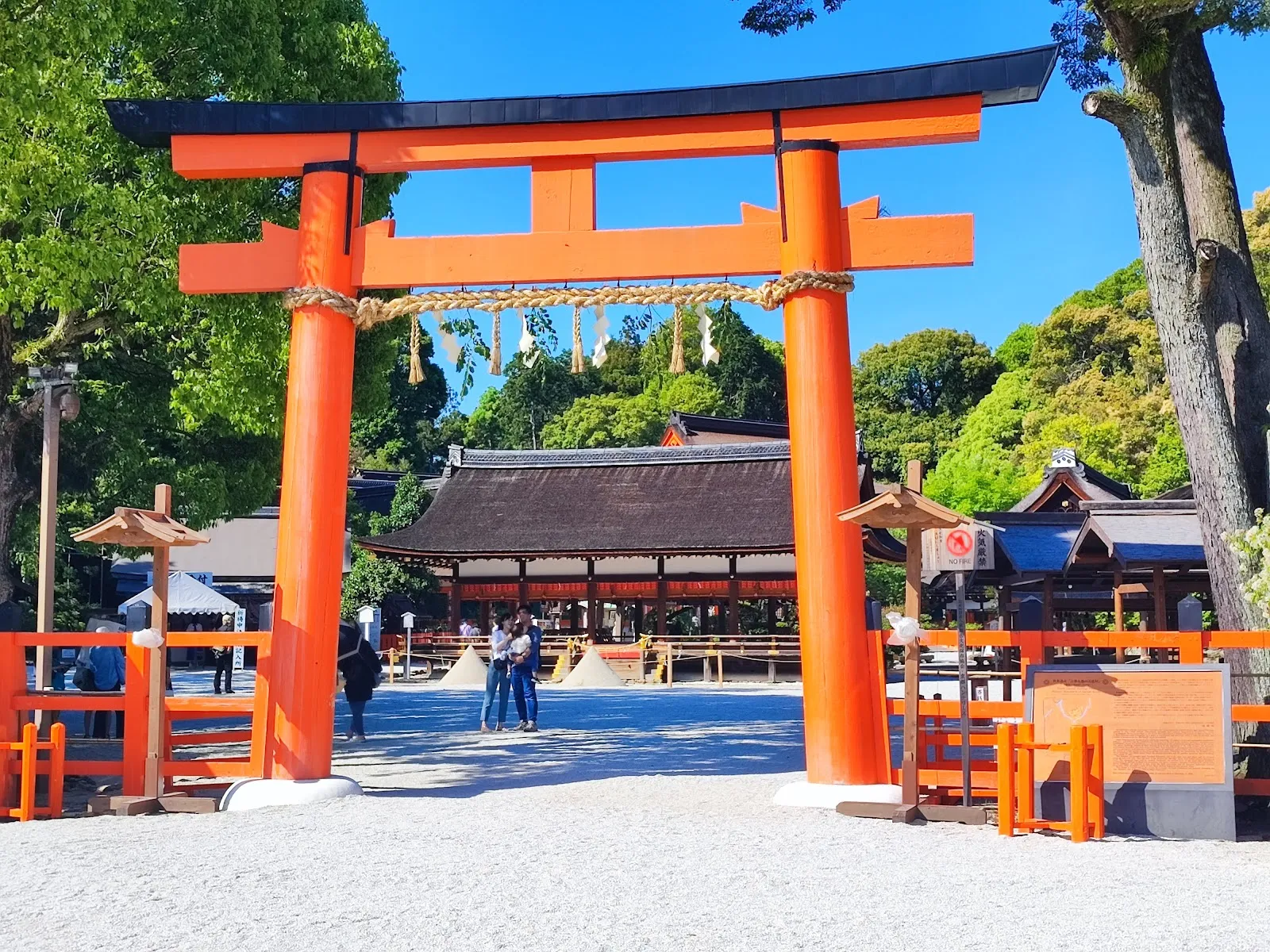
Kamigamo Shrine, in northern Kyoto, is one of the city’s oldest Shinto shrines and part of a UNESCO World Heritage Site. Its spacious grounds pair vermilion gates and shrine buildings with lawns, streams and a quiet setting near the northern hills. Look for the cone-shaped sand mounds used in purification and the thatched roofs; a small torii-lined stairway sits to the left of the entrance lawn when facing the exit. Entry to the grounds is free, with a fee to see the main hall’s interior.
A shrine with early roots
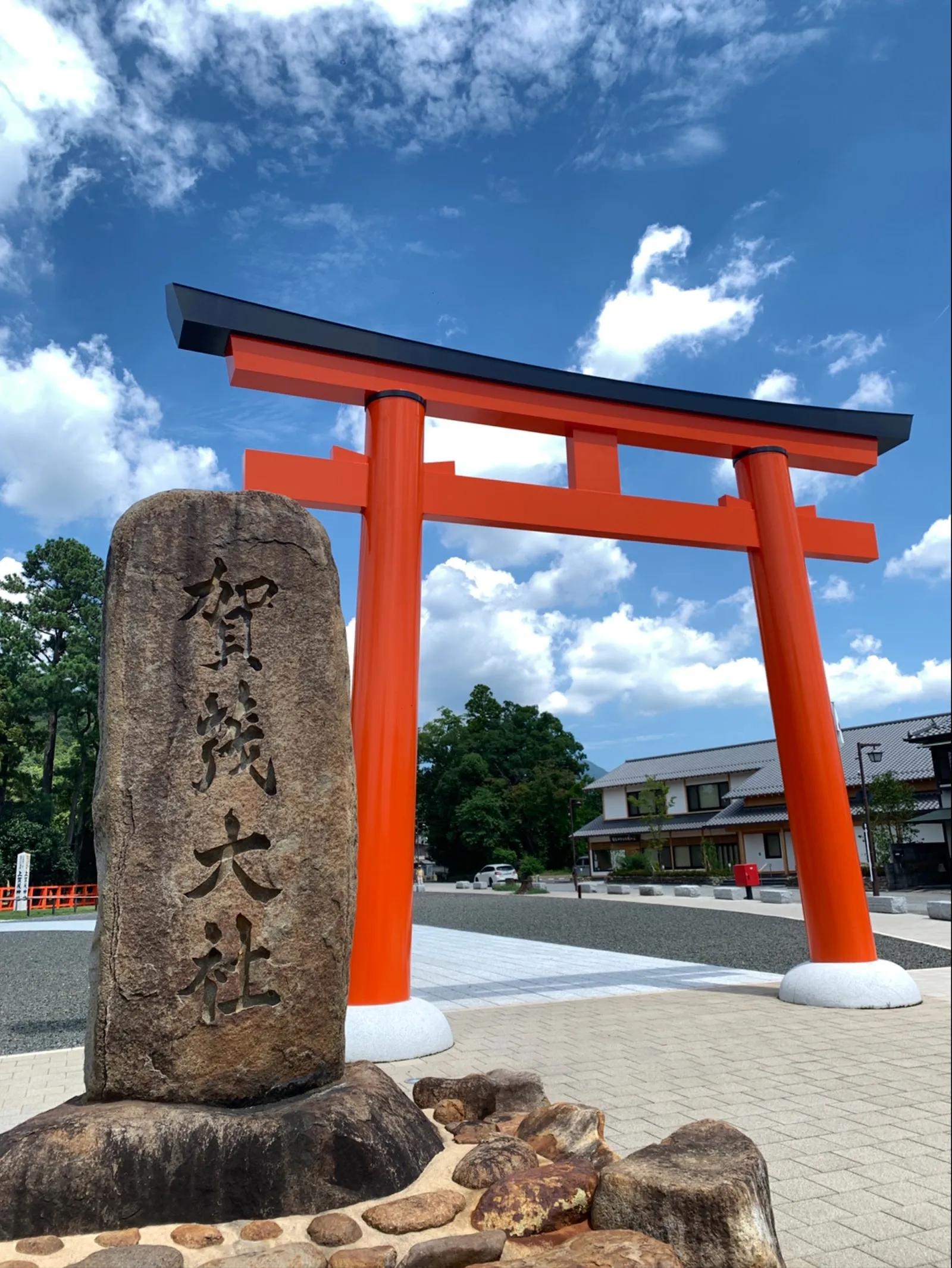
Kamigamo Shrine’s official name is Kamo Wake-ikazuchi Shrine. Its origins are linked to the deity Kamo Wakeikazuchi, who is said to have descended at nearby Mount Koyama. The shrine’s establishment is dated to 678, during the reign of Emperor Tenmu, and it is counted among Kyoto’s oldest places of Shinto worship.
Kamigamo is one of the two Kamo Shrines, alongside Shimogamo Shrine. Together, the shrines are part of a UNESCO World Heritage Site. Two buildings at Kamigamo, including the main hall, are designated National Treasures; 41 other buildings have Important Cultural Property status.
Buildings, sand mounds and grounds
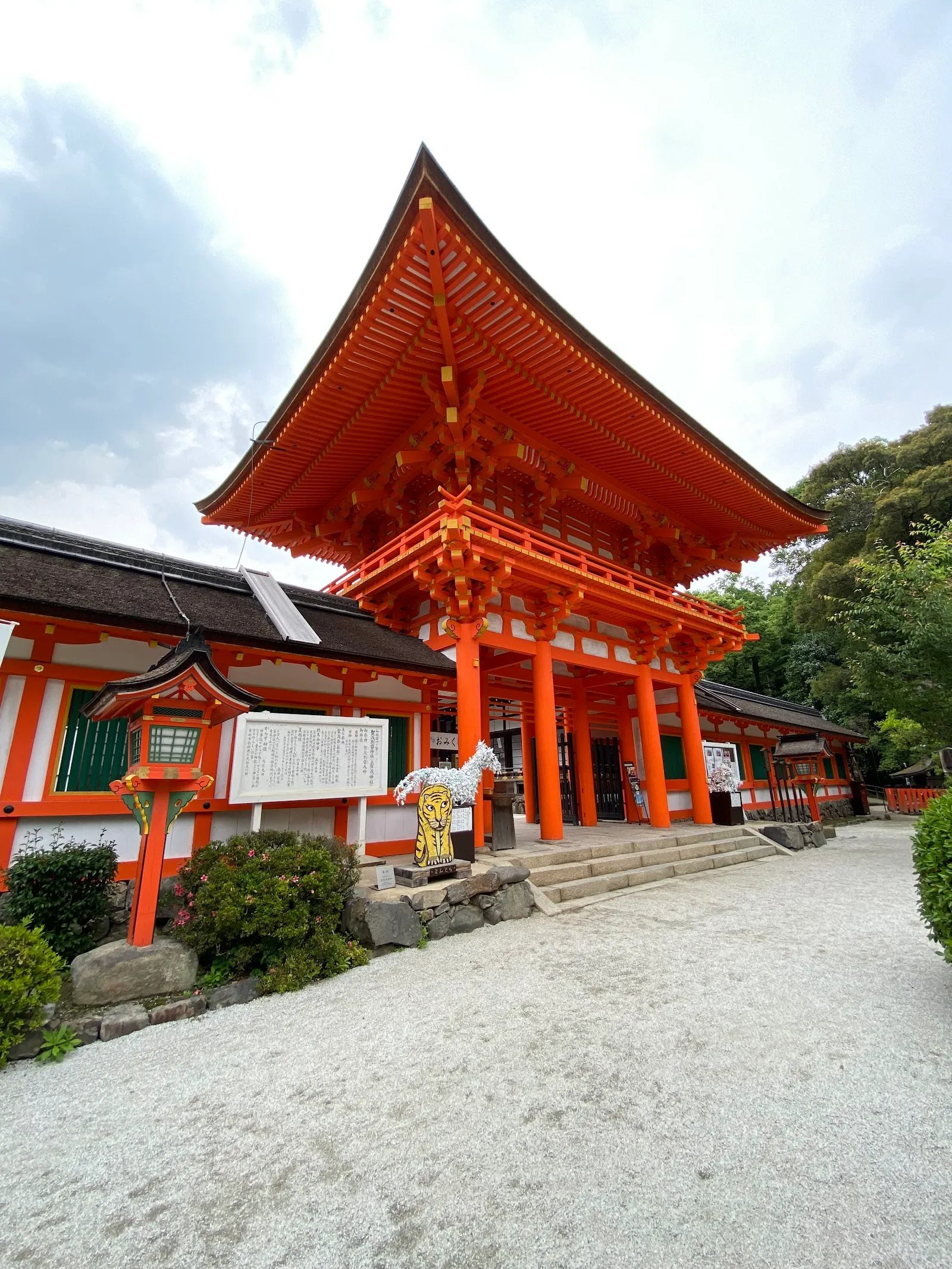
The approach begins at a torii gate and continues across spacious grounds marked by greenery, lawns and further gates. The buildings use white and vermilion, while some have thatched roofs. A small stairway lined with torii gates is tucked to the left of the entrance lawn when you face the exit, so it can be easy to pass without noticing it.
Look for the paired cone-shaped sand mounds, associated with purification and the shrine’s sacred mountain. The grounds also include the stream Nara-no-ogawa. The broad lawn between the first and second torii gates is used for Kurabe Uma, a traditional horse-racing ritual held as part of Aoi Matsuri.
Rituals and seasonal events
Aoi Matsuri takes place on May 15 at Kamigamo and Shimogamo Shrines. Its procession follows a route from the Kyoto Imperial Palace through Shimogamo before reaching Kamigamo, with participants dressed in the style of the Heian court.
Another event held at the shrine is Kasagake, a form of horseback archery. Its annual observance is associated with October 19. Events can give a visit a different focus from a quiet walk around the grounds, so check whether one falls during your stay before planning around it.
The shrine is also associated with Kamo Kangetsu Festival, which includes sacred music and dance rituals. The expansive grounds and historic buildings remain worth exploring outside festival dates, when you can take time to walk between the gates, lawns and streams.
Planning a visit
You can walk around the outdoor grounds without paying an admission fee. Access to the interior of the main hall requires a separate ticket; the stated adult price is ¥800. The grounds are extensive, and a quick stop may leave little time for the buildings and quieter paths, so set aside a couple of hours if you want to explore at an unhurried pace.
Winter is a good choice if you prefer a calmer visit. The shrine is in northern Kyoto, close to the hills and away from the busiest central areas. Keep your conduct respectful while on the grounds, as this is an active place of worship.
Perguntas frequentes
Is Kamigamo Shrine free to enter?
The shrine grounds are free to explore. Entering the main hall requires a separate fee; the stated adult admission is ¥800.
How long should I spend at Kamigamo Shrine?
Allow at least a couple of hours to explore the extensive grounds, buildings and paths.
When is Aoi Matsuri held at Kamigamo Shrine?
Aoi Matsuri takes place on May 15 at Kamigamo and Shimogamo Shrines.
What can you see at Kamigamo Shrine?
The grounds include torii gates, shrine buildings, lawns, streams and cone-shaped sand mounds used in purification. The main hall is a National Treasure.


