Shah Burj is a historic tower at the northeastern edge of the Red Fort in Old Delhi. It formed part of the fort’s water system, which lifted water from the Yamuna and channelled it through the palace complex. Pause here for the tower’s carved details and the quieter setting, then look for the adjoining white marble pavilion, built during Aurangzeb’s rule. The interior is closed to visitors, so plan to view the structure from outside and follow any photography restrictions in force.
A tower in the Red Fort’s water system
At the northeastern corner of the Red Fort, Shah Burj formed part of the system that brought water from the Yamuna into the imperial complex. Water was raised at the tower and carried onward through channels to other buildings. This practical role makes Shah Burj a useful stop for understanding how the fort’s water supply worked.
The tower is also described as a secondary source within the fort’s water system. It is associated with the Nahr-i-Bihisht, or Stream of Paradise, which ran through the palace grounds.
The tower and the marble pavilion
Shah Burj has an octagonal plan and a raised upper section. Its carved architectural details are a reason to pause, even though visitors cannot enter the interior. The structure has been described as having two or three storeys, so the exact count is unclear.
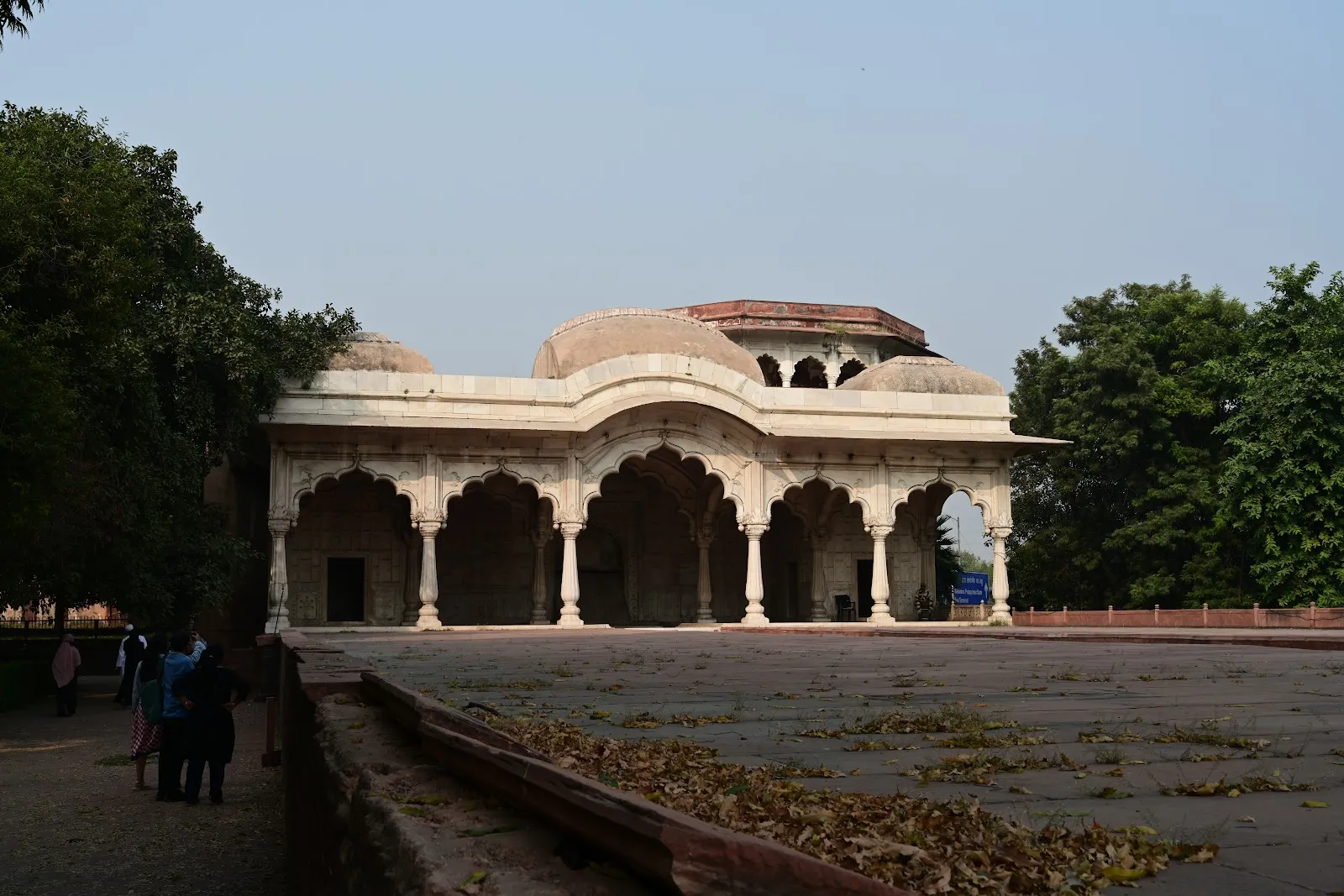
Beside the tower is a white marble pavilion built during Aurangzeb’s rule. It has five arches supported by fluted columns, low curved roofs and a marble cascade that descends into a scalloped basin. Look at the exterior details from the permitted visitor area.
Planning your stop
Shah Burj sits within the Red Fort complex, and its quieter northeastern corner makes a contrast with the busier central courtyards. Visit early if you would like a calmer pause. On-site guides can explain the tower’s place in the fort’s history and water system.
Access to the interior is restricted, and photography inside is not permitted. Check the instructions at the site and respect any conservation barriers. The tower’s upper section was damaged during the 1857 uprising, according to one account; the surviving structure remains part of the fort’s historic fabric.
Perguntas frequentes
Can you go inside Shah Burj?
No. The interior is closed to visitors, so view the tower from outside.
What was Shah Burj used for?
It formed part of the Red Fort’s water system, raising water from the Yamuna for distribution through channels.
What is beside Shah Burj?
A white marble pavilion built during Aurangzeb’s rule stands beside the tower.
When is a good time to visit Shah Burj?
Early in the day is suggested for a quieter stop.