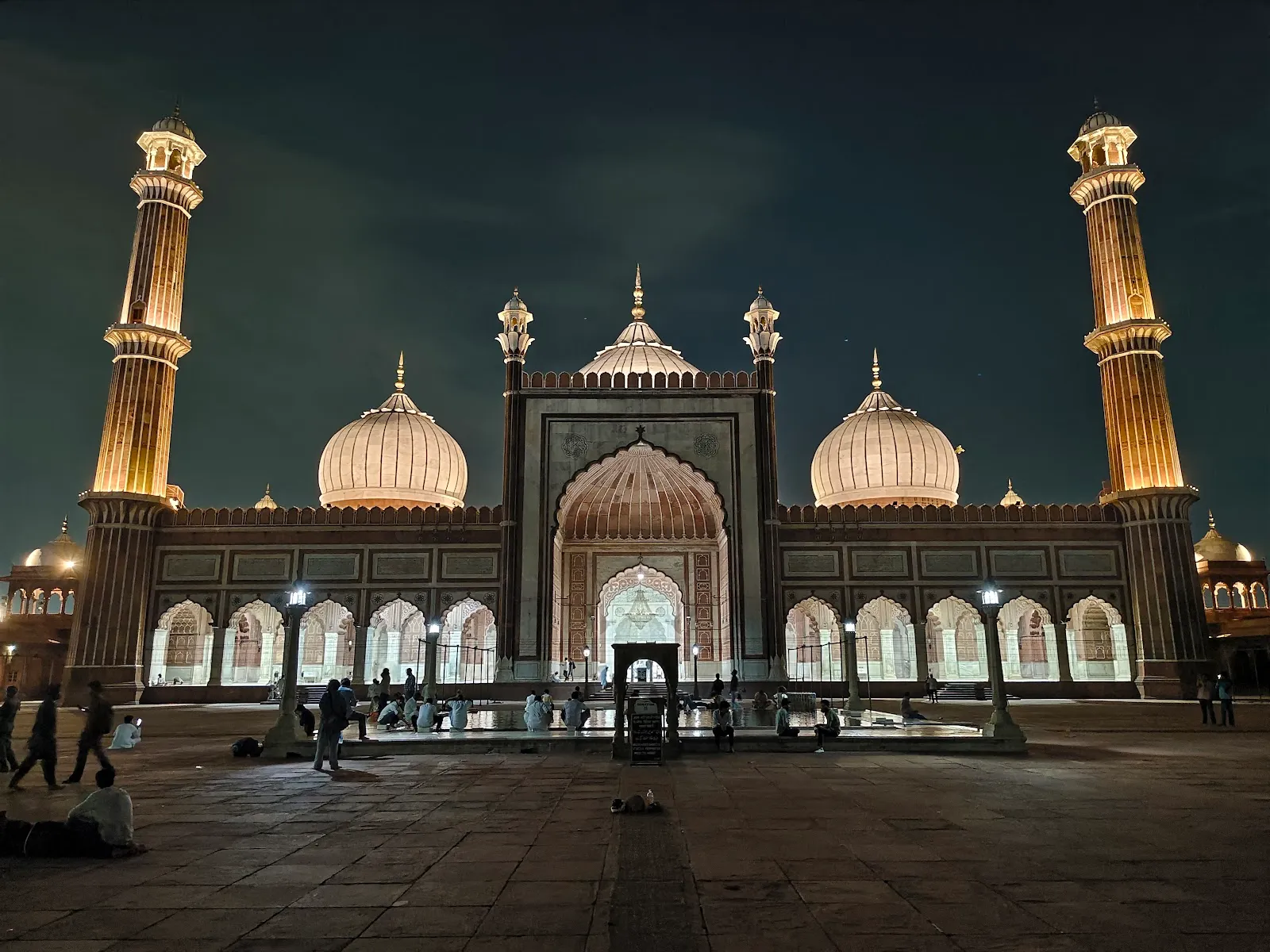
Jama Masjid, also called Masjid-i Jahan Numa, is a major Mughal mosque in Old Delhi, near the Red Fort and Chandni Chowk. Shah Jahan commissioned it, and it was completed in 1656. Red sandstone and white marble shape its gateways, domes and minarets; the broad courtyard gives the complex room for worship and quiet observation. Look across Old Delhi from the southern minaret, then continue into Chandni Chowk for its market lanes and nearby Mughlai food.
A royal mosque in Shahjahanabad
Jama Masjid is also known as Masjid-i Jahan Numa, a name commonly translated as “World-Reflecting Mosque.” Mughal emperor Shah Jahan commissioned it for his new capital, Shahjahanabad, now part of Old Delhi. Construction began in 1644 and the mosque was completed in 1656. It was intended as an imperial place of worship and remained important to the Mughal rulers until the dynasty ended in 1857.
The complex is among India’s largest mosques. Its courtyard can hold around 25,000 worshippers, and the scale is clear as soon as you enter. Three main gates, four towers and two tall minarets frame the site. Red sandstone and white marble give the buildings their distinctive contrast. The mosque faces Mecca, and the courtyard includes a central tank used for ablutions before prayer.
Details to look for
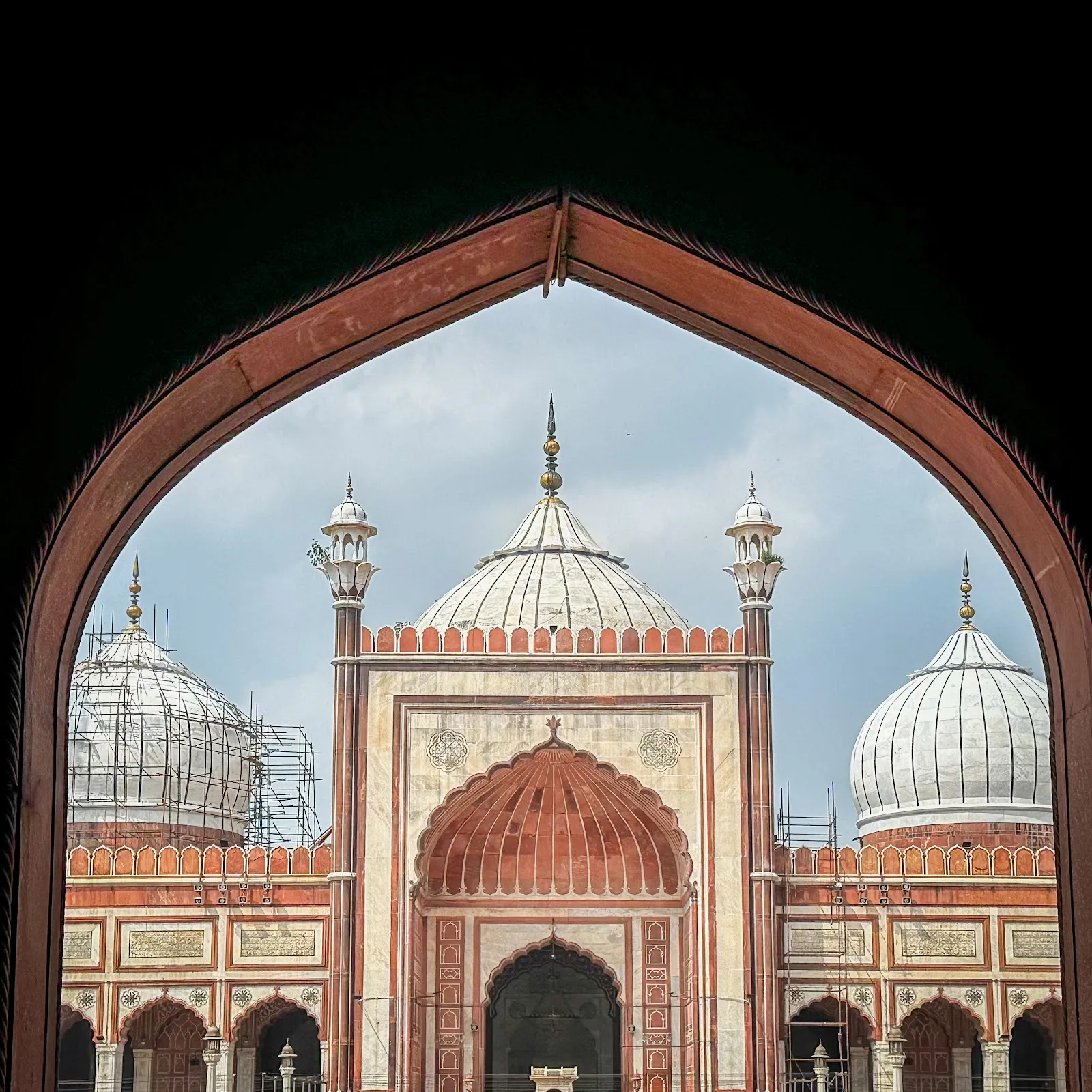
Take time to notice how the main structures sit around the large open courtyard. The prayer hall has a white ceiling and high arches at its entrance. Marble and sandstone appear in bands across the minarets and other parts of the complex. The overall design belongs to the Mughal tradition, with Indian and Persian influences noted in its architectural details.
The southern minaret is the one to climb for a view over Old Delhi. A narrow staircase leads upward, so the ascent is a practical consideration if you have limited mobility or dislike confined stairways. From above, the dense streets and the Red Fort come into view. Access to the minaret has carried a separate charge in some published accounts, but the reported amount differs, so check locally before climbing.
Visiting with respect
Jama Masjid remains a place of worship, not only a historic landmark. Dress modestly and follow any directions given on site. Visitors must remove their shoes before entering; wearing footwear that is easy to take off can make this simpler. The mosque is not open to tourists during prayer, so plan your visit around worship times.
Early morning is a quieter time to explore, while late afternoon can bring softer light to the stonework. The mosque is in Old Delhi, close to Chandni Chowk and the Red Fort. After your visit, the market streets nearby provide a natural next stop, with shops selling goods such as spices, silk, silver and crafts. The narrow roads around the mosque can be difficult to navigate by car; parking near the Red Fort is one alternative.
Perguntas frequentes
Where is Jama Masjid in Delhi?
It is in Old Delhi, near the Red Fort and Chandni Chowk.
When was Jama Masjid built?
Mughal emperor Shah Jahan commissioned it. Construction ran from 1644 to 1656.
What should I wear to Jama Masjid?
Choose modest clothing as a courtesy to the mosque and its worshippers.
Can you climb a minaret at Jama Masjid?
The southern minaret can be climbed for views over Old Delhi. A narrow staircase leads up, and published accounts report a separate charge, but the amounts differ.


