At 58 Quốc Tử Giám in Hanoi’s Đống Đa district, the Temple of Literature is a Confucian temple complex that became home to Vietnam’s first university. Founded in 1070, it is arranged around five courtyards, with traditional buildings, gardens and ponds to explore. Look for the Khuê Văn Các pavilion beside the Well of Heavenly Clarity and the stone steles set on turtle sculptures, inscribed with the names of scholars. The calm grounds offer a quieter change of pace from Hanoi’s busy streets.
A temple and a place of learning
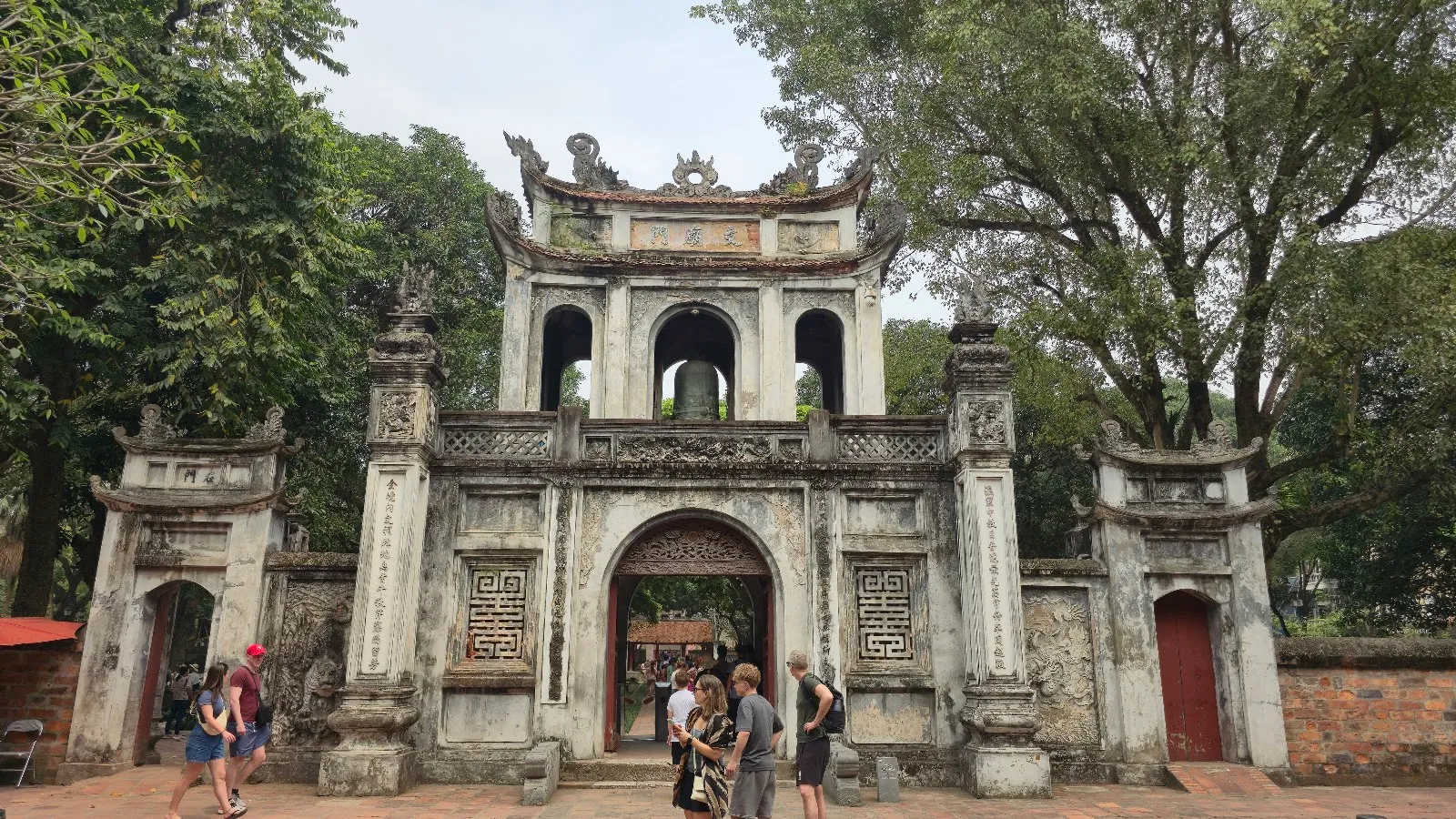
The Temple of Literature, also known as Văn Miếu, was founded in 1070 in honour of Confucius. In 1076, the Imperial Academy, or Quốc Tử Giám, was established within the complex as Vietnam’s first university. The site is now a memorial to education and to generations of scholars.
The university was initially intended for royalty and the elite. Its history links the temple’s religious purpose with the study of Confucian thought, literature and other subjects. Today, the grounds remain a place of meaning for students, who come to pray for good fortune in their studies.
Five courtyards to explore
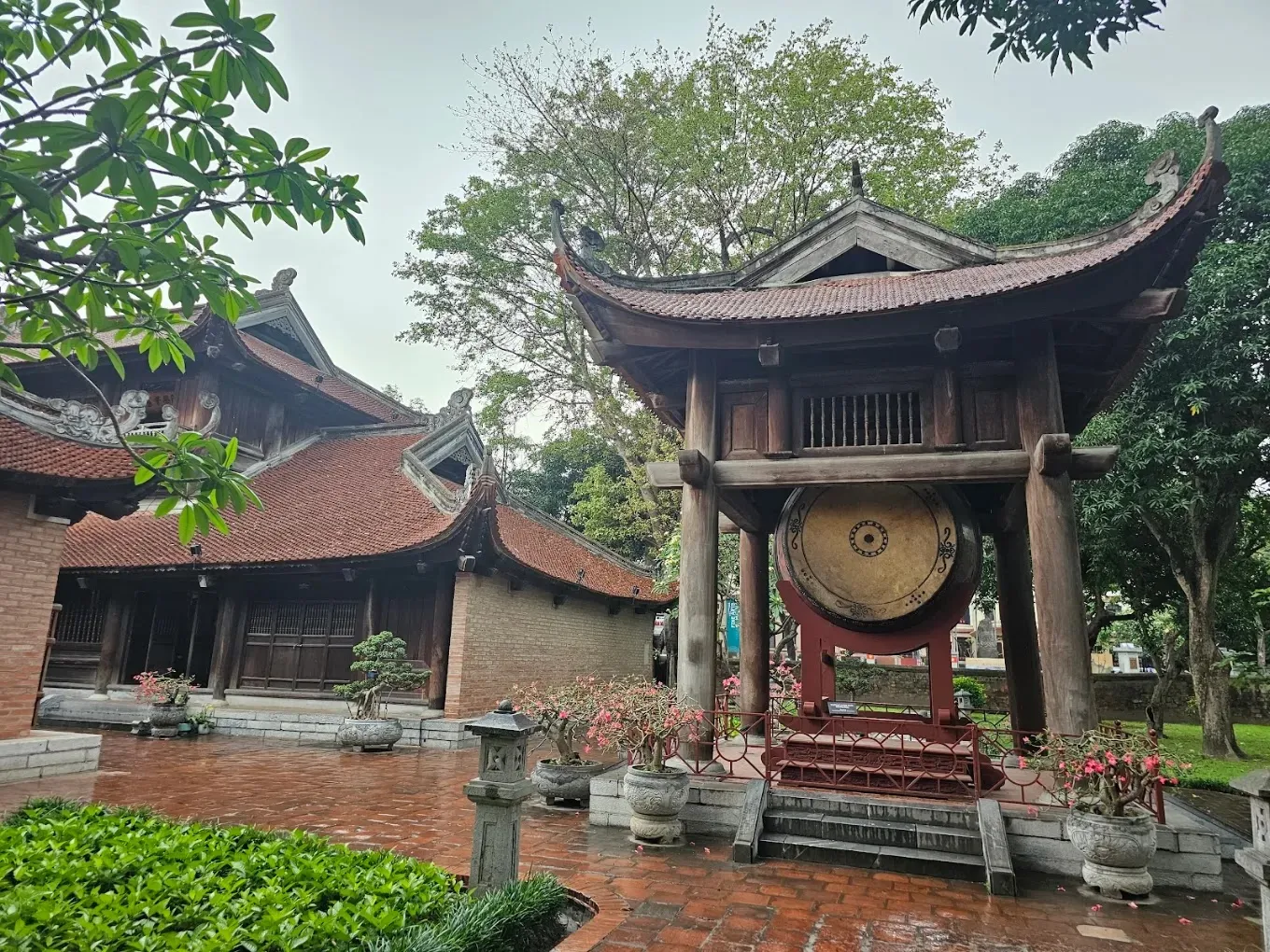
The complex is laid out around five courtyards, with gates, halls, pavilions, gardens and ponds along the route. Its buildings preserve traditional Vietnamese design, including tiled roofs and red timber details. The grounds also contain structures associated with the Ly and Tran dynasties.
The Khuê Văn Các, or Constellation of Literature Pavilion, stands beside the Well of Heavenly Clarity. The pavilion is a familiar symbol of Hanoi. Pause here to take in the relationship between the water, the buildings and the surrounding courtyard before continuing through the complex.
Steles and scholarly honours
Stone steles mounted on turtle sculptures record the names of distinguished scholars who earned imperial doctorates. These monuments connect the site’s architectural details with its former academic life. Take time to look closely at the inscriptions and the carved stone turtles rather than treating the steles as background scenery.
Statues and other displays across the grounds honour Confucius, his disciples and Vietnamese scholars. The halls and courtyards also preserve objects and exhibits that explain the site’s educational history. Some information is available in English, which can help make the displays easier to follow.
A living place of worship
The Temple of Literature is both a historic site and a place where people still come to pray. Students visit the altars before important exams, and the grounds are also used as a setting for graduation photographs. That continued use gives the complex a present-day role alongside its memorials and exhibitions.
Move quietly through the temple areas and dress respectfully. If you visit during a busy period, allow space for people praying or taking part in ceremonies. The site is popular, and holidays and graduation season can draw larger crowds.
Planning your visit
The entrance is at 58 Quốc Tử Giám in Hanoi’s Đống Đa district. Early morning is a practical choice if you want to avoid some crowds and the stronger midday heat. There are shaded garden areas for a pause, but comfortable clothing is useful in warm weather.
A guide can add context about the temple’s history and its role in Vietnamese education. The complex is open during the day, and occasional evening events have also been held, including a light-and-music presentation with activities. Check current details before planning around a special event.
Häufige Fragen
When was the Temple of Literature founded?
The temple was founded in 1070 in honour of Confucius. The Imperial Academy, Vietnam’s first university, was established within the complex in 1076.
What should you see at the Temple of Literature?
Explore its five courtyards, the Khuê Văn Các pavilion, the Well of Heavenly Clarity and the stone steles mounted on turtle sculptures. The grounds also contain halls, statues, gardens and historical displays.
Is the Temple of Literature still used as a place of worship?
Yes. Students still visit its altars to pray for success in their studies, so visitors should move quietly and behave respectfully.
When is a good time to visit the Temple of Literature?
Go early in the morning to avoid some crowds and the midday heat. Holidays and graduation season can be busier.