In Hanoi’s Ba Đình district, near the Ho Chi Minh Mausoleum and Museum, One Pillar Pagoda is a small wooden Buddhist shrine raised above a pond on a single stone pillar. Its lotus-inspired design makes it one of the city’s most distinctive historic sites. The pagoda dates to 1049, when Emperor Lý Thái Tông ordered it built after a dream of Quan Am, the Goddess of Mercy, offering him a son. Look at the curved roof and the shrine inside, then pause by the pond.
A pagoda shaped by a legend
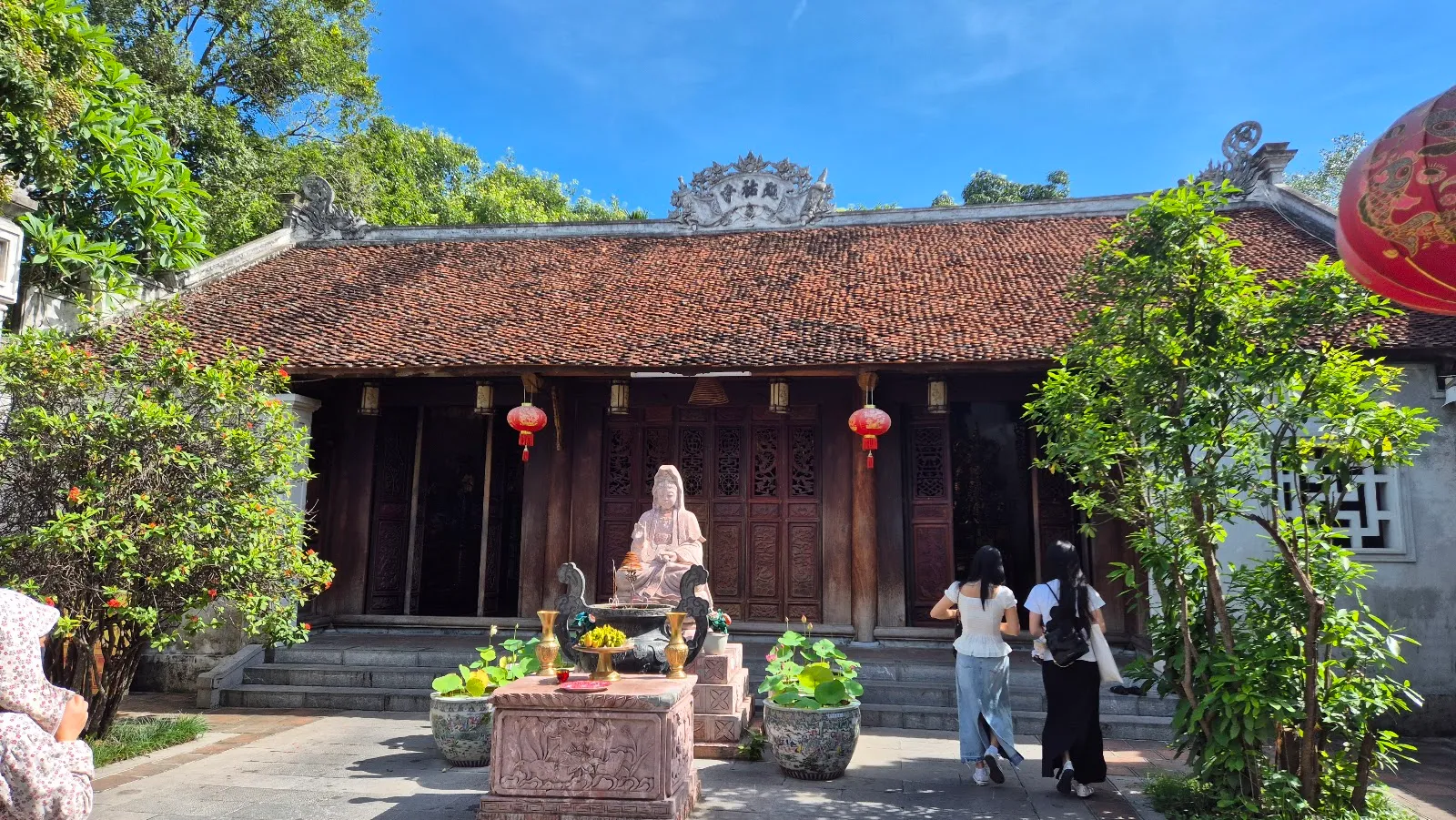
One Pillar Pagoda, or Chùa Một Cột, stands in Hanoi’s Ba Đình district, close to the Ho Chi Minh Mausoleum and Museum. It belongs to the Diên Hựu architectural complex, whose name is associated with lasting happiness. The pagoda itself is small, but its unusual form makes it a distinctive stop among the city’s historic sites.
The pagoda was built in 1049 during the reign of Emperor Lý Thái Tông. According to the legend tied to its construction, the emperor dreamed that Quan Am, the Goddess of Mercy, appeared seated on a lotus and offered him a son. After the birth of his heir, he ordered the shrine built in gratitude. The structure’s lotus-like design recalls the flower in the story.
The shrine and its setting
The wooden building rests on a single stone pillar in the middle of a pond. Its square form, curved tiled roof and position above the water give it the appearance of a lotus emerging from a pond. The design also carries Buddhist associations with purity and enlightenment.
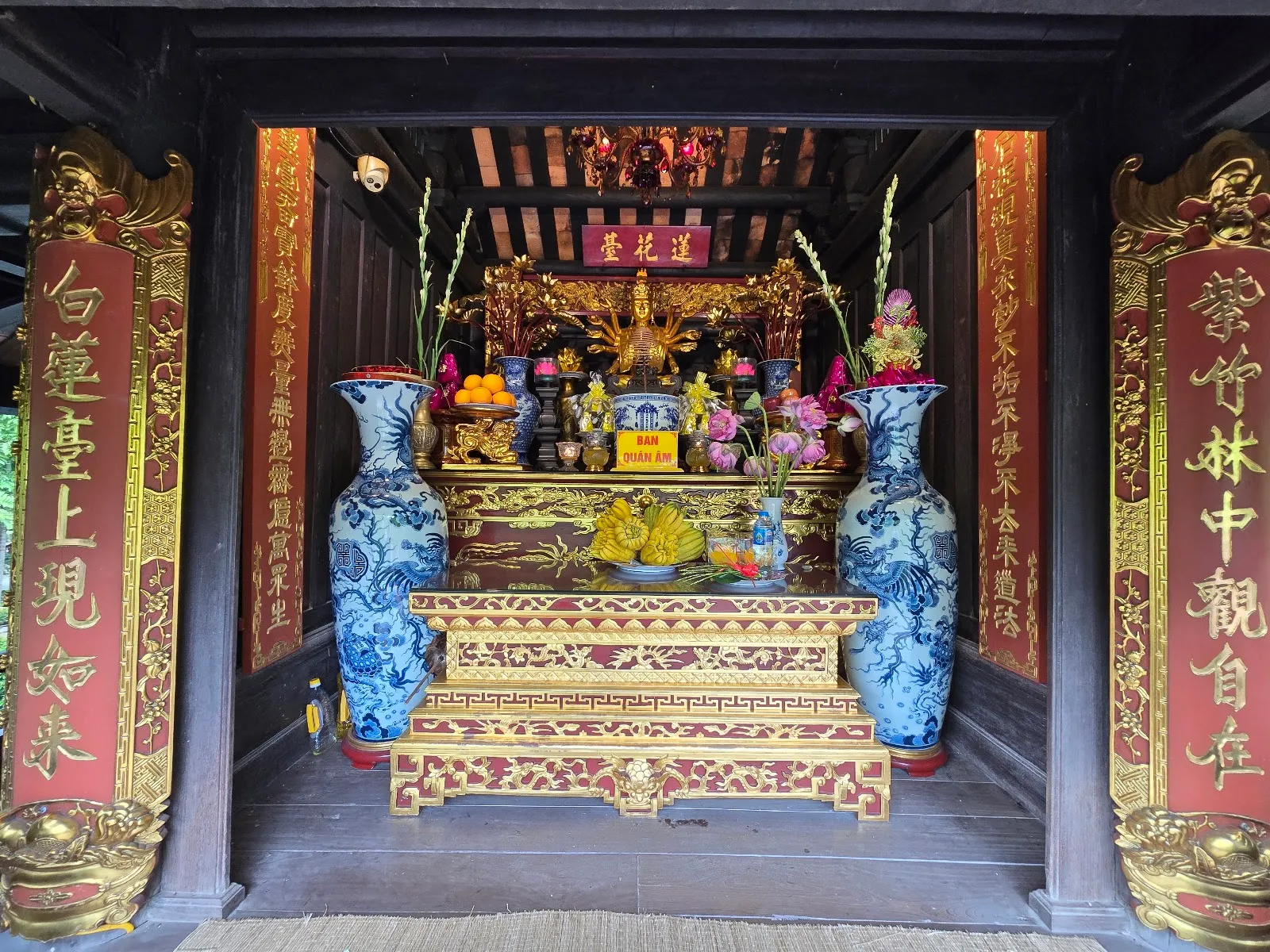
Inside, the shrine is dedicated to Quan Am. Visitors can look at the altar and religious objects, including a copper censer, ceramic vases and gold-plated lotuses. The pagoda remains a place of worship, so take a quiet, respectful approach while exploring it.
The structure seen today is a reconstruction. The original pagoda was destroyed by French soldiers in 1954, and the post-independence government commissioned a smaller version based on the earlier design. Its setting near the mausoleum and museum makes it easy to include with other sights in Ba Đình.
Häufige Fragen
Where is One Pillar Pagoda?
It is in Hanoi’s Ba Đình district, near the Ho Chi Minh Mausoleum and Museum.
Why was One Pillar Pagoda built?
Legend says Emperor Lý Thái Tông ordered it in 1049 after dreaming of Quan Am, the Goddess of Mercy, and later having a son.
What is inside One Pillar Pagoda?
The shrine is dedicated to Quan Am. Its altar includes religious objects such as a copper censer, ceramic vases and gold-plated lotuses.