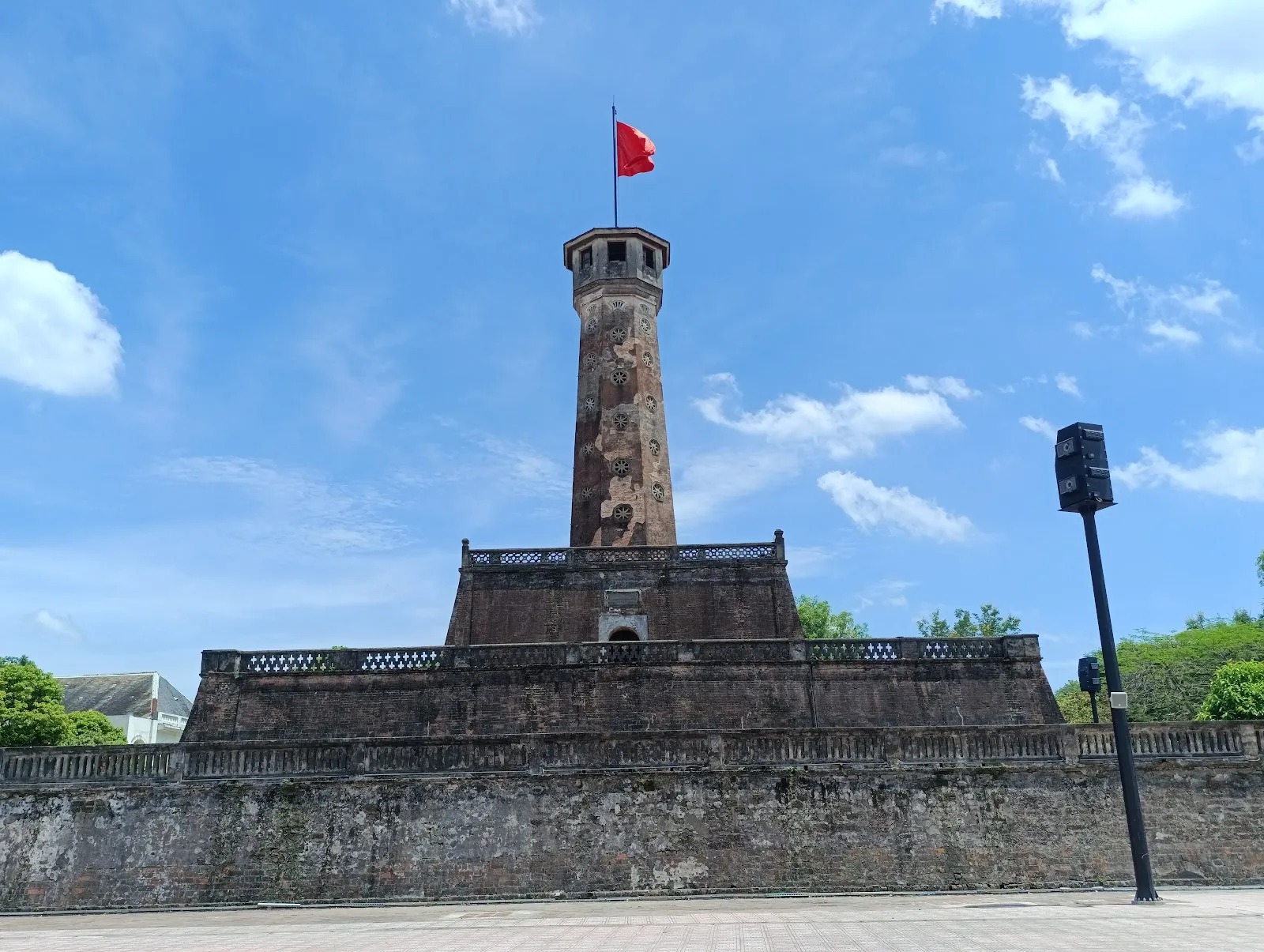
Hanoi Flag Tower stands on Điện Biên Phủ Street, beside the Imperial Citadel of Thang Long and within the grounds of the Vietnam Military History Museum. Built between 1805 and 1812, the stepped brick structure has three square bases and a central tower, with Vietnam’s flag flying above it. Its survival through the French colonial period and its place in Hanoi’s history make it a useful stop for visitors exploring the citadel and the city’s military past.
Built during the Nguyen dynasty
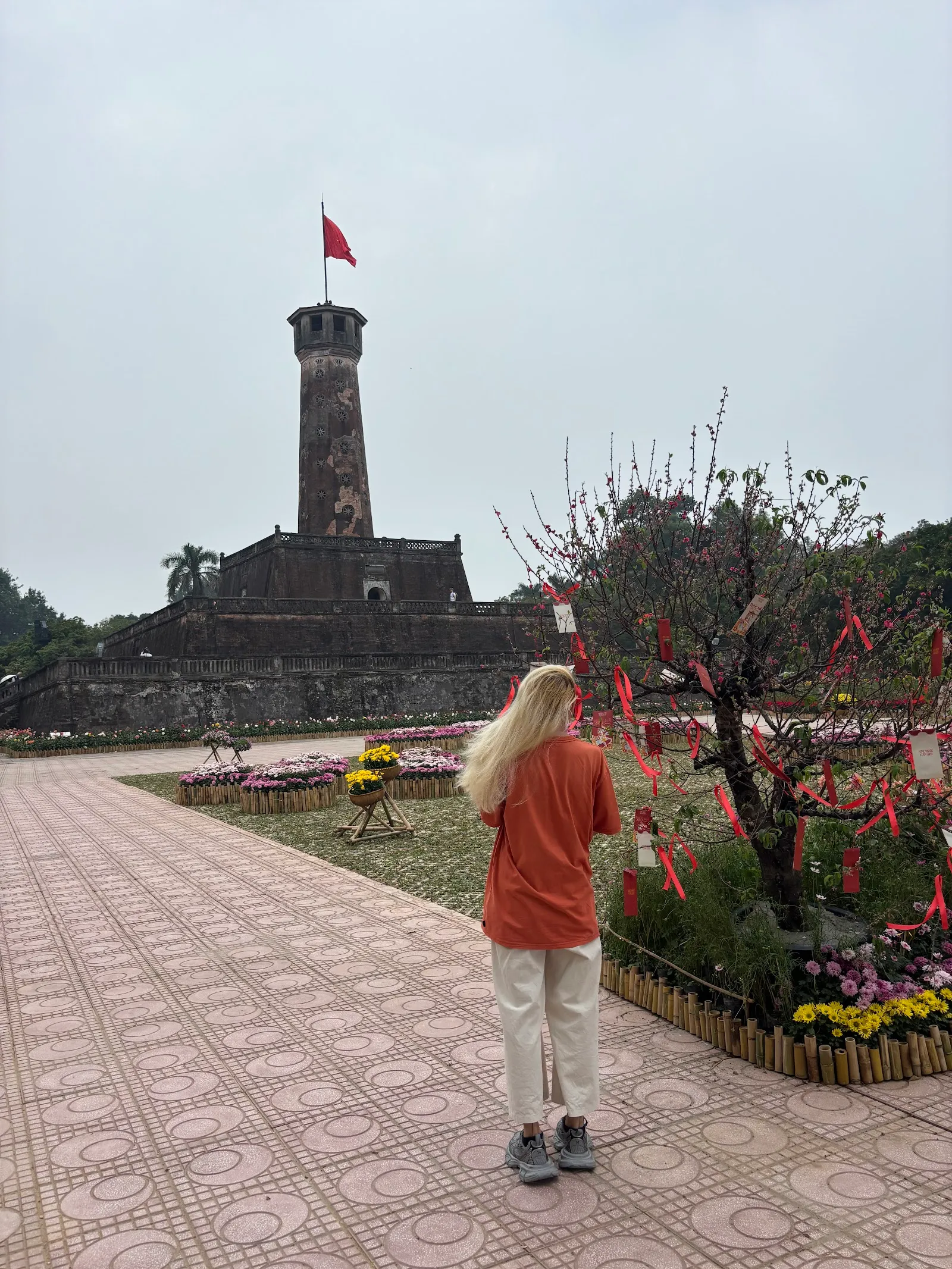
Construction of Hanoi Flag Tower began in 1805 and was completed in 1812, during the Nguyen dynasty. The tower is one of the historic structures associated with the Imperial Citadel of Thang Long. Its brick form rises through three square bases to a central pillar, topped by Vietnam’s national flag.
The structure was used as an observation post. It later served as a military post during the French colonial period. The tower survived the French administration’s destruction of much of the citadel in the late 19th century, and is now a familiar historic symbol of Hanoi.
A landmark tied to modern history
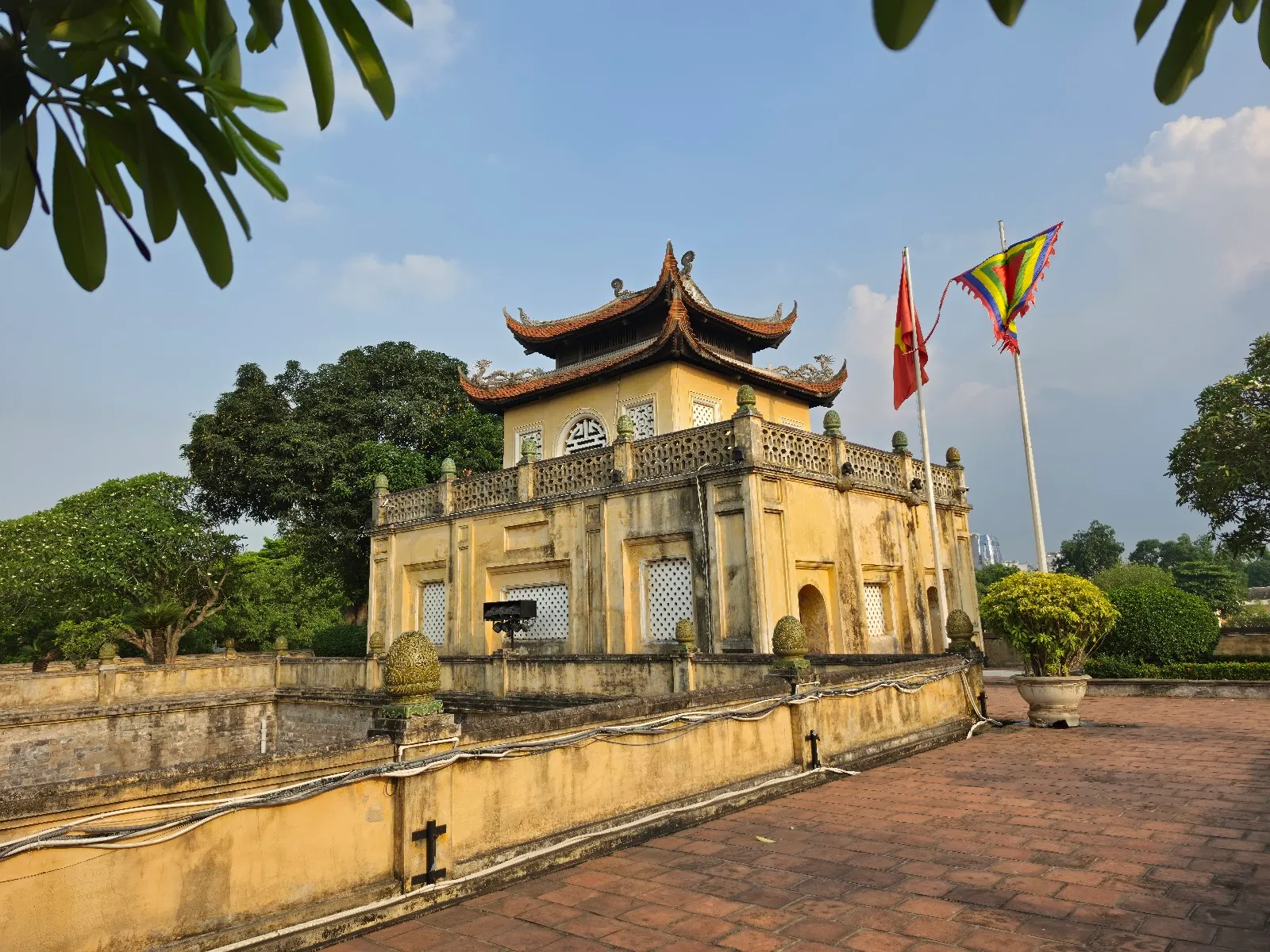
The tower’s history continued beyond its original military role. The national flag was raised there on 10 October 1954, a date connected with Vietnam’s independence from France. The site also recalls events in 1945 and 1954, giving the landmark significance beyond its architecture.
A nearby building has a video about the tower’s historical background. The tower sits within the Vietnam Military History Museum grounds, where outdoor displays include historic items from Vietnam’s wars. It is opposite Lenin Park and close to the Imperial Citadel, so the surrounding sites can be explored together.
Häufige Fragen
Can visitors climb Hanoi Flag Tower?
Visitors cannot climb to the top of the tower.
When was Hanoi Flag Tower built?
Construction began in 1805 and was completed in 1812.
What can you see near Hanoi Flag Tower?
The tower is beside the Imperial Citadel of Thang Long and within the grounds of the Vietnam Military History Museum. Lenin Park is opposite.
Is an entrance ticket required?
An entrance fee is required for the museum visit, which includes access to the tower grounds. The fee amount is not specified.