Almería Cathedral, formally the Cathedral of the Encarnación, is the seat of the diocese in the city of Almería. Built between 1524 and 1562, it blends Gothic and Renaissance styles in a building that was also designed as a fortress. Thick plain walls, small high windows and tall turrets were built to guard against pirate raids. Inside, look up at the ribbed vaulted ceiling and the 16th-century walnut choir stalls, then pass through the cloister. Outside, the facade has a sun emblem that is a symbol of the city. Going in during a service makes for a calmer visit.
Built for worship and defence
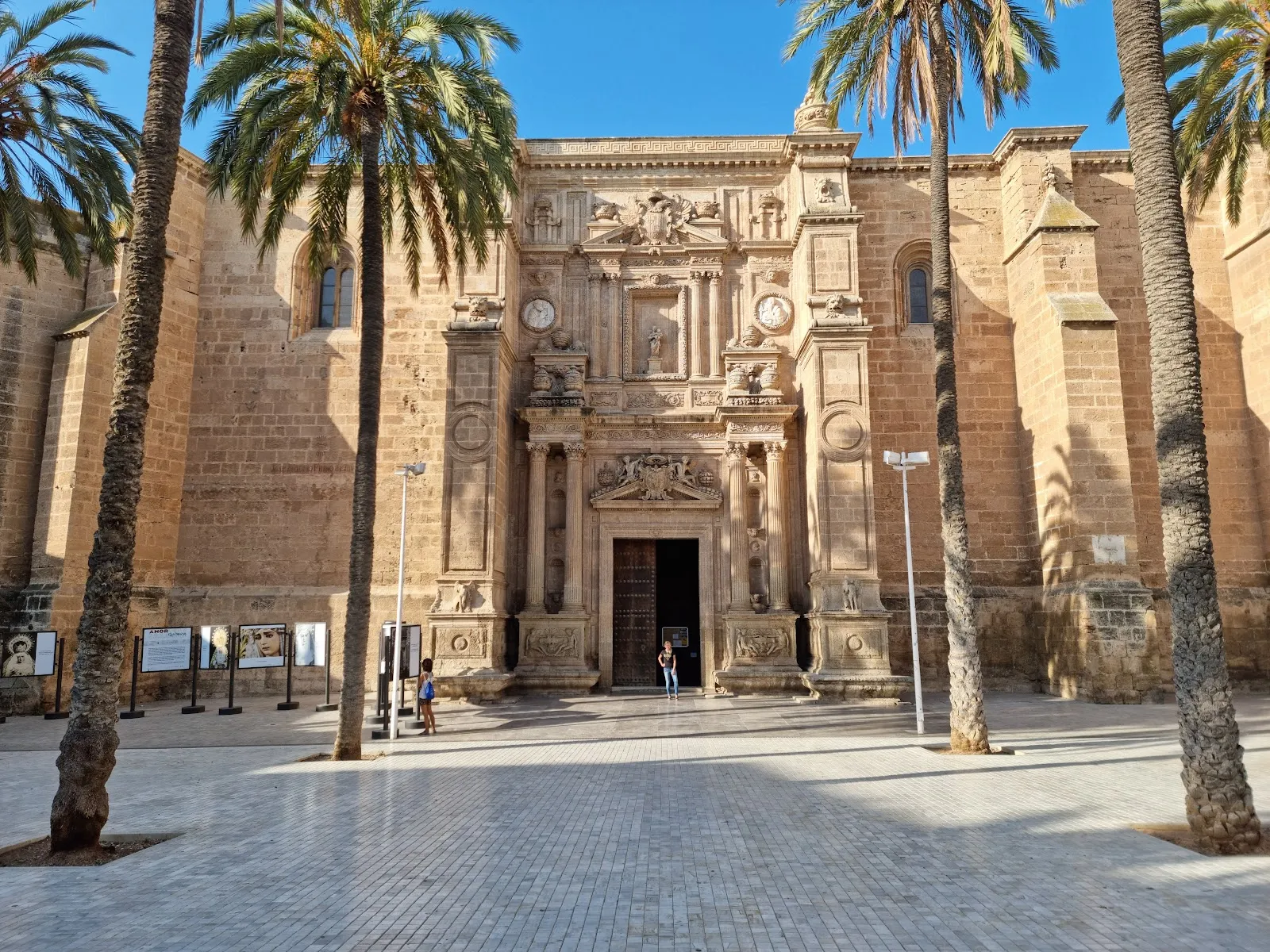
The cathedral replaced an earlier church destroyed by an earthquake in 1522. Work began in 1524 and continued until 1562. The project is associated with Bishop Villalón.
Almería faced frequent raids from North Africa during the 16th century, so the building was planned as a place of worship and a refuge for the people of the city. Its plan reflects that double role. The walls are plain and high, the windows are small and set high up, and the turrets and buttresses were built for defence, a feature not common in Spanish cathedrals.
Architecture outside
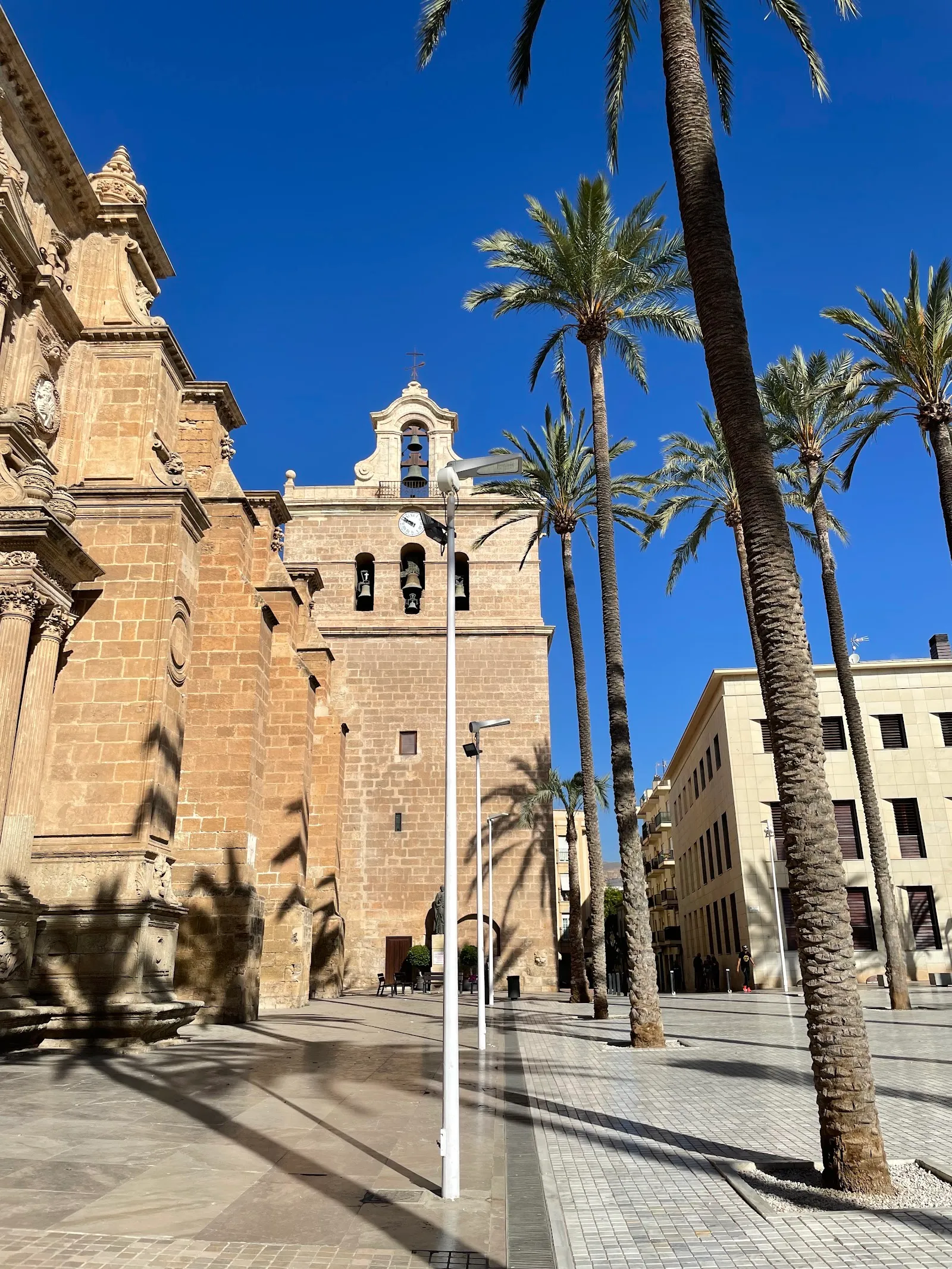
The cathedral combines Gothic and Renaissance styles. Baroque and neoclassical features were added in the 18th century, so the building shows several periods in one structure. Its six towers give the outline the look of a fortress.
On the facade facing Calle Cubo, look for the Sun of Portocarrero, the emblem that is a symbol of the city.
Inside the cathedral
The entrance is through a fine neoclassical cloister, where palm trees grow among the arches. The Gothic interior is an impressive space with a sinuous ribbed ceiling. The choir stalls are carved in walnut and date from the 16th century.
The monumental Capilla Mayor, or chancel, is the focal point of the church. Religious art and statues fill the chapels, and the interior is rich in gold.
Visiting during mass and on guided tours
Mass is held in the cathedral, and the atmosphere during a service is calm. Entry is free during mass, and admission is usually free on Sundays. At other times, admission is charged, and buying tickets in advance is recommended.
Guided tours are available and cover the history of the building. Admission includes a visit to the ecclesiastical museum. Because the cathedral is still used for worship, keep voices low and dress modestly.
Getting there and parking
The cathedral sits in the historic centre of Almería, within walking distance of the central car parks and the Archaeological Museum. The Estación Intermodal car park, next to the central train station, is large and central.
The wheelchair accessible entrance and wheelchair accessible parking lot are listed for the site.
Häufige Fragen
Is there an entry fee?
Entry is free during mass, and admission is usually free on Sundays. At other times, admission is charged. Buying tickets in advance is recommended.
Why does the cathedral look like a fortress?
It was built between 1524 and 1562 as both a place of worship and a refuge during pirate raids from North Africa. The thick plain walls, small high windows and turrets were part of that defence.
Are there guided tours?
Yes, guided tours are available and cover the history of the building. Admission includes a visit to the ecclesiastical museum.
Is the cathedral accessible for wheelchair users?
The cathedral has a wheelchair accessible entrance and a wheelchair accessible parking lot.