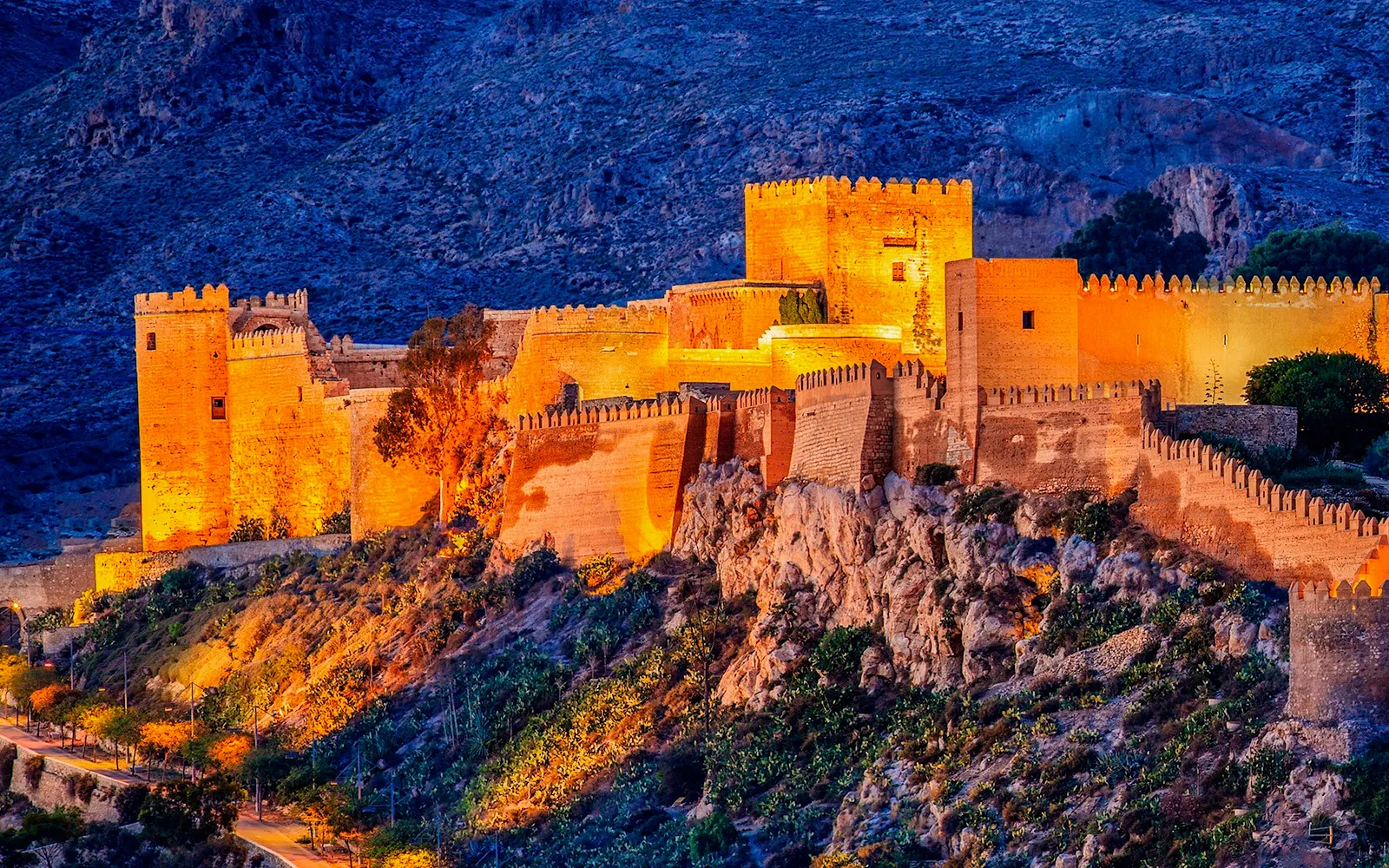
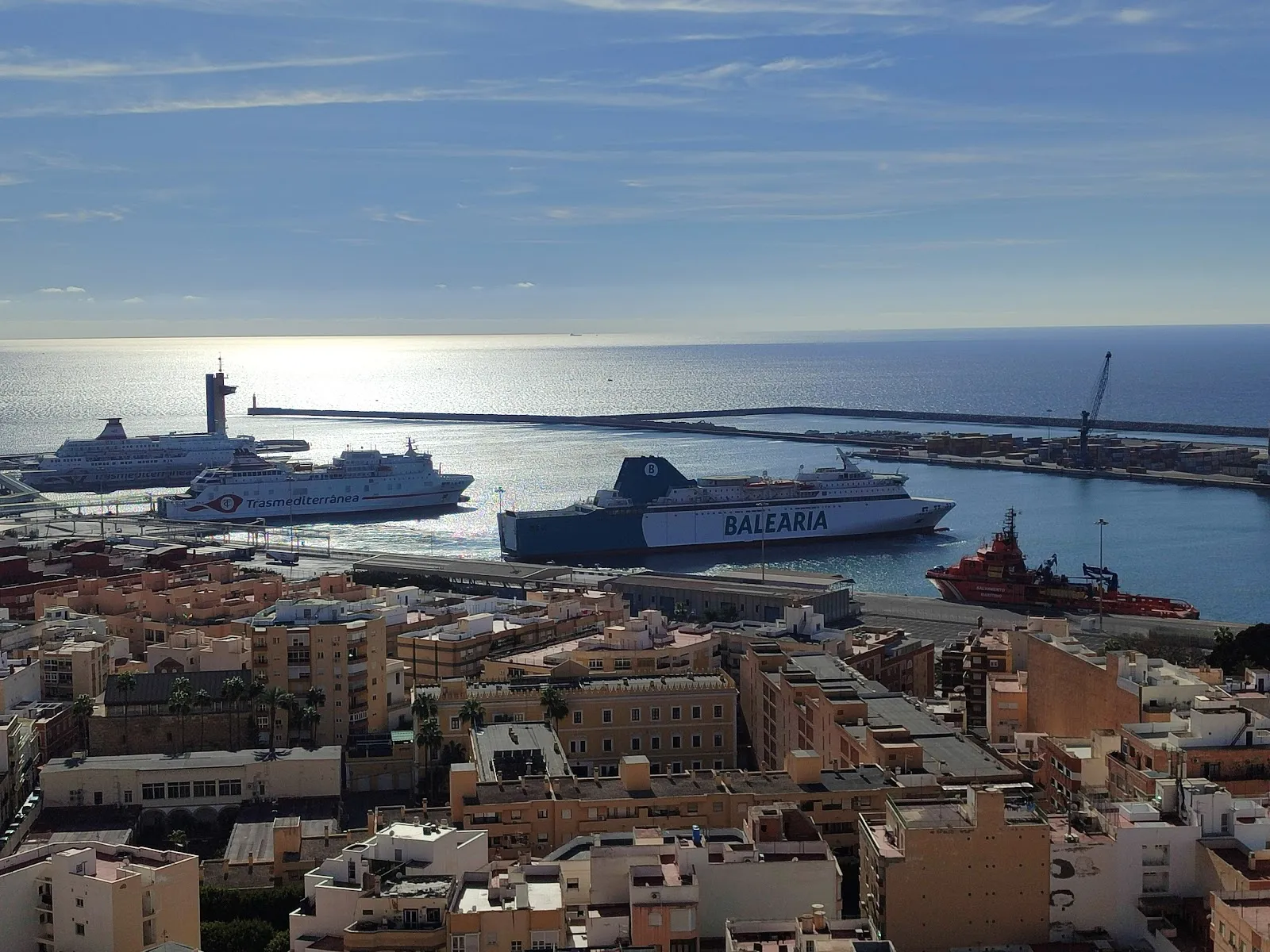
The Alcazaba is a walled Moorish fortress on the hill above Almería, built in 955 under the caliphate of Córdoba. Inside its walls are towers, courtyards, palace and house ruins, bath houses and gardens with water channels. From the upper levels you see the town, the port, the surrounding hills and the mountains. The climb takes some effort, but the views from different heights make it worthwhile. Entry is free for EU citizens.
From the Bronze Age to the caliphate
The hill under the fortress was settled in prehistoric times, in a period that can be dated to the Bronze Age. Phoenician finds from later centuries, and Roman remains such as water structures and pottery, have been unearthed here. Remains from the late Roman period, from the 5th to 7th centuries, are especially prominent.
In 955 the provincial capital moved from Pechina to Almería, and work began on a defensive fortress on the central hill. The name alcazaba comes from the Arabic al-qasbah, a fortress inside or outside a city. The complex is the second largest Islamic fortress in Spain, after the Alhambra in Granada, and it was a working citadel where the military and political powers of the time lived.
Earthquakes in 1522 and 1560 damaged parts of the fortress, and some sections were later rebuilt. In 2018 it was reported as the second most visited monumental site in Andalusia.
What is inside the walls
The complex has three walled enclosures. Inside are the ruins of homes, palace buildings and bath houses, along with squares and courtyards. The Saliente Bastion and the La Vela Wall are among the features to look for.
The first of the three spaces once held living quarters and baths. Today it is mostly gardens. Water channels run through them, with fountains and lily ponds in places. Among the ruins, landscaped beds hold rock flowers and cacti.
How a visit works
Reaching the top means climbing many stone steps, and the stairs stay steep once you are inside. Plan time to move between the towers at your own pace.
Security staff are present throughout the site. Restrooms are clean and found near the entrance and in the upper part. Water dispensers are placed around the complex.
Guided tours are available for an extra fee. An audio guide can be rented, but the official website can be hard to use, so have the details ready before you arrive. Allow about 1.5 hours for a relaxed visit.
Beyond the walls
Beneath the city lie about 4.5 km of tunnels, the Civil War shelters. Volunteers dug them with picks and shovels to protect residents from bombing raids during the Spanish Civil War.
The cathedral is about a ten-minute walk away, through residential streets.
The fortress has also been used as a film location. Scenes set in Dorne in Game of Thrones were filmed here, and it appeared in Wonder Woman 1984 and Risen.
Häufige Fragen
Is there an entry fee for the Alcazaba?
Entry is free for EU citizens. Non-EU visitors pay a small fee, so check the current price on the official website before you go.
How long do you need at the Alcazaba?
Allow about 1.5 hours to see the site at a relaxed pace.
When is the best time to visit?
Early morning, around 9 to 10 am, is cooler and less crowded. A sunny day gives the best views.
Is the Alcazaba suitable for pushchairs?
Pushchairs are difficult here. The entrance is steep and there are many stairs inside. The site has a wheelchair accessible restroom.