Reise planen
Sprache: Deutsch
ReiseplanerPlane deine Reise auf einer Karte

Top-Reiseziele

EnglishDeutschFrançaisEspañolPortuguêsPortuguês (BR)Italiano
Reisehinweis · PakistanEinige Regierungen raten von allen Reisen nach Pakistan ab, außer von unbedingt notwendigen.Die Empfehlung hängt von Ihrem Reisepass ab. Lesen Sie vor der Buchung die Hinweise Ihrer eigenen Regierung.Offizielle Hinweise
Gebiete mit Warnungen
  • Provinz Belutschistan · alle Reisen vermeiden · Kanada, Deutschland, Frankreich, Neuseeland, Vereinigtes Königreich, USA
  • Indische Grenze, Entfernung nicht angegeben (inkl. LoC) · alle Reisen vermeiden · Frankreich, Neuseeland
  • Karakorum-Highway, Mansehra bis Chilas · alle Reisen vermeiden · Kanada, Neuseeland, Vereinigtes Königreich
  • Provinz Khyber Pakhtunkhwa · alle Reisen vermeiden · Kanada, Frankreich, Neuseeland, USA
  • Von Pakistan verwaltetes Kaschmir (Azad Jammu und Kaschmir) · alle Reisen vermeiden · Kanada, Deutschland, Frankreich, Italien, Neuseeland, Vereinigtes Königreich
  • Grenzregion zu Afghanistan, Entfernung nicht angegeben · nicht notwendige Reisen vermeiden · Italien, Neuseeland
  • Ehemalige Stammesgebiete der FATA · nicht notwendige Reisen vermeiden · Frankreich, Italien

Außerdem von einer Regierung genannt: 10-km-Streifen entlang der chinesischen Grenze (Kanada), 10-km-Streifen entlang der indischen Grenze (Kanada), 10-km-Streifen entlang der iranischen Grenze (Kanada), 10-km-Streifen entlang der Kontrolllinie (LoC) (Kanada), 10-Meilen-Streifen entlang der afghanischen Grenze (Vereinigtes Königreich), 10-Meilen-Streifen entlang der Kontrolllinie (LoC) (Vereinigtes Königreich), 50-km-Streifen entlang der afghanischen Grenze (Kanada), 50-km-Streifen entlang der afghanischen Grenze in Gilgit-Baltistan (Neuseeland), Bajaur (Vereinigtes Königreich), Bannu (Vereinigtes Königreich), Buner (Vereinigtes Königreich), Charsadda (Vereinigtes Königreich), Dera Ismail Khan (Vereinigtes Königreich), Hangu (Vereinigtes Königreich), Unmittelbare Umgebung der Kontrolllinie (LoC) (USA), Karak (Vereinigtes Königreich), Distrikt Khyber (Vereinigtes Königreich), Kohat (Vereinigtes Königreich), Kurram (Vereinigtes Königreich), Lakki Marwat (Vereinigtes Königreich), Unter-Dir (Vereinigtes Königreich), Unteres Süd-Waziristan (Vereinigtes Königreich), Mohmand (Vereinigtes Königreich), Autobahn N45 von der Mardan-Ringstraße nördlich bis zum Stadtrand von Chitral, inkl. Kalasch-Tal (Vereinigtes Königreich), Nord-Waziristan (Vereinigtes Königreich), Orakzai (Vereinigtes Königreich), Peshawar (Vereinigtes Königreich), Provinz Punjab, ohne die Zone Faisalabad–Lahore–Islamabad (Frankreich), Swat (Vereinigtes Königreich), Tank (Vereinigtes Königreich), Oberes Dir (Vereinigtes Königreich), Oberes Süd-Waziristan (Vereinigtes Königreich), 20-km-Streifen entlang der indischen Grenze, inkl. LoC (Deutschland), 5-Meilen-Streifen entlang der indischen Grenze (Vereinigtes Königreich), Distrikt Chitral (Kanada), Dera Ghazi Khan (Vereinigtes Königreich), Zone Faisalabad–Lahore–Islamabad (Frankreich), Karatschi (Kanada), Landweg von und nach Iran und Afghanistan (Deutschland), Malakand (Vereinigtes Königreich), Mardan (Vereinigtes Königreich), Nowschera (Vereinigtes Königreich), Shangla (Vereinigtes Königreich), Provinz Sindh nördlich von Nawabshah und einschließlich Nawabshah (Vereinigtes Königreich), Swabi (Vereinigtes Königreich), Stammesgebiete Belutschistans (Italien)

RegierungHinweiseAktualisiertHinweise lesen
Vereinigtes Königreich (FCDO)No advice against the whole country (regional advisories)–Hinweise lesen
Vereinigte Staaten (State Dept)Reconsider Travel16. Juni 2026Hinweise lesen
Kanada (Global Affairs)Exercise a high degree of caution (regional advisories)–Hinweise lesen
Deutschland (Auswärtiges Amt)No advice against the whole country; partial warnings for named regions (regional advisories)13. Okt. 2026Hinweise lesen
Neuseeland (SafeTravel)Avoid non-essential travel–Hinweise lesen
Frankreich (Ministerium für Europa und Auswärtige Angelegenheiten)Le reste du territoire est déconseillé sauf raison impérative–Hinweise lesen

Täglich anhand der veröffentlichten Hinweise der Regierungen geprüft; zuletzt geprüft am 3. Nov. 2026.RoamLedger fasst offizielle Hinweise zusammen; es handelt sich nicht um Empfehlungen einer Regierung.

Pakistan Monument
Denkmal

Pakistan Monument

The Pakistan Monument stands on the western Shakarparian Hills in Islamabad.

The Pakistan Monument stands on the western Shakarparian Hills in Islamabad. Four large granite petals rise from the ground and curve inward like a flower, and three smaller petals sit inside them. The monument was opened in 2007 and is dedicated to national unity and to those who gave up their present for the country's future. A history museum with wax figures is on the site. From the hilltop you look over Islamabad, the Margalla Hills and Faisal Mosque. The grounds are open and suit families, and walking around the petals takes little time.

What the petals stand for
Pakistan Monument
Pakistan Monument

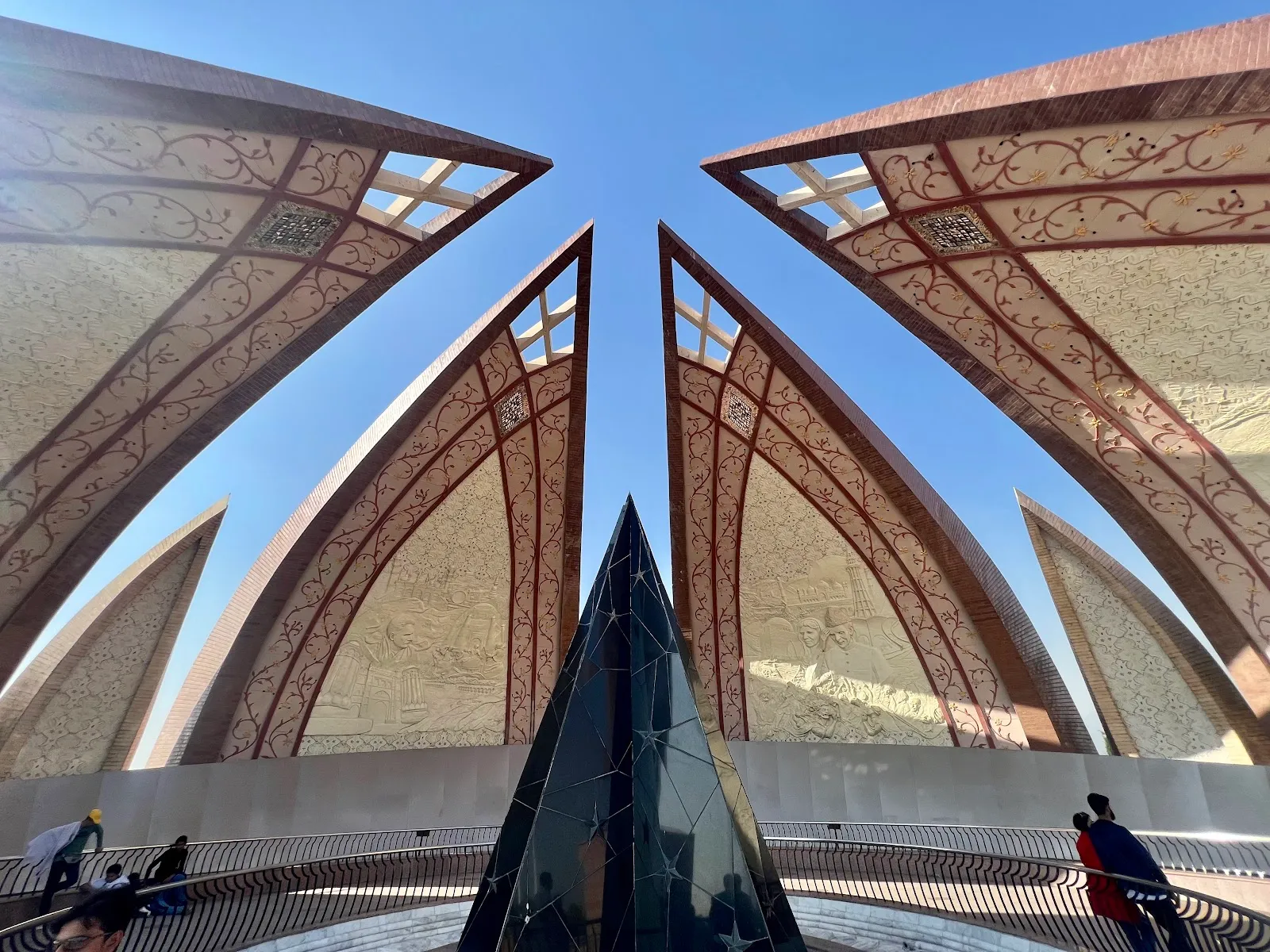
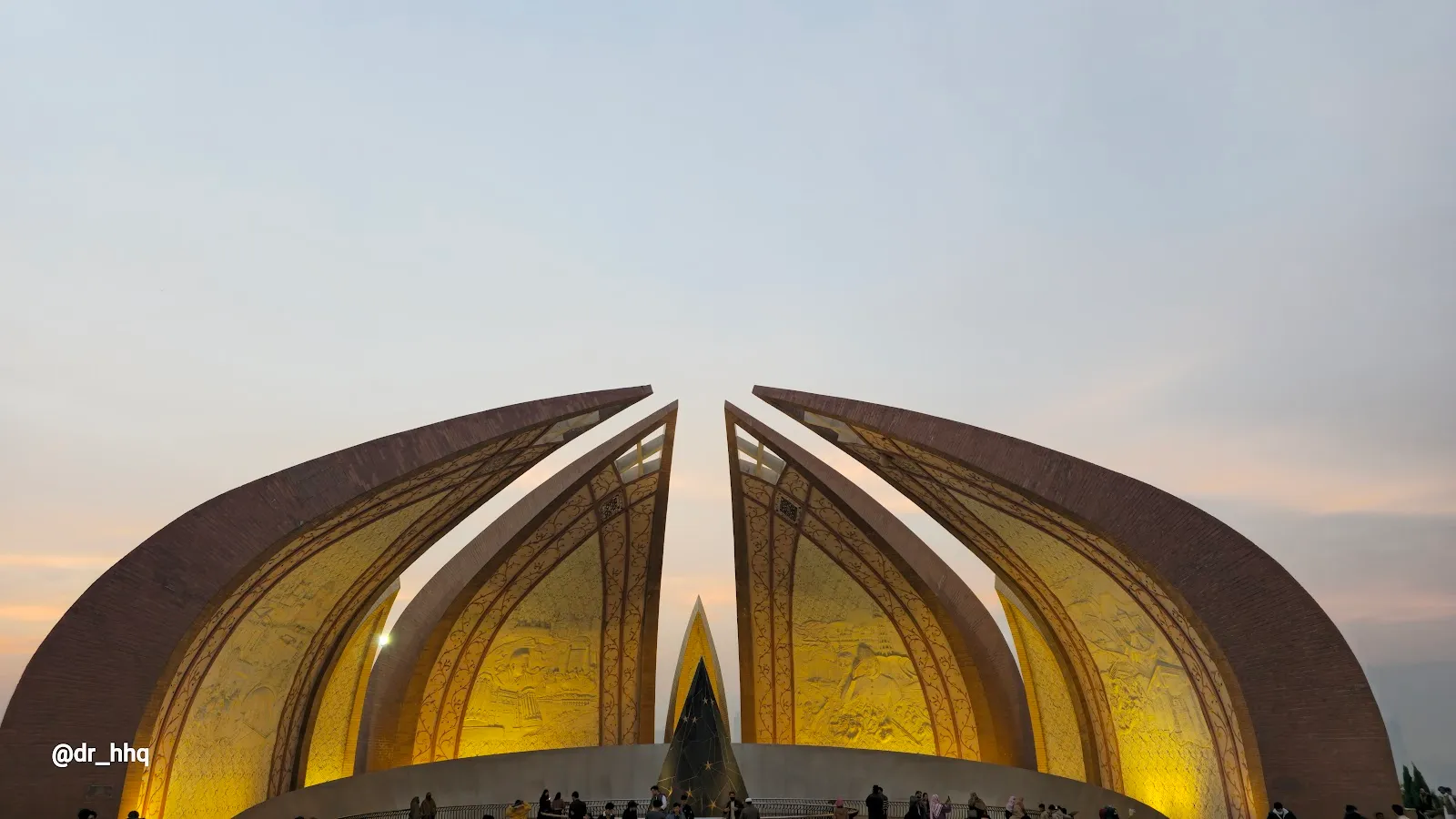
The monument is shaped like a flower in bloom. Four tall granite petals rise from the ground and meet at the top. They stand for the four provinces: Punjab, Sindh, Balochistan and Khyber Pakhtunkhwa. Three smaller petals inside the large ones represent Gilgit-Baltistan, Azad Kashmir and the former FATA region.

The design draws on Mughal architecture, and the dome-like structure is modelled on Mughal muqarnas. Look closely at the stonework. The surfaces carry carved detail, including calligraphy and murals, and the inner walls show the outlines of Badshahi Mosque, Lahore Fort, Minar-e-Pakistan, the Khyber Pass and the Quaid's tomb.

Construction and dedication
Pakistan Monument
Pakistan Monument

Construction began in 2004 and finished in 2007. The monument was inaugurated on 23 March 2007. The architect was Arif Masood. The site covers 2.8 hectares.

The monument is dedicated to national unity and to the people who sacrificed their present for a better future. It is built on high ground, so it can be seen from across the Islamabad and Rawalpindi area. The site averages around 1,500 visitors a day, and school groups are a regular sight.

The museum

The Pakistan Monument Museum is on the site. It has a wax museum that shows key events leading to the Pakistan Movement, and displays of historical figures. The material is visual, which helps younger visitors follow the story. Another account describes the museum as tracing the country's history from the Indus Valley civilization to the present.

The museum is the only part of the visit that needs a ticket. A visit to the exhibits takes around 20 minutes.

Reaching the monument and what is around it

The site sits on the edge of Shakarparian National Park, along the Kashmir Highway. Free and paid parking are both available, and the entrance and parking are wheelchair accessible. If you drive, follow the Shakarparian signs. The road can feel as if it leads the wrong way, but it passes the museum and the dinosaur park before you reach the parking area near the horses.

Outside the monument, stalls sell snacks and candyfloss, and camel rides are offered. Lok Virsa Museum is a short drive away, and the Heritage Museum is also nearby. Faisal Mosque and Daman-e-Koh pair well with the monument on a day in the capital.

The view and the evening

The monument itself takes little time to see. The view is the main reason to linger. From the hilltop you look over Shakarparian Park, the city and the Margalla Hills, and Faisal Mosque is visible in the skyline. A smaller viewpoint sits behind the monument and is easy to miss.

The monument is lit after dark, so staying past sunset adds a second view of it. Early morning is the other good time. One visitor arrived at 9:30 AM and found only two other people in the park.

Häufige Fragen

Is there an entry fee for the Pakistan Monument?

There is no fee to enter the grounds. You pay only if you want to go into the museum building that explains the history.

How long do you need at the Pakistan Monument?

Allow 45 to 90 minutes for the walk up, the petals, the view and photos. The museum exhibits take around 20 minutes more.

What do the petals represent?

The four large petals stand for Punjab, Sindh, Balochistan and Khyber Pakhtunkhwa. The three smaller ones stand for Gilgit-Baltistan, Azad Kashmir and the former FATA region.

How do you get to the monument by car?

Follow the signs for Shakarparian. Drive past the museum and the dinosaur park and park near the horses. The monument is then about 5 minutes away on foot.

Is the Pakistan Monument good for children?

Yes. The grounds are open and clean, and the wax figures and displays in the museum make the history easy for children to follow.
Weitere Highlights in Islamabad

Alle entdecken