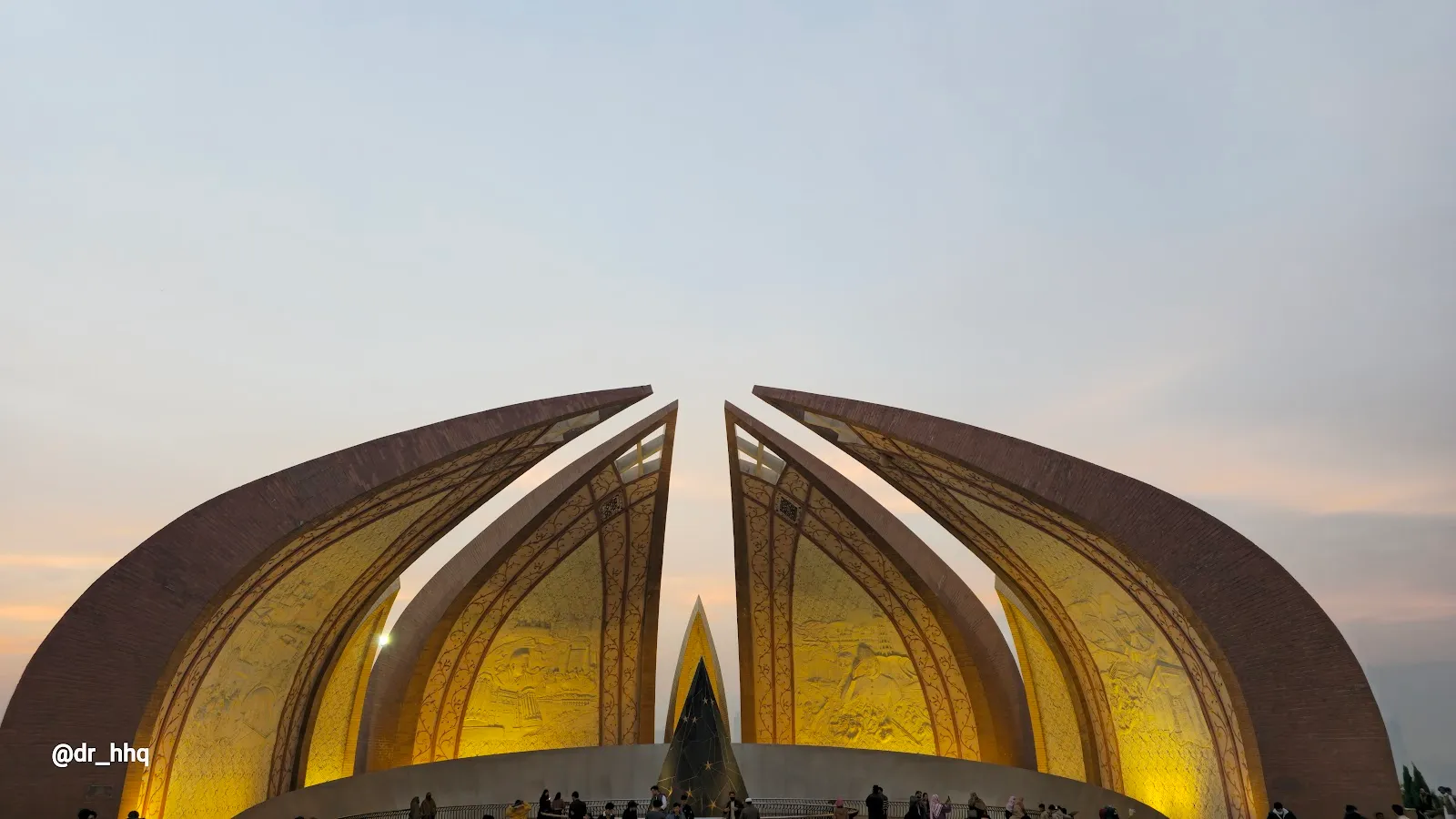
The Pakistan Monument stands on the western Shakarparian Hills in Islamabad. Four large granite petals rise from the ground and curve inward like a flower, and three smaller petals sit inside them. The monument was opened in 2007 and is dedicated to national unity and to those who gave up their present for the country's future. A history museum with wax figures is on the site. From the hilltop you look over Islamabad, the Margalla Hills and Faisal Mosque. The grounds are open and suit families, and walking around the petals takes little time.
What the petals stand for
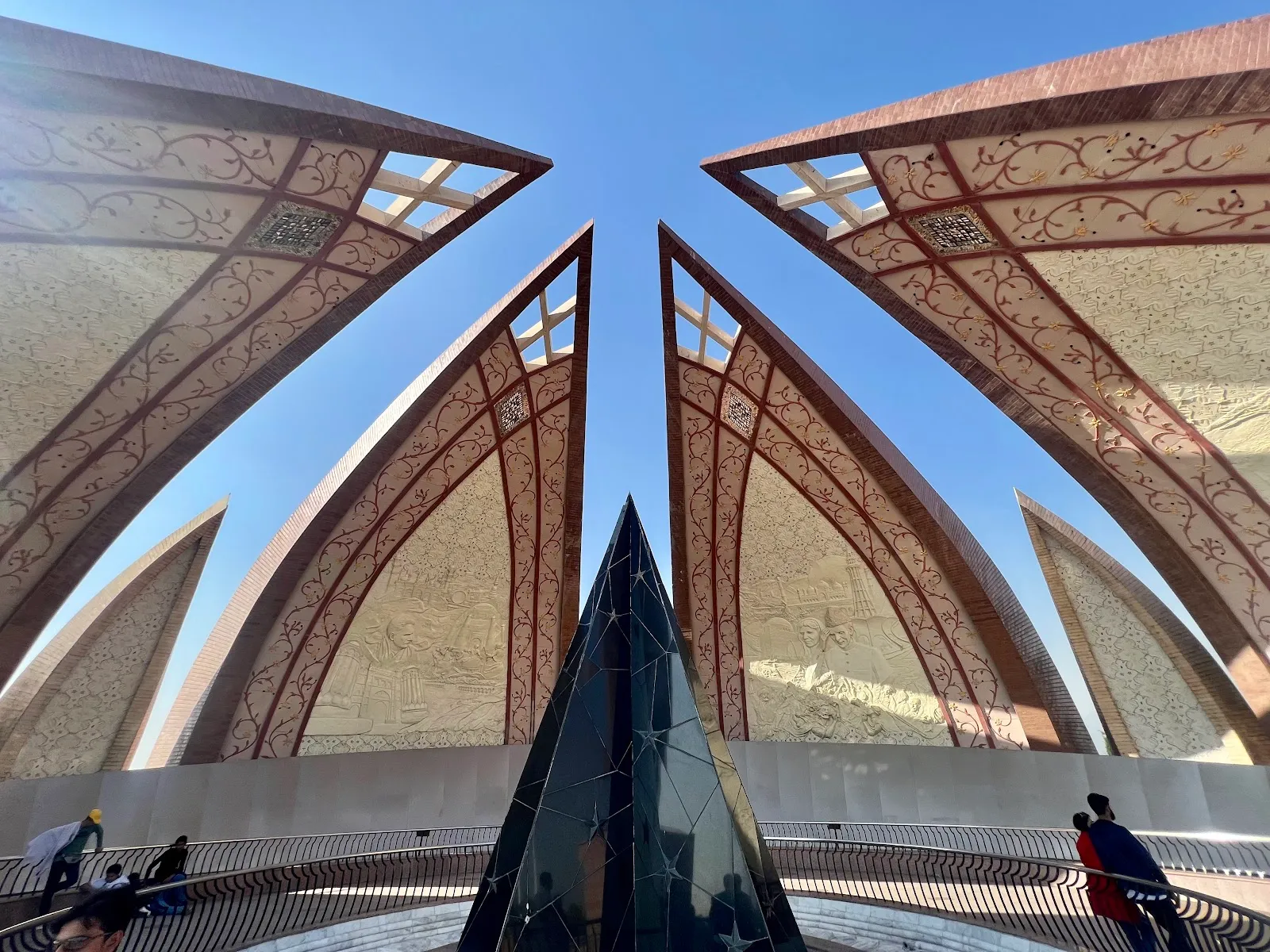
The monument is shaped like a flower in bloom. Four tall granite petals rise from the ground and meet at the top. They stand for the four provinces: Punjab, Sindh, Balochistan and Khyber Pakhtunkhwa. Three smaller petals inside the large ones represent Gilgit-Baltistan, Azad Kashmir and the former FATA region.
The design draws on Mughal architecture, and the dome-like structure is modelled on Mughal muqarnas. Look closely at the stonework. The surfaces carry carved detail, including calligraphy and murals, and the inner walls show the outlines of Badshahi Mosque, Lahore Fort, Minar-e-Pakistan, the Khyber Pass and the Quaid's tomb.
Construction and dedication
Construction began in 2004 and finished in 2007. The monument was inaugurated on 23 March 2007. The architect was Arif Masood. The site covers 2.8 hectares.
The monument is dedicated to national unity and to the people who sacrificed their present for a better future. It is built on high ground, so it can be seen from across the Islamabad and Rawalpindi area. The site averages around 1,500 visitors a day, and school groups are a regular sight.
The museum
The Pakistan Monument Museum is on the site. It has a wax museum that shows key events leading to the Pakistan Movement, and displays of historical figures. The material is visual, which helps younger visitors follow the story. Another account describes the museum as tracing the country's history from the Indus Valley civilization to the present.
The museum is the only part of the visit that needs a ticket. A visit to the exhibits takes around 20 minutes.
Reaching the monument and what is around it
The site sits on the edge of Shakarparian National Park, along the Kashmir Highway. Free and paid parking are both available, and the entrance and parking are wheelchair accessible. If you drive, follow the Shakarparian signs. The road can feel as if it leads the wrong way, but it passes the museum and the dinosaur park before you reach the parking area near the horses.
Outside the monument, stalls sell snacks and candyfloss, and camel rides are offered. Lok Virsa Museum is a short drive away, and the Heritage Museum is also nearby. Faisal Mosque and Daman-e-Koh pair well with the monument on a day in the capital.
The view and the evening
The monument itself takes little time to see. The view is the main reason to linger. From the hilltop you look over Shakarparian Park, the city and the Margalla Hills, and Faisal Mosque is visible in the skyline. A smaller viewpoint sits behind the monument and is easy to miss.
The monument is lit after dark, so staying past sunset adds a second view of it. Early morning is the other good time. One visitor arrived at 9:30 AM and found only two other people in the park.
Perguntas frequentes
Is there an entry fee for the Pakistan Monument?
There is no fee to enter the grounds. You pay only if you want to go into the museum building that explains the history.
How long do you need at the Pakistan Monument?
Allow 45 to 90 minutes for the walk up, the petals, the view and photos. The museum exhibits take around 20 minutes more.
What do the petals represent?
The four large petals stand for Punjab, Sindh, Balochistan and Khyber Pakhtunkhwa. The three smaller ones stand for Gilgit-Baltistan, Azad Kashmir and the former FATA region.
How do you get to the monument by car?
Follow the signs for Shakarparian. Drive past the museum and the dinosaur park and park near the horses. The monument is then about 5 minutes away on foot.
Is the Pakistan Monument good for children?
Yes. The grounds are open and clean, and the wax figures and displays in the museum make the history easy for children to follow.