The Assam State Museum stands at the southern end of Dighalipukhuri tank in central Guwahati, a few minutes from the Panbazar ropeway terminal. Founded in 1940, it is one of the oldest museums in Northeast India and covers archaeology, ethnography, coins, manuscripts and contemporary art. The highlights are stone and metal sculptures from the 5th to 12th centuries, palm-leaf manuscripts, tribal artefacts and textiles, and a reconstructed village section. Allow time for the ethnographic galleries, where the displays are detailed.
How the museum began
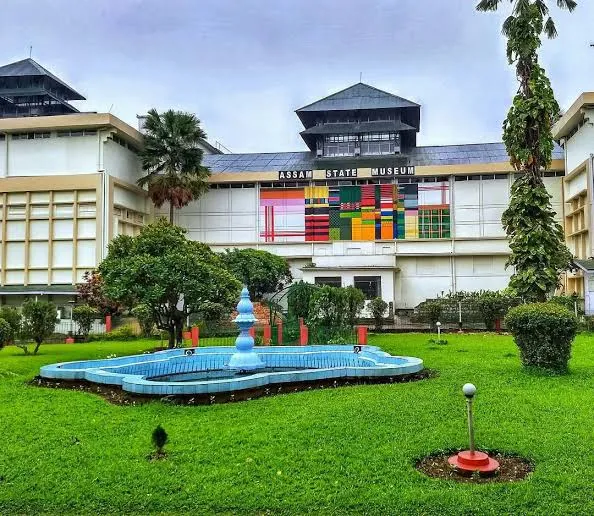
The museum was founded in 1940 by the Kamarupa Anusandhan Samiti, the Assam Research Society, under the leadership of writer and historian Kanaklal Barua. The state government took it over in 1953, after Barua's death.
It is located at the southern end of Dighalipukhuri tank, in the middle of the city. The building has a heritage feel, and its setting by the tank makes the walk there pleasant.
What the galleries hold
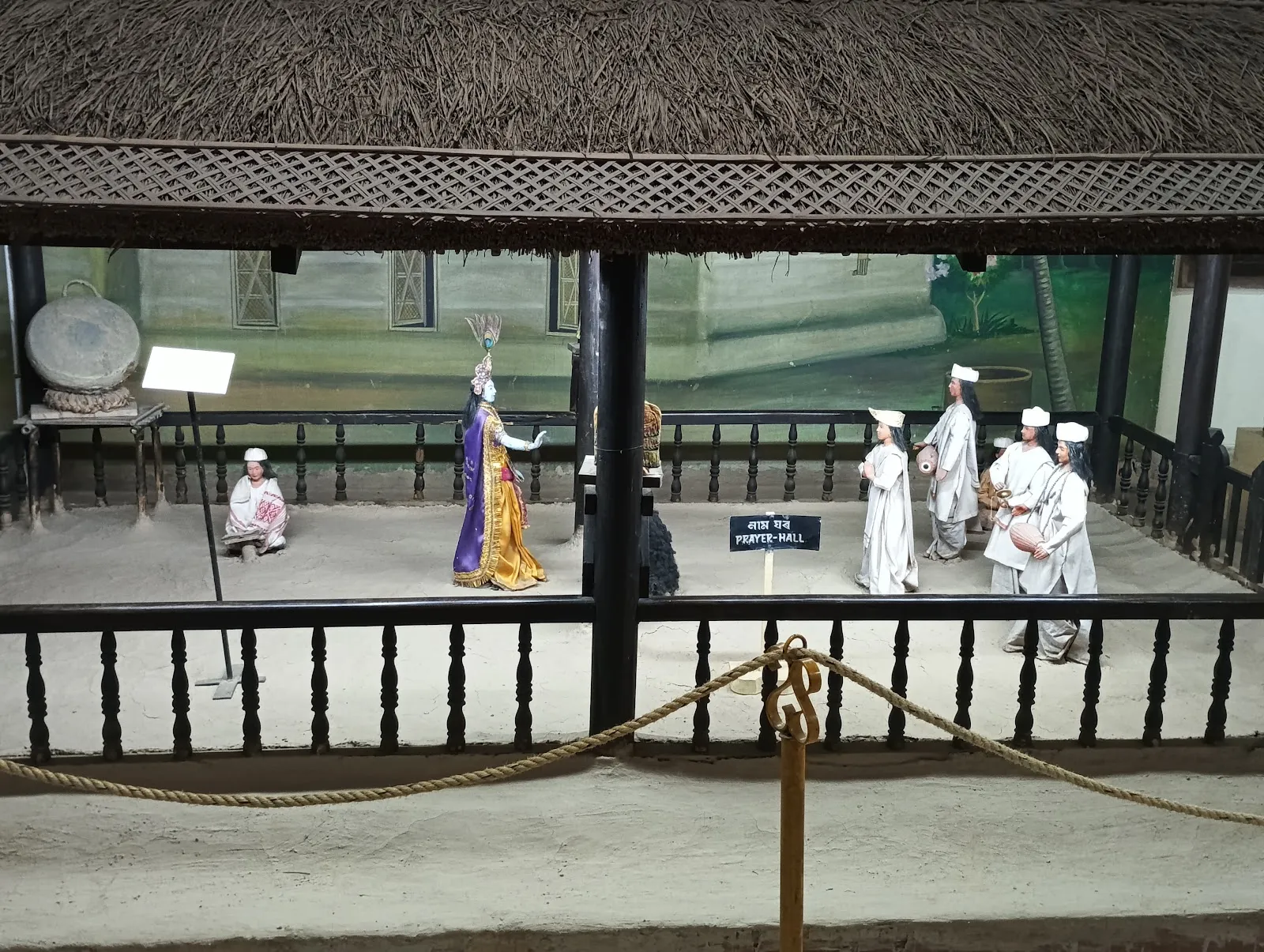
The collection covers archaeology, epigraphy, numismatics, ethnography and contemporary art. Together the galleries trace the political, religious and material history of Assam over many centuries.
The stone sculptures date from the 5th to the 12th centuries. Among the metal works are 18th-century brass icons that show Ahom and regional styles, and a 10th-century stone Nataraja. Palm-leaf manuscripts, coins, terracotta and pottery show how people wrote, paid and made everyday objects.
The museum also holds Ahom artefacts, which reflect the culture and lifestyle of the Ahom dynasty.
Tribal displays and village life
The tribal and cultural displays fill the upper floor. Costumes, local handloom textiles, musical instruments and bamboo crafts show the everyday life of the region's communities.
An outdoor reconstruction of traditional tribal huts sits alongside the indoor galleries. The village life section includes traditional fishing traps and farming tools, which give a clear picture of rural work.
A World War II section displays military artefacts from the region, so the visit moves from medieval sculpture to the modern era.
Planning a visit
Photography is allowed inside, but visitors are asked to keep quiet to respect the galleries. Entry is modest, and vehicles pay a separate parking charge.
The building is clean and has tight security. Across the road there are food stalls, and one of the dishes you will find there is momos.
Häufige Fragen
Is there an entry fee?
Yes. Entry is about ₹66 per person, and vehicles pay a separate parking charge.
Is the Assam State Museum open on Mondays?
No. The museum is closed on Mondays and on public holidays. It is open from Tuesday to Sunday.
Can you take photos inside?
Yes, photography is allowed. Keep quiet inside to respect the galleries and other visitors.
Are guided tours available?
No official guides are available, so read about the collection before your visit or bring a guidebook.
Where is the museum?
It is at the southern end of Dighalipukhuri tank in central Guwahati, a few minutes from the Panbazar ropeway terminal.