Reise planen
Sprache: Deutsch
ReiseplanerPlane deine Reise auf einer Karte

Top-Reiseziele

EnglishDeutschFrançaisEspañolPortuguêsPortuguês (BR)Italiano
Reisehinweis · ÄgyptenEinige Regierungen raten von Reisen in Teile von Ägypten ab.Die Warnungen gelten nur für diese Gebiete: 50-km-Streifen entlang der libyschen Grenze, Gazastreifen, Libysche Grenze (ohne feste Tiefe), Gouvernement Nord-Sinai, Sudan-Grenze (ohne feste Tiefe), Westliche Wüste, Gouvernement Ismailia (östlich des Suezkanals), Nördliches Süd-Sinai-Gouvernement (jenseits der Straße St. Katharina–Nuweiba).Die Empfehlung hängt von Ihrem Reisepass ab. Lesen Sie vor der Buchung die Hinweise Ihrer eigenen Regierung.Offizielle Hinweise
Gebiete mit Warnungen
  • 50-km-Streifen entlang der libyschen Grenze · alle Reisen vermeiden · Kanada, Neuseeland
  • Gazastreifen · alle Reisen vermeiden · Kanada, Frankreich, Neuseeland
  • Libysche Grenze (ohne feste Tiefe) · alle Reisen vermeiden · Deutschland, Spanien, Frankreich, Italien
  • Gouvernement Nord-Sinai · alle Reisen vermeiden · Kanada, Spanien, Frankreich, Irland, Neuseeland, Vereinigtes Königreich
  • Sudan-Grenze (ohne feste Tiefe) · alle Reisen vermeiden · Deutschland, Spanien, Frankreich, Italien
  • Westliche Wüste · alle Reisen vermeiden · Kanada, Neuseeland, Vereinigtes Königreich, USA
  • Gouvernement Ismailia (östlich des Suezkanals) · nicht notwendige Reisen vermeiden · Kanada, Vereinigtes Königreich
  • Nördliches Süd-Sinai-Gouvernement (jenseits der Straße St. Katharina–Nuweiba) · nicht notwendige Reisen vermeiden · Kanada, Neuseeland, Vereinigtes Königreich

Außerdem von einer Regierung genannt: 20-km-Streifen entlang der libyschen Grenze (Vereinigtes Königreich), Grenzgebiete (Militärzonen) (USA), Grenzgebiet Ägypten–Israel (Deutschland), Nördliche und mittlere Sinai-Halbinsel (USA), Gouvernement Port Said (östlich des Suezkanals) (Kanada), Grenzgebiet Rafah (Spanien), Gouvernement Suez (östlich des Suezkanals) (Kanada), Straße Bahariya–Siwa (Vereinigtes Königreich), Bir-Tawil-Trapez (Vereinigtes Königreich), Wüste westlich von Marsa Matrouh, Fayum und Abu Simbel (Frankreich), Region Gebel Uweinat bis Gilf el-Kebir (Italien), Halaib-Dreieck (Vereinigtes Königreich), Touristisch nicht erschlossene Wüstengebiete (Italien), Grenzübergang Rafah (Irland), Süd-Sinai-Halbinsel (Deutschland)

RegierungHinweiseAktualisiertHinweise lesen
Vereinigtes Königreich (FCDO)No advice against the whole country (regional advisories)–Hinweise lesen
Vereinigte Staaten (State Dept)Exercise increased caution (regional advisories)15. Juli 2025Hinweise lesen
Kanada (Global Affairs)Exercise a high degree of caution (regional advisories)–Hinweise lesen
Deutschland (Auswärtiges Amt)Besondere Vorsicht walten lassen (keine Gesamtwarnung) (regional advisories)13. Okt. 2026Hinweise lesen
Neuseeland (SafeTravel)Exercise increased caution elsewhere in Egypt (regional advisories)–Hinweise lesen
Irland (Außenministerium)High degree of caution (regional advisories)–Hinweise lesen
Frankreich (Ministerium für Europa und Auswärtige Angelegenheiten)Increased vigilance for the rest of the country (regional advisories)–Hinweise lesen

Täglich anhand der veröffentlichten Hinweise der Regierungen geprüft; zuletzt geprüft am 2. Nov. 2026.RoamLedger fasst offizielle Hinweise zusammen; es handelt sich nicht um Empfehlungen einer Regierung.

Sultan Al Nasir Muhammad Mosque
Moschee

Sultan Al Nasir Muhammad Mosque

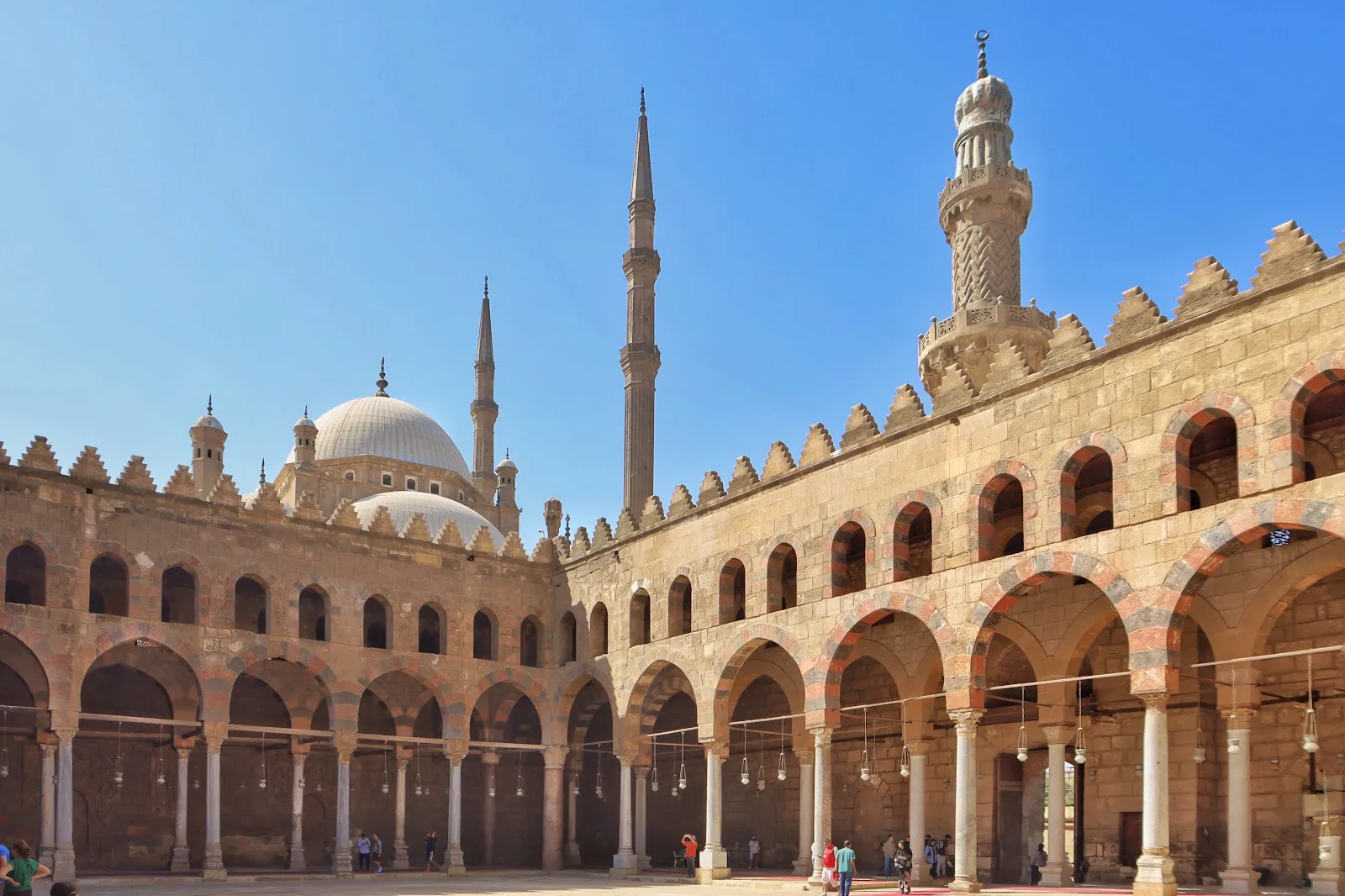
Inside Cairo’s Citadel, the Sultan Al Nasir Muhammad Mosque is a Mamluk place of worship dating to the 14th century.

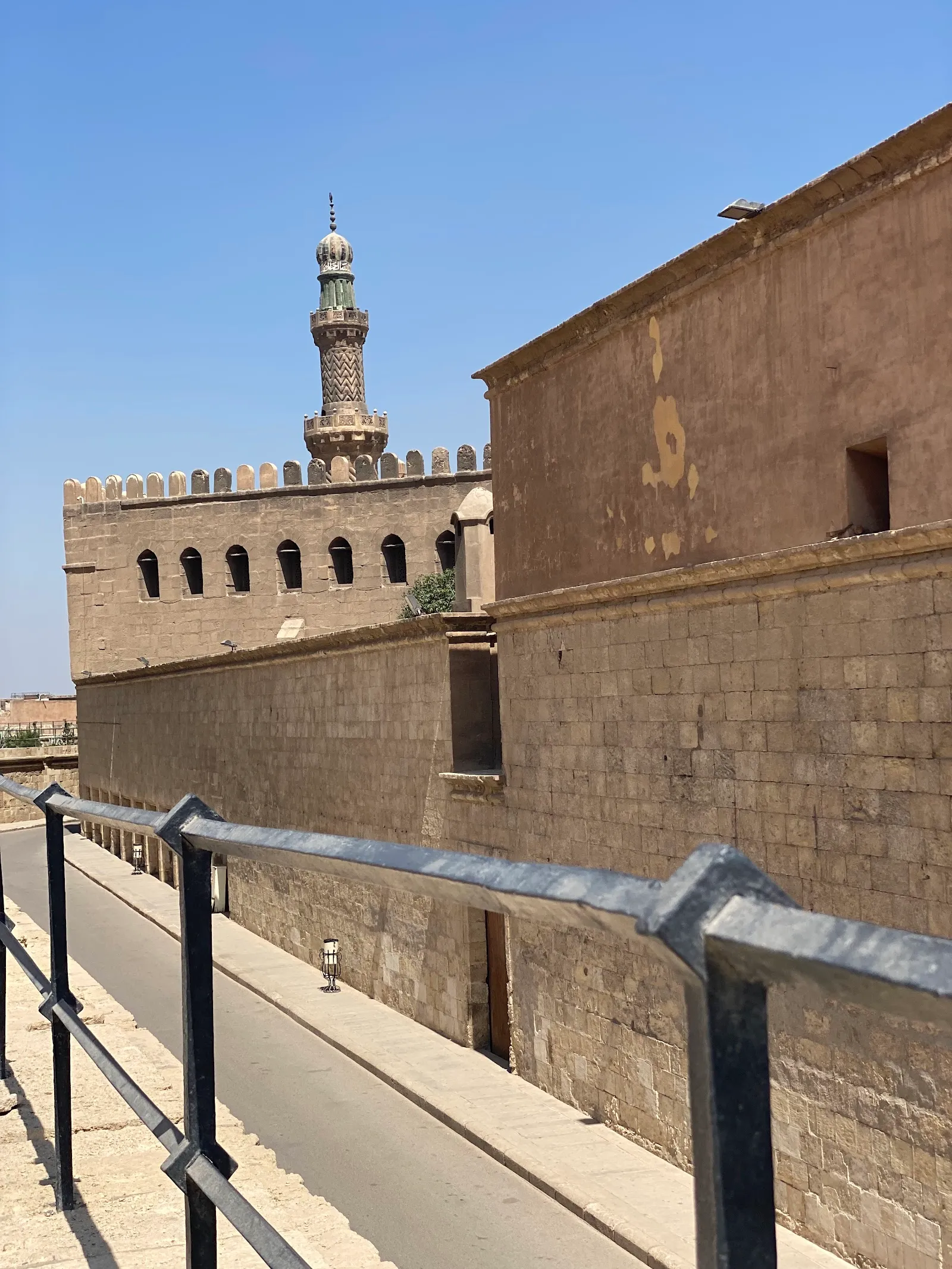
Inside Cairo’s Citadel, the Sultan Al Nasir Muhammad Mosque is a Mamluk place of worship dating to the 14th century. Sultan al Nasir Muhammad commissioned it in 1318 and rebuilt it on a larger scale in 1335. Look for its pair of minarets, decorated with faience tiles, and the arches, stonework and tile designs around the courtyard. Its quieter setting gives you space to take in the architecture. Dress respectfully and be considerate when taking photographs in this sacred space.

A Mamluk mosque in the Citadel
Sultan Al Nasir Muhammad Mosque

Sultan al Nasir Muhammad commissioned the mosque in 1318, during the Mamluk period. He ordered it rebuilt on a larger scale in 1335. Set in the southern part of the Citadel, it served as the royal mosque and was used by the Mamluk occupants of the fortress. Egyptian sultans also came here for Friday prayers.

The mosque’s history is closely tied to the Citadel’s role as a seat of rule. Its connection to the sultans who lived and worshipped there gives the building a distinct place among the Citadel’s historic sites.

Courtyard, arches and minarets
Sultan Al Nasir Muhammad Mosque

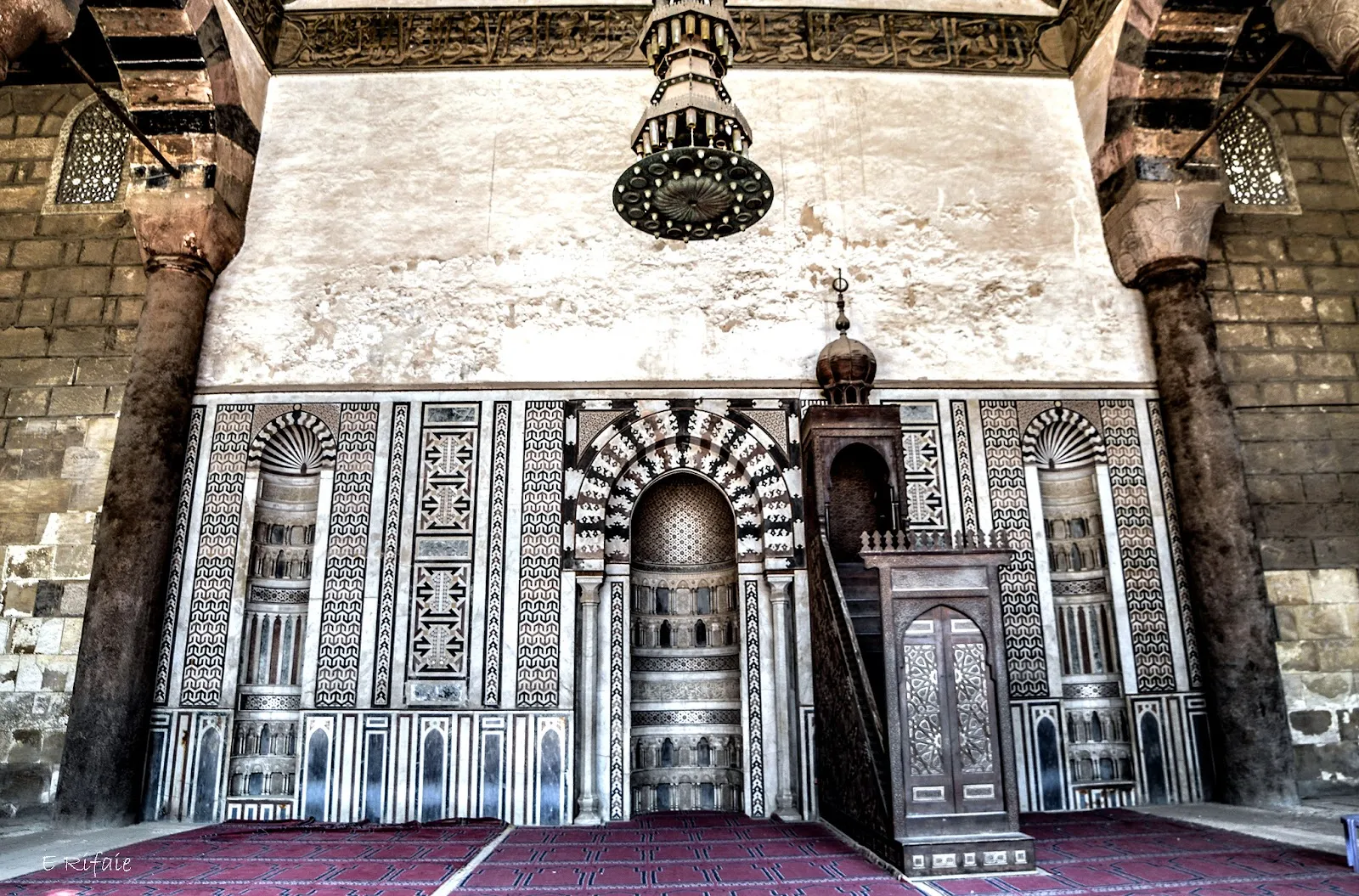
The courtyard and its arched colonnades are among the main areas to explore. Look at the stonework and tile designs, then turn your attention to the two minarets, which have faience tile decoration. The architecture rewards a slow look at its details rather than a quick walk through.

The mosque remains a sacred space. Dress respectfully, and be considerate when taking photographs. If a guide approaches with information and then requests payment, you can politely refuse if you do not want a guided visit.

Häufige Fragen

Where is the Sultan Al Nasir Muhammad Mosque?

It is inside the Citadel of Cairo, in the Citadel’s southern section.

When was the mosque built?

Sultan al Nasir Muhammad commissioned it in 1318. It was rebuilt on a larger scale in 1335.

What should I look for inside the mosque?

See the courtyard, arched colonnades, stonework and tile designs, as well as the two minarets decorated with faience tiles.

Weitere Highlights in Kairo

Alle entdecken