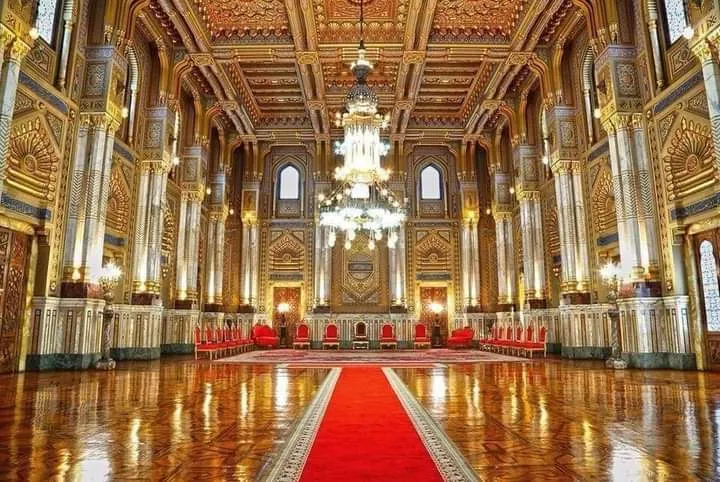
At a fork in Al Moez Street in historic Cairo, the Sabil-Kuttab of Abdel Rahman Katkhuda combines a public water fountain with an elementary Quran school and an adjoining residential wing. Commissioned in 1744, the free-standing building blends Mamluk and Ottoman design. Look for carved stonework, marble and ceramic decoration, inscriptions, and the upper level’s colorful wooden ceiling. It is a compact stop for understanding how water provision and education were built into Cairo’s urban life.
A fountain and school in one building
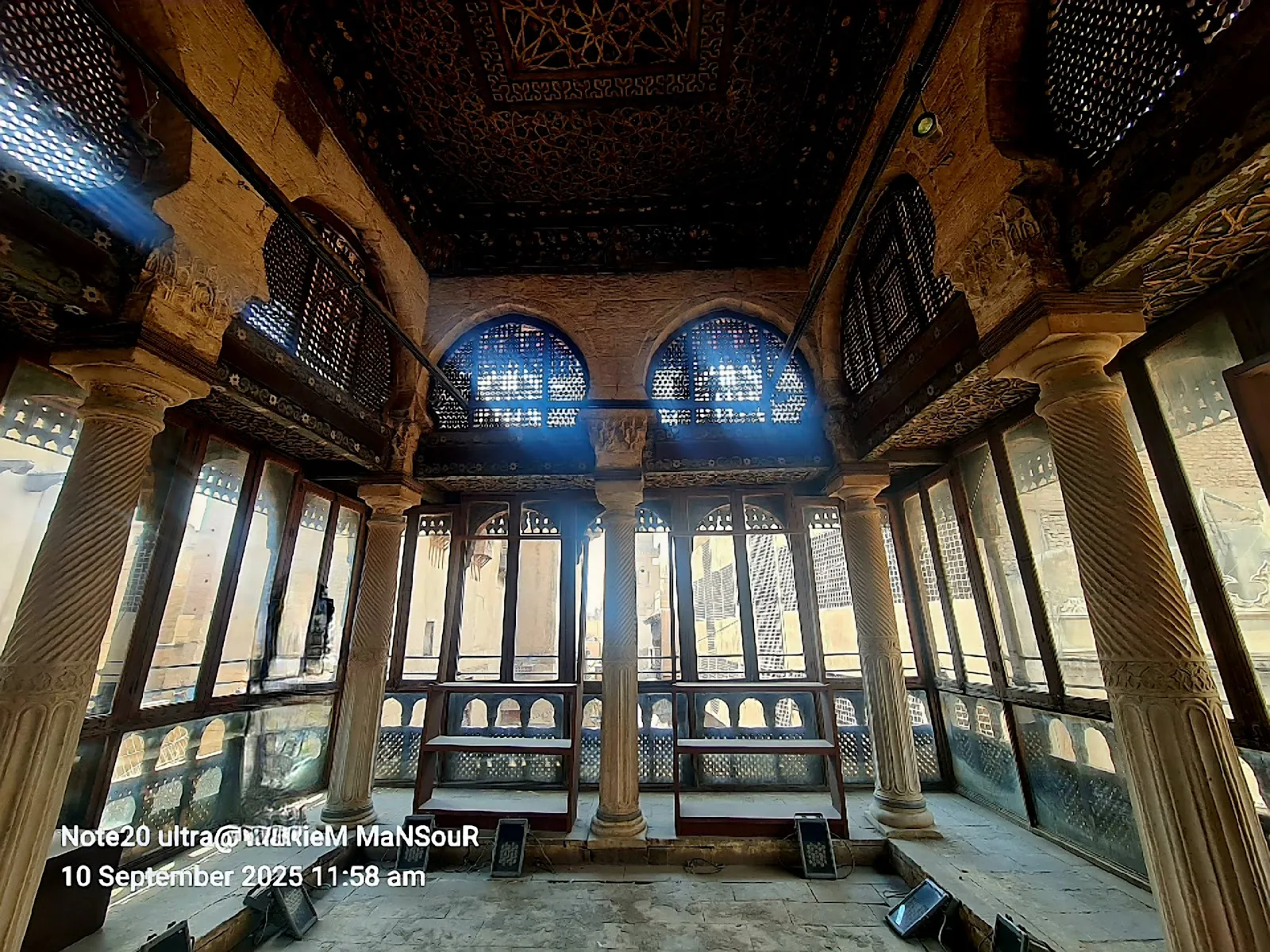
Commissioned by Abdel Rahman Katkhuda in 1744, this monument brought together two public functions. The ground level held a sabil, a fountain where people could obtain drinking water. Above it was a kuttab, an elementary school for Quranic study. An adjoining residential wing completed the complex.
Its position gives it a distinctive presence on Al Moez Street. The building stands free on three sides at a fork in the road, rather than forming part of a continuous street façade. It is a useful place to pause and look at how the historic street’s buildings meet at an intersection.
Mamluk and Ottoman details
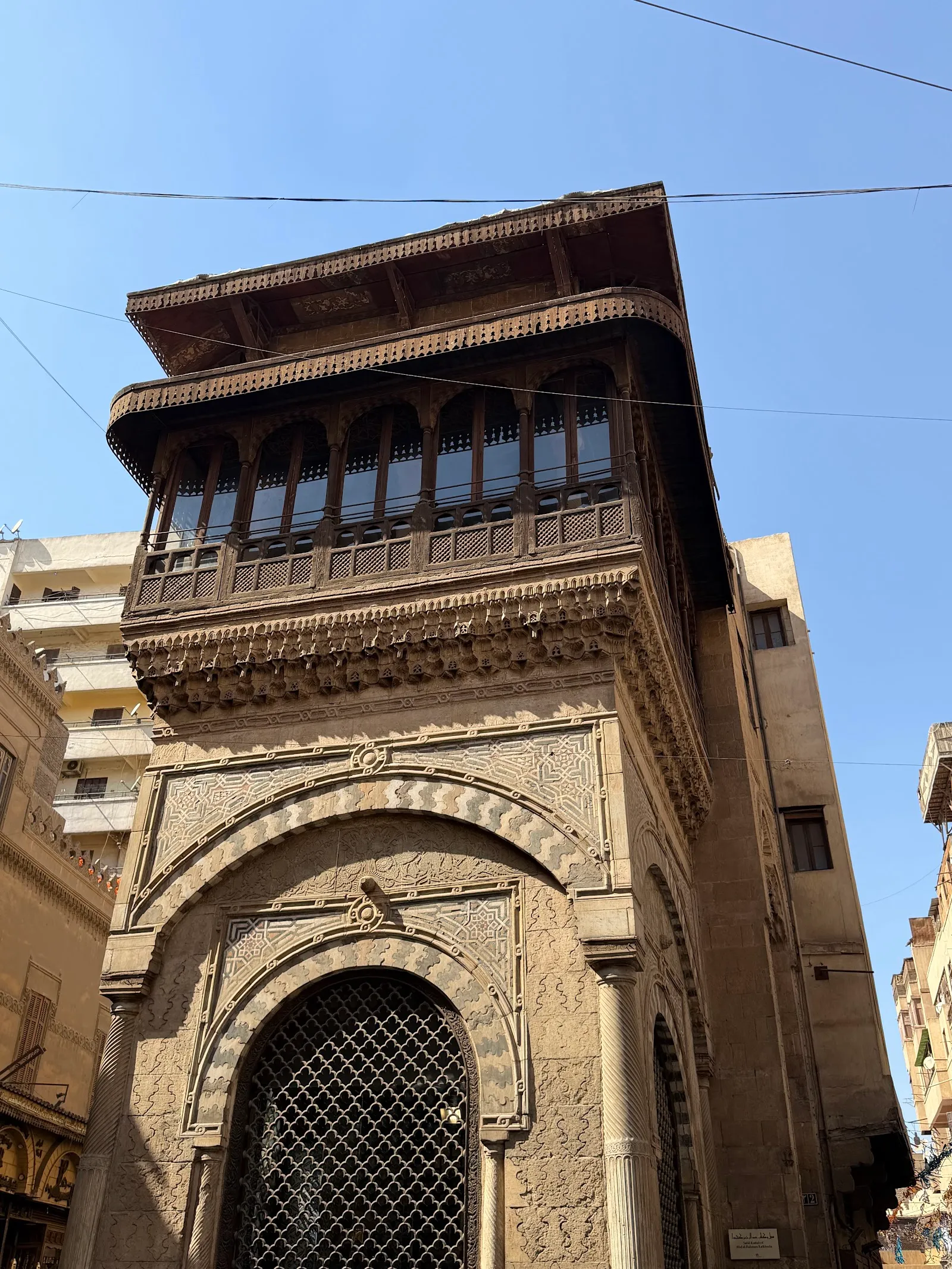
The structure dates to the Ottoman period, while its design draws on both Ottoman and Mamluk traditions. Its square, two-level form brings together a fountain below and a school above. Carved stonework, arches, inscriptions, and marble and ceramic decoration reward a closer look.
Look up to see the wooden ceilings, decorated with colorful motifs. The building’s ornamental details and carefully arranged levels show how architectural craft was applied to a structure with everyday civic and educational uses.
Finding and exploring the site
The Sabil-Kuttab is on Al Moez Street in the El Gamaleya district, at a point where the street forks. Its central position makes it easy to notice from outside, but the entrance may be less obvious; look around the building rather than relying on prominent signs.
Once inside, take time to notice the transition between the fountain level and the space above it. A guide can provide further context on the architecture and Katkhuda’s building projects in Cairo. The monument is one stop among the historic buildings along Al Moez Street.
Häufige Fragen
What was the Sabil-Kuttab of Abdel Rahman Katkhuda used for?
It combined a public water fountain, or sabil, with an elementary Quran school, or kuttab. The complex also had an adjoining residential wing.
When was the building commissioned?
Abdel Rahman Katkhuda commissioned it in 1744.
Where is the Sabil-Kuttab?
It stands at a fork in Al Moez Street in Cairo’s El Gamaleya district.
What architectural details should I look for?
Look for its carved stonework, inscriptions, marble and ceramic decoration, and colorful motifs on the wooden ceilings.