Reise planen
Sprache: Deutsch
ReiseplanerPlane deine Reise auf einer Karte

Top-Reiseziele

EnglishDeutschFrançaisEspañolPortuguêsPortuguês (BR)Italiano
Reisehinweis · KolumbienEinige Regierungen raten von Reisen in Teile von Kolumbien ab.Die Warnungen gelten nur für diese Gebiete: Departement Arauca, Buenaventura, Departement Caquetá, Region Catatumbo, Departement Cauca, Departement Chocó, Grenzgebiete zu Ecuador, Departement Norte de Santander, Grenzgebiete zu Panama, Tumaco, Departement Valle del Cauca, Grenzgebiete zu Venezuela, Departement Casanare, Cúcuta, Departement Guainía, Departement Guaviare, Jamundí, Departement Meta, Departement Nariño, Nördliches Antioquia, Departement Putumayo, Süd-Bolívar, Süd-Córdoba, Region Urabá und Golf von Urabá, Departement Vaupés, Departement Vichada.Die Empfehlung hängt von Ihrem Reisepass ab. Lesen Sie vor der Buchung die Hinweise Ihrer eigenen Regierung.Offizielle Hinweise
Gebiete mit Warnungen
  • Departement Arauca · alle Reisen vermeiden · Kanada, Spanien, Neuseeland, Vereinigtes Königreich, USA
  • Buenaventura · alle Reisen vermeiden · Kanada, Deutschland, Neuseeland, Vereinigtes Königreich
  • Departement Caquetá · alle Reisen vermeiden · Kanada, Spanien, Frankreich, Neuseeland
  • Region Catatumbo · alle Reisen vermeiden · Spanien, Neuseeland
  • Departement Cauca · alle Reisen vermeiden · Kanada, Deutschland, Spanien, Frankreich, Italien, Neuseeland, Vereinigtes Königreich, USA
  • Departement Chocó · alle Reisen vermeiden · Kanada, Deutschland, Spanien, Frankreich, Neuseeland, Vereinigtes Königreich
  • Grenzgebiete zu Ecuador · alle Reisen vermeiden · Frankreich, Neuseeland
  • Departement Norte de Santander · alle Reisen vermeiden · Kanada, Deutschland, Spanien, Neuseeland, Vereinigtes Königreich, USA
  • Grenzgebiete zu Panama · alle Reisen vermeiden · Spanien, Frankreich, Neuseeland
  • Tumaco · alle Reisen vermeiden · Kanada, Spanien, Neuseeland
  • Departement Valle del Cauca · alle Reisen vermeiden · Kanada, Deutschland, Frankreich, Italien, Neuseeland, USA
  • Grenzgebiete zu Venezuela · alle Reisen vermeiden · Deutschland, Frankreich, Neuseeland
  • Departement Casanare · nicht notwendige Reisen vermeiden · Spanien, Neuseeland
  • Cúcuta · nicht notwendige Reisen vermeiden · Kanada, Vereinigtes Königreich
  • Departement Guainía · nicht notwendige Reisen vermeiden · Kanada, Frankreich, Neuseeland
  • Departement Guaviare · nicht notwendige Reisen vermeiden · Kanada, Deutschland, Spanien, Frankreich, Neuseeland, Vereinigtes Königreich
  • Jamundí · nicht notwendige Reisen vermeiden · Deutschland, Vereinigtes Königreich
  • Departement Meta · nicht notwendige Reisen vermeiden · Kanada, Spanien, Neuseeland
  • Departement Nariño · nicht notwendige Reisen vermeiden · Kanada, Deutschland, Spanien, Frankreich, Neuseeland
  • Nördliches Antioquia · nicht notwendige Reisen vermeiden · Deutschland, Frankreich
  • Departement Putumayo · nicht notwendige Reisen vermeiden · Kanada, Deutschland, Spanien, Frankreich, Neuseeland
  • Süd-Bolívar · nicht notwendige Reisen vermeiden · Deutschland, Frankreich, Neuseeland, Vereinigtes Königreich
  • Süd-Córdoba · nicht notwendige Reisen vermeiden · Deutschland, Frankreich, Neuseeland, Vereinigtes Königreich
  • Region Urabá und Golf von Urabá · nicht notwendige Reisen vermeiden · Spanien, Vereinigtes Königreich
  • Departement Vaupés · nicht notwendige Reisen vermeiden · Kanada, Frankreich
  • Departement Vichada · nicht notwendige Reisen vermeiden · Kanada, Frankreich, Neuseeland

Außerdem von einer Regierung genannt: Ufer des Río Cauca (Frankreich), Grenzgebiete zu Brasilien (Frankreich), Straße Cali–Popayán–Pasto–Ipiales (Frankreich), Stadtbezirke unmittelbar südlich von Cali (Frankreich), Grenze zu Ecuador, innerhalb von 50 km (Kanada), Gemeinden González und Río de Oro (Cesar) (Kanada), Montes de María (Spanien), Grenze zu Panama, innerhalb von 100 km (Kanada), Grenzgebiete zu Peru (Frankreich), Grenze zu Venezuela, innerhalb von 10 km (USA), Grenze zu Venezuela, innerhalb von 50 km (Kanada), Departement Amazonas (Frankreich), Amazonas, innerhalb von 20 km zur Grenze mit Peru (Kanada), Departement Antioquia (Neuseeland), Antioquia, Grenzgebiet zu Chocó nördlich von Buriticá (Kanada), Region Ariari im Süden von Meta (Vereinigtes Königreich), Bahía Solano (Kanada), Region Bajo Cauca (Vereinigtes Königreich), Capurganá (Kanada), Cartagena del Chairá (Vereinigtes Königreich), Comunas an den Hängen von Medellín (Frankreich), Erdbebengebiet (Eje Cafetero und Suroriente) (Spanien), Östliches und südliches Meta (Deutschland), Östliches Valle del Cauca (Frankreich), Grenzgebiet zu Ecuador, bis 5 km (Vereinigtes Königreich), El Doncello (Vereinigtes Königreich), Florencia (Kanada), Ipiales und Grenzübergang Ipiales (Kanada), La Montañita (Vereinigtes Königreich), Nuquí (Kanada), Orito (Vereinigtes Königreich), Palmira (Deutschland), Nationalpark Paramillo (Córdoba) (Kanada), Paujil (Vereinigtes Königreich), Popayán (Kanada), Puerto Asís (Vereinigtes Königreich), Puerto Caicedo (Vereinigtes Königreich), Puerto Carreño (Vereinigtes Königreich), Puerto Guzmán (Vereinigtes Königreich), Puerto Leguízamo (Vereinigtes Königreich), Puerto Rico (Caquetá) (Vereinigtes Königreich), Quibdó (Frankreich), Die Subregionen San Jorge und La Mojana (Sucre) (Neuseeland), San Miguel (Vereinigtes Königreich), San Vicente del Caguán (Vereinigtes Königreich), Region Sanquianga (Nariño) (Vereinigtes Königreich), Departamento Santander (Frankreich), Pazifikregion Süd von Nariño (Vereinigtes Königreich), Arbeiterviertel im Süden Bogotás (Frankreich), Süd-Sucre (Frankreich), Süd-Tolima (u. a. Ataco, Chaparral, Planadas, Rioblanco) (Deutschland), Subregion Sur (Cesar) (Neuseeland), Region Telembí in Nariño (Vereinigtes Königreich), Valle del Guamuez (Vereinigtes Königreich), Grenze zu Venezuela, innerhalb von 5 km (Vereinigtes Königreich), Westlicher Valle del Cauca (inkl. Buenaventura) (Vereinigtes Königreich)

RegierungHinweiseAktualisiertHinweise lesen
Vereinigtes Königreich (FCDO)No advice against the whole country (regional advisories)–Hinweise lesen
Vereinigte Staaten (State Dept)Reconsider travel31. März 2026Hinweise lesen
Kanada (Global Affairs)Exercise a high degree of caution (regional advisories)–Hinweise lesen
Deutschland (Auswärtiges Amt)Keine Reisewarnung für das ganze Land (regional advisories)13. Okt. 2026Hinweise lesen
Neuseeland (SafeTravel)Exercise increased caution due to violent crime and the threat of terrorism (regional advisories)–Hinweise lesen
Frankreich (Ministerium für Europa und Auswärtige Angelegenheiten)Increased vigilance, with specific areas to avoid (regional advisories)–Hinweise lesen

Täglich anhand der veröffentlichten Hinweise der Regierungen geprüft; zuletzt geprüft am 2. Nov. 2026.RoamLedger fasst offizielle Hinweise zusammen; es handelt sich nicht um Empfehlungen einer Regierung.

Puerta del Reloj
Historische Stätte

Monumento Torre del Reloj

Monumento Torre del Reloj, also called Puerta del Reloj or Boca del Puente, is the historic gateway between Cartagena’s walled Old Town and Getsemaní.

Monumento Torre del Reloj, also called Puerta del Reloj or Boca del Puente, is the historic gateway between Cartagena’s walled Old Town and Getsemaní. Its clock-topped arches mark a natural starting point for exploring the city: pass through to Plaza de los Coches, with its arcades and colorful buildings, or browse stalls beneath the gate. The entrance once formed part of Cartagena’s defenses, and nearby squares, street food and local crafts make it easy to linger before heading into the historic center.

A gateway between the Old Town and Getsemaní
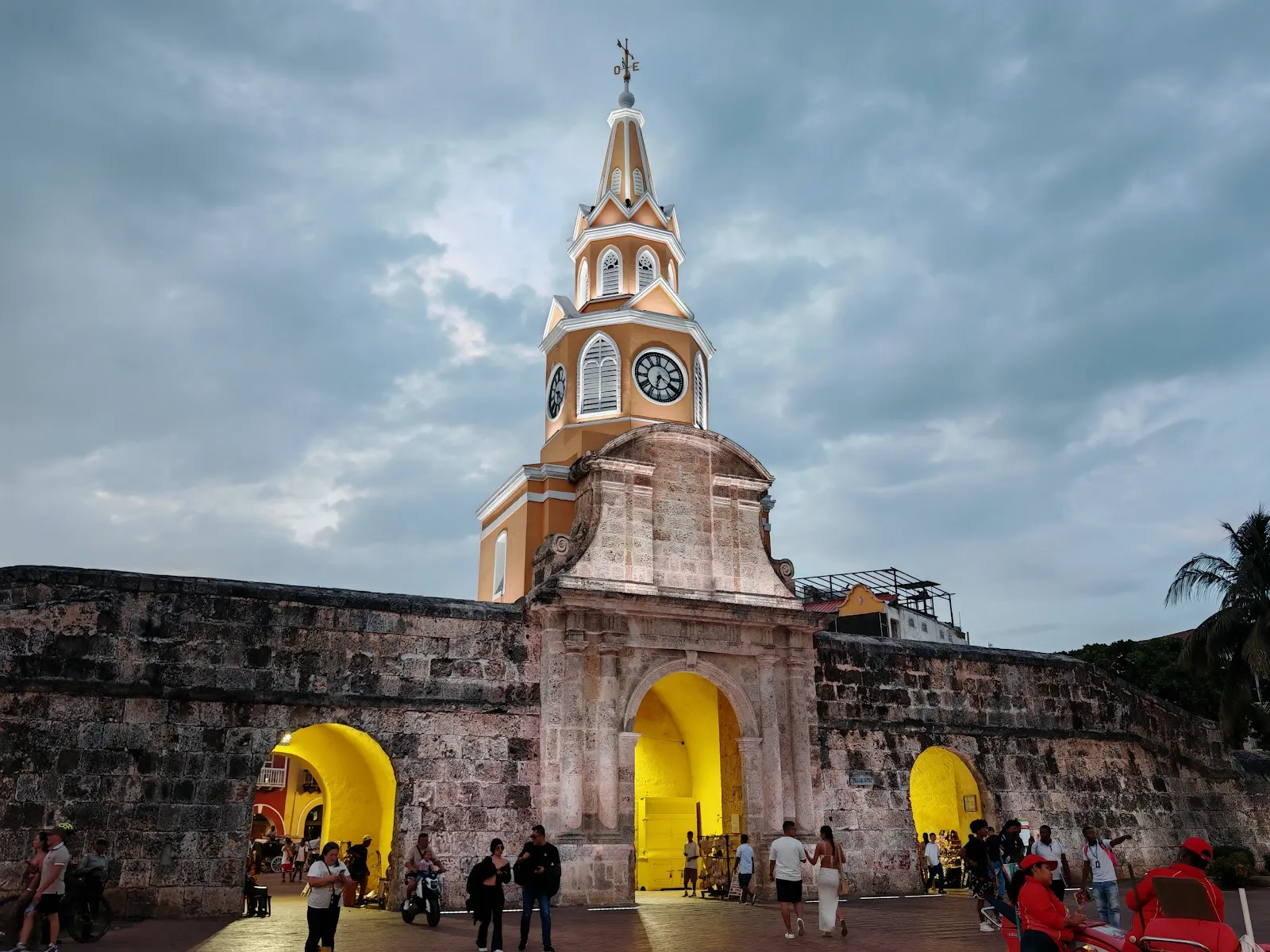
Monumento Torre del Reloj

The Torre del Reloj is the main historic entrance to Cartagena’s walled center. It is also known as Puerta del Reloj, meaning Clock Gate, and Boca del Puente. The gateway stands between Plaza de la Independencia and Plaza de los Coches, linking the Old Town with Getsemaní.

The passage is an easy place to orient yourself. Walk through the arches and you reach Plaza de los Coches, a square lined with arcades and colorful buildings. From there, the historic center’s plazas and streets are close by. Getsemaní lies on the other side of the gate.

The gate’s defensive past
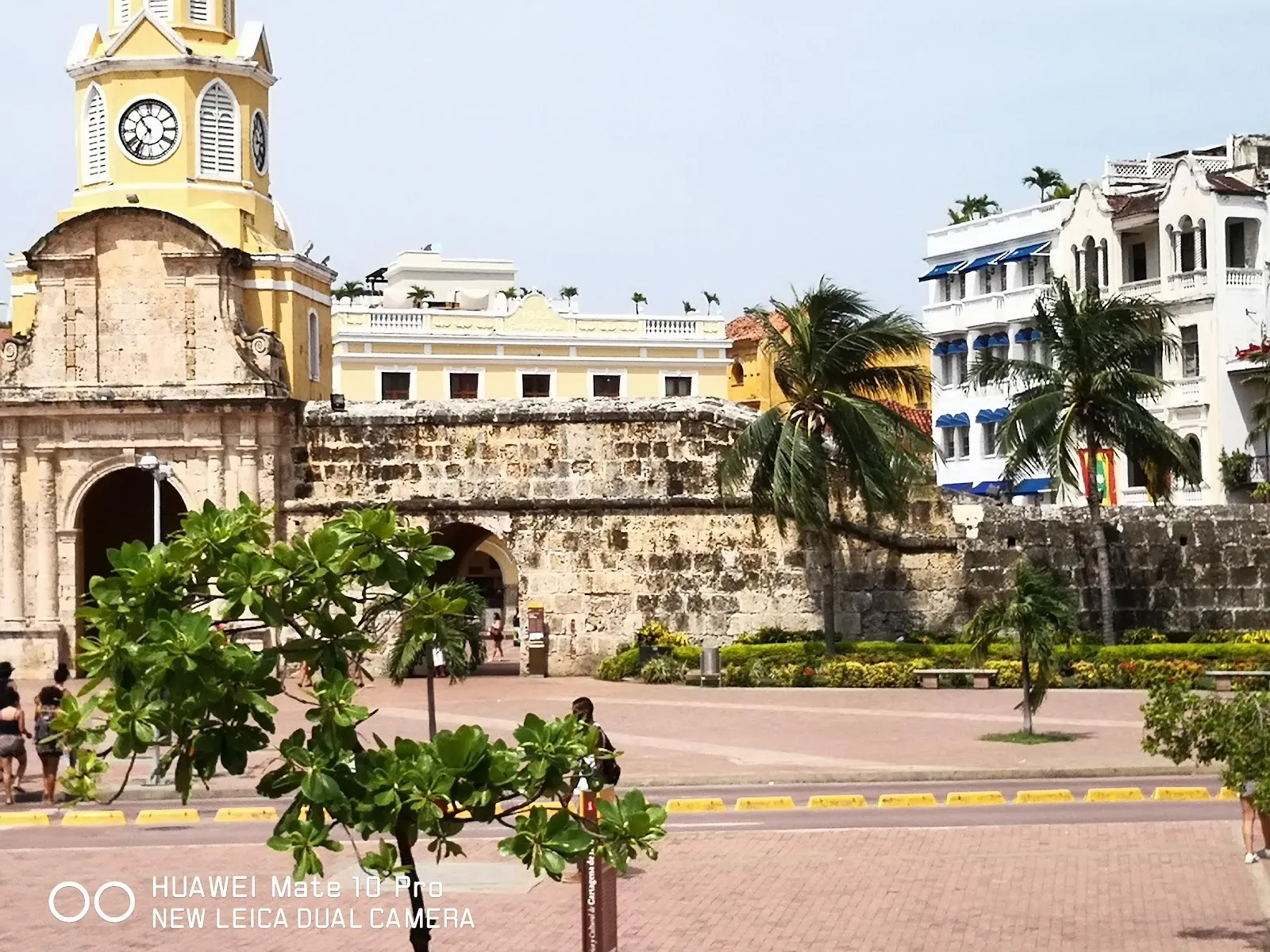
Monumento Torre del Reloj

During the colonial period, a wooden drawbridge crossed a moat between the gate and Getsemaní. It helped protect the city from attack and connected the walled center with the neighborhood beyond it. The gate’s side arches had earlier uses as a chapel and an armoury; today, they form walkways through the structure.

The tower and clock were added at different points in the gate’s history. The clock was installed in the early 18th century, while accounts of the structure also date the tower’s beginnings to 1601 and describe its later reconstruction in the 19th century. Its clock-topped profile is now one of Cartagena’s recognizable city symbols.

What to see around the monument

Take time to look at the tower and the stone walls that extend from it before crossing into Plaza de los Coches. The square is a useful first stop for seeing the architecture around the entrance. Vendors beneath the passage sell items that include handmade domino sets, musical instruments, used books and wool shoulder bags made by Kogi craftspeople from the Santa Marta area.

You may also encounter street performers in the open space in front of the gate. For a longer walk, continue into the Old Town’s squares or head toward Getsemaní. The city walls nearby are a good choice around sunset; rooftop bars around the monument provide another way to take in the evening atmosphere.

Häufige Fragen

What is the Torre del Reloj?

It is Cartagena’s clock-topped historic city gate, also known as Puerta del Reloj and Boca del Puente. It marks the entrance to the walled Old Town.

What is on the other side of the gate?

Plaza de los Coches is directly beyond the passage, with arcades and colorful buildings. The gate also links the Old Town with Getsemaní.

How long should I spend at the Torre del Reloj?

The input does not give a typical visit duration. You can stop to see the gate and continue into Plaza de los Coches or nearby streets.

When is a good time to visit?

Sunset suits a walk along the nearby walls or a visit to a rooftop bar. For fewer crowds, go when no cruise ships are in port.
Weitere Highlights in Cartagena

Alle entdecken