
Long Son Pagoda is an active Buddhist temple at the foot of Trai Thuy Hill in Nha Trang, known for its mosaic decorations and large white Buddha on the hill above the complex. Walk through the grounds to see the smaller prayer spaces, then follow the steps past the reclining Buddha to the seated statue and views over the city. The climb is exposed and can feel strenuous in hot weather, so bring water and take your time. This is a place of worship, so dress modestly and behave respectfully.
A temple at the foot of Trai Thuy Hill
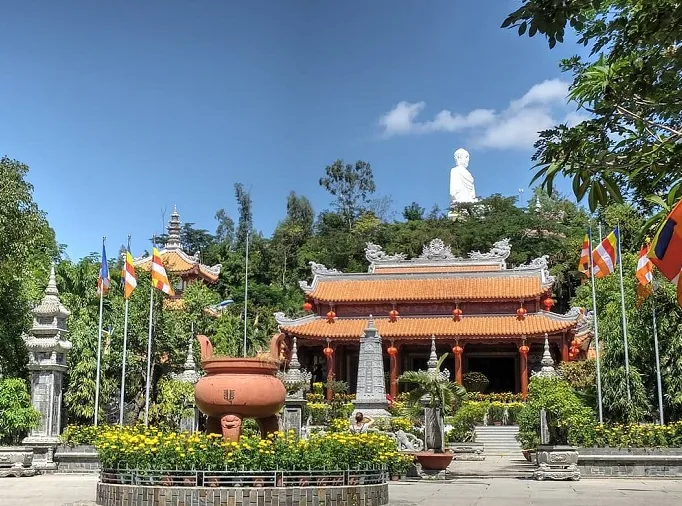
Long Son Pagoda is an active Buddhist place of worship in Nha Trang. The temple was established in the late 19th century and is also known as Dang Long Tu. Its setting combines prayer halls and temple buildings at the foot of Trai Thuy Hill with a route that climbs to a large white Buddha above them.
The complex has been restored and changed over time. Accounts describe damage from a cyclone around 1900, followed by the temple’s move from the hill to its present location and later rebuilding. Its buildings bring together traditional motifs and later decorative details. Glass and ceramic tiles form dragon mosaics on parts of the pagoda, while statues and other religious imagery add detail throughout the grounds.
Long Son remains a place for worship, not simply a monument to walk through. Visitors can look around the grounds, but should give space to people praying and keep their clothing modest. Cover your knees before entering; a wrap can be rented or bought nearby if you need one.
Following the steps to the Buddha
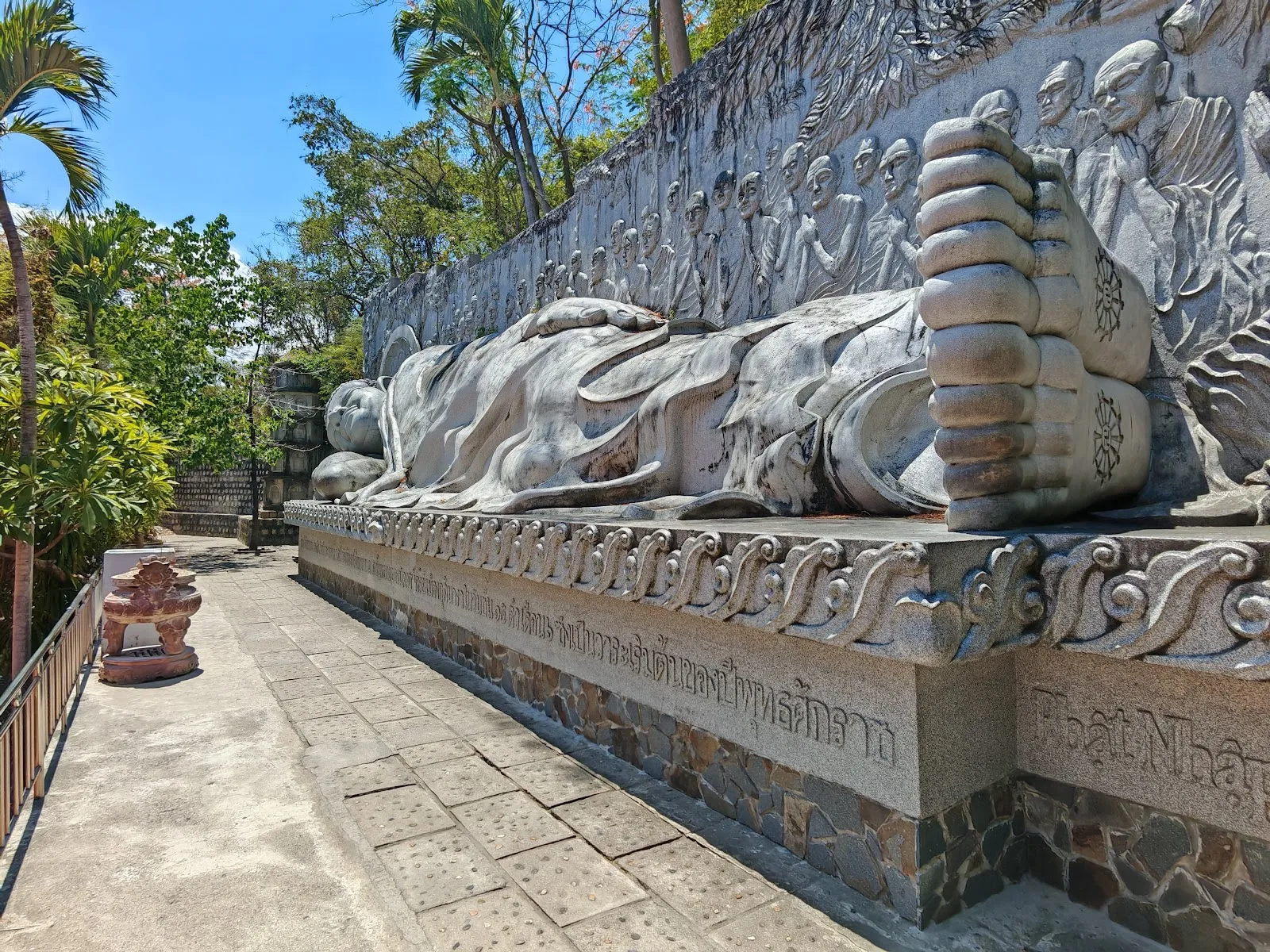
Begin with the temple buildings and smaller prayer areas before heading up the hill. This gives you time to notice the decorative work before the climb. The route includes many steps, so take it at a comfortable pace, particularly in the heat, and carry water.
A reclining Buddha is one of the main stops along the way. Continue uphill to reach the large white seated Buddha on a lotus. The statue is a defining feature of the site and can be seen from parts of Nha Trang. The hilltop also provides a view across the city. Conditions and sightlines can affect how much of the surrounding area is visible, so allow time to pause without expecting every visit to have the same panorama.
On the way back down, look out for the smaller features around the hill, including a gazebo area. The same route works in either direction, but stopping at the smaller temple spaces before the ascent lets you see them before the steps become tiring.
Visiting with care
There is no entrance fee. The site has stalls near the entrance selling refreshments, souvenirs and items used for worship. You do not need to buy anything to visit the pagoda.
Dress rules are enforced at the entrance, with knees required to be covered. A T-shirt and flip-flops are acceptable, but shorts that leave the knees uncovered can prevent entry. Sarongs are available to rent or buy nearby; check the terms directly with the attendant before accepting a rental.
The climb is more comfortable when the weather is cooler, and evening is a practical choice in hot conditions. Set aside time for both the temple grounds and the uphill route rather than treating the hilltop statue as the only stop. Move quietly around worshippers and ask before photographing people in prayer.
Perguntas frequentes
Is there an entrance fee for Long Son Pagoda?
No entrance fee is reported. The temple grounds are free to visit.
What should I wear to Long Son Pagoda?
Cover your knees before entering. Sarongs are available to rent or buy near the entrance.
How long should I spend at Long Son Pagoda?
Allow about 1 to 2 hours to see the temple grounds, climb to the white Buddha and stop at the reclining Buddha.
Is there a climb to the white Buddha?
Yes. Steps lead uphill from the temple buildings to the white Buddha. Bring water and take your time, especially in hot weather.


