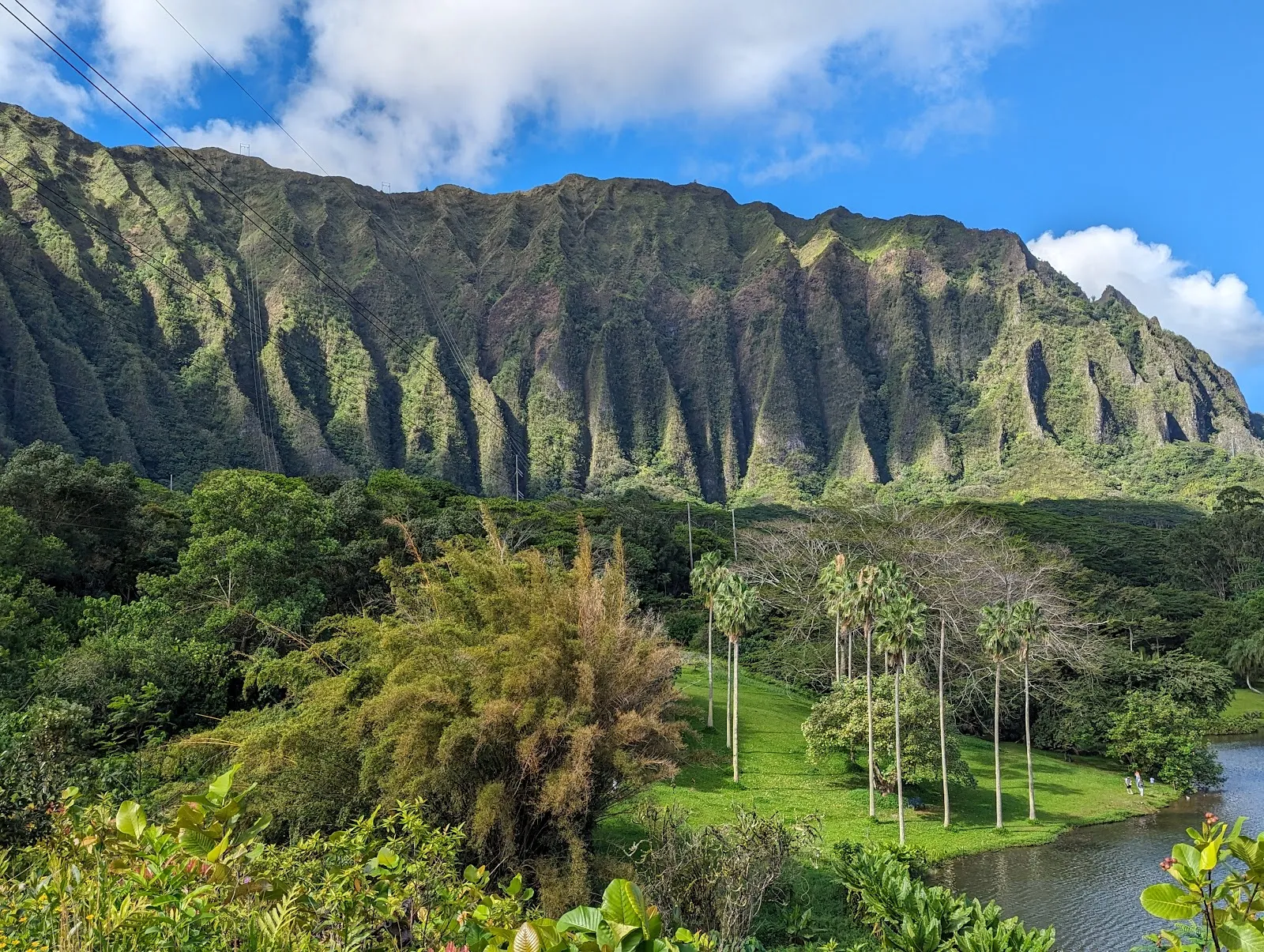
Hoʻomaluhia Botanical Garden is a 400-acre garden in Kāneʻohe on Oʻahu’s windward side, with the Koʻolau Range rising behind its tropical plant collections. Walk or drive between areas planted with species from Hawaiʻi, the Philippines, Malaysia, tropical America, India and Sri Lanka, Melanesia, Polynesia, and Africa. A lake, nature trails, picnic spots, and broad mountain views make time here easy to pace. Pick up a map at the visitor center, and leave room for a quiet stop by the water.
A garden built for flood protection
Hoʻomaluhia means “a peaceful refuge.” The garden opened in 1982 in Kāneʻohe, on Oʻahu’s windward side. It was developed with flood protection in mind, and today its grounds combine that purpose with a public botanical garden.
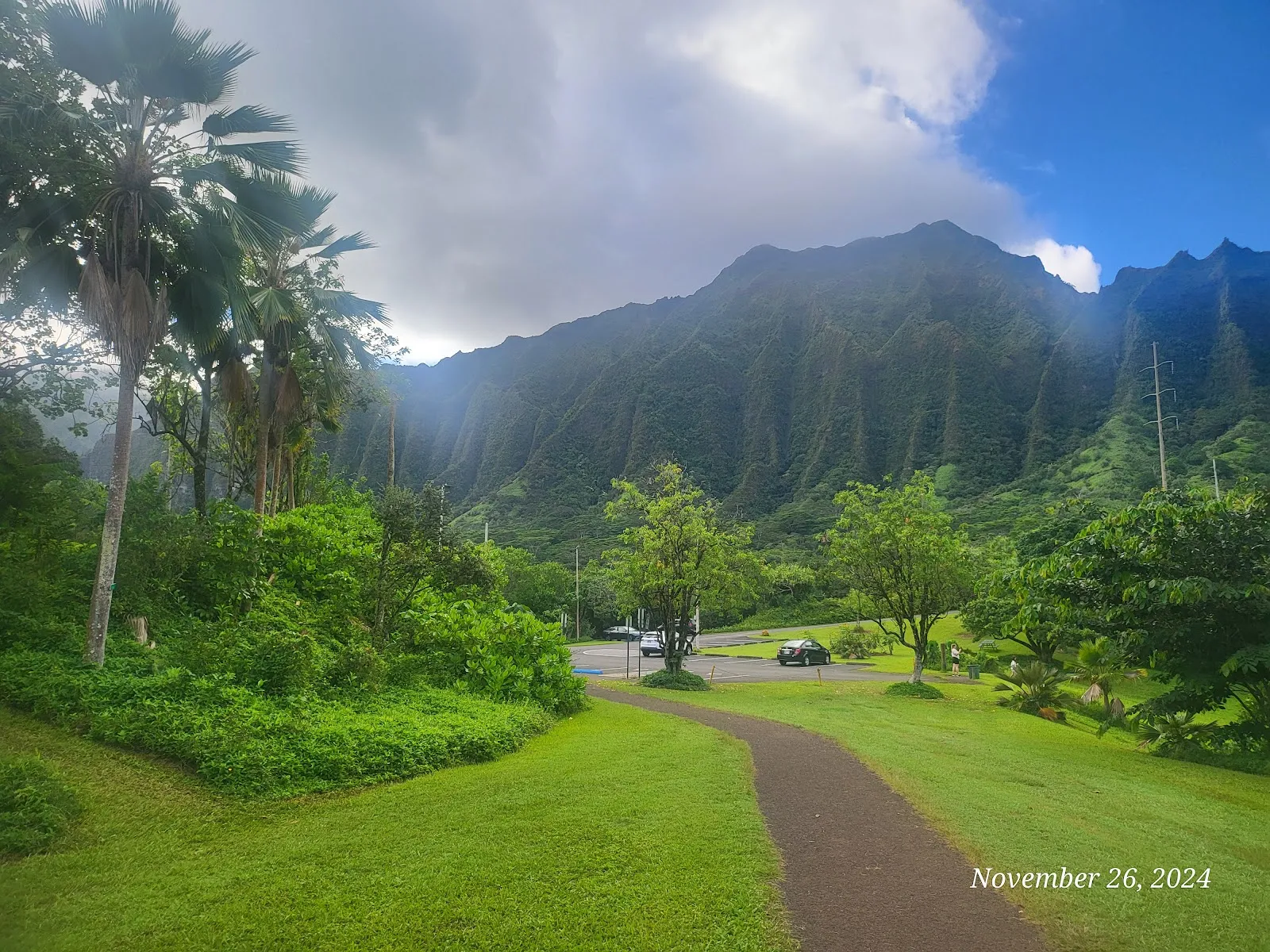
The 400-acre site sits beneath the Koʻolau Range and includes a large reservoir. Its lawns, paths, and planted areas give you space to explore at a gentle pace, with the mountain ridges often in view. The garden is part of the Honolulu Botanical Gardens, which are managed by the City and County of Honolulu.
Plant collections from tropical regions
Rather than placing plants in one mixed display, the garden groups its collections by geographic region. Areas represent Hawaiʻi, the Philippines, Malaysia, tropical America, India and Sri Lanka, Melanesia, Polynesia, and Africa. Labeled plants and informational signs help you identify what is growing as you move through the grounds.
The collections make a visit appealing even if you are not planning a long walk. You can focus on one section or explore several, stopping along the way to read signs and look at the surrounding vegetation. Pick up a map at the visitor center to help orient yourself within the large site.
Walking, driving, and finding viewpoints
You can explore the garden on foot or by car. Driving is useful for covering more ground, while walking lets you take your time along the paths and notice the labeled plants. The garden includes nature trails and scenic viewpoints, with the Koʻolau Range providing a dramatic backdrop.
The palm-lined entrance road is widely photographed, but it is not a place to stop for pictures. Continue into the garden and use other spots around the grounds for photographs. If you would like to pause outdoors, picnic tables and open lawns provide places to take a break.
The lake and weekend fishing
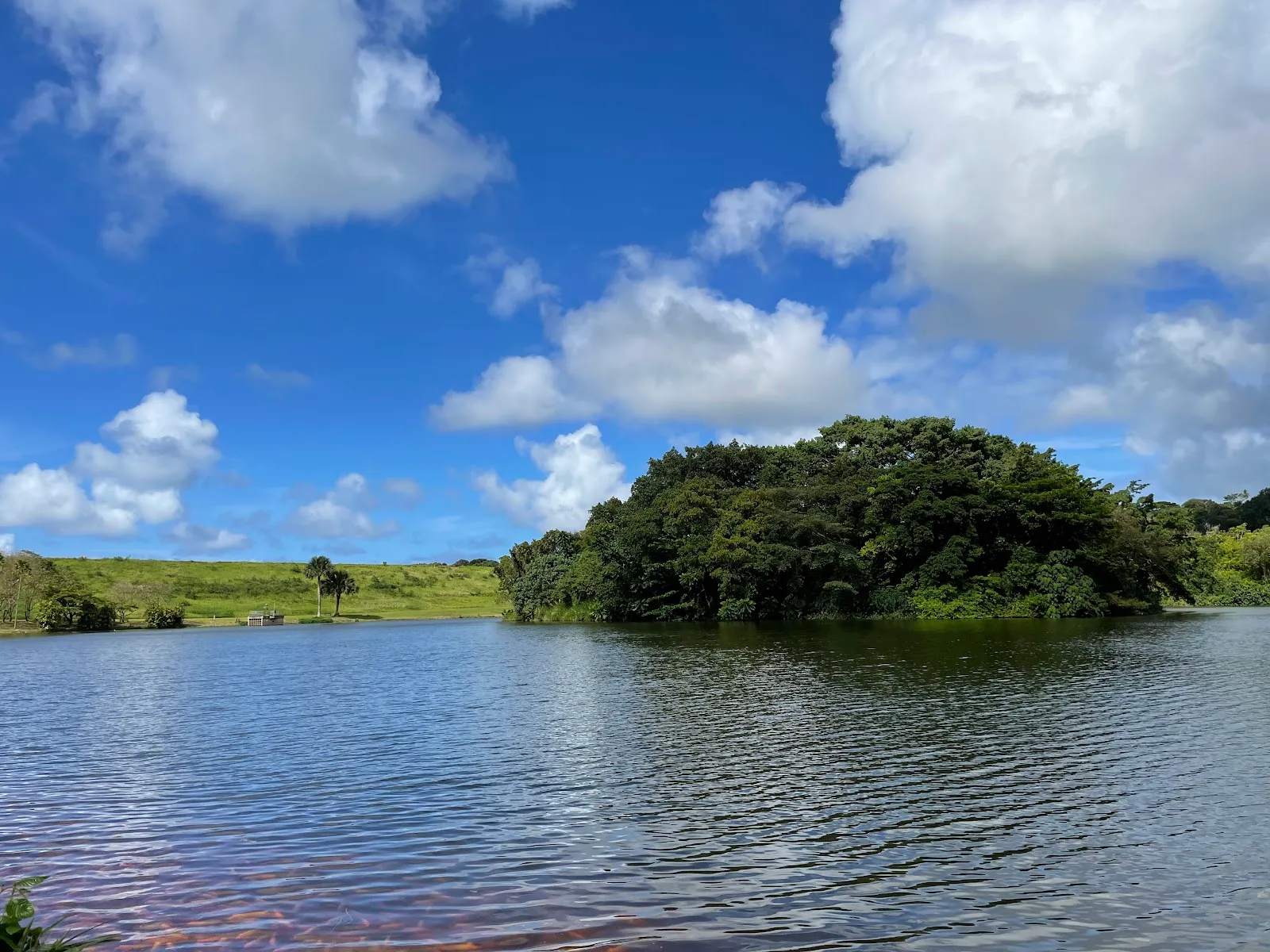
The garden’s lake is a natural place to slow down after exploring the plant collections. Fish live in the water, and ducks visit the shore. On Saturdays and Sundays, a catch-and-release fishing program lets visitors fish for tilapia and cichlids with bamboo poles and barbless hooks provided for the activity.
The reservoir and surrounding greenery also give you a chance to watch the landscape change with the weather. The garden is on Oʻahu’s rainy windward side, where clouds can linger over the mountains. Bring a camera, but plan to explore the garden rather than stopping on the entrance road.
Picnics and overnight camping
Picnic areas make it easy to turn a short visit into a longer break. Pack food and water, then choose a table or lawn for a meal among the garden’s plants and mountain scenery.
Camping is available at designated sites, but an overnight visit requires a camping permit. Check the garden’s official website for current permit details before making plans. The grounds also include a small art gallery, so you can check for an exhibit during your visit.
Perguntas frequentes
Is Hoʻomaluhia Botanical Garden free to visit?
Admission to the garden is free.
How long should I spend at Hoʻomaluhia Botanical Garden?
Plan on about one to two hours for a casual walk. You can spend longer exploring by car, stopping at viewpoints, or having a picnic.
Can you fish at Hoʻomaluhia Botanical Garden?
A catch-and-release fishing program runs on Saturdays and Sundays. Bamboo poles and barbless hooks are provided, and the program targets tilapia and cichlids.
Can you camp at Hoʻomaluhia Botanical Garden?
Camping is available at designated sites with a permit. Check the garden’s official website for current permit details.