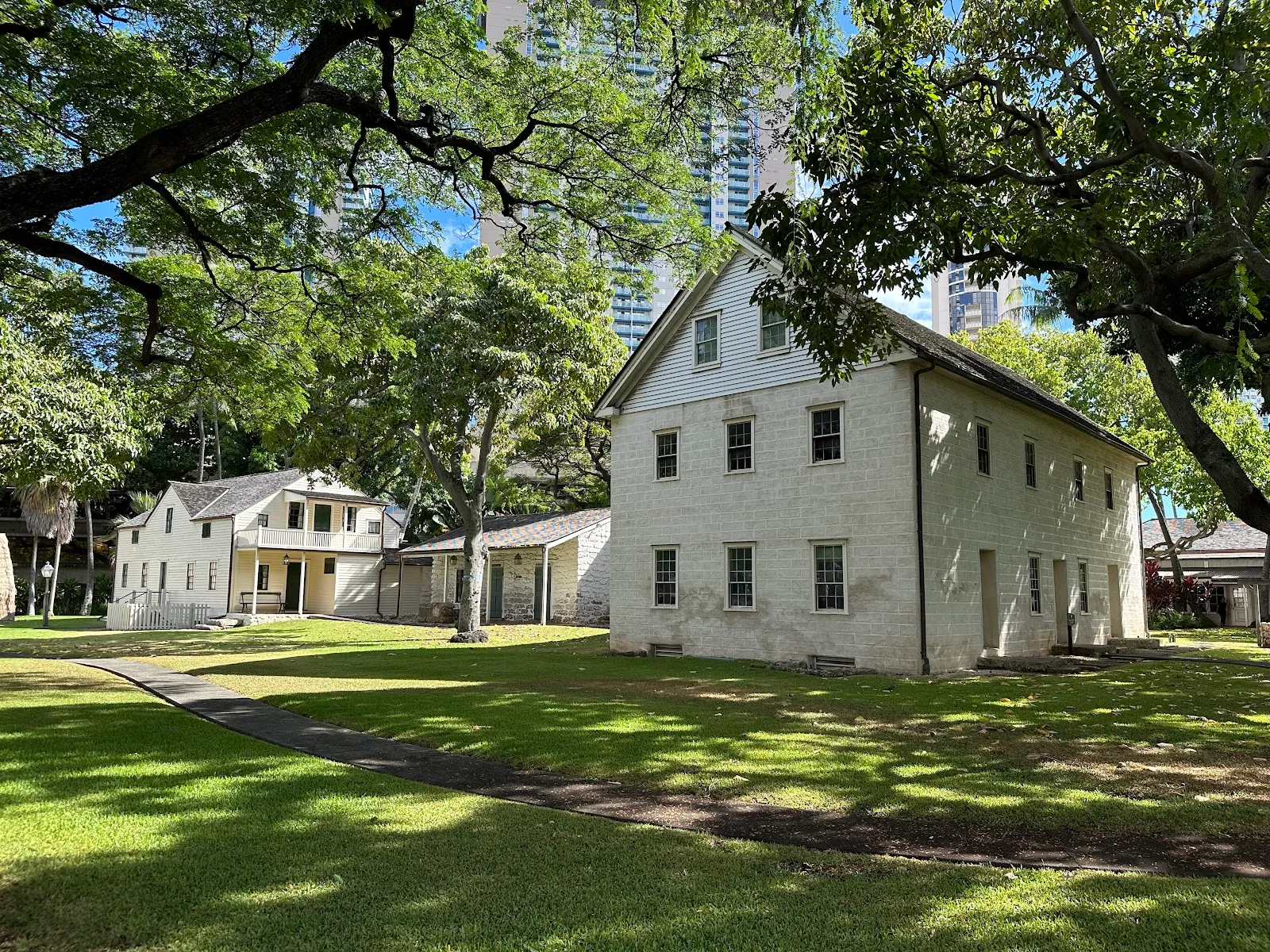
At 553 South King Street in downtown Honolulu, Hawaiian Mission Houses Historic Site and Archives preserves homes and collections from the missionary period that began in 1820. A guided tour takes you through historic rooms and explains how missionaries lived and how their arrival affected Hawaiian society and culture. Look for the early printing history, including a replica of the first press brought to the islands and examples of Hawaiian-language books. The grounds also include a cemetery, and the gift shop sells work by local artists.
The houses and the missionary period
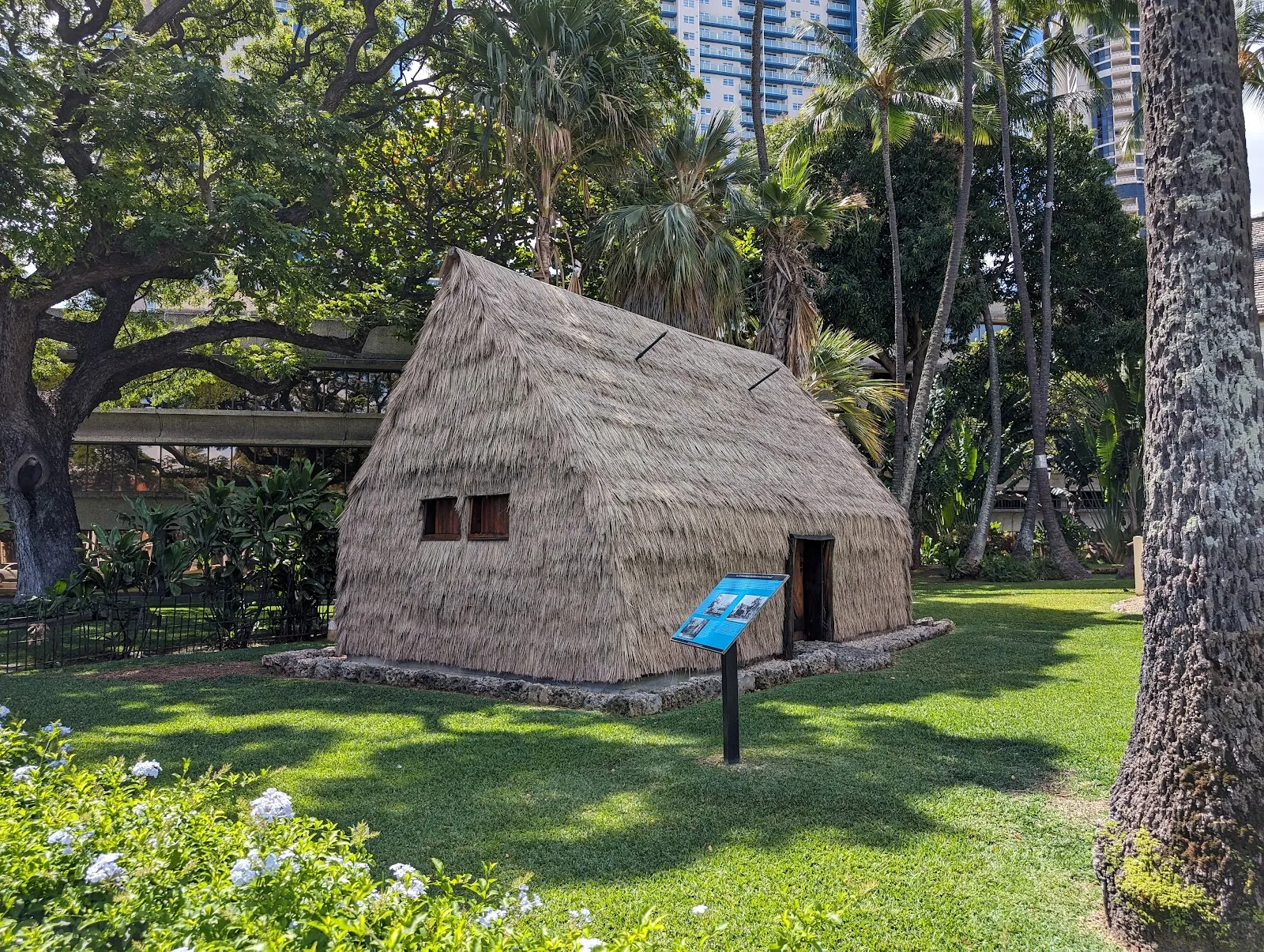
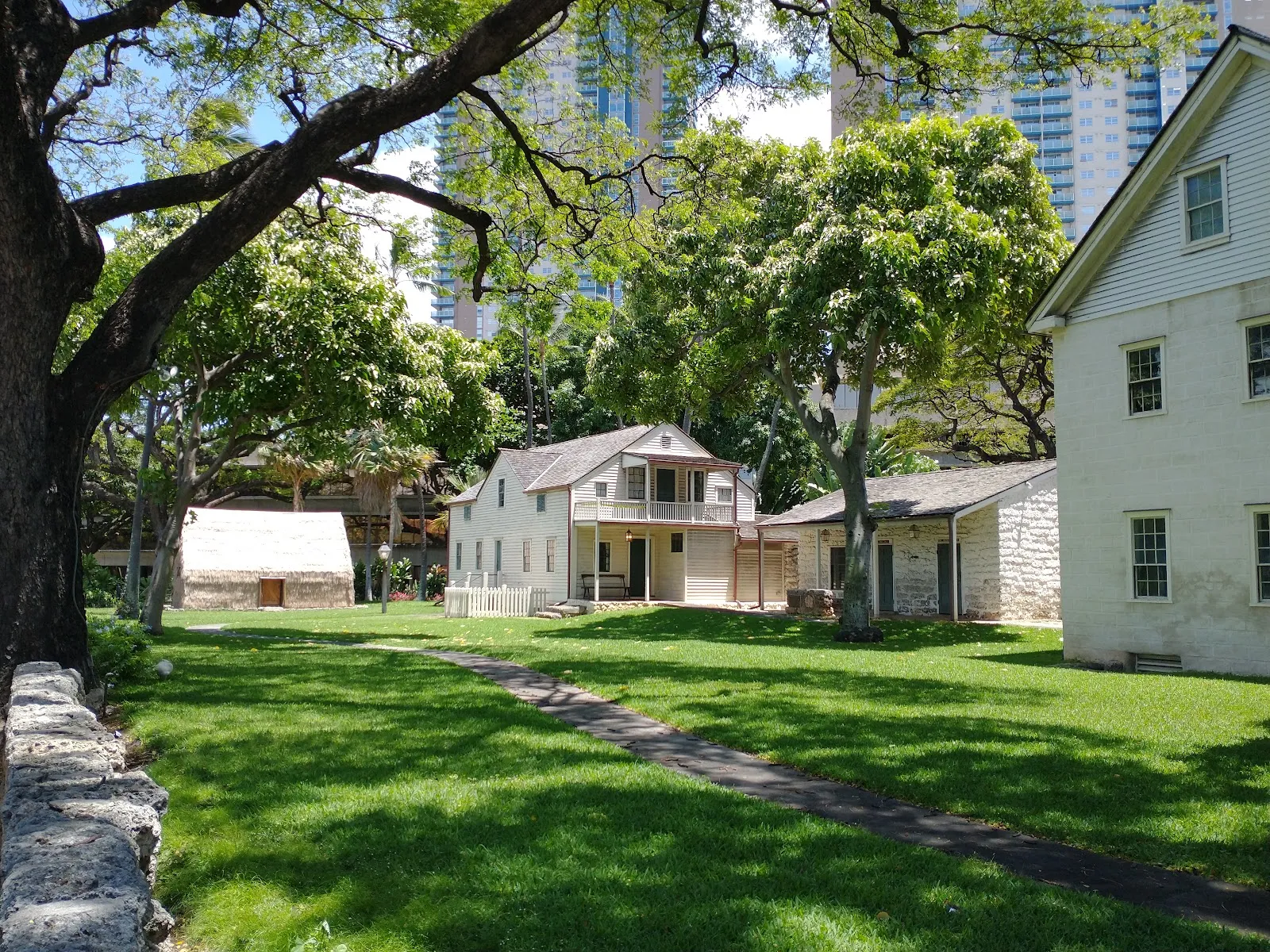
Hawaiian Mission Houses preserves buildings and collections tied to the arrival of American Protestant missionaries in Hawaiʻi in 1820. The site’s three historic structures include the 1821 Mission House, the 1831 Chamberlain House and a bedroom annex built in 1841. Together, they offer a way to explore the lives of the people who lived and worked here during the early missionary period, which lasted into the 1860s.
The Mission House is Hawaiʻi’s oldest surviving Western-style wooden building. Its frame was prepared in New England and shipped to the islands, where it was assembled. The complex also includes coral-block buildings, reflecting different approaches to construction as the missionaries adapted to life in Hawaiʻi. The Chamberlain House was used to store mission supplies.
The story here includes cultural influence as well as architecture. The missionaries’ presence affected Hawaiian society, religious life and the monarchy. A guided visit gives context to these changes and to the relationships between missionaries and Hawaiians. The site’s collections preserve objects and records from this period, alongside the historic rooms.
Printing and the Hawaiian language
Printing is an important part of the site’s history. A building on the grounds contains a replica of the first 19th-century printing press brought to the islands, along with examples of early books printed in Hawaiian. The printing work included an alphabet book and a Hawaiian hymnal.
The site also holds archival material in both English and Hawaiian. Its collections include artifacts, books, manuscripts, letters, diaries, illustrations and Hawaiian church records. The archives support research as well as public interpretation, connecting the buildings to the written records of the period.
During a guided tour, you can move through historic rooms while hearing about the people who lived in or visited the houses and the way they used the buildings. The interpretation links the missionary period to Hawaiian culture rather than treating the houses as isolated architectural objects.
Planning a visit
The site is at 553 South King Street in downtown Honolulu, across Kawaiahaʻo Street from Kawaiahaʻo Church. A tour is the most direct way to see the restored buildings and understand the objects and stories associated with them. Tours are offered on selected days, including Tuesday, Thursday and Saturday; reserve tickets at least 24 hours in advance.
You can also explore the grounds, where interpretive signs provide context. The gift shop carries books and items by local artists. One featured food souvenir is The North Shore Goodies’ Original Chocolate Coconut Peanut Butter.
Mission Houses staff also organize the Oahu Cemetery Pupu Theater, a seasonal event with historical reenactments of figures from Hawaiʻi’s past. Check whether it is running during your visit if you want to add an evening history program.
Perguntas frequentes
Where is Hawaiian Mission Houses?
The site is at 553 South King Street in downtown Honolulu, across Kawaiahaʻo Street from Kawaiahaʻo Church.
Do you need to reserve tickets in advance?
Reserve tickets at least 24 hours before your visit.
How long does a visit take?
A guided tour takes about an hour. Allow 30 to 60 minutes for a typical visit.
When are guided tours available?
Tours are offered on selected days, including Tuesday, Thursday and Saturday. Check availability when you book.