The Getty Villa is an art museum in Pacific Palisades, between Santa Monica and Malibu, devoted to the ancient cultures of Greece, Rome and Etruria. Its galleries sit inside a recreation of a Roman country house inspired by the Villa dei Papiri at Herculaneum. Look for sculpture, mosaics, pottery and other antiquities, then walk the gardens and colonnaded courtyards, where fountains and a reflecting pool frame views toward the Pacific. Admission is free, but you need a timed-entry reservation; allow time for both the indoor collection and the grounds.
A museum shaped like a Roman house
The Getty Villa is one of the two campuses of the J. Paul Getty Museum. It focuses on art and cultures from ancient Greece, Rome and Etruria, while the Getty Center has a different collection. The Villa opened in 1974 as the original home of the Getty Museum.
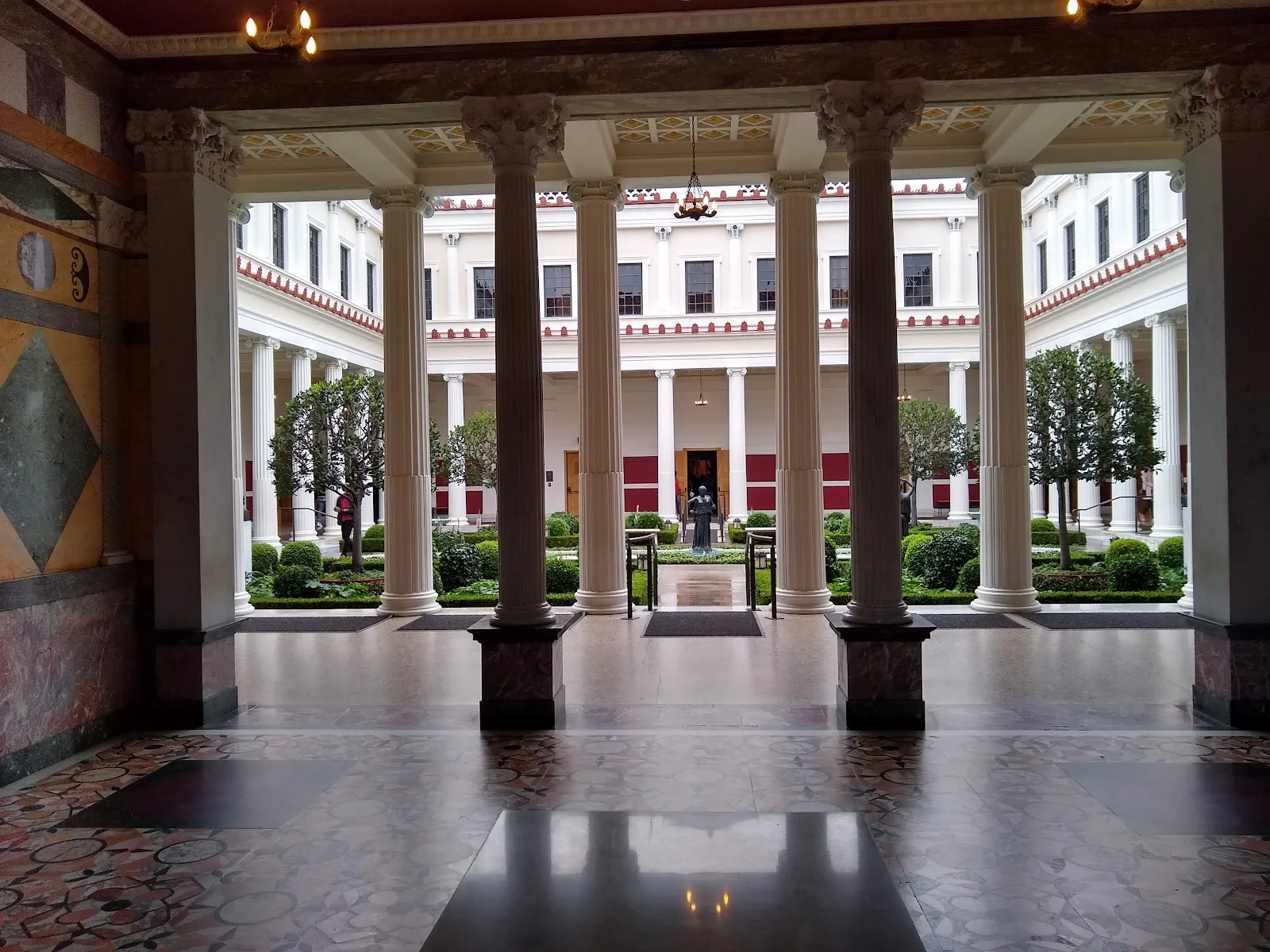
Its design takes inspiration from the Villa dei Papiri, an ancient Roman country house in Herculaneum buried by the eruption of Mount Vesuvius. The Getty Villa is not an exact replica. Instead, its architecture draws on the ancient model to create a setting of courtyards, galleries and garden spaces for the collection.
What to see in the collection
The museum’s holdings include Greek, Roman and Etruscan antiquities dating from around 6,500 BC to 400 AD. The collection includes sculpture, pottery, mosaics, jewelry and other objects. Among the named works are the Lansdowne Heracles and the Victorious Youth, a bronze statue of an athlete.
Displays are arranged across gallery spaces and cover themes from the ancient world, including the Trojan War and gods and goddesses. The objects on view can change, so plan to explore the galleries rather than expecting every piece in the broader collection to be displayed at once.
Gardens and outdoor spaces
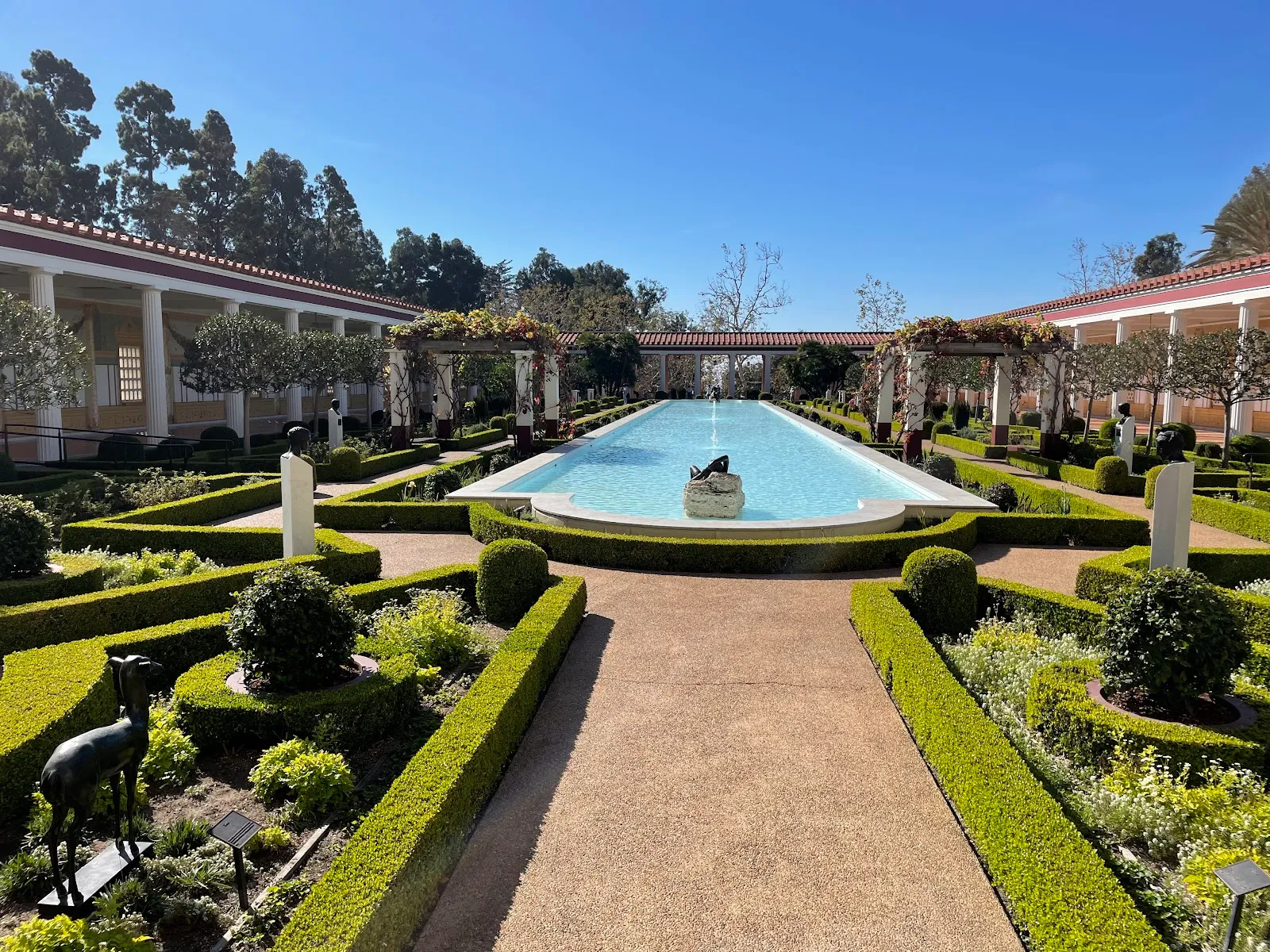
The gardens extend the Roman-inspired design beyond the galleries. Four named gardens are the Inner Peristyle, Herb Garden, Outer Peristyle and East Garden. Their layouts draw on ancient Roman gardens and include Mediterranean plants, fountains, sculptures and reflecting pools.
The Outer Peristyle’s pool is a prominent place to pause, with classical architecture and garden planting around it. Colonnaded walkways and courtyards provide views across the grounds and toward the Pacific. The outdoor areas are part of the visit, so leave time to walk them rather than treating the Villa as a quick gallery stop.
Planning your visit
Admission is free, but entry requires a timed reservation. Book ahead online and check the museum’s official visit information before setting out. On-site parking is paid; the supplied information gives different fee amounts, so confirm the current charge when planning.
A self-guided audio tour can be accessed by QR code and is available in multiple languages. The museum also has a cafe, restaurant and gift shop. The galleries include ancient art, including nude imagery, which may be relevant when deciding whether to visit with children. A visit of a few hours gives you room for both the collection and the grounds.
Perguntas frequentes
Is admission to the Getty Villa free?
Yes. Admission is free, but you need to reserve a timed-entry ticket in advance.
How long should you spend at the Getty Villa?
Allow about two to three hours to explore the galleries and gardens.
Do you have to pay for parking at the Getty Villa?
Yes, on-site parking is paid. Check the official visit information for the current fee, as the available information gives conflicting amounts.
What is the Getty Villa known for?
It houses ancient Greek, Roman and Etruscan art in a Roman country house-inspired setting, with four gardens and views toward the Pacific.