
On Cincinnati’s downtown riverfront, the National Underground Railroad Freedom Center examines slavery, the Underground Railroad and continuing struggles for freedom. Its location beside the Ohio River connects the exhibits to the crossing many freedom seekers made from Kentucky into Ohio. Inside, look for the recovered slave pen, films and interactive displays, including material on modern-day slavery. A third-floor terrace with an Eternal Flame offers a place for reflection. Plan time for the museum’s layered history, which reaches beyond the Underground Railroad to contemporary issues.
Why Cincinnati is central to the story
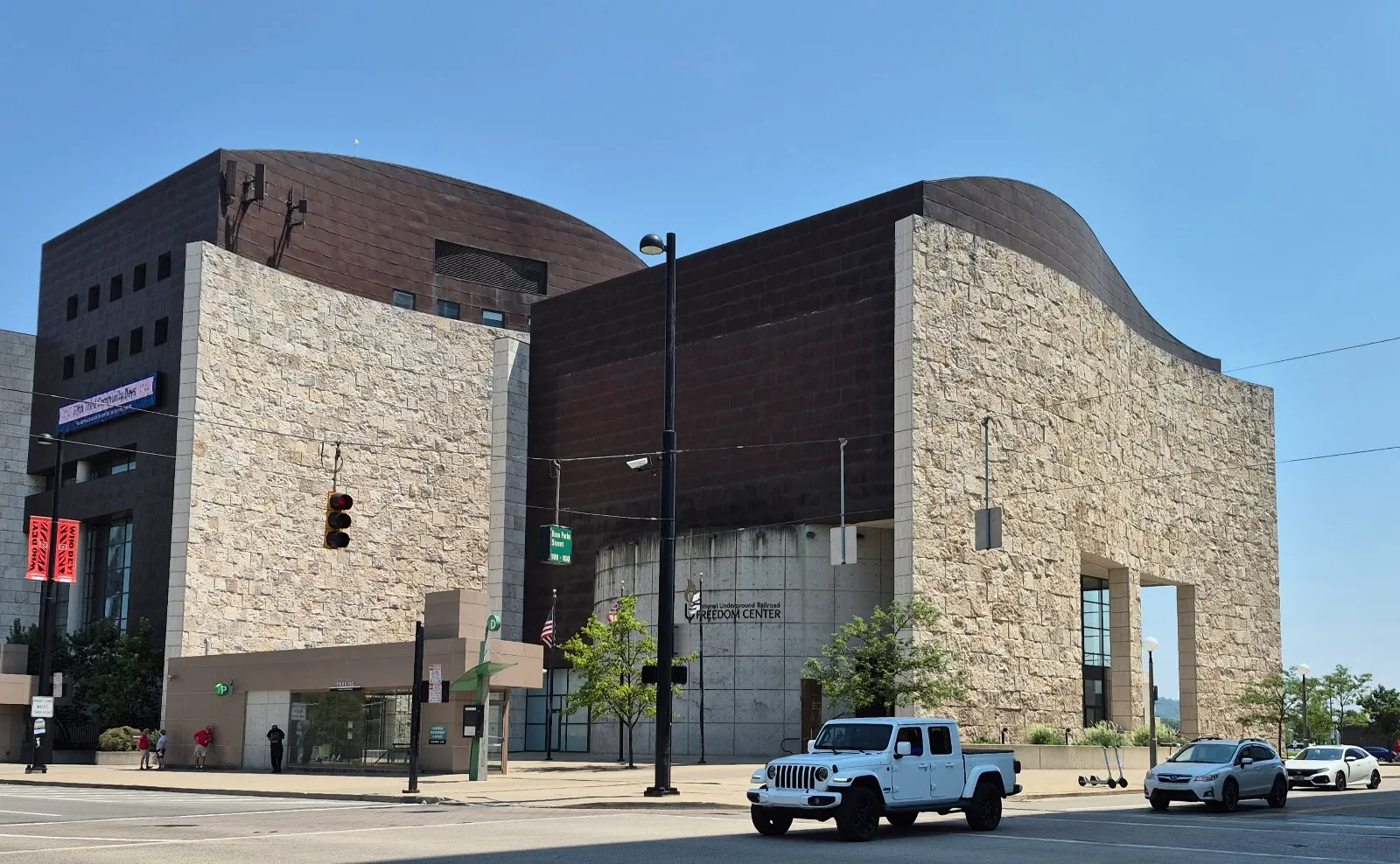
The Freedom Center stands beside the Ohio River, a crossing that marked a major step toward freedom for enslaved people escaping north from Kentucky. In the years before and during the Civil War, Cincinnati became an important point on the Underground Railroad. Abolitionists in the area helped freedom seekers with shelter, food and other assistance as they continued their journeys.
The museum opened in 2004. Its subject reaches beyond the routes and people of the Underground Railroad: exhibits also examine slavery’s wider history, abolition and the continuing struggle for civil rights. The riverfront setting gives visitors a direct connection to the geography behind many of these stories.
Exhibits and the recovered slave pen
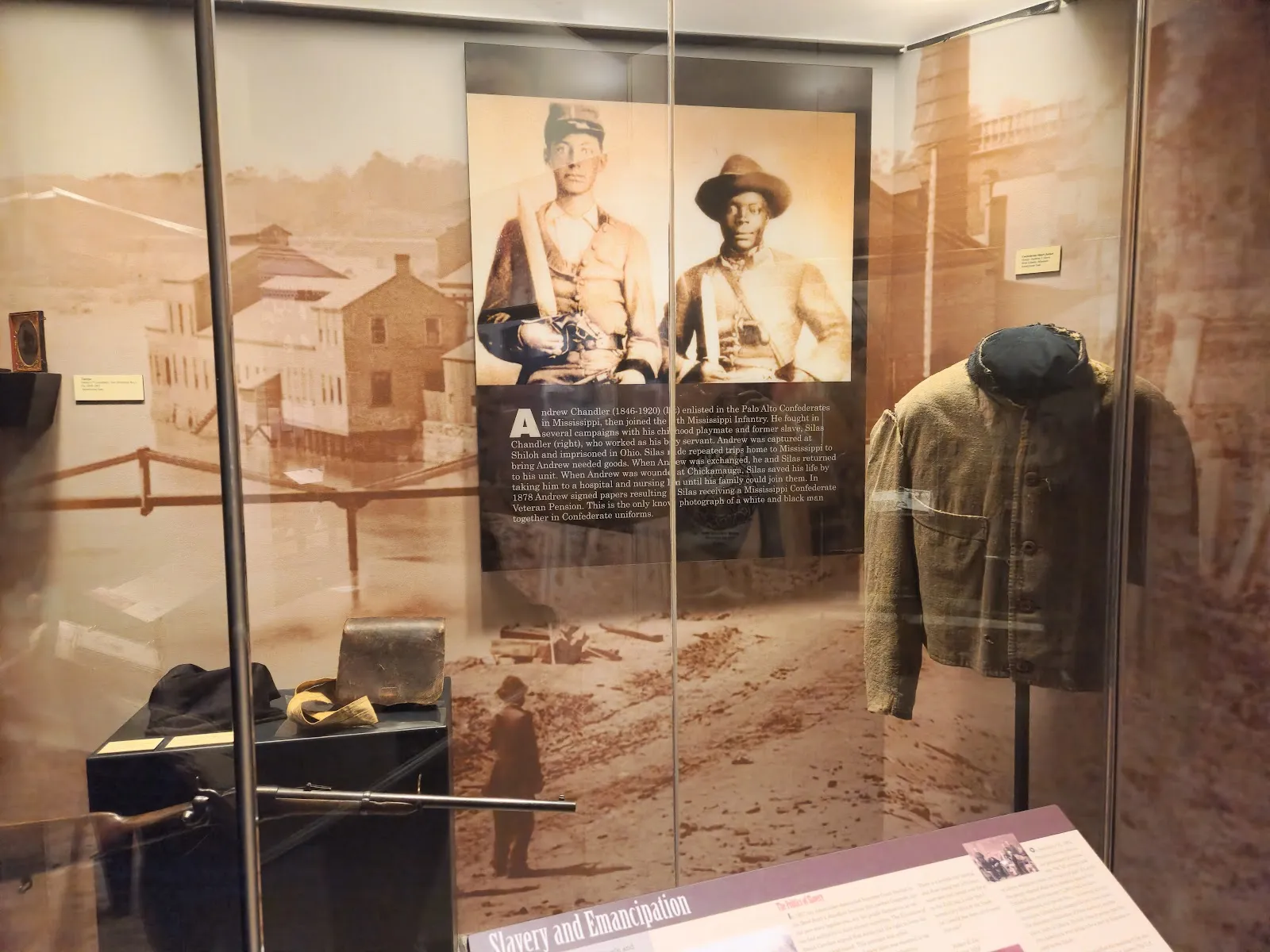
A wooden slave pen recovered from a Kentucky farm is among the center’s key objects. It was used to hold captive people who were being taken to slave auctions. The structure brings the realities of enslavement into view through a physical space, alongside artifacts, text, images and artwork.
Exhibits cover different parts of the history. “From Slavery to Freedom” traces the past, while “Escape! Freedom Seekers and the Underground Railroad” focuses on journeys out of bondage. “Brothers of the Borderland” and “Everyday Freedom Heroes” give attention to people and actions connected to the Underground Railroad. Displays use interactive elements and film to add context to the objects and individual stories.
The films are a useful part of the visit, and can help frame the material before you move through the galleries. Some visitors choose to watch them first, then explore the exhibits at their own pace.
From historical slavery to present-day freedom
The museum also addresses enslavement in the present. “Invisible: Slavery Today” examines modern forms of slavery, placing the subject alongside the history of the transatlantic slave trade and the Underground Railroad. “Open Your Mind: Understanding Implicit Bias” turns attention to assumptions and their effects. Together, these displays extend the visit beyond a single period in American history.
The center’s exhibits can be emotionally demanding. Accounts of slavery and the struggle to escape it are presented directly, and some displays may be complex for younger children. Families can use the range of exhibits to decide what is appropriate for each child and allow time for questions.
Planning a visit
The museum is at 50 E Freedom Way, downtown by the riverfront. It is open Wednesday through Sunday and closed Monday and Tuesday. A visit can take about two hours if you move selectively through the galleries; reading closely and stopping for films can extend it to three or four hours. If your schedule is tight, consider returning for another visit rather than trying to take in every exhibit at once.
Guided tours are available for visitors who want additional context. The center also presents traveling exhibitions and public events, so check its website for current programming before you go. At the end of the visit, the third-floor terrace and its Eternal Flame offer a quiet place to pause and look toward the Ohio River.
Perguntas frequentes
How long should I plan for the Freedom Center?
Allow about two hours for a selective visit. Reading the displays and stopping for films can bring the visit to three or four hours.
When is the National Underground Railroad Freedom Center open?
It is open Wednesday through Sunday, 10 a.m. to 5 p.m. It is closed Monday and Tuesday.
What is the slave pen at the museum?
It is a wooden structure recovered from a Kentucky farm, where enslaved people were held before being taken to auctions.
Is the museum suitable for children?
The exhibits include material for different ages, but some subjects and displays can be difficult or complex for young children.


