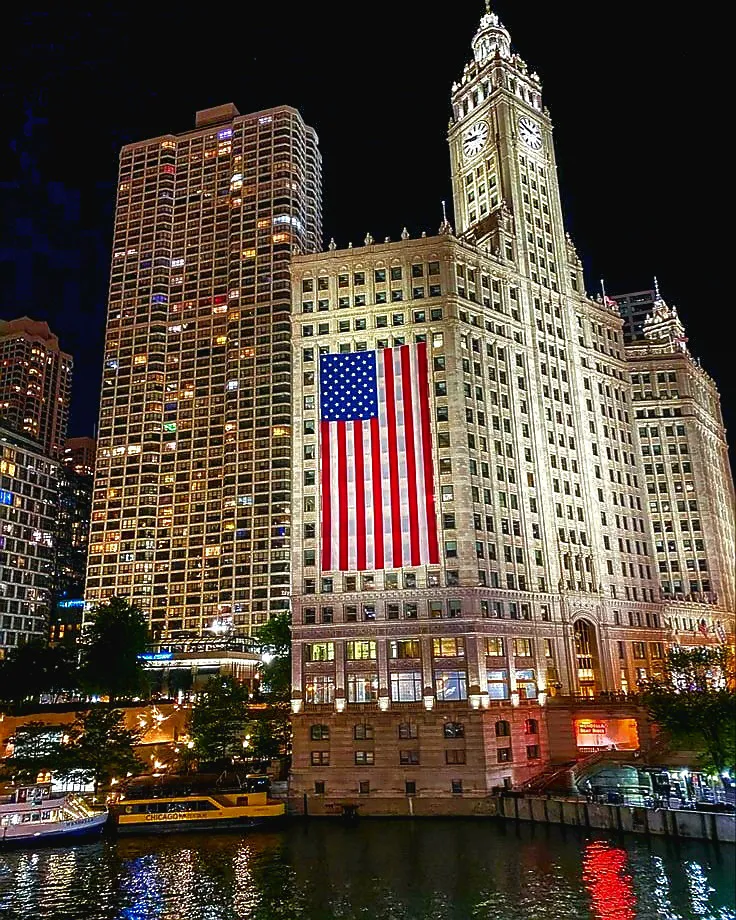
The Wrigley Building stands where Michigan Avenue meets the Chicago River, at the start of the Magnificent Mile. Completed in 1924 as the Wrigley Company’s headquarters, it is known for its white terra-cotta towers and a clock tower inspired by Seville’s Giralda. Take in the façade from the plaza and riverfront, then continue along the Riverwalk for more city views. The building is especially striking after dark, when lighting brings out the pale exterior. It is mainly office space, so plan to admire it from outside rather than expect a full tour.
A landmark at the river crossing
The Wrigley Building occupies a prominent site where Michigan Avenue meets the Chicago River, at the northern end of the Magnificent Mile. Its construction began in 1920, and it was completed in 1924 as the headquarters of the Wrigley Company, the chewing-gum business founded by William Wrigley Jr. The building helped change the character of Michigan Avenue, which had previously included warehouses.
The design came from Graham, Anderson, Probst & White. The complex has two towers, built several years apart and later connected by skybridges. Its setting makes it easy to take in from more than one angle: look toward the façade from Michigan Avenue, then head to the riverfront for a view that includes the building and the bridges.
White terra-cotta and the clock tower
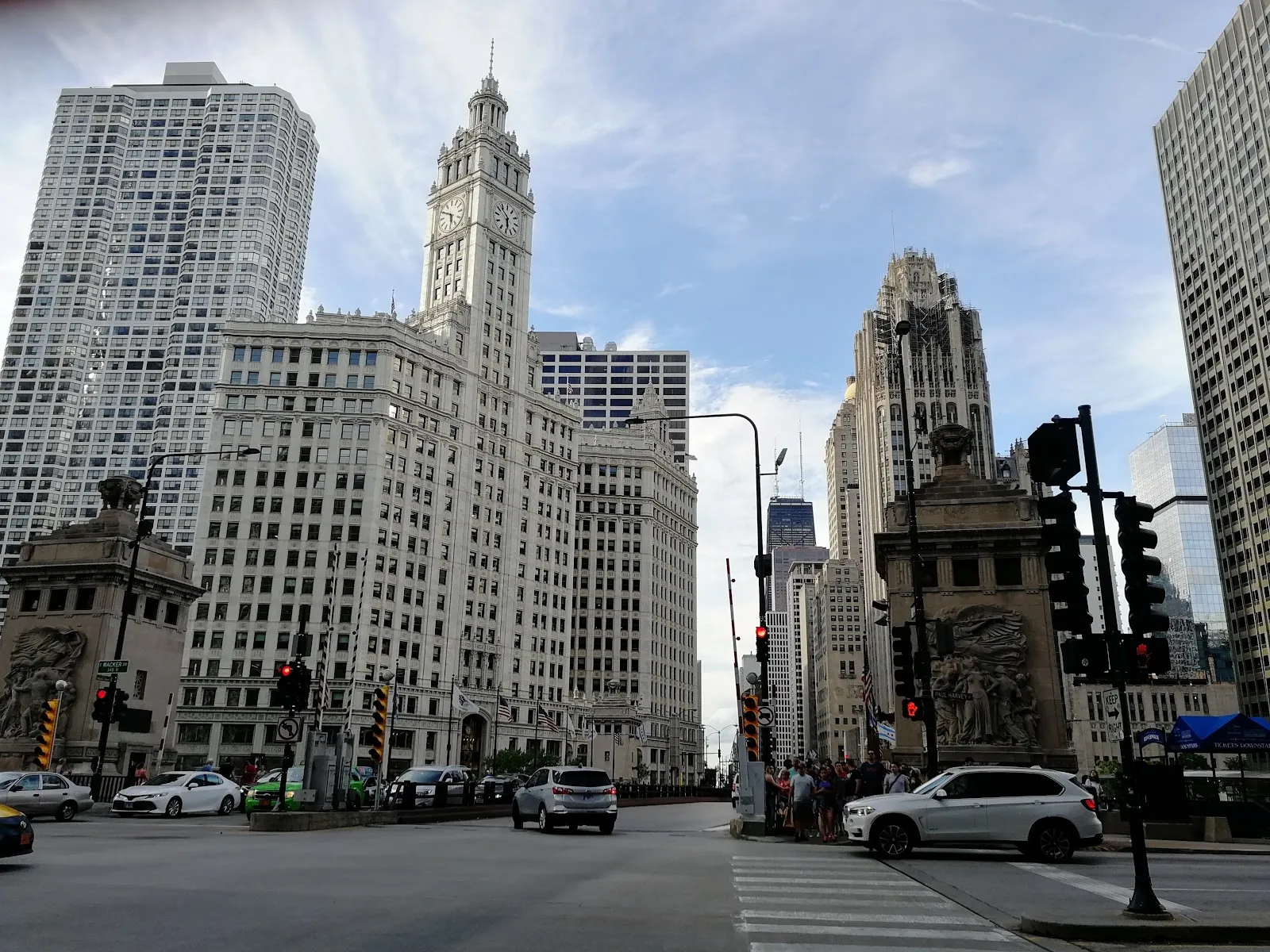
The building’s pale exterior is made from terra-cotta tiles in six shades of white. The clock tower draws on the Giralda, the bell tower of Seville Cathedral in Spain. Together, the tower and carefully detailed façade give the building its distinctive profile on the river.
Look closely at how the two towers meet the street and at the clock above them. The Wrigley Building is often photographed from the DuSable Bridge and the riverbank, both of which offer a clear view of its exterior. In the evening, lamps illuminate the terra-cotta, making the white surface stand out against the surrounding skyline.
What to expect inside
The Wrigley Building was an office building from its earliest days and remains mainly used for offices. It was Chicago’s first air-conditioned office building, an innovation when it opened. The public-facing experience is primarily the exterior and the surrounding plaza, though the lobby may be accessible. Access can vary, so check ahead if seeing the interior is important to your visit; there is no basis to assume a full tour is available.
The building is a practical starting point for a walk along the Chicago River or the Magnificent Mile. Nearby views take in the Michigan Avenue Bridge and the downtown skyline. The area is busy, particularly along Michigan Avenue, so an early visit or a weekday can make taking photographs easier. After dark, return to see the façade lit.
Perguntas frequentes
Where is the Wrigley Building?
It is at 400-410 N Michigan Avenue, where Michigan Avenue meets the Chicago River, at the start of the Magnificent Mile.
Can you go inside the Wrigley Building?
The building is mainly office space, and lobby access can vary. Check ahead if you want to see inside, and don’t assume a full tour is available.
What is the Wrigley Building known for?
Its white terra-cotta exterior, twin towers and clock tower inspired by Seville’s Giralda are its defining details.
When is the best time to photograph the Wrigley Building?
Go after dark to see the façade illuminated, or early in the day for a quieter photo stop.