Founded in 1773, The Charleston Museum at 360 Meeting St traces the natural and cultural history of Charleston and the South Carolina Lowcountry. Its galleries range from Native American history and colonial life to the American Revolution and Civil War, alongside natural history, textiles and decorative arts. Look for the whale skeleton, local fossils and the piano George Gershwin used while composing Porgy and Bess. Kidstory and hands-on natural history displays give younger visitors room to explore, too. Plan extra time if you like reading exhibits closely.
A museum founded before the United States
The Charleston Library Society established the museum in 1773, before the American Revolution. Its early purpose grew from a period interest in collecting and studying objects from the natural world and human history. The museum opened to the public later, in 1824.
Its collections developed over generations and include natural specimens, historical objects and decorative arts. The galleries focus on Charleston and the Lowcountry, placing local stories alongside the region’s ecology and its connections to wider events. Rather than following a single period, the displays range from prehistoric evidence to more recent cultural history.
Lowcountry history and material culture
The Lowcountry History Hall begins with material connected to Native Americans who lived along the South Carolina coast before colonization. Other displays address European settlement, the Revolutionary era and the Civil War. Objects relating to rice cultivation and the region’s agricultural economy provide context for the wealth built through enslaved labor. The museum also presents accounts of racial inequality through personal video testimony.
Textiles and clothing offer another way to read the past. The collections include historic garments and sweetgrass basketry, a traditional regional craft. Military history appears in displays of early weapons and artifacts connected to Charleston’s role in conflict. These objects help explain how work, trade, status and defense shaped life in the city.
Natural history and Kidstory
The natural history galleries connect the area’s human past with its landscape and wildlife. Fossils and remains of prehistoric animals include a primitive toothed whale, while displays introduce the Lowcountry’s natural resources and ecology. A large whale skeleton hangs in the museum’s entrance area.
Kidstory gives children an interactive route into Charleston’s history, including opportunities to try on colonial-style clothing. Hands-on natural history activities invite younger visitors to examine the local ecosystem. Families can take breaks on benches around the museum, though seating is limited in some areas.
Music and objects with personal histories
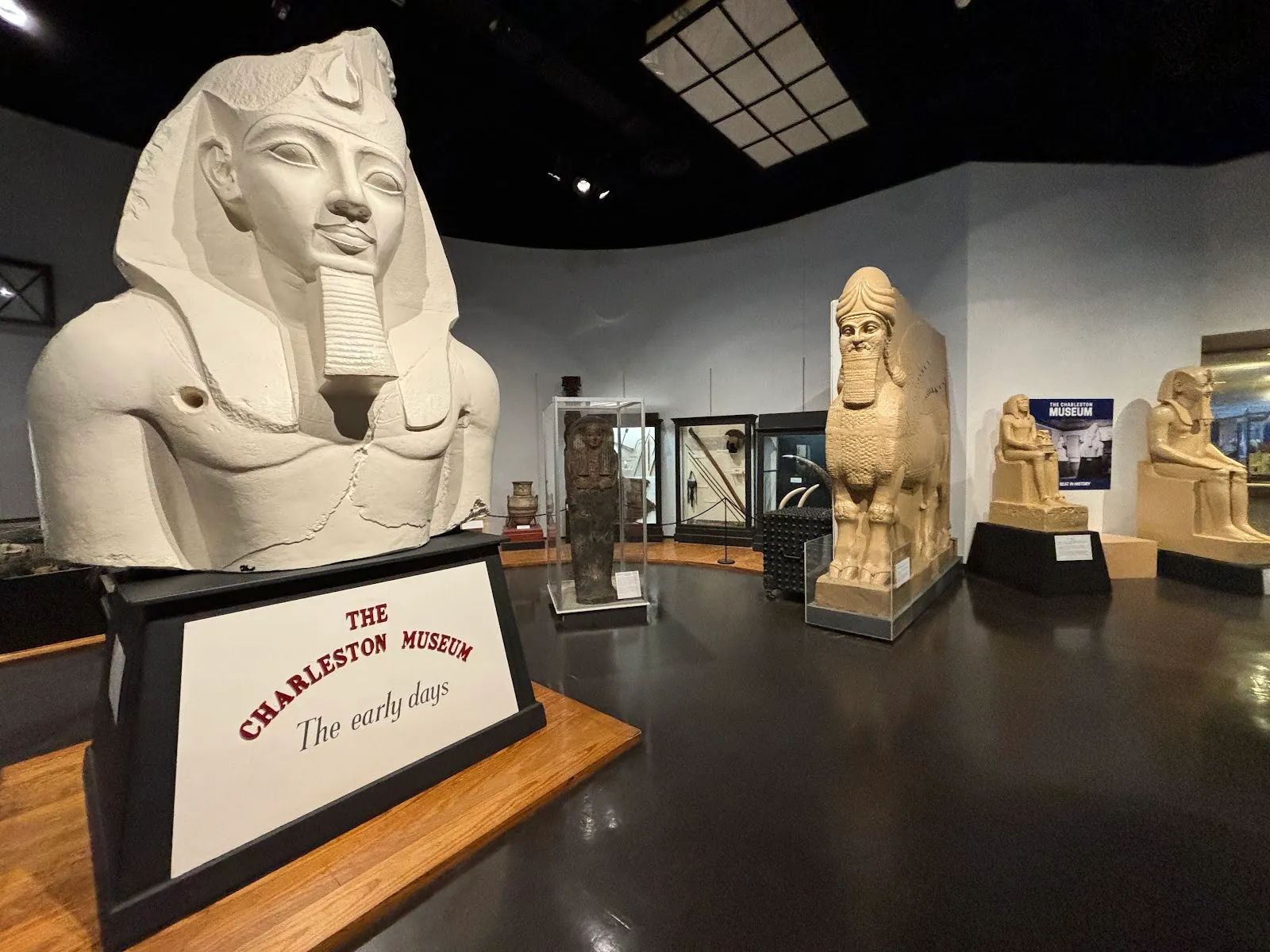
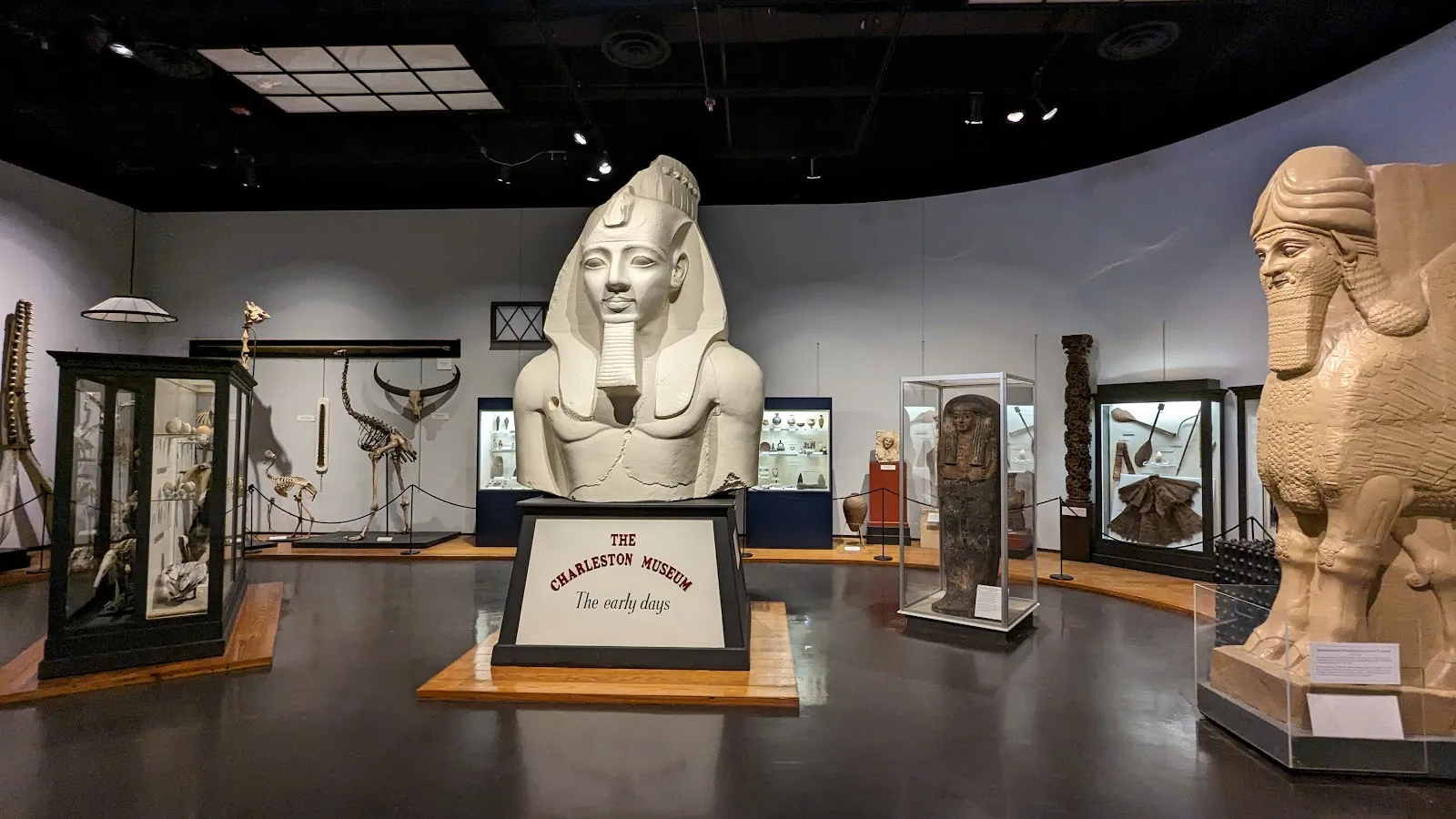
Among the museum’s cultural objects is George Gershwin’s piano, which he used while composing Porgy and Bess. It links the galleries’ local history to a work associated with South Carolina. The collection also includes Egyptian antiquities, silver and objects connected to Charleston’s maritime history.
Allow more time if you prefer to read each display and watch the videos. Visitors who focus on selected subjects can move through more quickly, while families may want to leave time for Kidstory and the hands-on natural history area. The museum’s Meeting Street address also places it among Charleston’s downtown cultural attractions.
Perguntas frequentes
When was The Charleston Museum founded?
The Charleston Library Society established it in 1773. It opened to the public in 1824.
How long should you spend at The Charleston Museum?
Allow about two hours for a focused visit or up to five hours to explore the displays in detail.
Is The Charleston Museum suitable for children?
Yes. Kidstory has interactive history activities, and the natural history area includes hands-on displays for children.
What can you see at The Charleston Museum?
Exhibits cover Lowcountry history, natural history, historic clothing, decorative arts and military history. Highlights include a whale skeleton and George Gershwin’s piano.