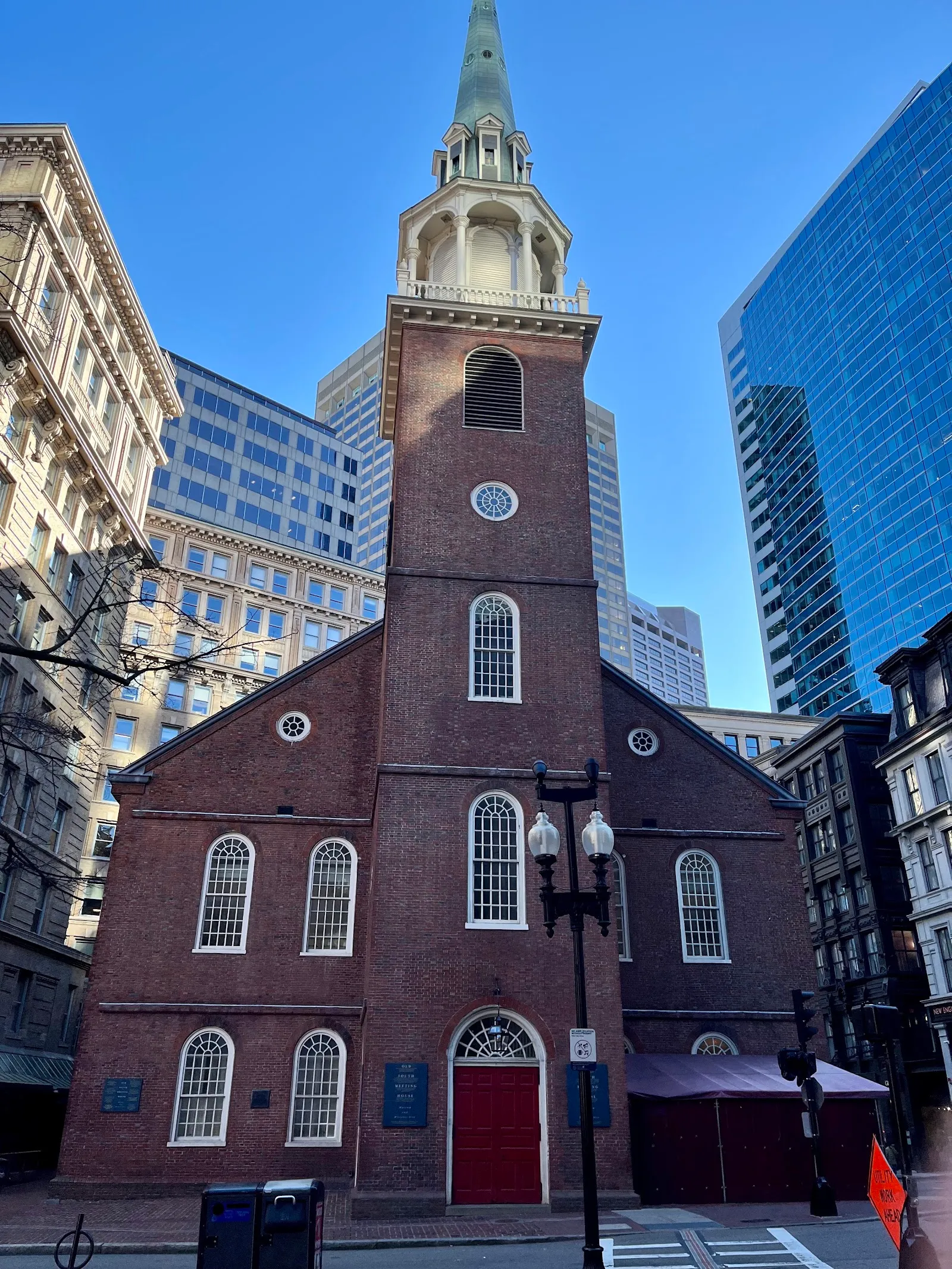
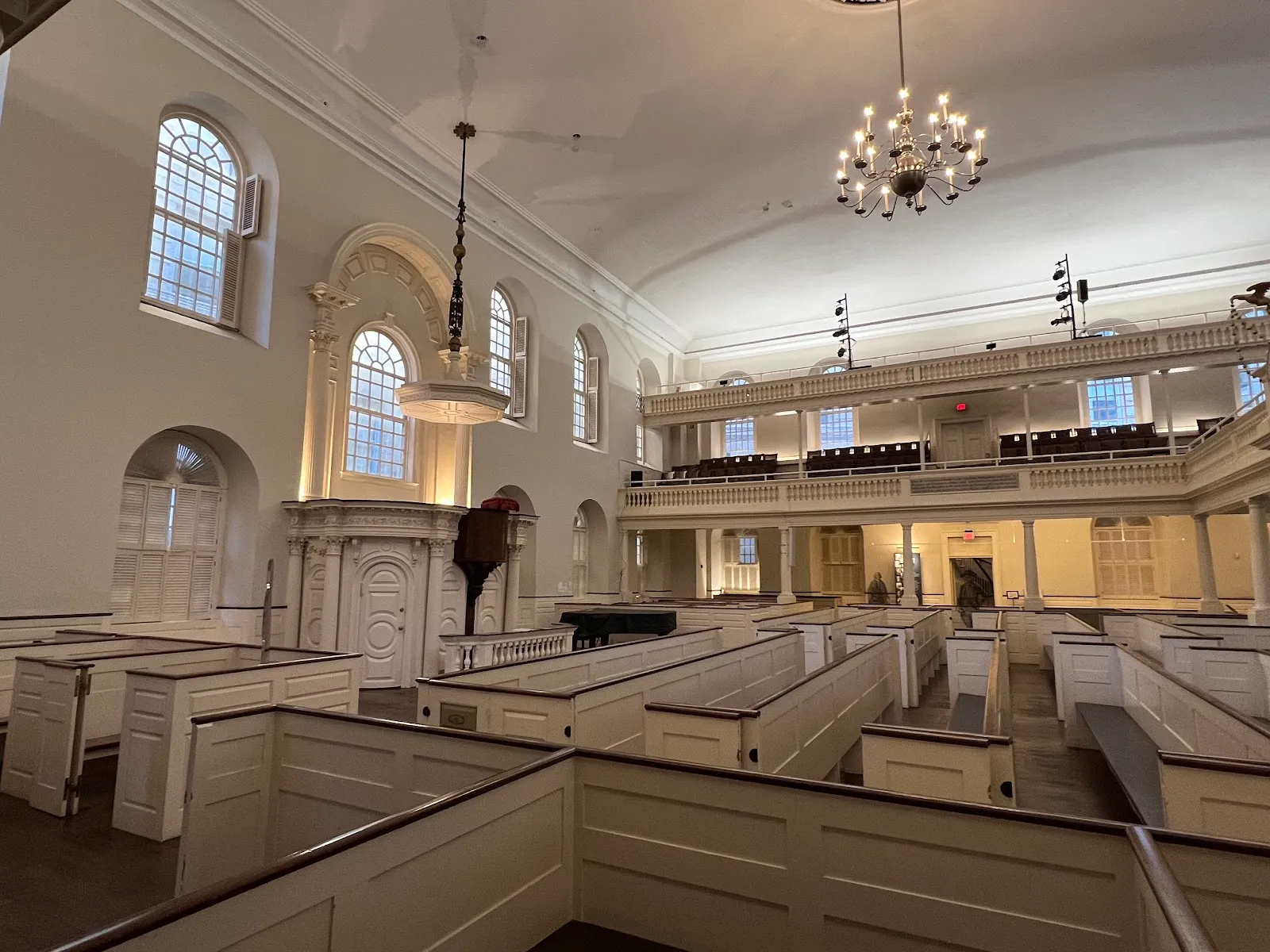
On Boston’s Freedom Trail, Old South Meeting House is a 1729 Georgian building where religious services and public meetings once shared the same hall. Its best-known gathering took place in December 1773, when 5,000 people assembled to protest the tea tax before the Boston Tea Party. Today, exhibits explore the building’s revolutionary history and later life. Inside the compact meeting hall, you can picture the size of the crowd that filled it; outside, look for the red brick, white steeple, green copper top and clock.
A meetinghouse built for worship and public debate
Congregationalists built Old South Meeting House in 1729 as a place of worship. It also became a town meeting hall, used when a gathering was too large for Faneuil Hall. In colonial Boston, it was the city’s largest building, and its size made it a natural place for public assemblies.
The congregation held services here, while the hall also hosted political and social meetings. In the years before the American Revolution, people gathered to debate British policies and remember those killed in the Boston Massacre. The building’s role in these discussions is part of what makes a visit different from seeing a landmark only from the street.
The gathering before the Boston Tea Party
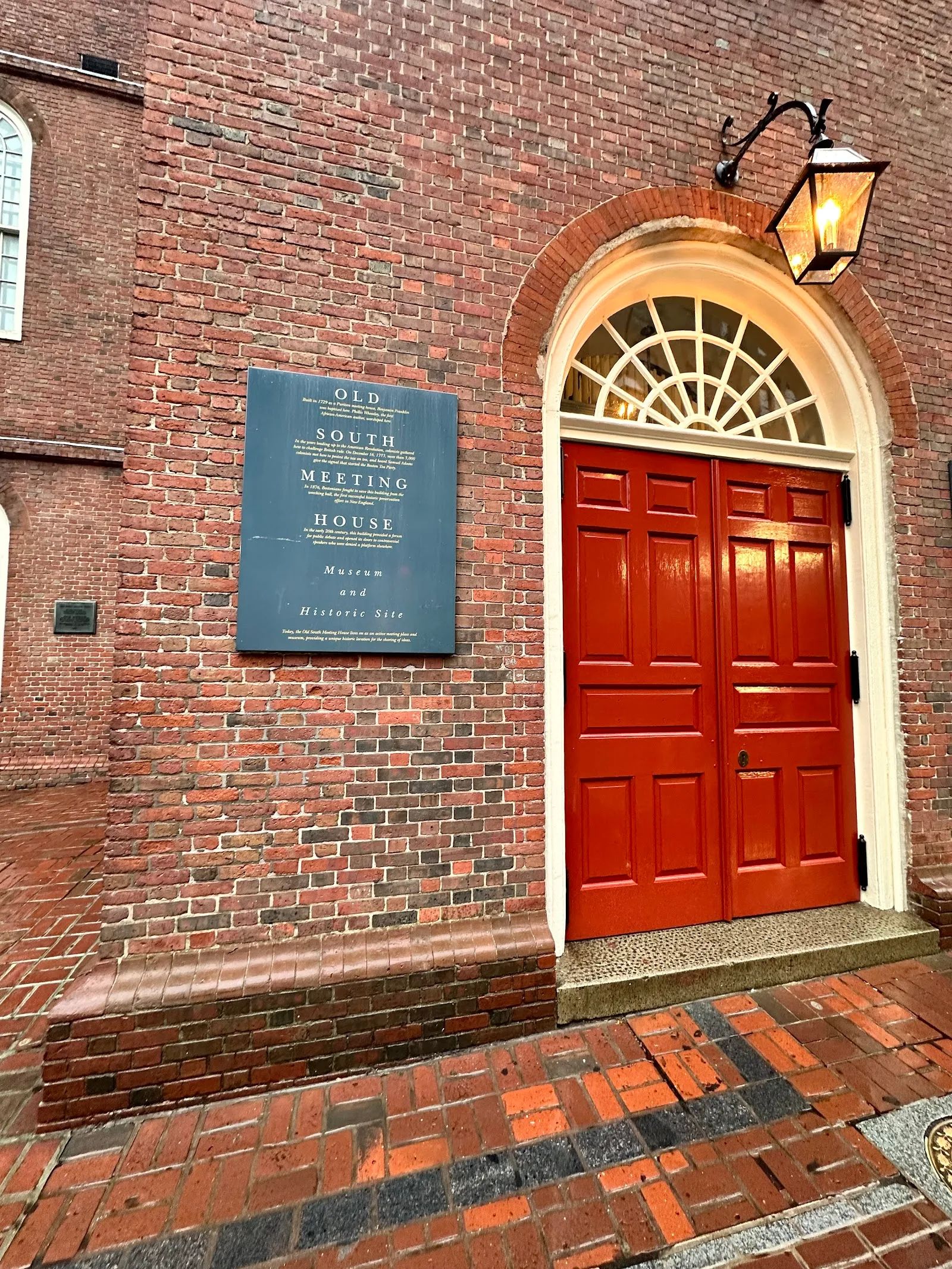
On December 16, 1773, about 5,000 people gathered inside to protest the British tax on tea. After the meeting, participants went to Boston Harbor, where tea was dumped from British ships. The event became known as the Boston Tea Party.
The hall is compact, and that scale helps put the gathering into perspective. Imagine thousands of people fitting into the room to hear debate and decide what to do next. The meetinghouse is a place to connect the familiar story of the Tea Party with the actual space where the protest was organized.
What to see inside and out
The museum’s exhibits cover the meetinghouse’s revolutionary history as well as later events in its life. A short introductory film has been used to set the scene, including for younger visitors. Staff can answer questions about the building and its history; leave time for a conversation if you want more context than the displays provide.
The exterior is easy to pick out in Downtown Crossing. Look for its red-brick Georgian façade, white steeple, green copper top and clock. After the Great Fire of 1872 destroyed neighboring buildings, the congregation moved to the Back Bay. During the British occupation, troops used the meetinghouse as a riding school, and the building later needed restoration.
The site also makes a practical stop for families. School-holiday activities have included watercolour and bookmark-making, a reading corner, sensory play and historical dress-up. Ask staff whether activities are running during your visit, since the stations are not a guaranteed part of every visit.
Perguntas frequentes
What happened at Old South Meeting House in 1773?
On December 16, about 5,000 people gathered to protest the British tea tax. Participants then went to Boston Harbor, where tea was dumped from British ships in what became known as the Boston Tea Party.
When was Old South Meeting House built?
The meetinghouse was built in 1729 for Boston’s Congregationalists. It also served as a public meeting hall.
Is there an admission fee?
Yes, it is a paid attraction. The available information does not specify the current ticket price.
Where is Old South Meeting House?
It is at 310 Washington Street in Boston, on the Freedom Trail.