On Saadiyat Island in Abu Dhabi, the Natural History Museum traces the story of the universe and life on Earth, with a focus on the Arabian Peninsula’s landscapes and ancient life. The galleries move from the origins of the solar system through the age of dinosaurs to modern biodiversity. Look for Stan, a Tyrannosaurus rex skeleton, the Murchison Meteorite and a blue-whale skeleton. Interactive displays and the building’s landscape-inspired design add to the visit. Plan for at least three to four hours if you want to explore the sections at a measured pace.
A journey through deep time
The Natural History Museum Abu Dhabi is in the Saadiyat Cultural District on Saadiyat Island. Its galleries tell the story of the universe and life on Earth across a timeline beginning with the Big Bang, around 13.8 billion years ago. The displays connect this vast history with the development of the planet and its living species.
The collection is arranged around the history of the solar system, the age of dinosaurs and the development of life on Earth. In the final part of that story, the Arabian Peninsula comes into focus through its desert, mountain and coastal habitats.
Dinosaurs and objects from space
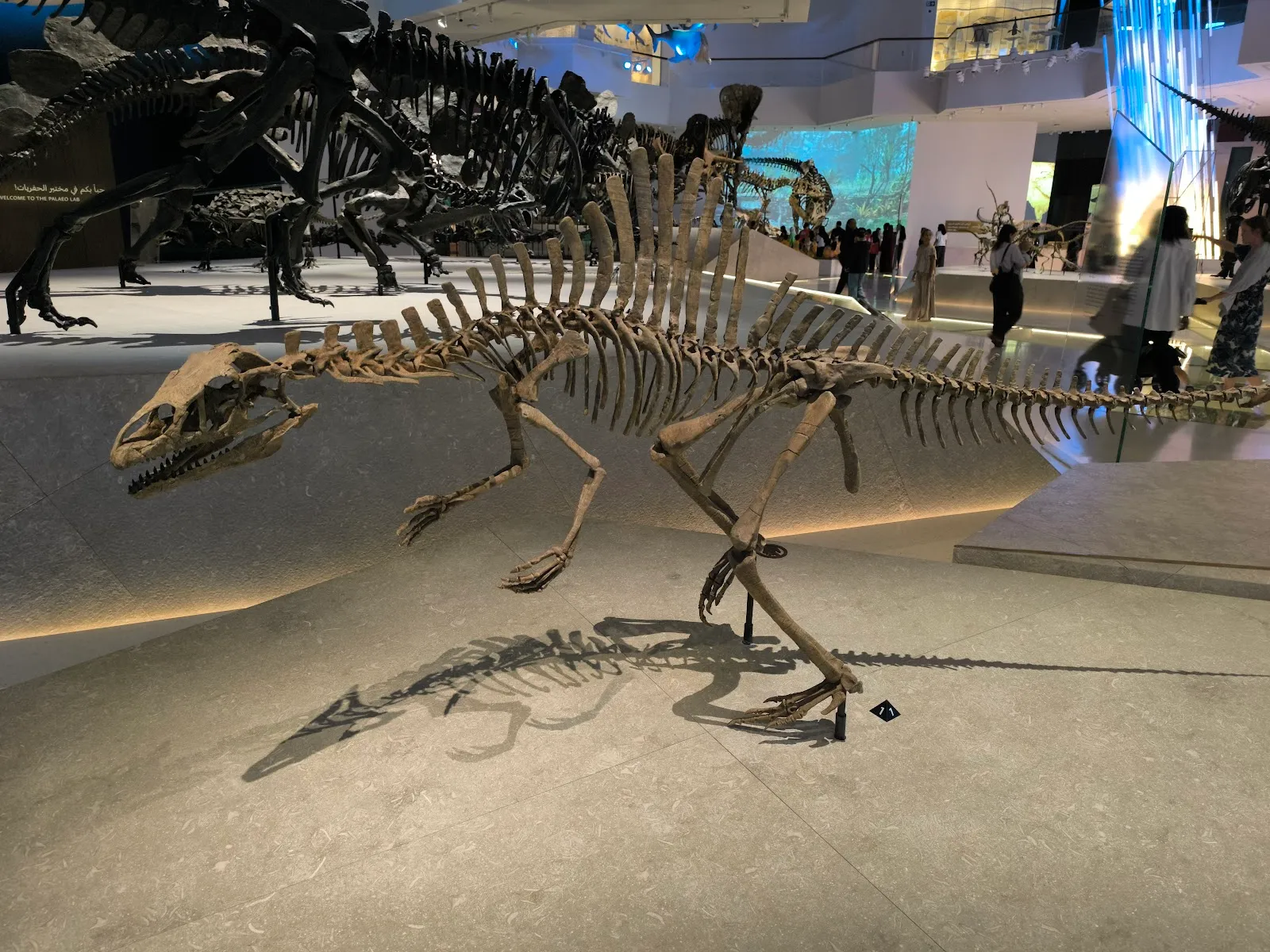
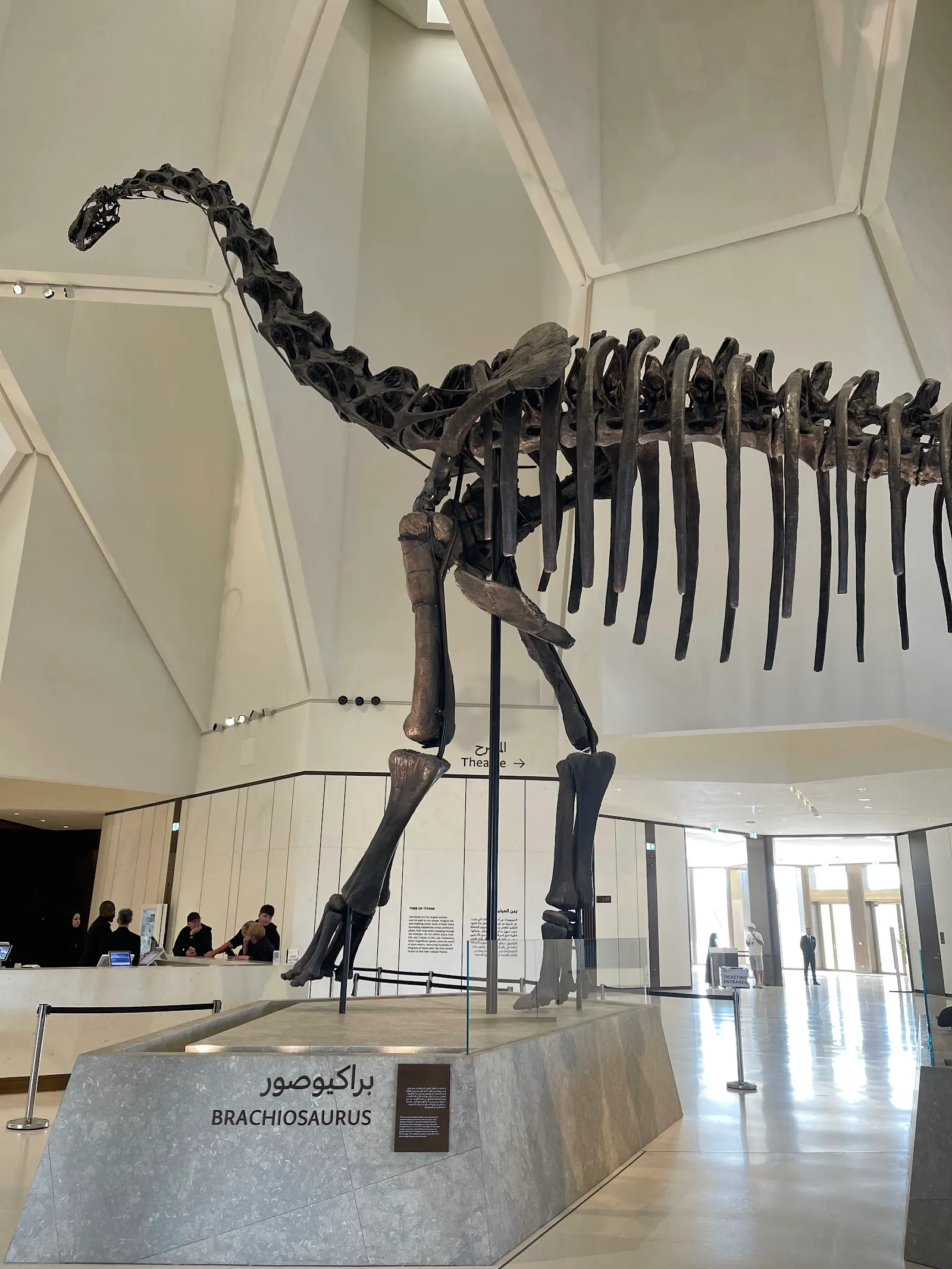
Stan, a Tyrannosaurus rex skeleton about 67 million years old, is one of the museum’s major specimens. Fossils and reconstructions help bring extinct animals into view, while displays on rocks and the evolution of species broaden the story beyond dinosaurs.
The Murchison Meteorite, around seven billion years old, offers a striking link to the museum’s account of the early universe. The collection also includes material from the Moon. Together, these objects place the history of Earth within a much longer cosmic timeline.
The Arabian Peninsula in the galleries
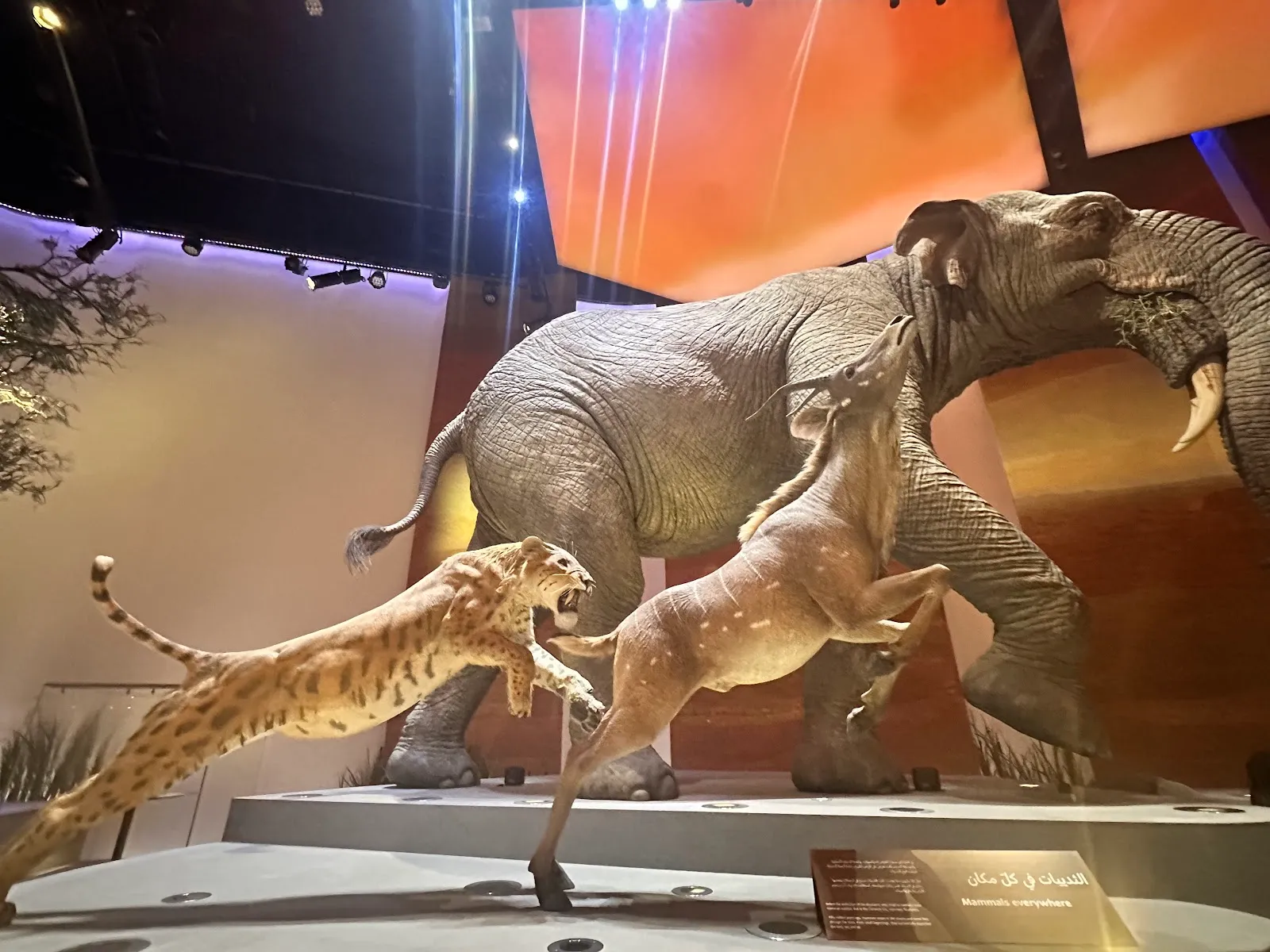
The regional exhibits explore the natural history of the Arabian Peninsula, adding local habitats and ancient species to the broader account of life on Earth. A fossil of an ancient four-tusked elephant is among the specimens connected with the region.
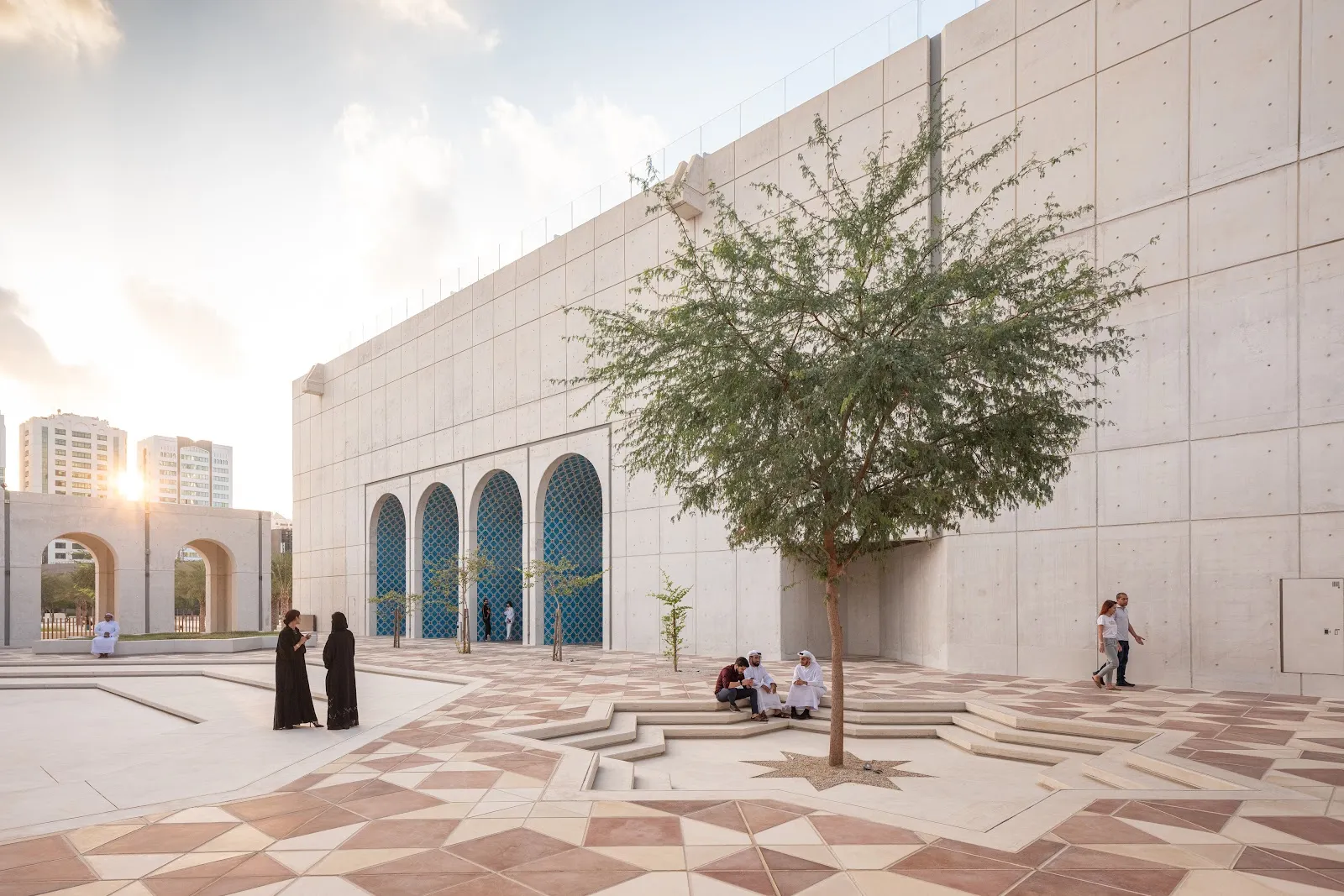
The museum’s landscape-inspired architecture continues the natural theme outside the displays. Inside, spacious galleries, immersive scenes and interactive technology help explain the changes in the planet and its species.
Planning your visit
The museum suits visitors interested in science, fossils, wildlife and Earth’s history, and its displays are designed to engage children as well as adults. Allow at least three hours, with some visits taking closer to four hours to cover the galleries. The site has a cafe, restaurant, theatre and gift shop.
Tickets are recommended in advance. The gathered information lists an adult admission price of AED 70 and free entry for minors, but check the museum’s official website for current ticket details. Discounts may be available for some groups, so ask staff before purchasing. Parking can be busy, so allow time to find a space.
Perguntas frequentes
How long do you need at the Natural History Museum Abu Dhabi?
Allow at least three hours. A full visit can take around three to four hours.
What are the main things to see?
Look for Stan, the Tyrannosaurus rex skeleton, the Murchison Meteorite, the blue-whale skeleton and exhibits on the Arabian Peninsula’s natural history.
Is the museum suitable for children?
Yes. Interactive displays and exhibits on dinosaurs, fossils and wildlife are designed to engage children and adults.
Should you book tickets in advance?
Advance tickets are recommended. Check the museum’s official website for current ticket prices and availability.