
Hagia Irene is a former Byzantine church in the outer courtyard of Topkapı Palace in Istanbul. Its restrained interior, thick stone walls and high vaulted ceilings give it a different feel from the city’s more ornate churches. Look for the unusual atrium, an early architectural feature, and the church’s surviving traces of Christian decoration. It now functions as a museum and concert venue, so it makes a thoughtful stop for anyone exploring the palace’s Byzantine history.
A church within Topkapı Palace
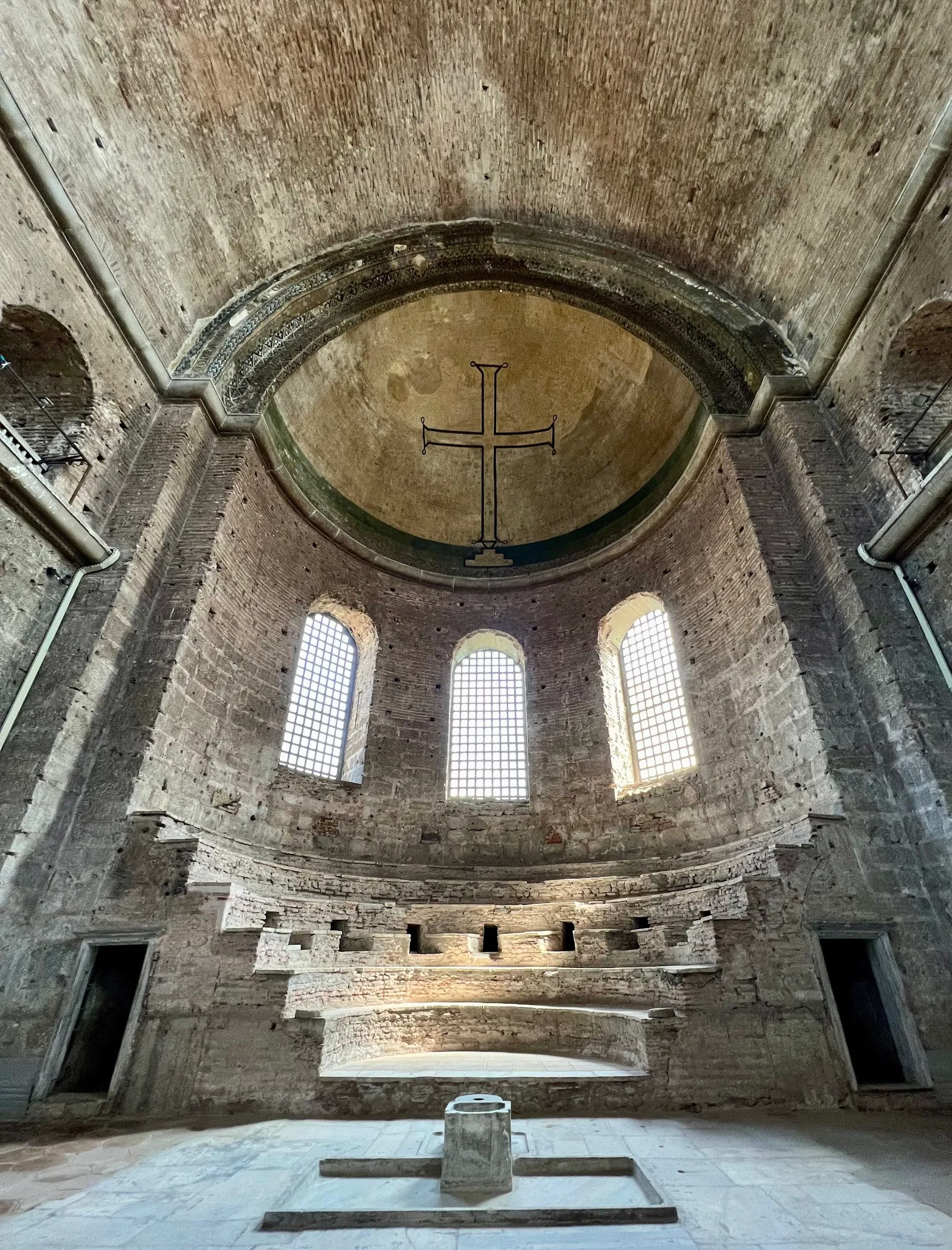
Hagia Irene stands in the outer courtyard of Topkapı Palace, close to Hagia Sophia. It is an Eastern Orthodox church that became a museum and concert venue. The building is notable among Istanbul’s historic churches because it was never converted into a mosque. Its position inside the palace grounds makes it easy to pair with a visit to Topkapı Palace.
The name Hagia Irene means “Holy Peace.” The church was dedicated to a sacred idea rather than to a particular saint. It was among the earliest Christian churches in Constantinople and served as the city’s patriarchal church before Hagia Sophia was built.
From early church to arsenal
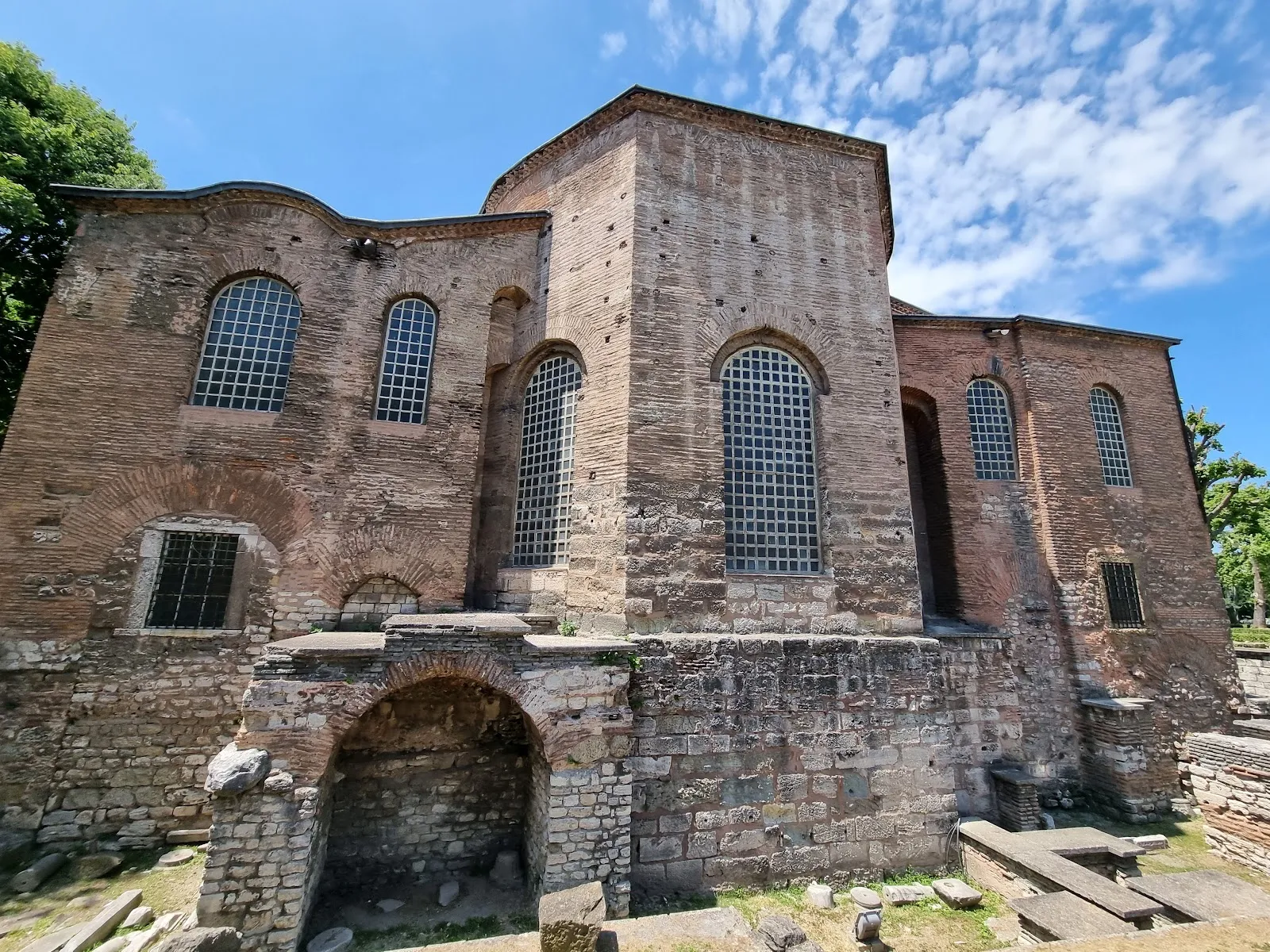
The first church on this site dates to the fourth century and is associated with Emperor Constantine. It was damaged by fire and later rebuilt under Justinian in the sixth century. The building has passed through several uses over time. After the Ottoman conquest, it was used to store weapons, and it remained an arsenal until the nineteenth century. It later held military and archaeological collections before becoming a museum.
Those different chapters help explain why Hagia Irene feels distinct from a church that has remained in continuous religious use. Its interior is not filled with the elaborate decoration found at Hagia Sophia. Instead, the scale of the masonry and the open volume of the space draw attention to the building itself.
The atrium and interior
The atrium is one of the most notable parts of the church. It is described as a rare surviving example of this Roman-era feature in Istanbul. Inside, the plan includes a narthex, a central space divided into three naves and an apse. The high vaults and heavy stone construction give the interior a solid, almost fortress-like character.
Some early Christian frescoes remain, although much of the original decoration has disappeared. Restoration work may limit access to parts of the complex, so the interior available to see can vary. Hagia Irene also hosts concerts and other cultural performances, making its acoustics part of the building’s present-day life.
Perguntas frequentes
Where is Hagia Irene?
It is in the outer courtyard of Topkapı Palace in Istanbul.
What was Hagia Irene used for?
It began as a church, later served as an arsenal and housed military and archaeological collections. It now operates as a museum and concert venue.
What should you look for inside Hagia Irene?
Look for the atrium, the three-nave interior, the apse and surviving traces of early Christian frescoes.
Is Hagia Irene open on Tuesdays?
No. It is closed on Tuesdays.


