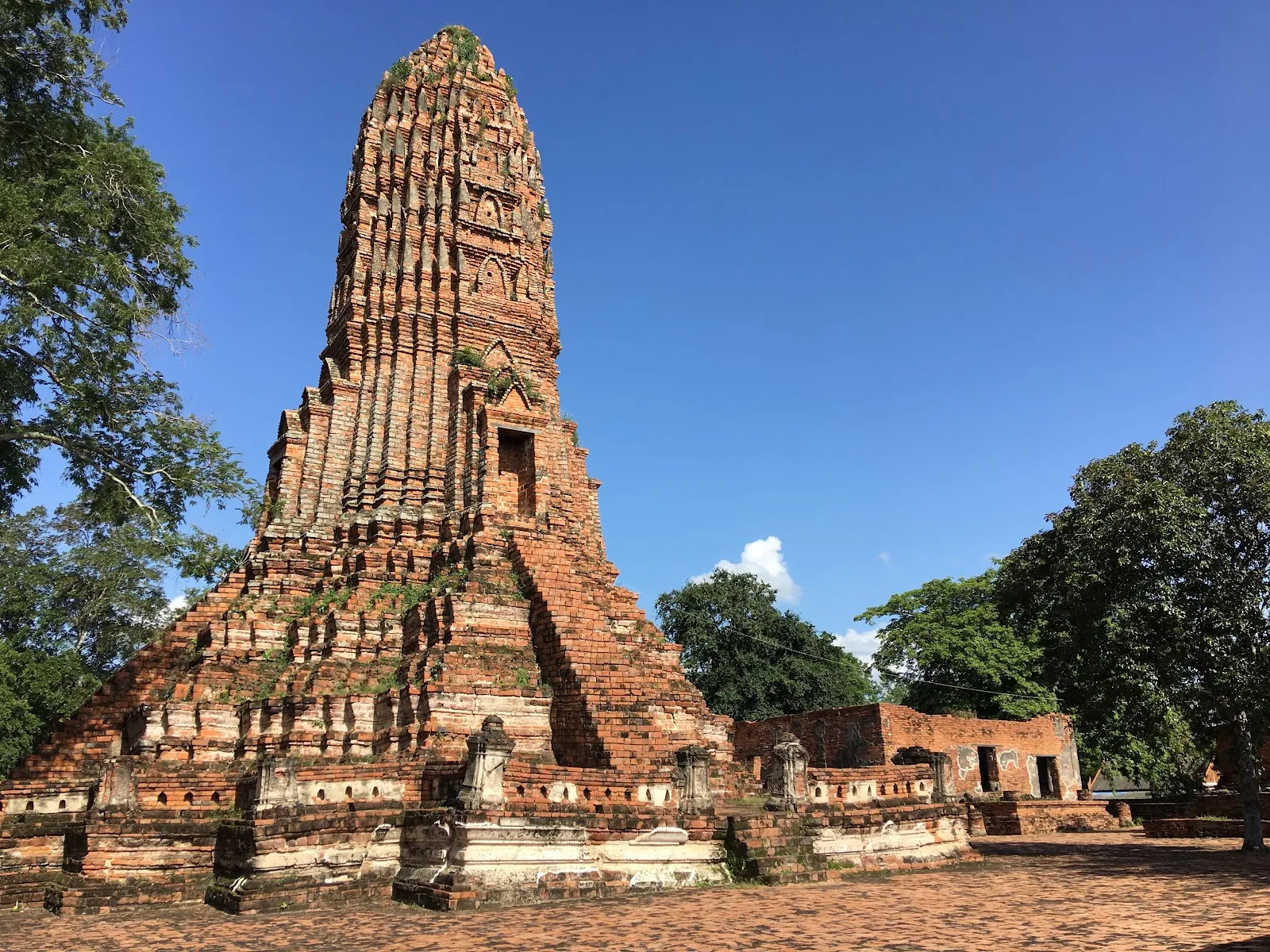
Wat Mahathat is a ruined royal temple in the old city of Ayutthaya, on Chikun Alley directly across from Wat Ratchaburana. It dates to the 14th century, once enshrined Buddha relics and was the home of the Supreme Patriarch. The grounds hold crumbling brick prangs, rows of headless Buddha statues and the sandstone Buddha head cradled in tree roots, in the southeastern corner. Paths are easy to walk and there are shaded places to sit. Give yourself time beyond the famous head, because the quiet ruins around it are where most of the temple's history shows.
A royal temple of the old capital
Wat Mahathat means the temple of the great relic. It was built in the 14th century, soon after Ayutthaya was founded, and it became one of the most important monasteries in the kingdom. Buddha relics were enshrined here, and the Supreme Patriarch, the leader of Thai Buddhist monks, lived within its walls. It also served as a venue for royal ceremonies. Accounts differ on the exact year of founding and on which king ordered it, so the safest statement is that it dates to the early decades of the city.
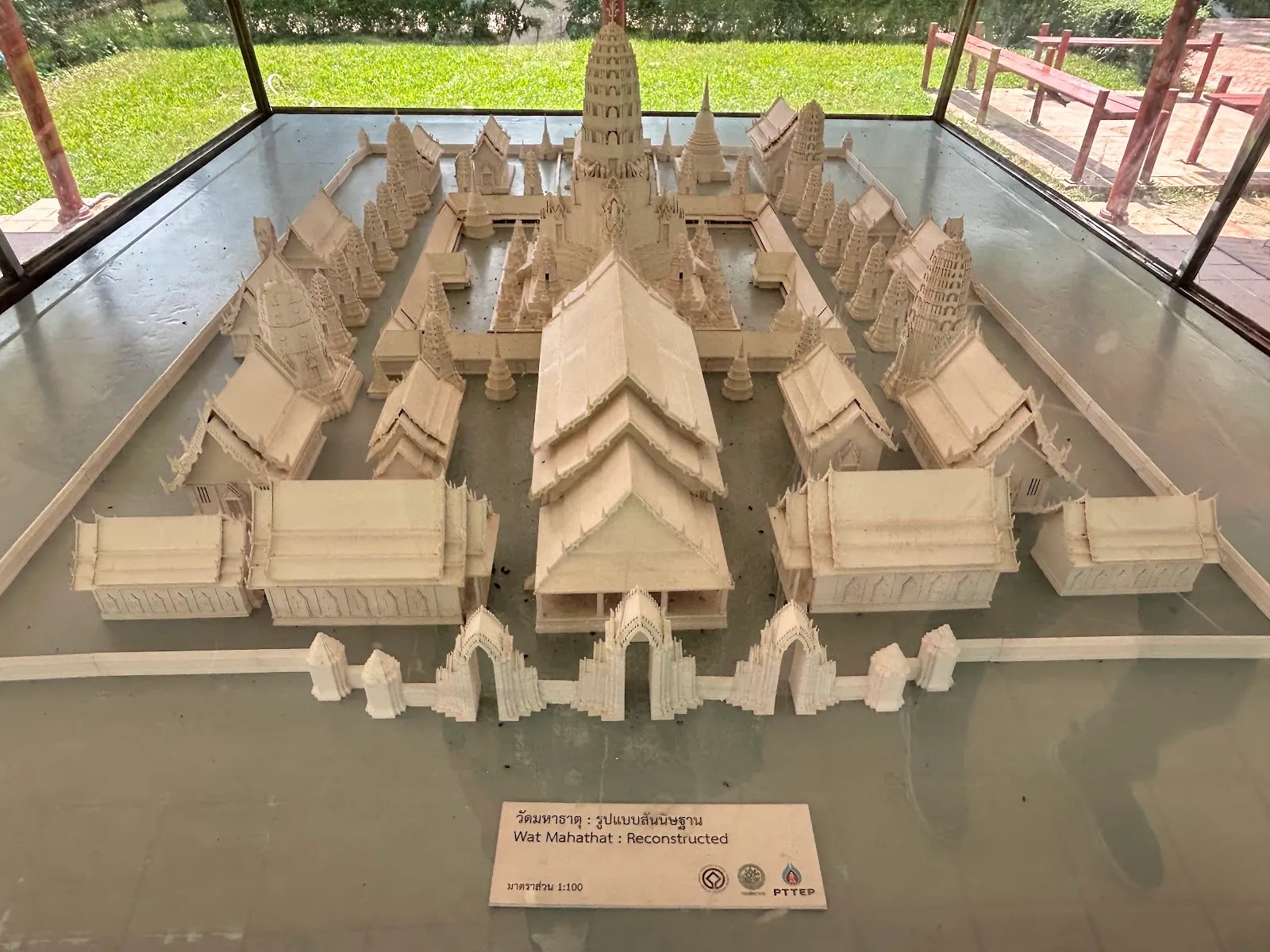
The temple follows a Khmer plan: a main prang, towers at the corners, and assembly and ordination halls arranged according to Hindu and Buddhist ideas of the universe. The layout is often compared with Angkor, and the central tower is likened to Mount Meru. Today it is one of the temples inside Ayutthaya Historical Park, a UNESCO World Heritage Site.
Destruction and what remains
Most of the temple was ruined when Burmese forces took Ayutthaya. Fire damaged the complex, and troops cut the heads off many Buddha statues. One explanation given is that the heads were made at least partly of gold. The temple was then abandoned, and age and weather brought down more of the brick.
The central prang once rose about 43 metres. It collapsed on its own long before the Burmese attack, was rebuilt in more recent times, and fell again in 1911. A small casket holding Buddha relics was found inside it, and it is now displayed in the Chao Sam Phraya Museum. Gold found in hidden chambers at Wat Mahathat and Wat Ratchaburana is often cited as evidence of how wealthy the kingdom was.
The Buddha head in the tree roots
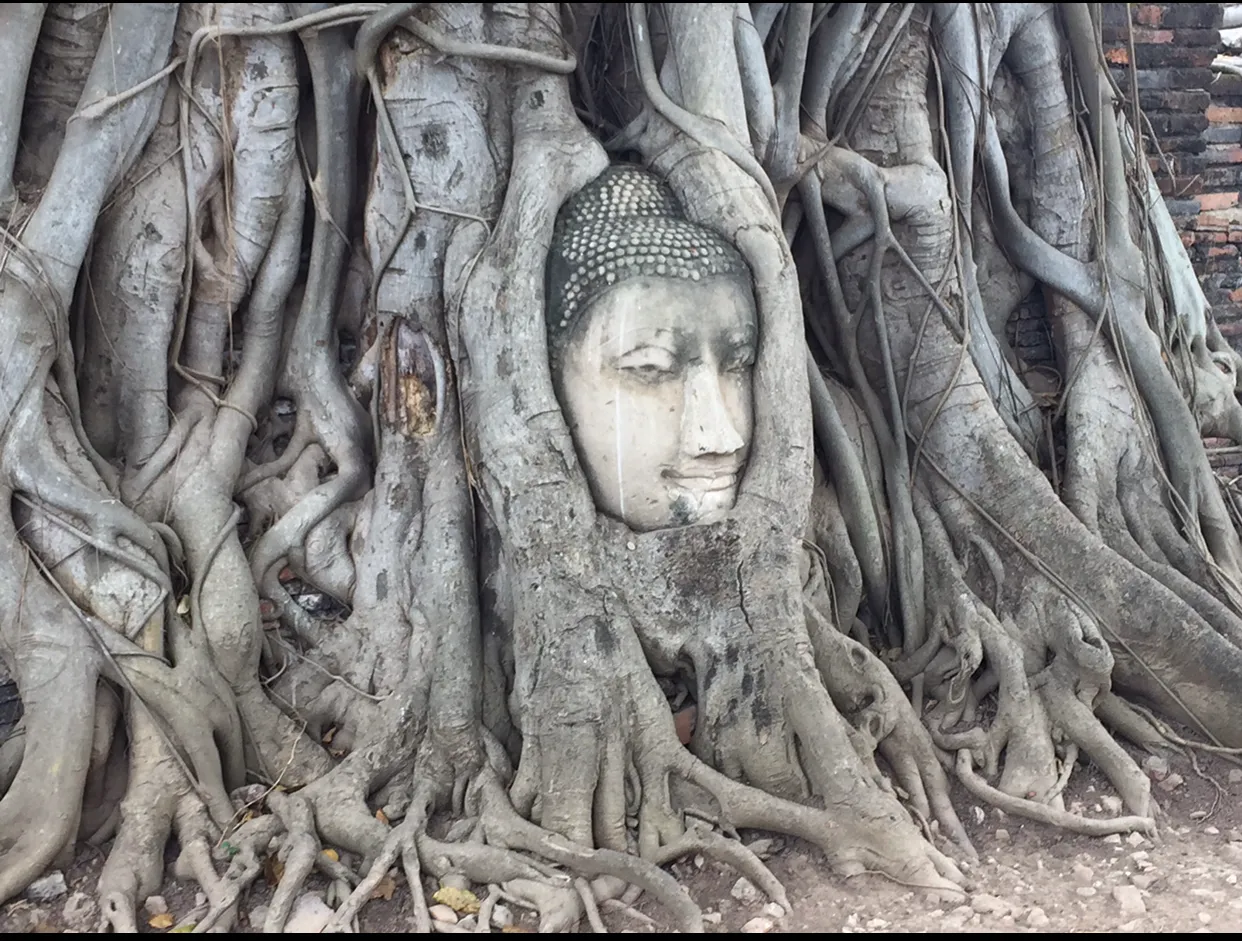
In the southeastern corner of the grounds, a sandstone Buddha head sits within the roots of a tree. Sources name the tree differently, as a banyan, a bodhi tree or a fig, so it is simplest to call it an old tree. How the head got there is not settled. One explanation is that it fell from a deteriorating statue and the roots grew around it. Another is that it was placed there on purpose. Local storytellers say the Burmese buried it and the tree lifted it as it grew.
The head has become a symbol of the city, and people queue to photograph it. The expression on its face is calm despite the damage around it. Please follow the custom of keeping your own head below the statue's, and do not touch it.
Walking the grounds
The head draws the crowds, but the rest of the site is large and rewards slow walking. Red-brick chedis and prangs stand among mossy walls, and rows of headless Buddha statues line the open spaces. Fragments of statues lie scattered, and old trees give shade to benches and seating areas. Visitors who come for the head often end up spending much longer among the surrounding ruins than they planned.
The temple is across the road from Wat Ratchaburana, so the two are easy to combine on foot or by bicycle. Wat Phra Si Sanphet and Wat Chaiwatthanaram are the other temples most often visited in the same outing. Take care not to confuse this Wat Mahathat with the temples of the same name in Sukhothai and Bangkok.
Perguntas frequentes
How much is the entry fee for Wat Mahathat?
Foreign visitors pay 50 baht, and Thai citizens pay 10 baht. A ticket is needed, and buying one in advance is recommended.
How long do you need at Wat Mahathat?
Plan one to two hours. The Buddha head takes a few minutes, but the surrounding ruins are worth a slow walk.
When is the best time to visit?
Late afternoon gives softer light, and early morning is also good. Midday is very hot and hard to do without shade, although the crowds are present most of the day.
How should I behave at the Buddha head?
Keep your head lower than the statue's when you photograph it, by crouching or kneeling, and do not touch the image. The site is sacred to Thai Buddhists.
How did the Buddha head end up in the tree roots?
No one knows for certain. One explanation is that the head fell from a decaying statue and the roots grew around it. Another is that someone placed it there deliberately.
Is Wat Mahathat accessible and family friendly?
The entrance is wheelchair accessible, and there is free parking with accessible spaces. The grounds are open and walkable, which suits children, but shade is limited in the heat.