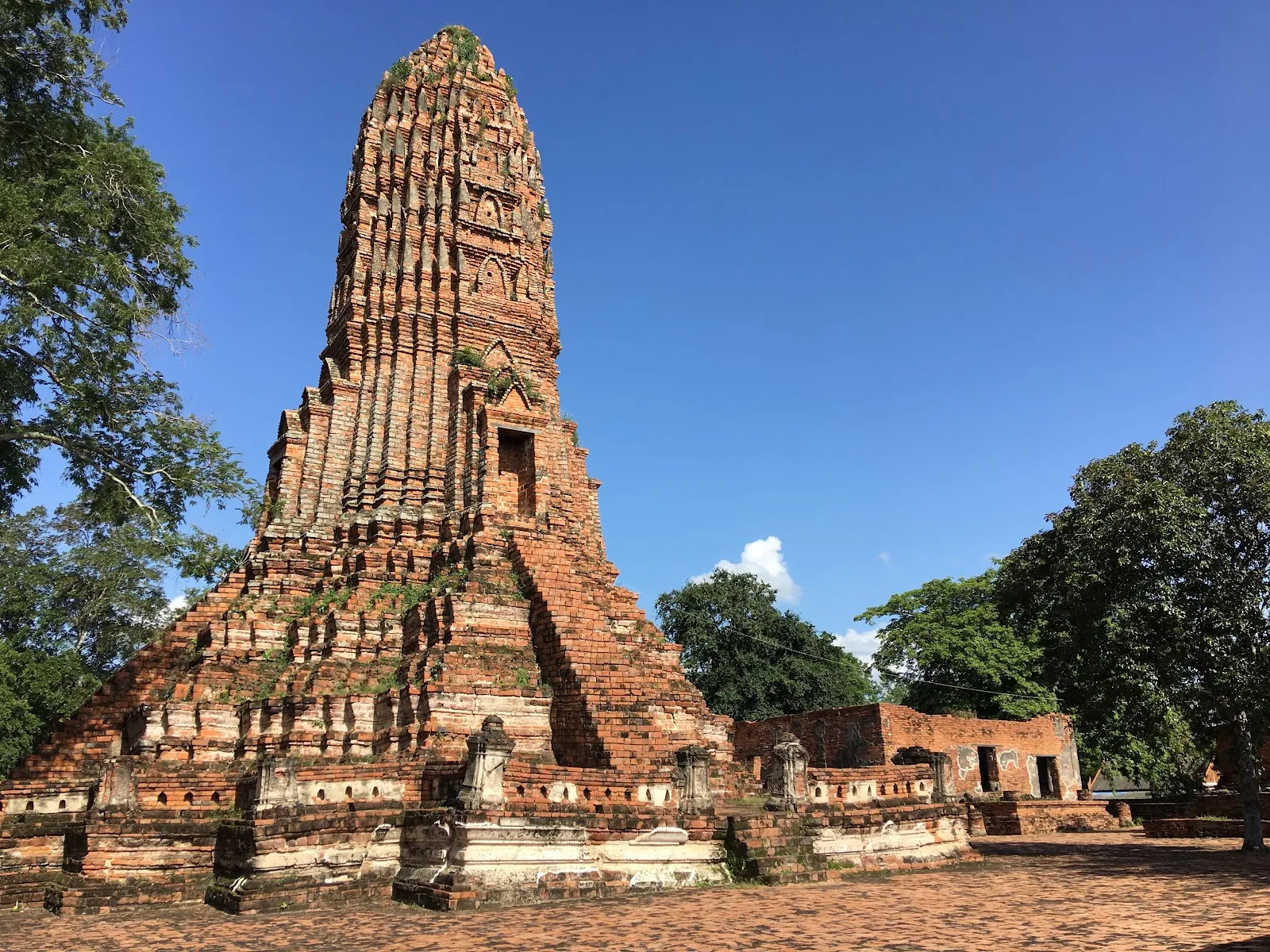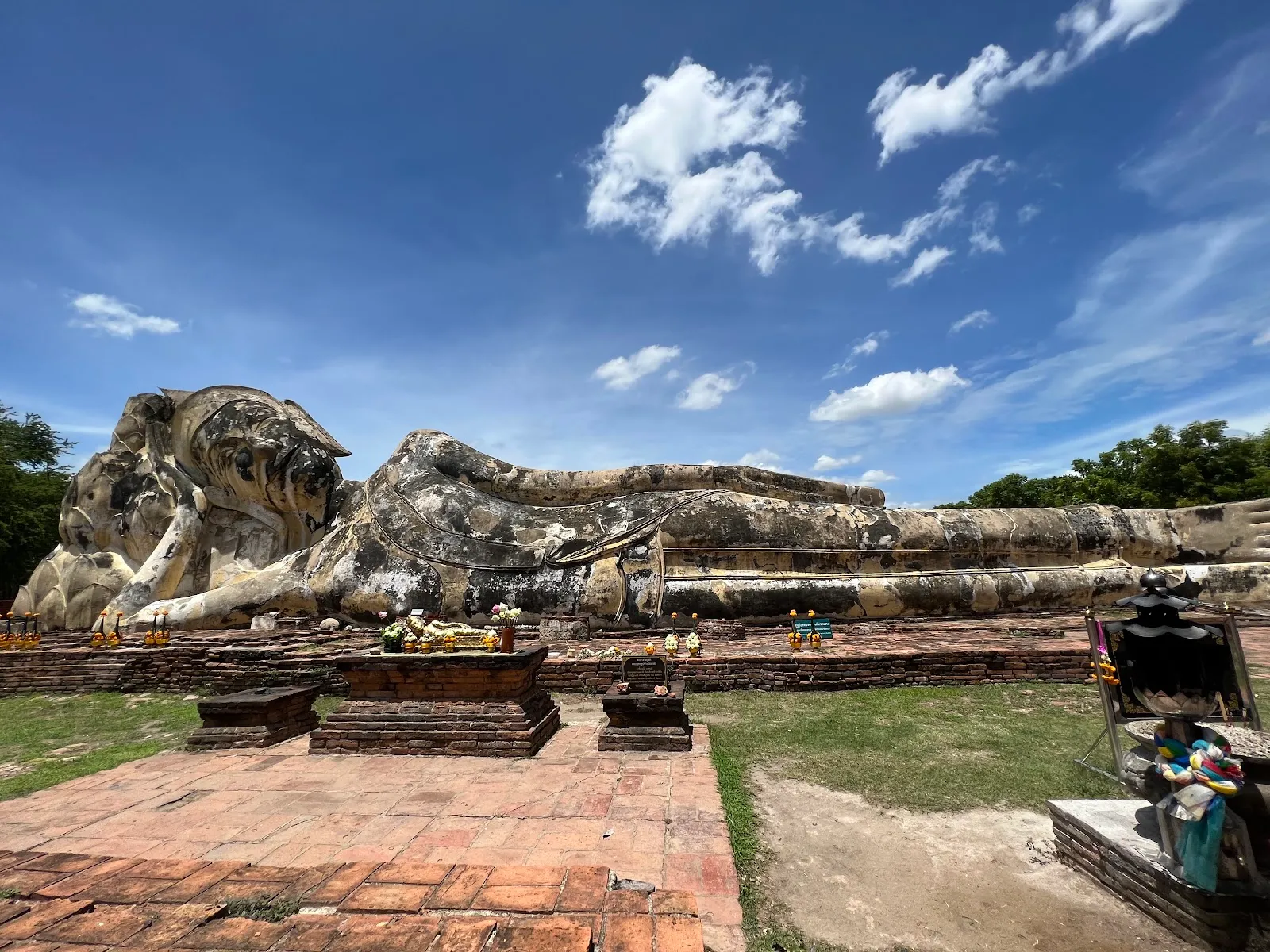
Wat Lokaya Sutha in Ayutthaya is known for one of Thailand's largest reclining Buddha statues, about 42 metres long, lying in the open among old brick ruins. The statue was repainted recently, and the fresh look divides opinion. Entry is free, and the site sits close to other temples, so many people see it on a tuk tuk route through the historic park. Allow a few minutes for photos, or an hour or more to walk the ruins and find the Gate of Time, a ruined arch set among tree roots.
A reclining Buddha among the ruins
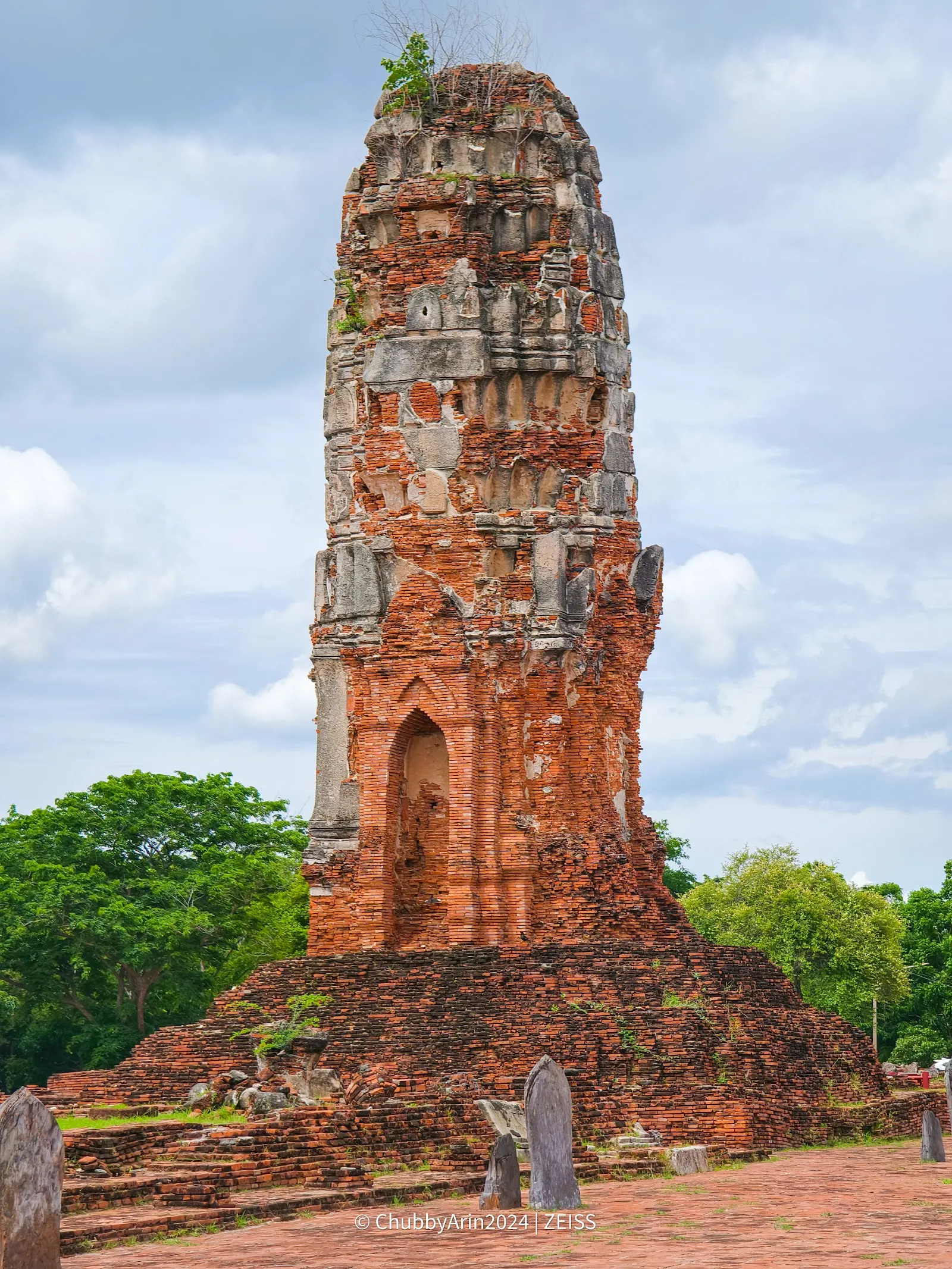
The reclining Buddha is the reason most people come. The statue is about 42 metres long and 8 metres high, and it rests on a lotus base with its head raised. It is built of brick covered in plaster. It is usually wrapped in bright orange cloth, and local worshippers apply small sheets of gold leaf to it, a custom linked to blessings, protection and good fortune.
The statue lies in the open air, with old temple walls, floors and pillars around it. Fragments of other Buddha images are scattered across the site. The combination of a large figure and weathered remains is the feature that stands out most.
The temple and its history
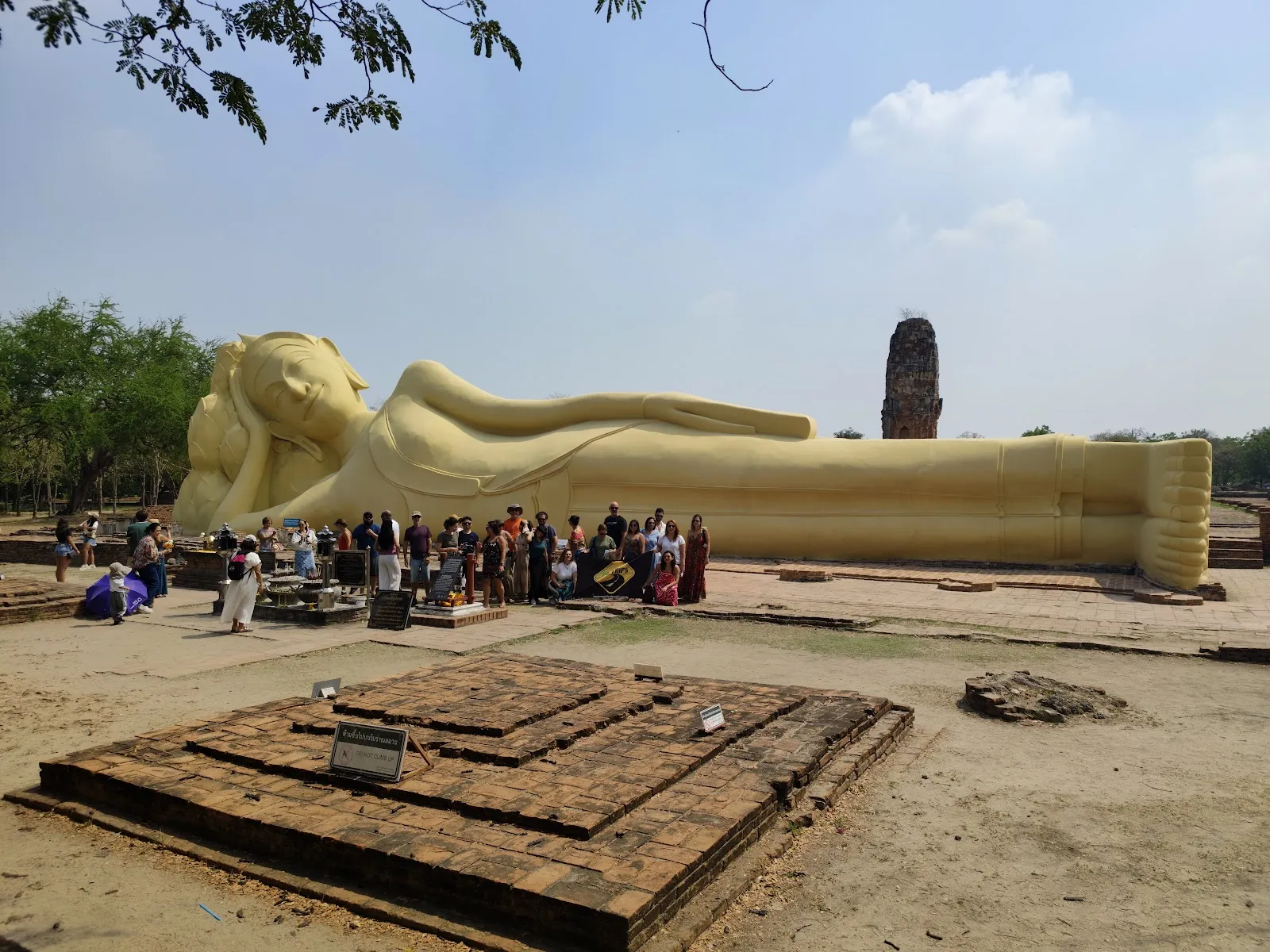
The origins of the temple are uncertain. Some historians place it in the early Ayutthaya period, in the late 14th century, while others date it to the 17th or 18th century. The statue is associated with the Ayutthaya period and is believed to show the Buddha entering parinirvana, the final passing away. Its formal name is Phra Buddha Sai Yat.
The complex was largely destroyed in the Burmese attack on the city. The statue survived while most of the surrounding buildings were reduced to their foundations. The figure was restored in the 1950s. The temple shows the Ayutthaya style, with octagonal pillars and layered roofs, but much of that architecture is now gone.
What to see besides the statue
The Gate of Time is a ruined arch set among the roots of a tree, and it is one of the most photographed spots in this part of the site. The gardens and trees offer shade, which makes walking the grounds easier in the heat. Shops sit in front of the statue, so drinks and souvenirs are close at hand.
A tuk tuk is a common way to tour the area. A route can take in Wat Phanancheong, Wat Mahathat, where tree roots wrap around a Buddha head, Wat Phra Si Sanphet, a former royal temple, and Wat Chai Wattanaram, which shows Khmer architectural influence. Wat Lokaya Sutha is often included in tours alongside these temples.
Visiting with respect
This is a place where people still pray and light incense, and the ruins are fragile. Keep the area clean, do not climb on or sit on the ancient walls, and avoid touching the Buddha or the old brick and plaster. Careful visitors help keep the remains intact.
Opinions on the fresh paint differ. Some people find that the bright finish makes the statue striking and well kept. Others miss the weathered look of the older figure. Either way, the statue remains a place for prayer and quiet reflection.
Getting there and visiting
The temple is in the northwest of the historic city, in the Pratu Chai sub-district. Entry is free. The site has a free parking lot, a paid parking lot and free street parking nearby. The parking area fits roughly 10 to 15 cars and about 30 motorbikes.
The entrance and parking are wheelchair accessible, and the site is suitable for children. A quick photo stop takes 5 to 10 minutes, while exploring the ruins can take an hour or more.
Perguntas frequentes
Is there an entry fee?
No. Entry to Wat Lokaya Sutha is free.
How long do you need?
A quick photo stop takes 5 to 10 minutes. Exploring the ruins can take an hour or more.
When is the best time to visit?
Early morning or late afternoon is best, because the heat is lower and the light is softer.
Is the site wheelchair accessible?
Yes. The entrance and the parking lot are wheelchair accessible.