At 251 Tongil-ro in Seoul, Seodaemun Prison History Hall preserves part of a former prison used from 1908 to 1987. Its cells and other surviving buildings trace the imprisonment of Korean independence activists under Japanese colonial rule, as well as later detention of pro-democracy campaigners. Exhibits explain the prison’s history and the conditions people endured there. Many information boards have English translations, though some videos are in Korean without subtitles. Allow time to read, and be prepared for life-size figures and scenes that depict violence.
A prison shaped by Korea’s modern history
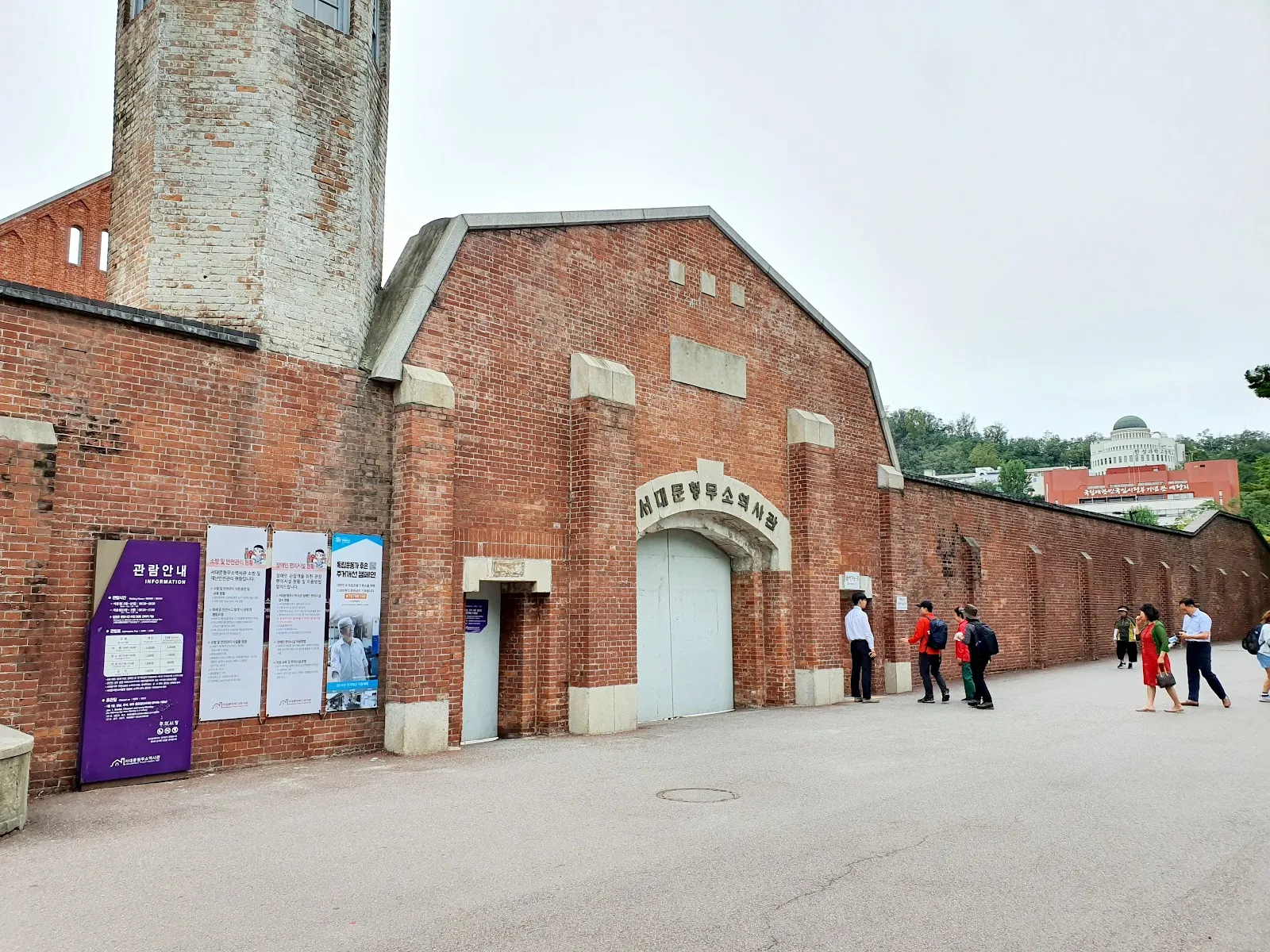
The prison opened in 1908 under the name Gyeongseong Prison. It was used to detain Korean independence activists during Japanese colonial rule, and the site became closely tied to the struggle for freedom. As the number of detained activists grew, the prison expanded and was renamed Seodaemun Prison in 1912.
The prison’s history did not end with colonial rule. It also held pro-democracy campaigners under postwar governments, and remained in use until 1987. In 1998, the site became a history museum. Seven buildings have been preserved, including cell blocks and the execution building.
Cells, displays and difficult scenes
The original cell blocks let you see the spaces where prisoners were held. Exhibits explain their confinement and the harsh conditions they faced, alongside the history of the independence movement. Information boards provide substantial context, with English translations available on many of them.
Some rooms use life-size figures to depict events inside the prison, including torture. The scenes can be graphic, so take care if visiting with children. The museum’s subject matter is painful, but the displays connect individual suffering with the wider history of resistance and the people who fought for Korean independence.
The execution building and visiting thoughtfully
The execution building is another preserved part of the complex. It dates from 1923 and includes a concealed passage once used to remove the dead. The former exercise area and prison cells add to the picture of how the site operated; allow time to move between the buildings and read the exhibits.
Some video material has Korean audio without English subtitles, so not every presentation is accessible to English-speaking visitors. A guide can help explain areas where written interpretation is limited. Self-service ticket machines are located outside, and a cafeteria and souvenir shop are on site. The museum is wheelchair accessible, including its entrance and restrooms.
Perguntas frequentes
When did Seodaemun Prison open?
It opened in 1908 as Gyeongseong Prison and was renamed Seodaemun Prison in 1912.
How long should I allow for a visit?
Allow around 2 to 3 hours to see the buildings and spend time reading the displays.
Are the exhibits available in English?
Many information boards have English translations, but some videos are in Korean without English subtitles.
Is the site suitable for young children?
Some exhibits include life-size figures and graphic depictions of torture, so consider this before visiting with young children.