Olympic Park is a large green space in Seoul’s Songpa District, built for the 1988 Summer Olympics. Its grounds bring together sports arenas, open lawns, lakes, gardens and outdoor sculptures, with traces of the ancient Baekje-era Mongchontoseong Fortress. Look for the World Peace Gate, the park’s many public artworks and the Lone Tree on One Tree Hill. Wide paths suit a walk or bike ride, while the lawns and shaded areas make room for a slower break from the city.
A park shaped by the 1988 Olympics
Olympic Park was created for the 1988 Summer Olympics and remains a major sports and recreation complex in eastern Seoul. Its grounds cover about 1.4 million square metres, with arenas set among lawns, paths, wooded areas and water. The park also hosted the 1986 Asian Games.
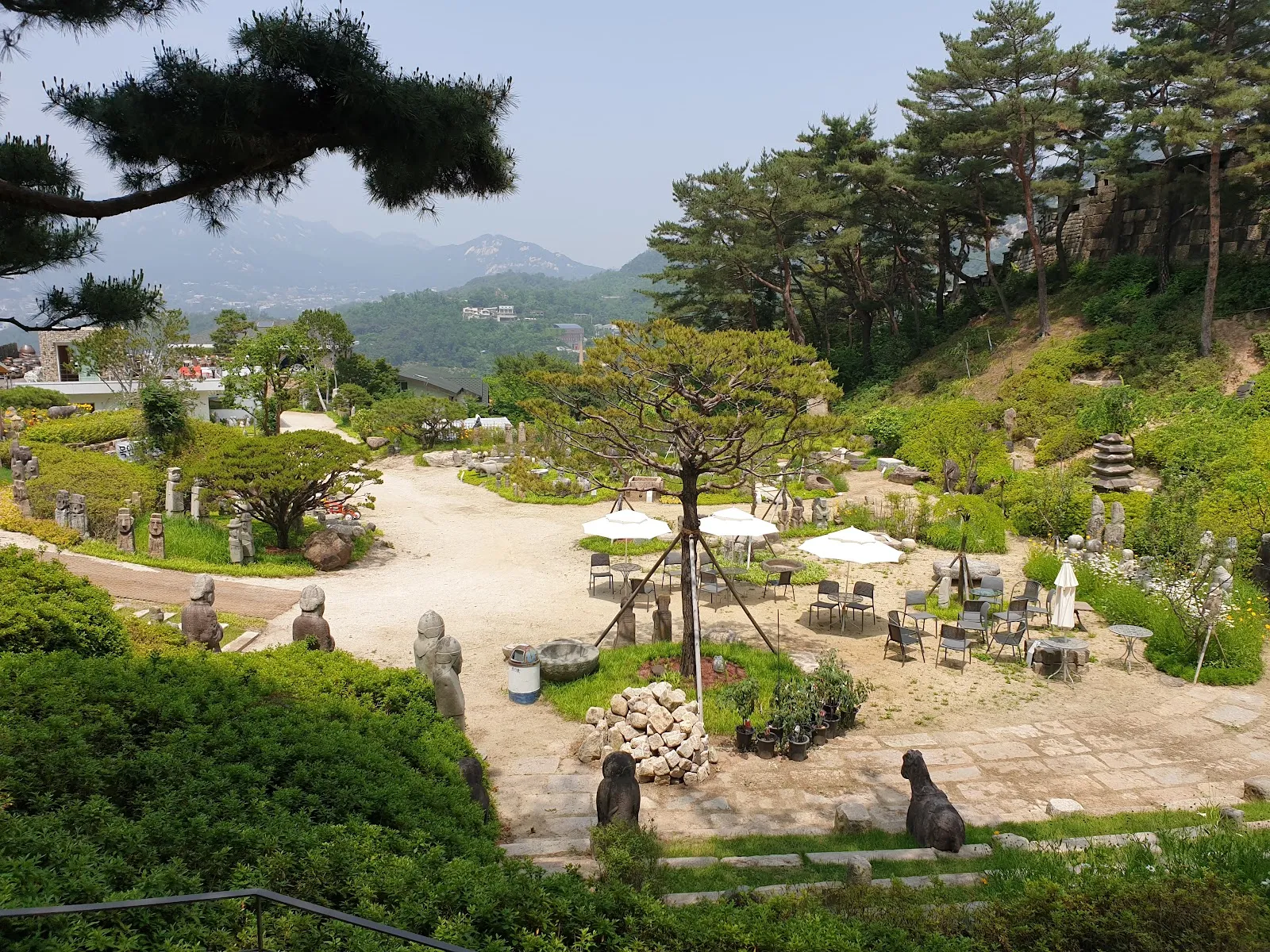
The Olympic setting is still visible in monuments and permanent artworks around the grounds. The World Peace Gate marks a principal entrance and commemorates the Seoul Games. An eternal flame burns beneath it. The park’s open-air sculptures are another part of the Olympic legacy, with more than 200 works spread through the grounds.
Mongchontoseong and Baekje history
The park includes the remains of Mongchontoseong, an earthen fortress associated with the Baekje kingdom and dated to the 3rd century AD. The rampart was surrounded by a moat, and the site preserves a connection to Seoul’s history that predates the Olympic facilities.
Mongchonhaeja, a man-made lake from the early Baekje period, is also part of the area’s historical landscape. The combination of ancient earthworks and modern sports venues gives the park more to explore than its lawns and walking routes alone. History-focused areas and museums are among the facilities found within the park.
Paths, gardens and open spaces
The grounds are divided into areas for culture and art, leisure sports, ecology and history. Paths cross open fields and pass ponds, trees and sculptures; visitors use them for walking, jogging, cycling and skating. The park’s scale means a full circuit can take about three hours on foot.
One Tree Hill, known for its lone tree on a sloping field, is a popular spot for photographs. Seasonal flower areas include rose and cosmos gardens, while ginkgo trees bring another point of interest in autumn. The park also has shady places to rest, benches and vending machines. Families and people looking for outdoor exercise can make use of the broad lawns and recreational areas.
Planning a visit
Olympic Park works for a short walk around a particular landmark or a longer outing across its grounds. If you want to see more without covering the distance on foot, bicycle rentals are available; electric bikes are also mentioned as an option. A train ride through the park is another way to get around.
The park hosts sports matches, concerts, festivals and other events, so parts of the visit can centre on a scheduled activity. For a simple outdoor break, bring food and drink with you, as some coffee shops inside are expensive. The grounds are open from 5 AM until midnight.
Perguntas frequentes
How long do you need at Olympic Park?
Allow about 2 to 3 hours to explore much of the park on foot. Its full walking circuit takes roughly three hours.
What can you see at Olympic Park?
The park has the World Peace Gate, outdoor sculptures, sports arenas, Mongchontoseong Fortress remains, lakes and gardens. One Tree Hill is a popular photo spot.
Can you rent a bike at Olympic Park?
Yes. Bicycle rentals are available, and electric bikes are also mentioned as a way to cover the large grounds.
When is Olympic Park open?
The park is open daily from 5 AM to midnight.