Machrie Moor Standing Stones is an archaeological site on the Isle of Arran in southwest Scotland, reached by a walk across open moorland. Six stone circles sit among standing stones, burial cairns and hut circles, with evidence of ancient ritual and burial. The route from the car park follows a farm track with information signs, and takes about 25 to 30 minutes each way. Go for the stone circles and the quiet landscape around them; the path can be muddy after rain.
The walk to the stones
The standing stones are reached on foot from the car park, along a farm track across the moor. The walk takes about 25 to 30 minutes each way. Information signs on the route explain the prehistoric remains, so allow time to stop and read as you go.
The ground can be wet and boggy after rain, particularly in winter. Comfortable shoes are useful. The car park can fill up, so an early start can help you avoid the busiest period.
Stone circles and prehistoric remains
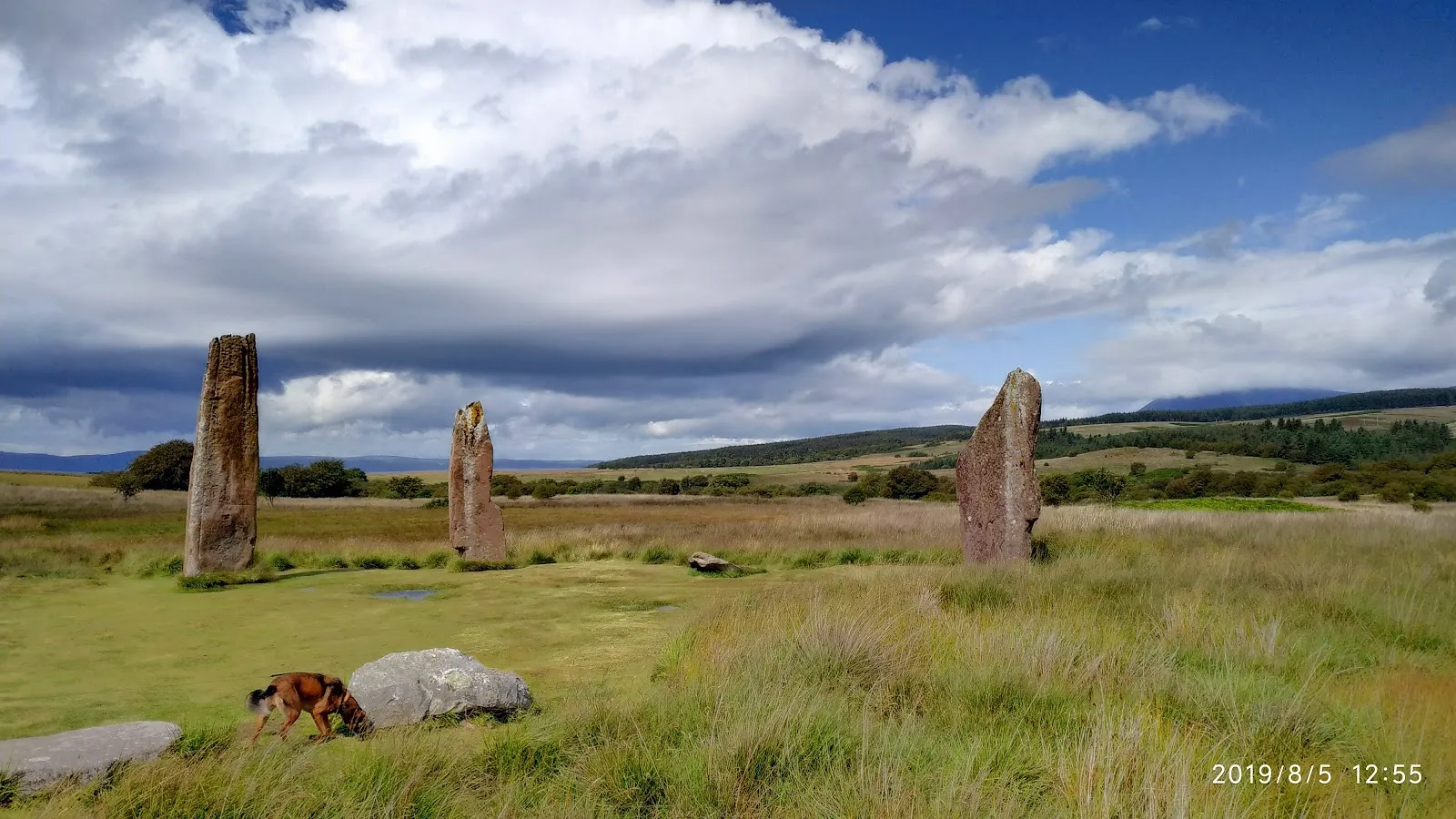
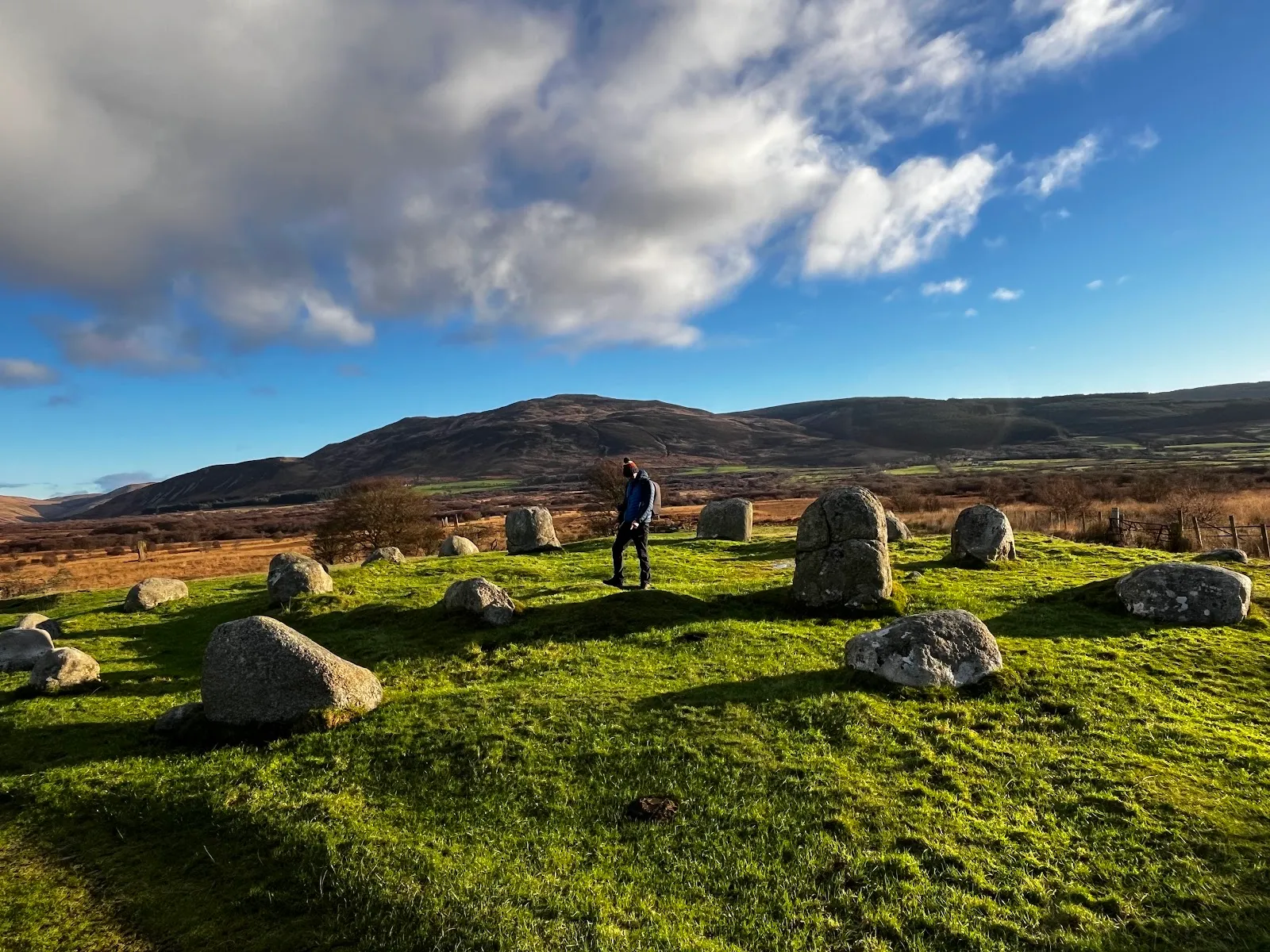
Machrie Moor contains six stone circles, alongside standing stones, burial cairns and hut circles. The archaeological remains date from around 3500 BC, with the circles associated with both Neolithic and later periods. Some of the original circles were made of timber before stone replaced it.
The site provides evidence of ancient ritual and burial, but the purpose of the circles is not fully known. There are no written records explaining how the people who built them understood the place. Take time to look across the moor as well as at the stones themselves; the remains are spread across the landscape.
Perguntas frequentes
How long is the walk to Machrie Moor Standing Stones?
The walk from the car park takes about 25 to 30 minutes each way. The route is around 3 to 4 km, depending on the account.
Is entry to Machrie Moor free?
Yes. Entry is free, and donations for site upkeep are encouraged.
When is the best time to visit?
Go in the morning, before 11 am, to avoid the busier part of the day.
What should I wear for the walk?
Wear comfortable shoes. The path can be muddy after rain and boggy in winter.